Minnesota’s wilderness offers the perfect backdrop for your personal retreat. Cabin kits MN provide an affordable path to owning your dream getaway without the complexity of traditional construction.
We at Up North Property Management see growing interest in these cost-effective solutions. Modern cabin kits deliver quality materials and clear instructions, making cabin ownership accessible to more families than ever before.
Which Cabin Kit Style Fits Your Minnesota Property
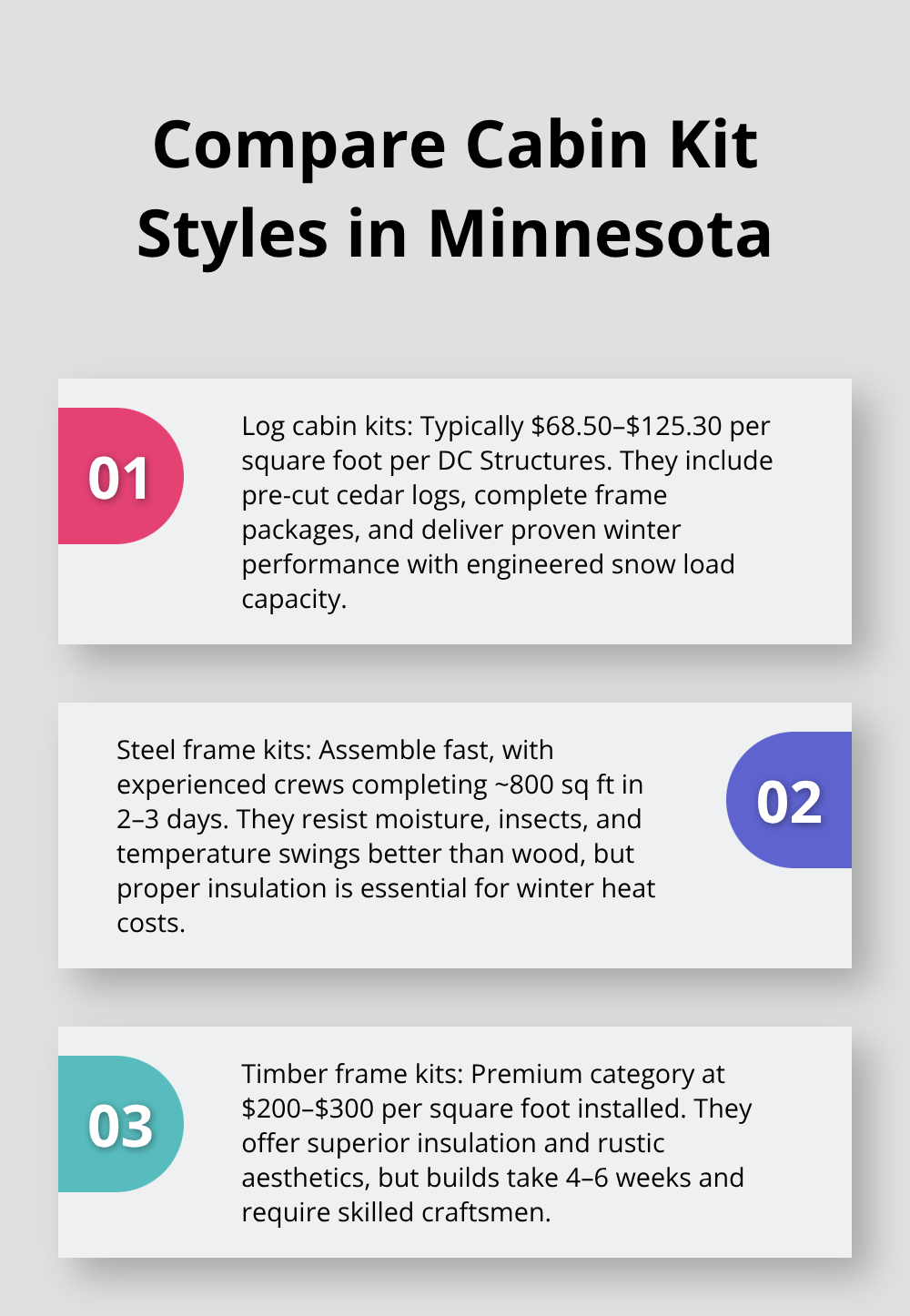
Pre-fabricated log cabin kits dominate Minnesota’s market with prices that range from $68.50 to $125.30 per square foot according to DC Structures data. These kits include pre-cut cedar logs, complete frame packages, and detailed blueprints. Companies like Log Homes of Minnesota offer complete turnkey packages with pre-engineered truss systems and high-quality insulated roofs. The major advantage lies in their proven performance against Minnesota’s harsh winters, with engineered snow load capacity and moisture-resistant finishes standard in most packages.
Steel Frame Advantages for Minnesota Weather
Modern steel frame cabin kits offer competitive pricing compared to log alternatives. Steel frames resist moisture, insects, and extreme temperature fluctuations better than wood alternatives. These kits assemble faster than traditional options, with experienced builders who complete 800-square-foot structures in 2-3 days. The downside involves higher heat costs during Minnesota winters (proper insulation packages become essential for year-round use).
Timber Frame Construction Reality
Traditional timber frame options represent the premium cabin kit category, with costs that reach $200-300 per square foot when installed. These structures offer superior insulation properties and authentic rustic aesthetics that many buyers prefer. However, assembly requires skilled craftsmen and extends construction timelines to 4-6 weeks for average-sized cabins.
Summerwood’s Kepler Creek model demonstrates this category well, with premium cedar construction and customizable windows and doors (though their 192-square-foot size limits practical applications for full-time retreats).
Kit Selection Factors That Matter Most
Minnesota’s extreme weather conditions dictate specific requirements for cabin kits. Snow loads can reach 42-60 pounds per square foot in northern regions, which makes engineered structural components non-negotiable. Moisture management systems prevent rot and mold issues that plague poorly designed kits. Foundation compatibility varies significantly between kit types, with steel frames that require different approaches than log structures.
Once you select your ideal kit style, the next consideration involves understanding the complete financial picture and available options to fund your Minnesota cabin project.
What Does a Minnesota Cabin Kit Actually Cost
Cabin kit prices in Minnesota vary dramatically based on size and materials. Small cabin kits like Summerwood’s 192-square-foot Kepler Creek model start at $13,156 after recent price reductions from $18,795. Mid-sized options around 650-950 square feet typically range from $45,000 to $85,000 for basic packages. Larger premium kits exceed $150,000 before installation costs. DC Structures reports costs between $68.50 and $125.30 per square foot for their Minnesota-specific designs, while traditional timber frame options reach $200-300 per square foot installed according to industry standards.
Foundation and Site Preparation Expenses
Foundation work adds $8,000-$25,000 to your project based on soil conditions and basement requirements. Minnesota’s frost line requires foundations to meet minimum depth requirements for frost protection. Rocky terrain increases excavation costs by 30-50% compared to standard soil conditions. Basement additions provide extra living space but double foundation expenses in most cases.
Utility Connection Reality
Electrical connections cost $3,500-$8,000 for basic service to remote cabin locations. Septic systems range from $15,000-$35,000 in rural Minnesota areas where municipal sewer access doesn’t exist. Well water systems average $4,500-$12,000 based on depth requirements (most Minnesota wells reach 100-200 feet for reliable water sources). Professional assembly fees add another $25-$50 per square foot to your total investment.
Permit and Compliance Costs
Minnesota’s building permits cost $500-$2,000 for standard cabin projects. Engineering reviews for snow load compliance reach $1,500-$3,000 for complex designs that require structural analysis. Prefabricated structures are governed by Minnesota Rules, which means each kit needs proper documentation and compliance certificates before installation begins.
Smart Financing Strategies
Summerwood offers monthly financing through Acorn Finance at $299 per month for smaller kits. Traditional construction loans require 20-25% down payments and convert to permanent mortgages after completion. Credit unions in Minnesota often provide better rates than national banks for cabin projects, with some institutions that offer 15-year terms at competitive rates.
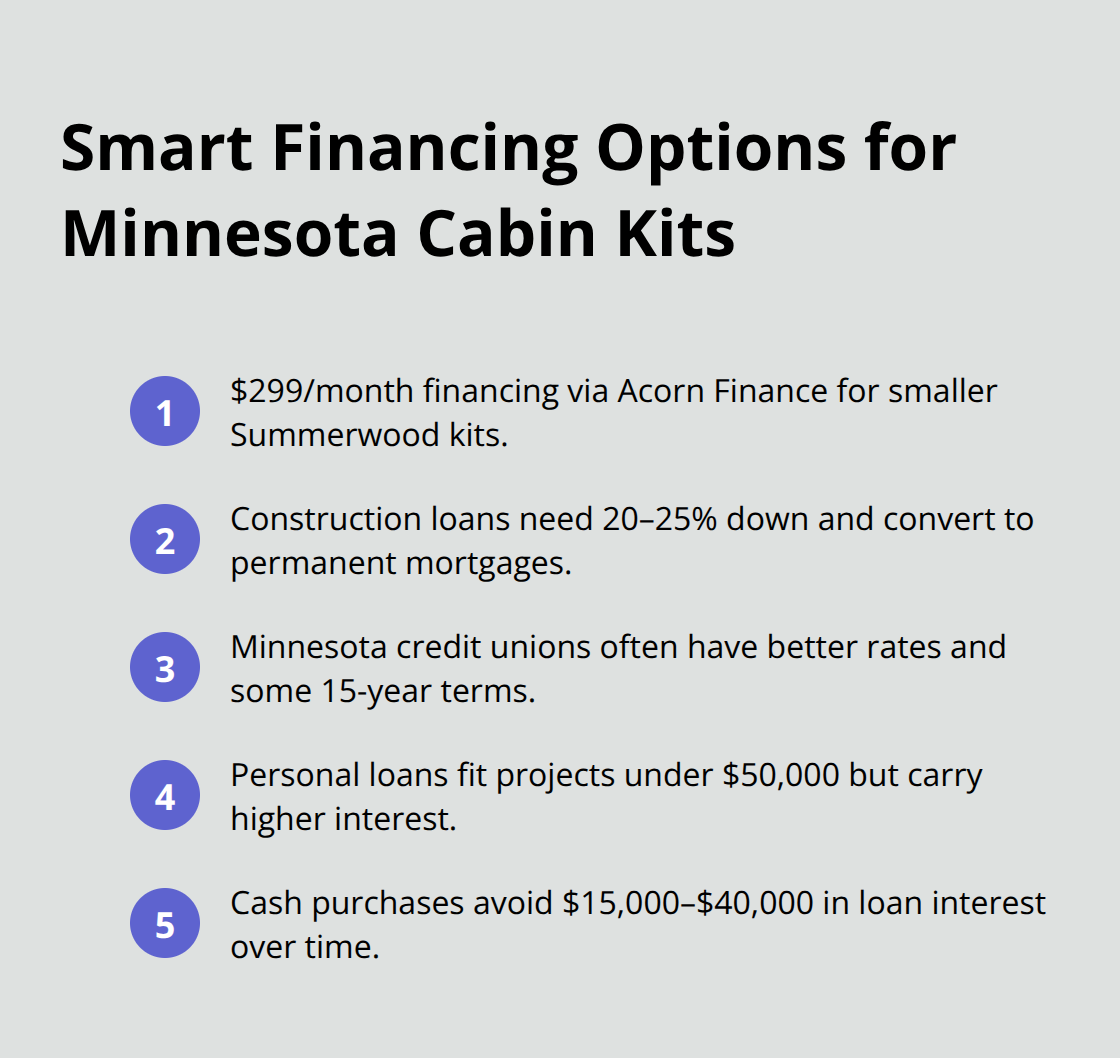
Personal loans work for smaller projects under $50,000 but carry higher interest rates. Cash purchases eliminate interest payments that can add $15,000-$40,000 over typical loan terms.
Smart location selection can significantly impact these costs, especially when you consider Minnesota’s diverse geography and varying infrastructure access across different regions.
Where Should You Build Your Minnesota Cabin
Northern Minnesota’s lakes region offers the most compelling opportunities for cabin kit placement, with over 11,842 lakes that provide waterfront access within reasonable distances from major cities. Crow Wing County and Cass County lead in cabin-friendly policies, while Aitkin County provides the most affordable land prices at $3,500-$8,000 per acre for wooded lots. Lake access adds 40-60% to property values but creates rental income potential that justifies the premium. Counties like Itasca and St. Louis offer extensive state forest boundaries that provide permanent wilderness views and recreational access.
County Rules That Actually Matter
Minnesota counties maintain different standards for seasonal versus year-round cabins. Seasonal structures require minimum 75-foot setbacks from ordinary high water marks in most northern counties, while year-round dwellings need 100-foot setbacks. Minimum building sizes vary from areas of 500 to 2,000 square feet depending on jurisdiction, with some counties also requiring minimum lot sizes related to house size. Septic system requirements drive lot size minimums to 1-2 acres in areas without municipal services. Some townships restrict cabin rentals entirely, which eliminates income potential for investment properties.
Power and Road Access Drive Total Costs
Properties within 1,000 feet of power lines reduce electrical connection costs by 60-70% compared to remote locations. Year-round road access adds $15,000-$25,000 to property values but prevents seasonal access limitations that restrict construction windows. Municipal water access exists primarily within 10 miles of cities like Brainerd, Grand Rapids, and Bemidji, while rural areas require private wells that average 150-200 feet deep in northern Minnesota.
Internet and Site Preparation Factors
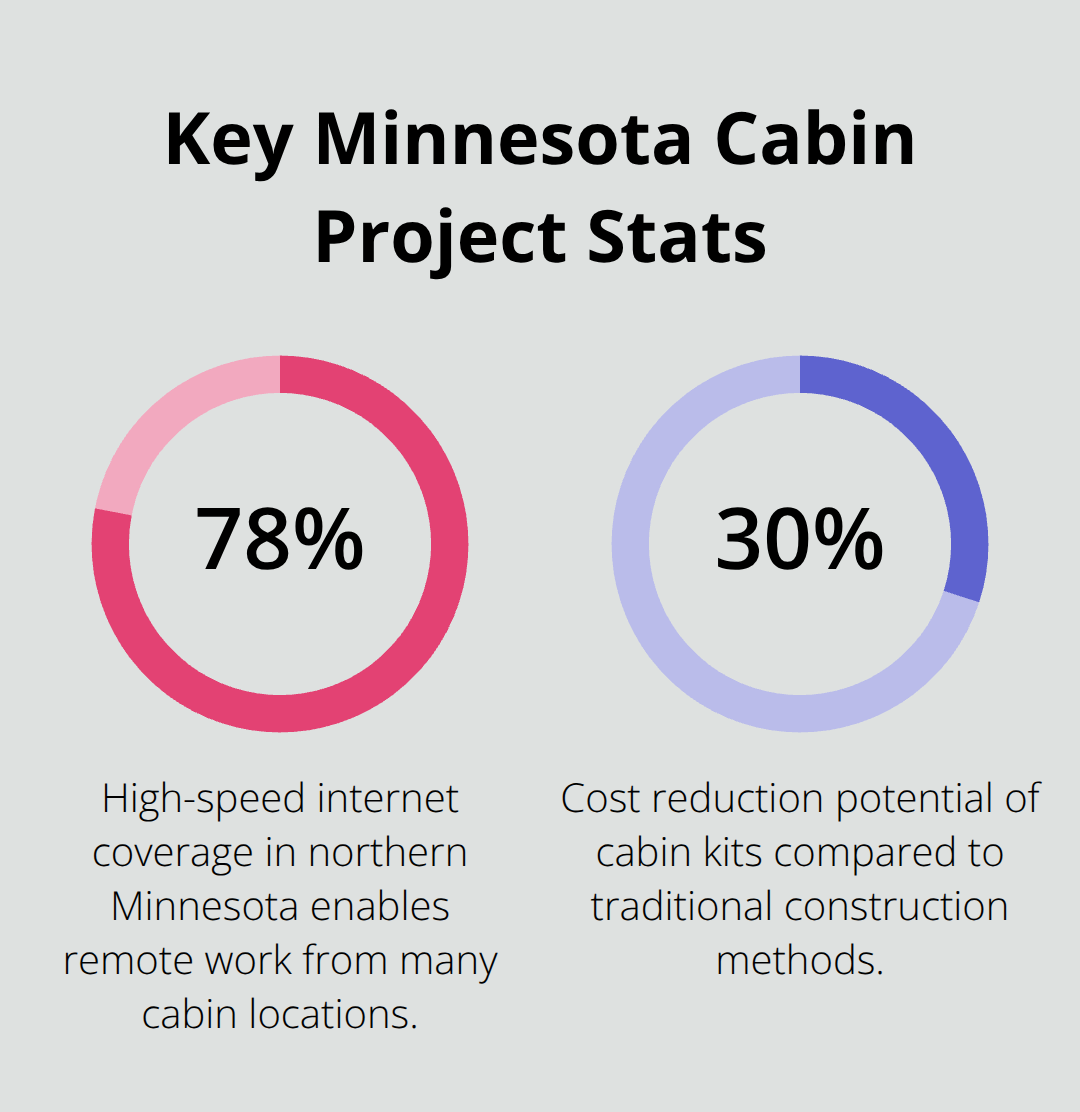
High-speed internet reaches 78% of northern Minnesota through fiber expansion programs that fund broadband service to unserved areas (this makes remote work feasible from cabin locations). Properties with existing driveways and cleared sites save $8,000-$15,000 in site preparation costs compared to heavily forested lots. Rocky terrain increases excavation expenses by 30-50% over standard soil conditions, while wetland areas require special permits that can delay projects by 3-6 months.
Final Thoughts
Cabin kits MN offer the most direct route to Minnesota wilderness ownership. These packages remove construction complexity while they deliver materials that withstand harsh northern winters. Cost reductions reach 30% compared to traditional methods, and financing options make ownership accessible to more families.
Your next step requires you to select the right kit style for your intended use and budget. Contact manufacturers for detailed quotes that include site-specific requirements. Schedule property visits to evaluate access, utilities, and local regulations before you commit to any location.
Smart investors recognize cabin rental potential in Minnesota’s tourism market (especially during peak summer and fall seasons). We at Up North Property Management handle marketing, bookings, maintenance, and property oversight for vacation rentals in Northern Minnesota. Professional management maximizes rental returns while it eliminates the stress of remote property oversight.