
Minnesota’s pristine lakes and dense forests make it the perfect place to buy cabin MN properties. The state offers over 11,000 lakes, creating endless waterfront opportunities for cabin buyers.
We at Up North Property Management see growing demand for both seasonal retreats and year-round homes. This guide walks you through everything needed to find your ideal Minnesota cabin.
Where Should You Buy Your Minnesota Cabin
Premier Cabin Destinations
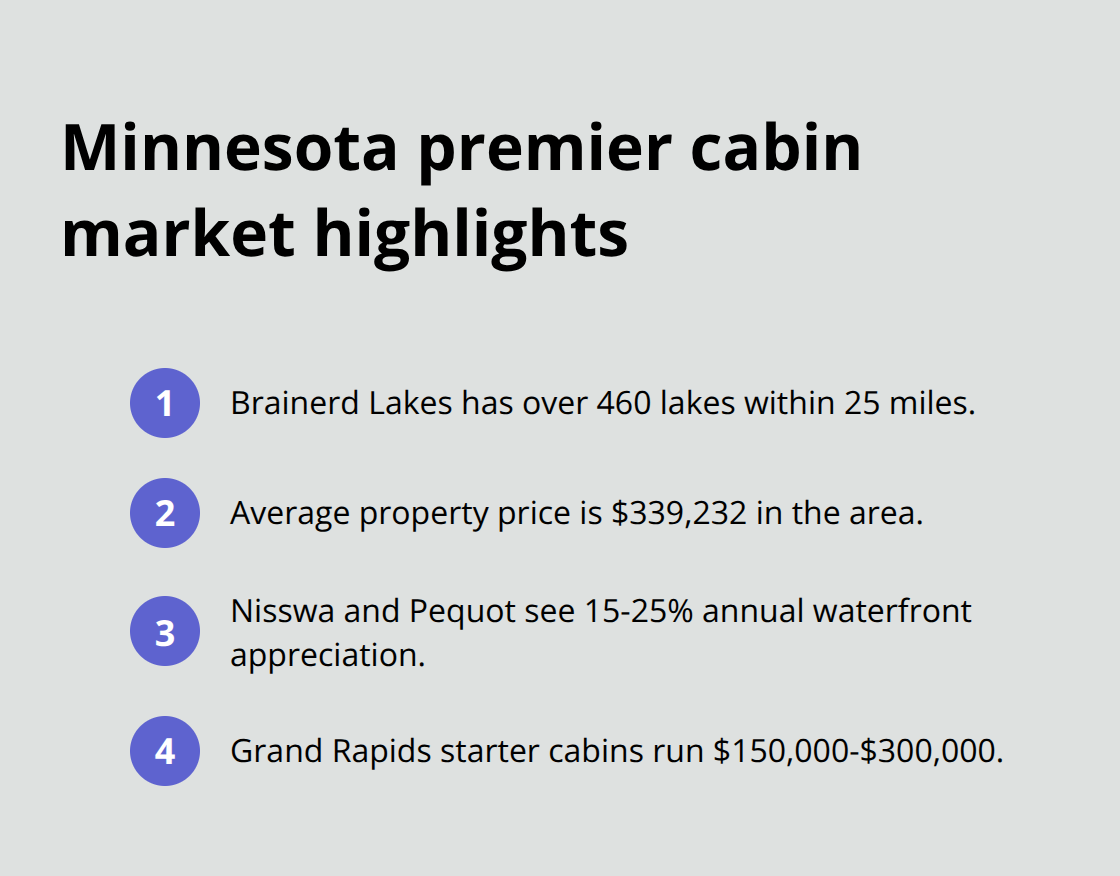
The Brainerd Lakes area dominates Minnesota’s cabin market with over 460 lakes within a 25-mile radius. Properties here average $339,232 according to recent market data, which makes this region accessible compared to premium lakefront markets. Nisswa and Pequot Lakes deliver the strongest appreciation rates, with waterfront values that climb 15-25% annually. The Grand Rapids region provides better entry-level options, with starter cabins between $150,000-$300,000, though inventory remains tight in this price range.
Current Market Conditions
Minnesota’s cabin market shifted dramatically in 2025 and created a balanced environment with 15% more transactions than previous years. Median lake home prices hit $220,000 in April, while quality lakefront properties range from $300,000-$500,000. Mortgage rates stabilized around 6.1-6.2% and give buyers predictable costs. Fall and winter purchases offer significant advantages with less competition and motivated sellers who negotiate more readily.
Seasonal vs Year-Round Properties
Year-round cabins require robust heat systems, insulated foundations, and winterized plumbing (typically adding $30,000-$50,000 to construction costs). Seasonal cabins offer lower maintenance expenses but limit rental income potential to summer months only. Properties within two hours of Twin Cities command premium prices due to weekend accessibility, while remote locations offer better value but reduced resale appeal.
Rental Income Potential
Buyers who plan rental income should target year-round properties near popular destinations like Mille Lacs Lake or Lake Pepin, where occupancy rates remain strong through winter months. These locations provide consistent revenue streams and attract guests year-round. Professional property management services can maximize your rental returns through marketing, maintenance, and guest services. The improved inventory means buyers can select properties based on specific location and feature preferences rather than settle for available options.
With location factors clear, the next step involves evaluating the physical condition and essential features that determine your cabin’s long-term value and enjoyment.
What Makes a Cabin Worth Buying
Access Roads and Emergency Services
Minnesota cabin buyers must prioritize year-round road access before anything else. Properties with private roads often face significant annual maintenance costs that owners split among neighbors. Gravel roads require regular grading and snow plowing, while seasonal access roads become impassable during spring thaw periods (lasting 4-6 weeks). Emergency vehicle access determines insurance rates and response times. Fire departments require minimum 20-foot road widths and weight capacity for their trucks. Properties more than 5 miles from the nearest fire station face higher insurance premiums.
Critical Infrastructure Assessment
Well water systems demand immediate attention during cabin purchases. Shallow wells under 100 feet often fail during drought years, while artesian wells provide reliable water but cost $8,000-$12,000 to install. Test existing wells for bacteria, nitrates, and iron levels before closing. Septic systems require professional inspection since replacement costs range from $15,000-$25,000 depending on soil conditions and setback requirements from water bodies.
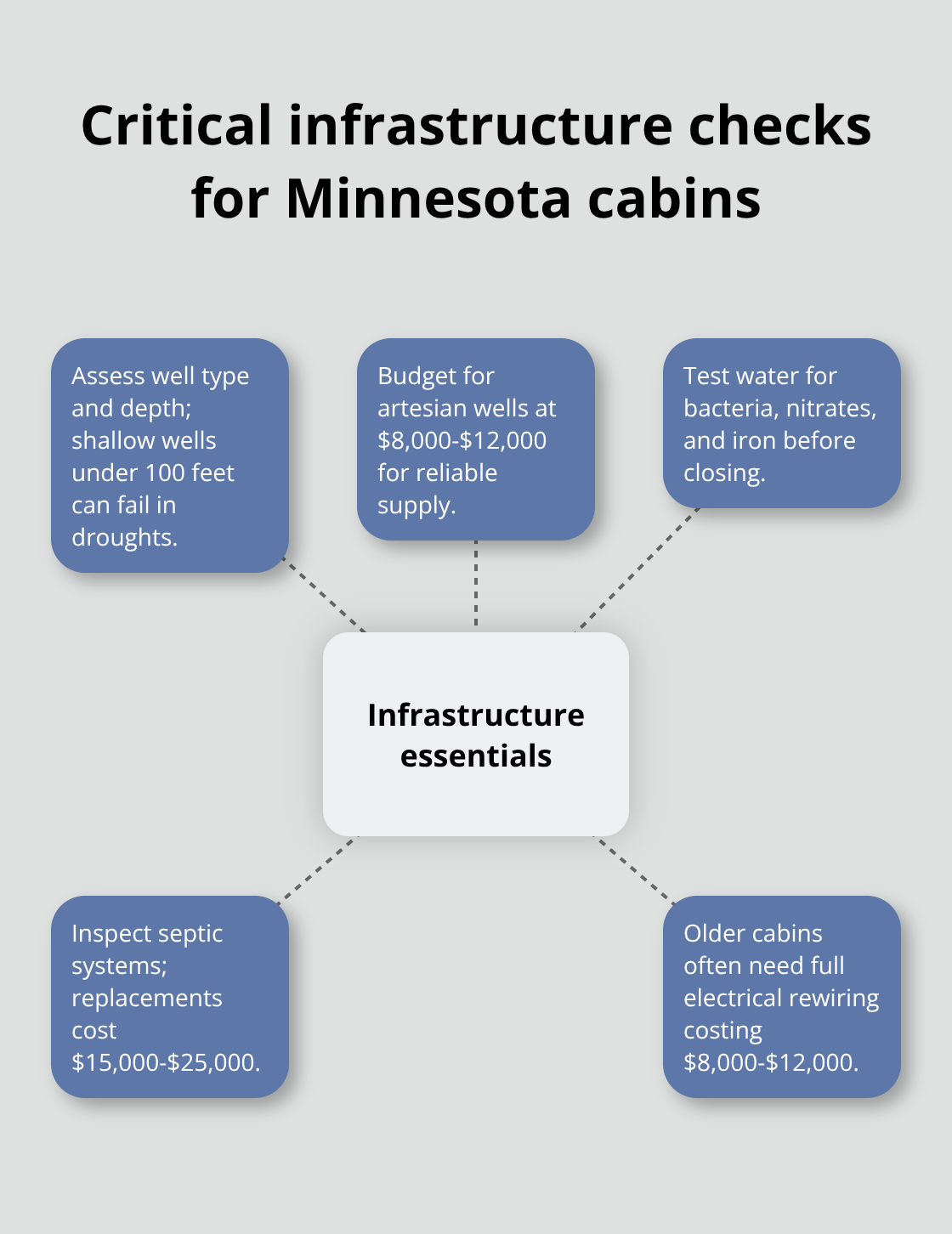
Electrical systems in older cabins frequently need complete rewiring to handle modern appliances and meet current codes (budget $8,000-$12,000 for electrical upgrades in cabins built before 1980).
Foundation and Structural Priorities
Inspect crawl spaces and basements for moisture damage, foundation cracks, and pest intrusion. Minnesota’s freeze-thaw cycles create foundation movement that costs $10,000-$20,000 to repair properly. Roof conditions directly impact heating costs and structural integrity. Metal roofs last 40-50 years but cost twice as much as asphalt shingles. Check for ice dam damage along eaves and valleys where most leaks originate. Heating systems require special attention since propane costs average $2.50-$3.00 per gallon in remote areas, making efficient systems essential for year-round properties.
Once you understand these physical property factors, the next step involves securing appropriate financing and navigating the legal requirements that make cabin ownership possible.
How Much Does Cabin Financing Actually Cost
Down Payment and Credit Requirements
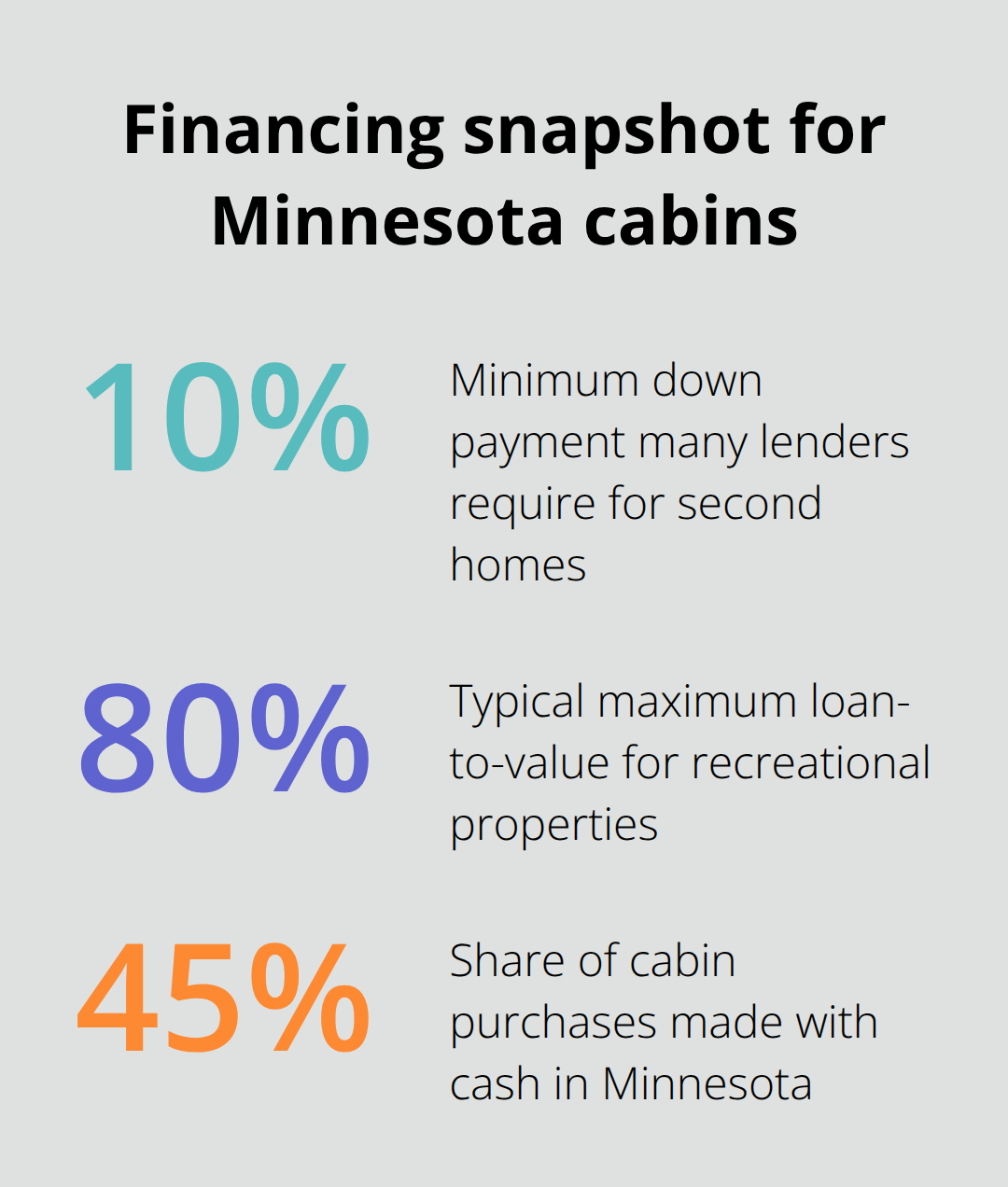
Cabin mortgages demand stricter requirements than primary home loans. Lenders require at least 10% down payments and credit scores above 640. Second home interest rates run 0.5-1% higher than primary residence rates, which puts current cabin loan rates between 7.1-8.2%. Conventional loans cap at 80% loan-to-value ratios for recreational properties. Jumbo loans above $766,550 require 25-30% down payments. Cash purchases dominate Minnesota’s cabin market at 45% of transactions and give cash buyers significant advantages over financed offers.
Annual Property Costs
Property taxes on Minnesota cabins average $2,800-$4,200 annually for properties valued at $300,000-$500,000. Lakefront properties face higher assessment rates than inland cabins. Homeowners insurance costs $1,200-$2,800 yearly for seasonal cabins, while year-round properties require $1,800-$3,500 coverage. Flood insurance adds $400-$800 annually for properties within 500 feet of water bodies (most lakefront cabins fall into this category).
HOA and Association Fees
Lake associations charge HOA fees that range from $200-$800 annually. These fees cover road maintenance, beach access, and common area upkeep. Some associations include boat launch privileges and winter road maintenance in their fee structure. Properties without association membership often face higher individual maintenance costs for private roads and water access.
Permit and Regulatory Costs
Local shoreland ordinances restrict construction within 150 feet of water. Property owners need permits for docks, decks, and vegetation removal that cost $150-$500 per permit. Township regulations often limit rental frequency to protect residential character. Some areas restrict rentals to 14-day minimum stays or seasonal-only operations, which impacts potential rental income for investment buyers.
Final Thoughts
Minnesota cabin buyers need systematic preparation and local expertise to succeed in today’s market. Define your complete budget with down payments, closing costs, and annual expenses like property taxes and insurance. Visit properties across different seasons to understand year-round conditions and maintenance demands.
Local real estate professionals who specialize in Minnesota cabins understand shoreland regulations, septic requirements, and seasonal market patterns that general agents miss. They identify properties with strong appreciation potential and help you avoid costly mistakes like inadequate well systems or foundation problems. These specialists know which areas offer the best value when you buy cabin MN properties (whether for personal use or investment income).
Professional management becomes essential when you purchase rental properties in Minnesota’s competitive market. We at Up North Property Management handle the marketing, maintenance, and guest services that maximize your investment returns. The improved 2025 market conditions create exceptional opportunities for prepared buyers who act with proper guidance.