

Vacation rental properties can generate impressive returns, but many investors struggle to determine realistic profit expectations. What is a good ROI on vacation rental property depends on multiple factors including location, management efficiency, and market conditions.
We at Up North Property Management have analyzed thousands of vacation rental investments across different markets. The answer isn’t straightforward, as returns vary dramatically between high-demand destinations and emerging markets.
How Do You Calculate Vacation Rental ROI
Return on investment for vacation rentals uses the formula: Net Annual Income divided by Total Investment multiplied by 100. Net annual income includes all rental revenue minus operational expenses like cleaning fees, maintenance costs, property management fees, insurance, and taxes. Total investment encompasses the property purchase price, closing costs, initial furniture expenses, and any renovation costs.
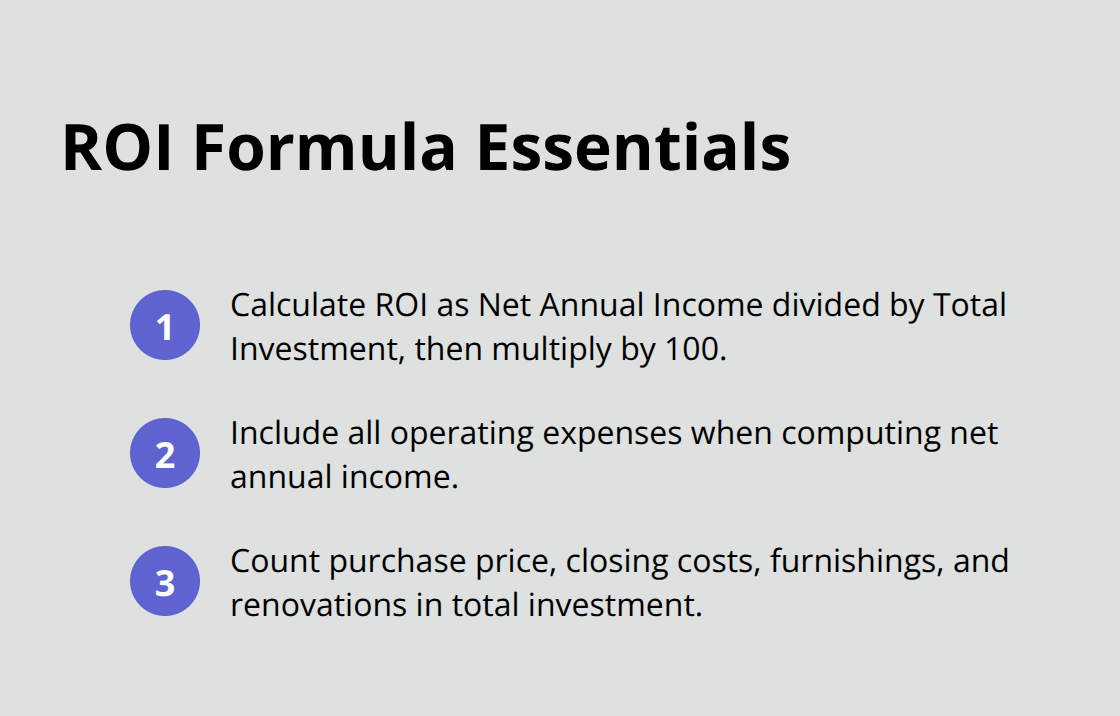
This calculation differs significantly from traditional real estate where investors often focus solely on property appreciation and basic rental income.
Essential Metrics Beyond Basic ROI
Revenue per Available Rental measures your property’s performance when you combine occupancy rates with average daily rates. The vacation rental software market was valued at $20.14 billion in 2024 and is expected to grow to $45.84 billion, indicating strong industry growth and the importance of optimized pricing strategies.
Cash-on-cash return becomes more relevant for leveraged properties. This metric measures annual pre-tax cash flow against total cash invested. Net Operating Income reveals true profitability after you cover all operational expenses but before debt service.
Cap rates help you compare different markets, with vacation rentals typically ranging from 6% to 12% depending on location demand.
Why Vacation Rentals Outperform Traditional Rentals
Vacation rentals generate substantially higher daily rates than long-term rentals. These properties often command 3-5 times more per night than monthly rental equivalents. Dynamic pricing allows owners to adjust rates based on demand, local events, and seasonal patterns (maximizing revenue potential during peak periods).
Properties in tourist destinations can achieve 15-20% ROI compared to traditional rentals that average 5-8% annually. However, vacation rentals require more intensive management including guest communication, frequent cleaning, and higher maintenance costs due to increased turnover rates.
Market Performance Variations
High-demand tourist destinations consistently deliver superior returns compared to emerging markets. Properties near major attractions or festivals can achieve ROI rates exceeding 20% in peak seasons. Markets with year-round appeal (like ski destinations with summer activities) provide more stable income streams than purely seasonal locations.
Understanding these performance variations helps investors identify which markets align with their ROI expectations and risk tolerance.
What Drives Your Vacation Rental Returns
Location Impact on Revenue Performance
Location stands as the single most powerful factor that determines vacation rental profitability. Properties within walking distance of major attractions command premium rates that can exceed $300 per night, while similar properties just five miles away struggle to reach $150. Properties near beaches, ski slopes, or national parks achieve occupancy rates above 80% compared to 45-60% for properties in secondary locations.
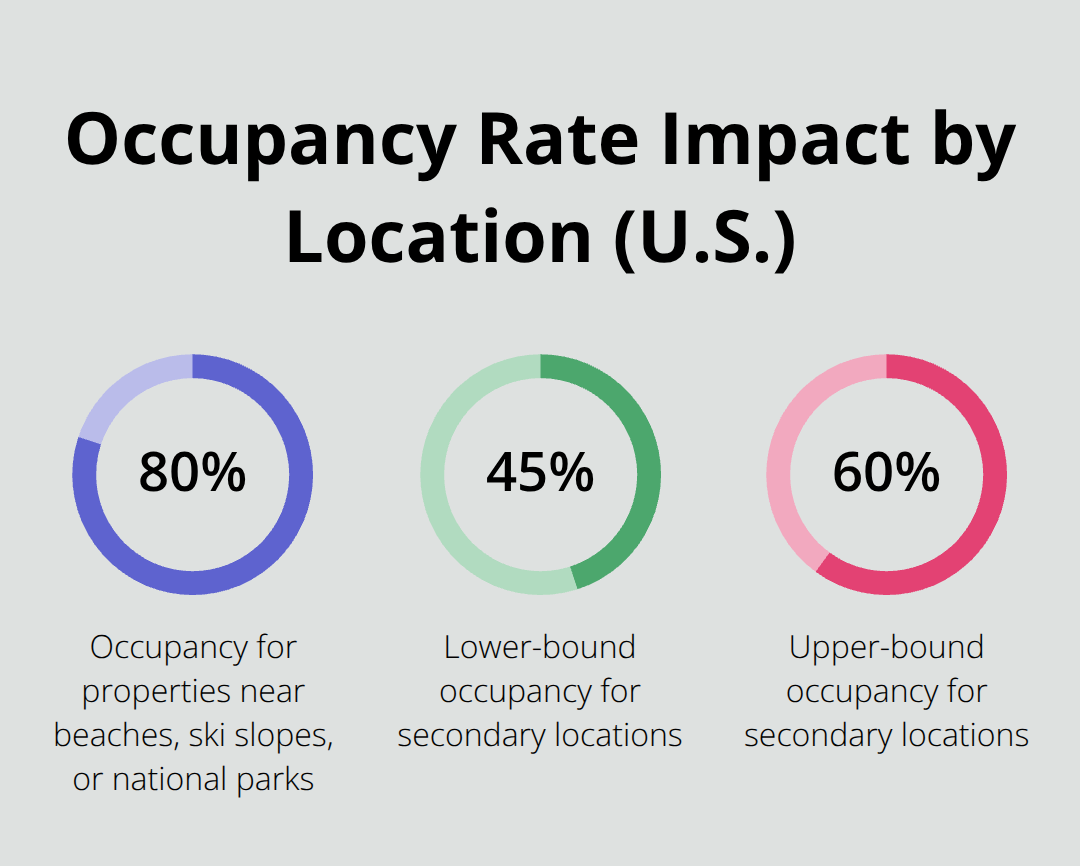
Market demand fluctuates dramatically based on proximity to airports, entertainment venues, and natural attractions. Properties within 30 minutes of major airports see 25% higher rates than remote locations. Seasonal destinations like ski resorts can generate 70% of annual revenue during peak months, making location selection the foundation of successful vacation rental investments.
Professional Management vs Self-Management
Professional management becomes non-negotiable for property owners who want to maximize returns. Self-managed properties typically underperform by 15-20% due to inefficient strategies and poor guest communication. Property managers implement dynamic rates, handle guest inquiries promptly, and maintain consistent quality standards that drive repeat bookings.
The difference between professional and amateur management shows up immediately in guest reviews and occupancy rates. Properties with professional oversight maintain higher average daily rates and achieve better seasonal performance across all market conditions.
Operational Costs That Affect Profitability
Operational costs directly impact your bottom line through multiple expense categories. Cleaning fees average $75-150 per turnover, while maintenance expenses range from 8-12% of gross revenue. Dynamic software subscriptions, insurance premiums, and utility costs add additional layers to your expense structure.
Properties with occupancy rates below 65% rarely achieve double-digit ROI regardless of location advantages. High-performance properties balance premium rates with consistent occupancy through strategic expense management and guest experience optimization.
These performance factors work together to create the foundation for realistic ROI expectations across different market segments.
What ROI Should You Expect From Your Vacation Rental
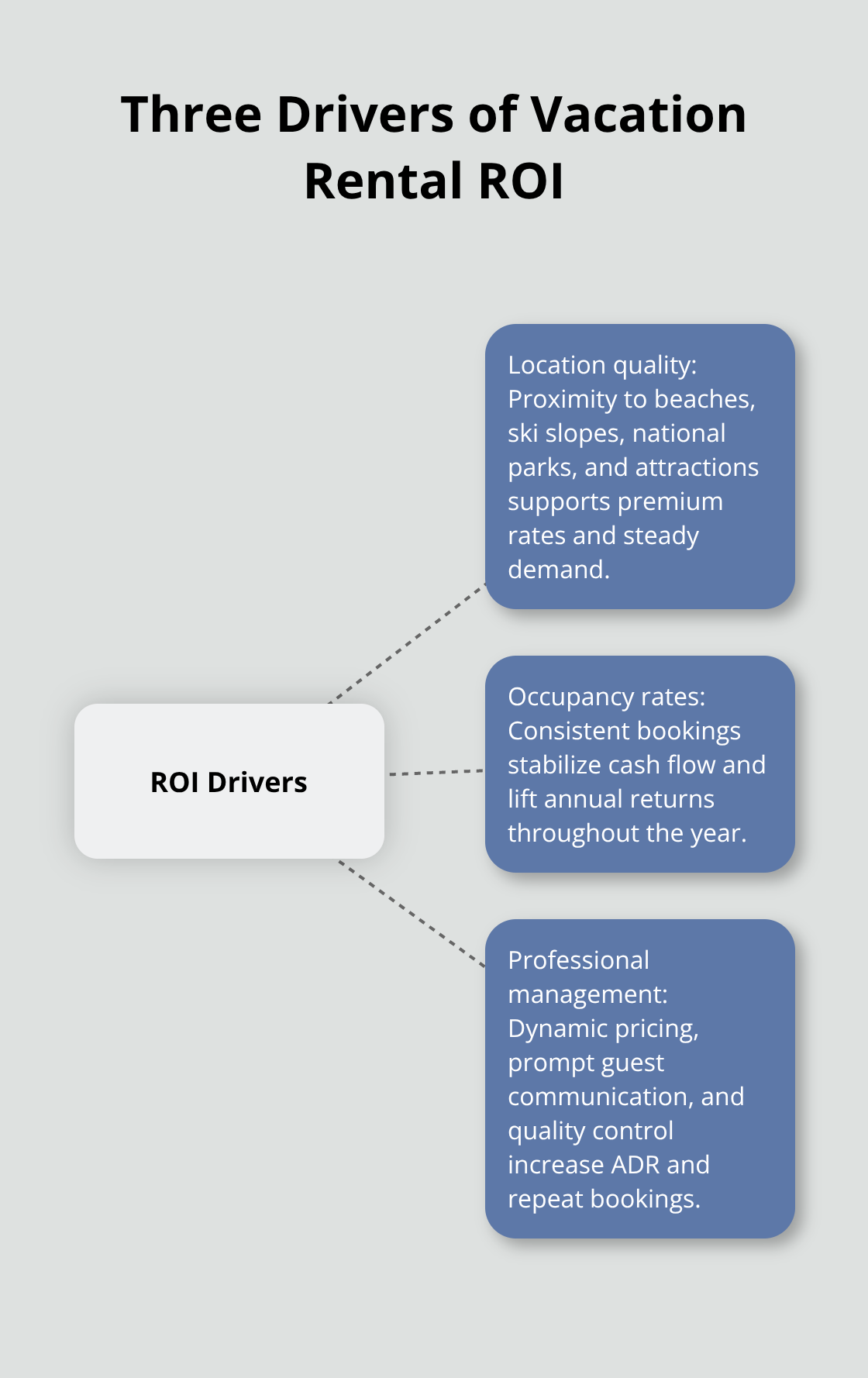
Vacation rental properties deliver ROI between 8% and 15% in most markets, with exceptional properties that reach 20% or higher. Properties in high-demand tourist destinations consistently outperform this range, while properties in new markets struggle to exceed single-digit returns. The difference between winners and losers comes down to three factors: location quality, occupancy rates, and professional management that maximizes revenue potential.
Top Markets Generate Superior Returns
Beach destinations, ski resorts, and properties near national parks achieve the highest returns due to consistent demand and premium rates. Coastal properties in Florida and California regularly exceed 15% ROI, while mountain destinations like Colorado ski towns deliver 12-18% returns during peak seasons. Properties within one mile of major attractions command premium rates compared to similar properties five miles away.
Urban vacation rentals near downtown areas or convention centers maintain steady occupancy year-round and generate 10-14% ROI with less seasonal volatility. Markets with multiple demand drivers perform better than single-season destinations (such as beach towns that also offer cultural attractions).
Timeline for Profitability
Most vacation rental investments achieve positive cash flow within 18 months when owners manage them properly and locate them in strong markets. Properties with professional management reach profitability faster due to optimized rates and higher occupancy rates. Properties that owners manage themselves typically require 30-36 months to break even due to learning curves and suboptimal performance.
Cash purchases break even faster than leveraged properties, but financing can amplify returns once positive cash flow stabilizes. Properties that require significant renovations or furniture investments need additional 6-12 months to recover initial costs and achieve consistent profitability.
Performance Benchmarks by Property Type
Single-family homes near attractions typically achieve 12-18% ROI with occupancy rates above 75%. Condos in resort areas generate 8-12% ROI but require less maintenance and management oversight. Luxury properties with premium amenities can exceed 20% ROI in high-demand markets (though they require higher initial investments and operational costs).
Properties that offer unique experiences or locations consistently outperform standard vacation rentals by 3-5 percentage points in ROI calculations.
Final Thoughts
What is a good ROI on vacation rental property depends on your location, management approach, and market conditions. Properties in high-demand destinations achieve 15-20% returns, while properties in new markets typically deliver 8-12%. Strategic location selection, professional management, and consistent occupancy above 70% separate successful investments from poor performers.
Professional property management makes the difference between mediocre and exceptional returns. Self-managed properties consistently underperform by 15-20% due to poor pricing strategies and inadequate guest communication. Property managers implement dynamic pricing, maintain quality standards, and handle operational complexities that maximize your revenue potential.
We at Up North Property Management specialize in vacation rental management for Northern Minnesota properties. Our marketing strategies, maintenance services, and guest support help homeowners achieve income while guests experience memorable vacations in the Northern Lakes Area. Market research, financial analysis, and experienced management partners who understand local demand patterns will optimize your property’s performance from day one.