

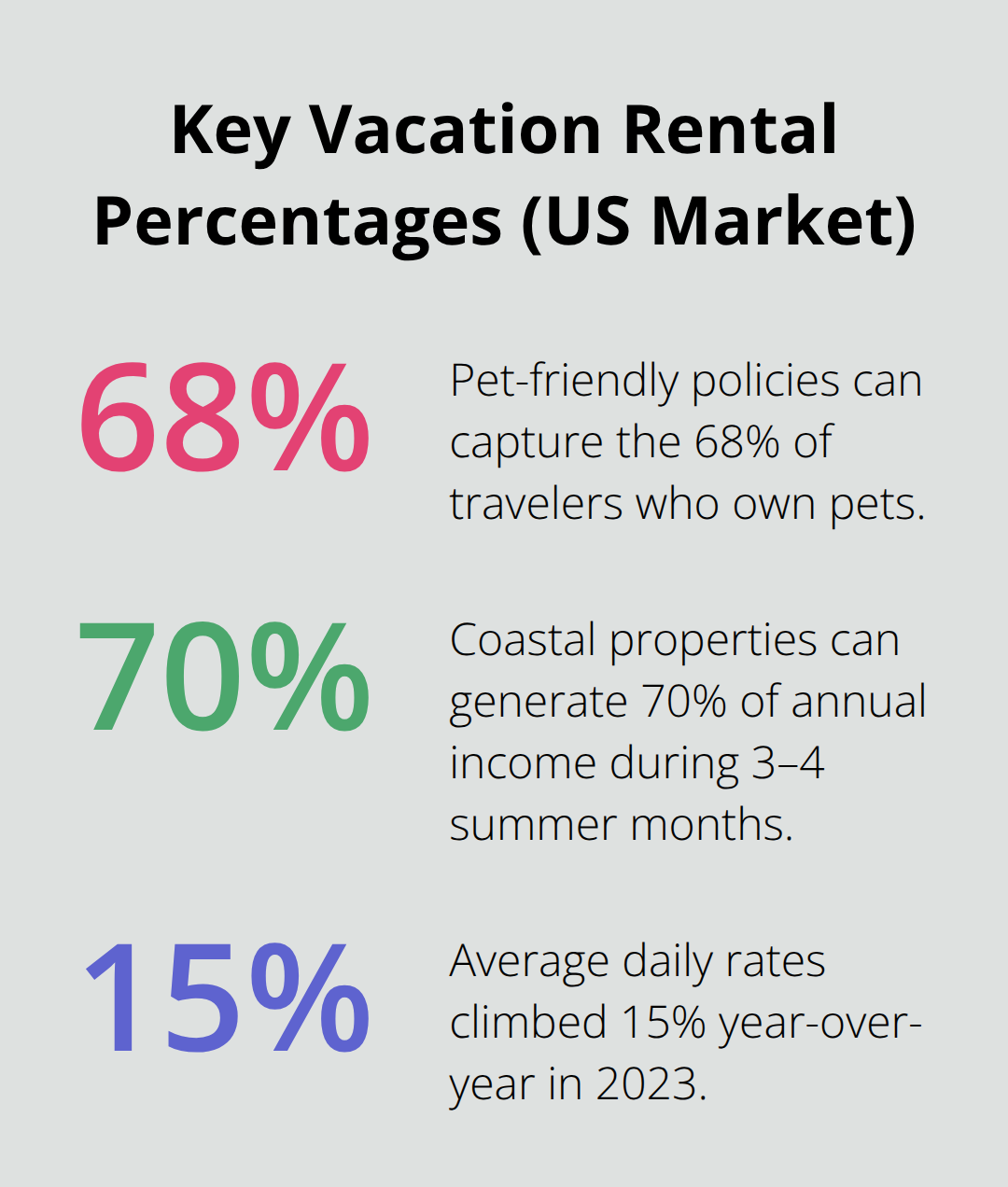
Vacation rental properties can generate substantial income while building long-term wealth. The short-term rental market reached $87 billion in 2023, with average daily rates climbing 15% year-over-year.
At Up North Property Management, we see investors asking “should I buy a vacation rental property?” more frequently as traditional investments underperform. The answer depends on your risk tolerance and management capacity.
How Much Money Can Vacation Rentals Generate?
Vacation rental properties produce three distinct income streams that make them more profitable than traditional long-term rentals. Airbnb research shows hosts earn an average of $13,800 annually, but properties in high-demand tourist areas generate significantly more. Springfield, Illinois properties achieve 8.02% cap rates with $147,350 median home prices, while St. Petersburg, Florida rentals produce $83,964 annual revenue with 6.4% cap rates. These numbers demonstrate why vacation rentals consistently outperform traditional rental investments.
Multiple Revenue Streams Beyond Nightly Rates
Smart vacation rental owners maximize income through fees for pets, extra guests, and premium amenities. Properties with hot tubs command 20-30% higher rates, while pet-friendly policies capture the 68% of travelers who own pets. Event-driven demand near convention centers and stadiums creates revenue spikes that can double monthly income during peak periods (particularly during major conferences or sporting events).
Tax Benefits That Boost Net Returns
Vacation rental owners deduct mortgage interest, property taxes, and depreciation when properties rent more than 14 days annually. The 50% rule estimates that expenses consume half your rental income, but tax deductions on maintenance, utilities, and property management fees reduce this burden. Professional tax consultation maximizes these benefits since vacation rental tax treatment differs significantly from primary residence rules.
Property Values Rise Faster in Tourist Markets
Tourist destinations see accelerated property appreciation compared to regular residential markets. Coastal areas and mountain locations experience 5-8% annual appreciation rates, while urban vacation rentals near cultural attractions maintain steady 4-6% growth. This appreciation compounds rental income returns and creates dual wealth-building opportunities that traditional investments cannot match.
Revenue Varies by Market and Management Quality
Market selection determines your income potential more than any other factor. Rockford, Illinois properties generate over $58,000 annually with 7.16% cap rates, while Fairbanks, Alaska achieves 66.5% occupancy rates despite seasonal challenges. Professional management companies optimize revenue through dynamic pricing strategies and superior guest experiences, though they typically charge 14-35% of rental income for their services.
However, even the most profitable vacation rental markets come with significant challenges that can quickly erode these attractive returns.
What Are the Hidden Costs of Vacation Rentals?
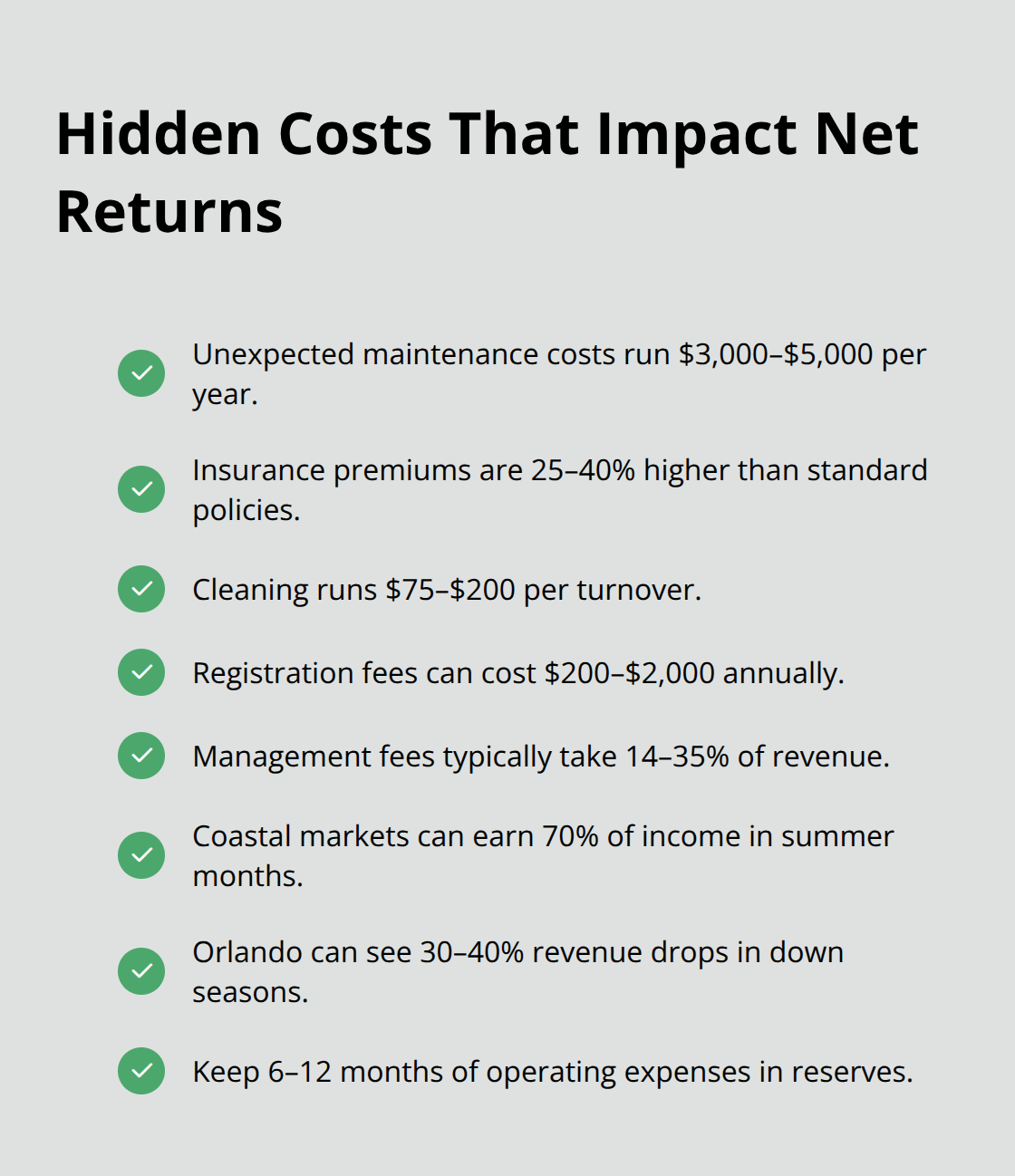
Vacation rental ownership requires constant attention to property management details that traditional landlords never encounter. Emergency repairs strike at the worst times – when guests arrive or during peak season weekends. Property owners spend $3,000-5,000 annually on unexpected maintenance issues like HVAC failures, plumbing emergencies, and appliance breakdowns that demand immediate professional response. Insurance costs run 25-40% higher than standard homeowners policies due to increased liability exposure and property damage risks from rotating guests.
Seasonal Income Swings Create Cash Flow Problems
Tourism markets experience dramatic revenue fluctuations that devastate unprepared investors. Coastal properties generate 70% of annual income during 3-4 summer months, which leaves owners scrambling to cover mortgage payments during off-season periods. Mountain ski destinations face similar challenges with winter peaks and summer valleys. Even steady markets like Orlando see 30-40% revenue drops during hurricane season and economic downturns. Smart investors maintain 6-12 months of operating expenses in reserve accounts to survive these inevitable income gaps.
Regulations Change Without Warning
Local governments increasingly restrict short-term rentals through licensing requirements, occupancy limits, and outright bans that can eliminate your investment overnight. Miami Beach prohibits vacation rentals in single-family homes and many multi-family buildings in certain zoning districts, while New York City implemented regulations that effectively banned most short-term rentals. Registration fees range from $200-2,000 annually, plus mandatory inspections and compliance costs. Property management companies stay current on regulatory changes, but self-managed owners often discover violations only after they receive hefty fines or cease-and-desist orders.
Guest Damage and Turnover Expenses
Each guest checkout triggers cleaning fees, supply restocking, and damage assessments that traditional rentals avoid. Professional cleaning costs $75-200 per turnover (depending on property size), while linens and amenities require constant replacement. Guest damages range from minor issues like broken dishes to major problems like furniture destruction or unauthorized parties. Security deposits rarely cover actual damage costs, and pursuing guests for additional compensation proves time-consuming and often unsuccessful.
Despite these significant challenges, successful vacation rental investors focus on specific strategies that minimize risks while maximizing returns.
What Determines Vacation Rental Success?
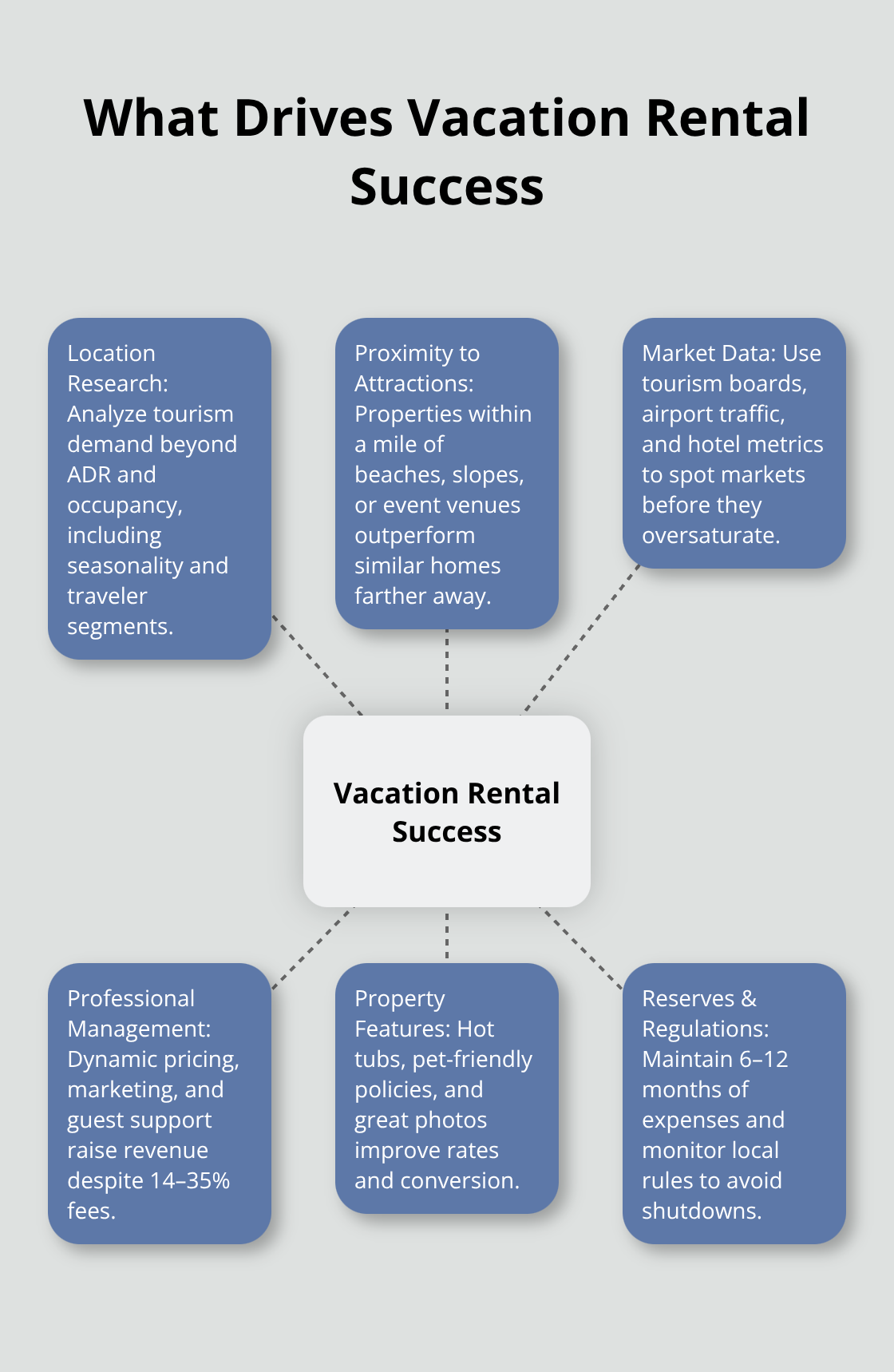
Location research demands analysis of tourism data beyond basic occupancy rates and average daily rates. AirDNA market analysis provides comprehensive guidance for thorough short-term rental market analysis to guide investments and maximize returns. Properties within one mile of beaches, ski slopes, or major event venues generate higher revenue than similar properties three miles away. Tourism boards data, airport passenger counts, and hotel performance metrics help identify markets before they become oversaturated. Springfield Illinois properties achieve strong cap rates because they capture business travelers and medical tourism from nearby hospitals. Fairbanks Alaska maintains high occupancy despite harsh winters because aurora tourism and military base proximity create consistent demand.
Property Features That Generate Premium Revenue
Smart property features focus on experiences rather than basic amenities. Hot tubs increase rates significantly and command higher nightly rates according to rental platform data. Pet-friendly policies capture travelers with pets, which allows owners to charge pet fees per stay. High-speed internet and dedicated workspaces became non-negotiable after remote work trends emerged. Properties with game rooms, fire pits, or unique architectural elements photograph better for listings and generate more social media shares. Professional photography increases inquiries compared to amateur photos.
Professional Management Maximizes Returns
Professional management companies optimize revenue through dynamic pricing algorithms that adjust rates based on local events, weather patterns, and competitor analysis. Self-managed properties typically achieve lower occupancy rates because owners lack pricing expertise and guest service systems. Management fees range from 14-35% of revenue, but quality companies increase gross income through superior marketing and operational efficiency. Evaluate management companies based on their technology platforms, local market knowledge, and response times rather than just fee structures. Properties managed by experienced companies maintain higher guest satisfaction scores and avoid costly regulatory violations that can shut down operations overnight.
Final Thoughts
The question “Should I buy a vacation rental property?” demands honest assessment of your financial capacity and management commitment. Properties in markets like Springfield, Illinois generate 8.02% cap rates, while St. Petersburg rentals produce $83,964 annually. These returns exceed traditional investments, but success requires active involvement or professional management.
Vacation rentals work best for investors who understand tourism markets and can handle seasonal income fluctuations. Properties need 6-12 months of operating expense reserves to survive off-season periods. Regulatory changes can eliminate rental income overnight (making location research essential before purchase).
We at Up North Property Management see successful investors focus on prime tourist locations, distinctive property features, and professional management systems. Our vacation rental management services in Northern Minnesota handle marketing, bookings, cleaning, and maintenance while maximizing owner income. Analyze specific markets using tourism data and occupancy rates, calculate total ownership costs including insurance and management fees, then consider your risk tolerance for seasonal income swings and regulatory changes.