

A solid vacation rental property agreement protects both owners and guests from costly disputes. Without proper documentation, property owners face financial risks and legal headaches.
We at Up North Property Management have seen too many owners learn this lesson the hard way. The right agreement sets clear expectations and safeguards your investment.
Key Components of Vacation Rental Property Agreements
Your vacation rental agreement needs three non-negotiable elements to protect your property and income. The property description section must list every amenity, from WiFi speeds to kitchen appliances, because vague descriptions lead to disappointed guests and negative reviews.
Property Details That Prevent Disputes
Include square footage, bedroom configurations, and parking availability in your agreement. Mismatched expectations about amenities create the majority of guest disputes and critical red flags in guest reviews. List what guests cannot access too – your personal storage areas, locked rooms, or off-limits outdoor spaces. Specify exact WiFi speeds (minimum 25 Mbps for most guests), kitchen appliance brands, and entertainment system details. This level of detail protects you from unreasonable guest complaints.
Payment Structure That Reduces Risk
Structure your payment schedule with a 50% deposit at booking and the remaining balance 30 days before arrival. Security deposits are usually due at least 30 days prior to arrival to ensure funds have cleared before guest arrival. Include your security deposit amount – typically $200-500 for most properties – and specify exactly what triggers deductions. Late payment fees should start at $50 minimum to discourage delays. Your cancellation policy needs specific deadlines: full refund 60+ days out, 50% refund 30-59 days, and no refund within 30 days of arrival.
House Rules That Actually Work
Maximum occupancy limits matter more than you think. Set it at the legal fire code limit, not your comfort preference, because insurance companies scrutinize this during claims. No-smoking policies should include vaping and marijuana, with $500 minimum cleaning fees for violations. Pet policies work best when you charge $75 per pet plus a $200 deposit rather than blanket bans.
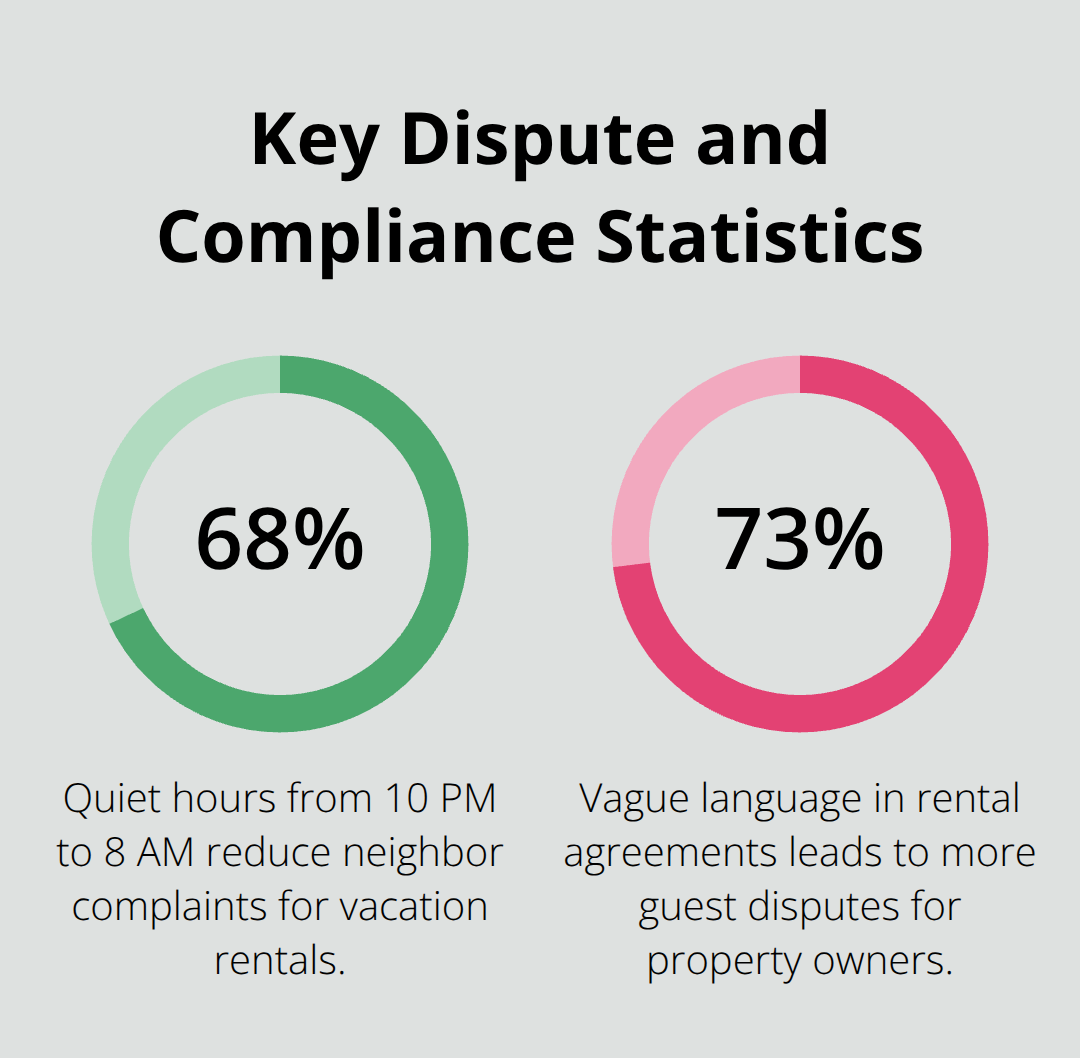
Quiet hours from 10 PM to 8 AM reduce neighbor complaints by 68% according to vacation rental management data.
Enforcement Mechanisms That Matter
Include specific consequences for each rule violation, from warnings to immediate eviction. Document violation procedures clearly – first offense warnings, second offense fees, third offense removal. This systematic approach gives you legal standing when problems arise. Your agreement becomes worthless without clear enforcement terms that courts will uphold.
These foundational elements create the framework for protection, but legal safeguards require additional layers of security that go beyond basic terms and conditions.
Legal Protections for Property Owners
Property owners need three layers of legal protection beyond basic rental agreements. Standard homeowner’s insurance excludes short-term rental coverage and leaves you exposed to massive liability claims. Commercial short-term rental insurance costs $1,200-2,500 annually but covers guest injuries, property damage, and lost rental income that regular policies won’t touch.
State Farm and Farmers Insurance offer specialized STR policies, while VRBO partners with CBIZ for comprehensive coverage. Your agreement must require guests to carry travel insurance and explicitly state that you’re not liable for their personal property losses.
Security Deposits That Actually Protect You
Set security deposits at $500 minimum for properties under $300/night and $1,000+ for luxury rentals. Airbnb’s Host Guarantee caps at $1 million but excludes cash, jewelry, and intentional damage – gaps your security deposit must fill.
Document pre-arrival property conditions with timestamped photos and require guests to acknowledge receipt within 24 hours. Withhold deposits for excess fees over $150, damaged linens over $50, or any violations. Return deposits within 14 days in most states to avoid legal penalties (California requires returns when the tenant moves out).
Use separate escrow accounts for deposits to maintain legal compliance and guest trust.
Cancellation Policies That Minimize Revenue Loss
Implement strict cancellation policies with tiered refund structures. Full refunds 60+ days out, 50% refunds 30-59 days, and zero refunds within 30 days protect your calendar from last-minute cancellations.
Weather-related cancellations should only trigger refunds for named storms or government-issued evacuation orders – not general bad weather complaints. Charge rebooking fees of $75-150 for any changes within 30 days of arrival.
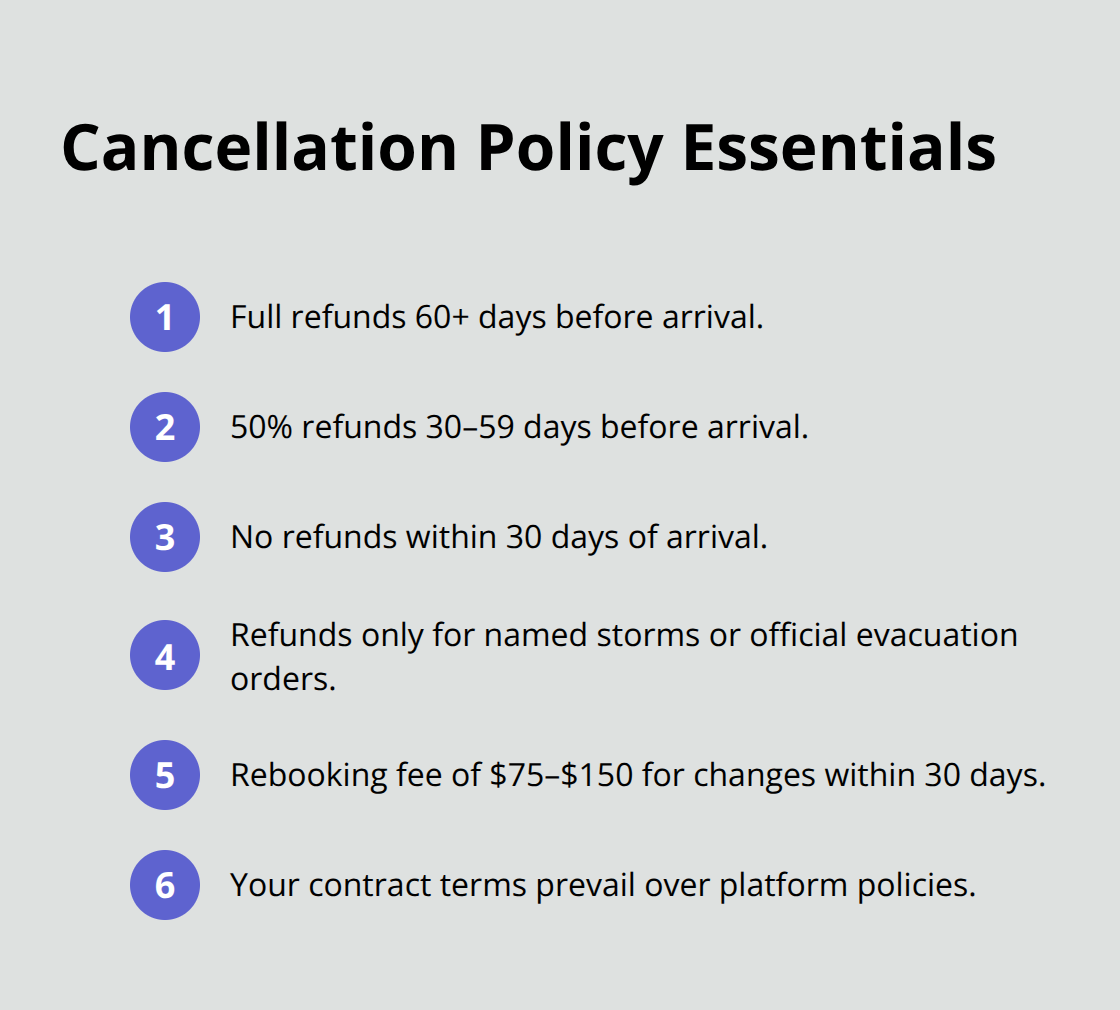
Your agreement must specify that platform policies don’t override your contract terms, which gives you stronger legal standing than reliance solely on Airbnb or VRBO protections.
Insurance Requirements That Close Coverage Gaps
Require guests to acknowledge they understand your insurance limitations in writing. Standard policies exclude coverage for guest personal property, so guests need their own travel insurance or renters coverage extensions.
Document all property damage immediately with photos and written descriptions. This documentation becomes essential when insurance companies evaluate claims or when you need to pursue legal action for damages that exceed your security deposit.
Even with solid legal protections in place, many property owners still make costly mistakes in their agreements that leave them vulnerable to disputes and financial losses.
Common Agreement Mistakes to Avoid
Property owners lose thousands annually from preventable agreement mistakes that create legal loopholes and guest exploitation opportunities. Vague language in rental agreements leads to 73% more disputes according to vacation rental management industry data, while unclear terms cost owners an average of $2,400 per incident in lost revenue and legal fees.
Generic Language That Backfires
Property owners write “check-out is at 11 AM” instead of “checkout occurs at exactly 11 AM Eastern Time” and allow guests to argue time zones. Your cleaning fee covers standard cleaning transforms into a meaningless phrase when guests leave excessive messes because you never defined standard.
Maximum occupancy of 8 people fails when you don’t specify that infants count toward limits and fire marshals cite overcrowding violations. Replace all general terms with measurable specifics: WiFi speeds must maintain 50 Mbps minimum, quiet hours run from 10:00 PM to 8:00 AM sharp, and parking accommodates exactly 2 vehicles in designated spots only.
Damage clauses that mention reasonable wear and tear without definition create disputes over every scuff mark and stain.
Inadequate Financial Protection
Security deposits under $300 fail to cover real damage costs, while deposits over local legal limits get thrown out in court proceedings. Most states cap security deposits at 1-2 months rent equivalent, but vacation rentals operate under different rules that vary by municipality.
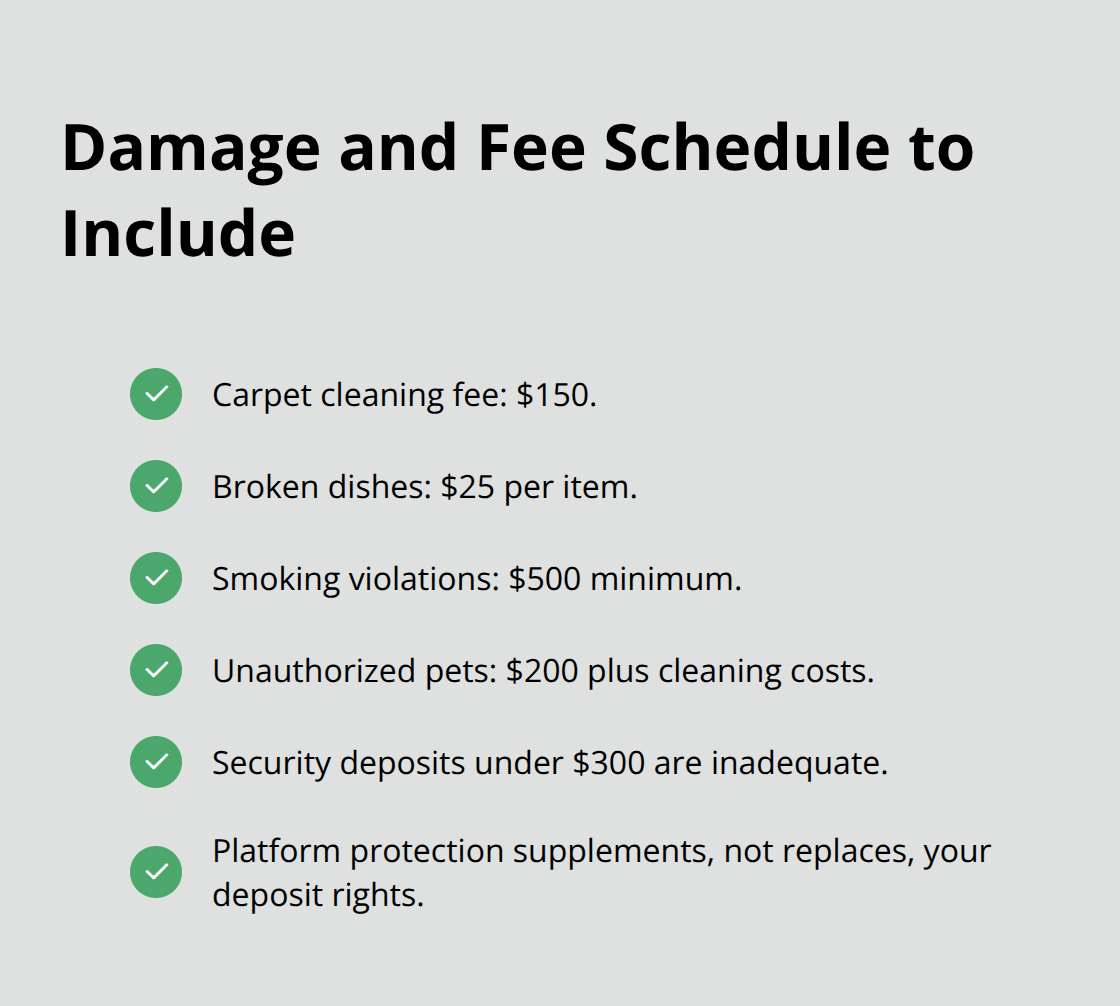
Include specific damage fee schedules: carpet cleaning $150, broken dishes $25 per item, smoking violations $500 minimum, and unauthorized pets $200 plus cleaning costs. Your agreement must specify that platform damage protection supplements but doesn’t replace your security deposit rights.
Missing Local Compliance Requirements
Property owners ignore local tax collection requirements in cities like San Francisco or New York and trigger $484 per day penalties per residential unit. Operating without proper permits results in immediate shutdown orders in over 200 US municipalities (including popular vacation destinations like Miami Beach and Charleston).
Noise ordinances vary dramatically between jurisdictions – what works in rural areas fails in urban settings where quiet hours start at 9 PM instead of 10 PM. Research your specific city’s short-term rental regulations before finalizing agreement terms.
Final Thoughts
A comprehensive vacation rental property agreement protects your investment and prevents costly disputes that drain profits. Property owners who skip detailed agreements face average losses of $2,400 per incident from preventable conflicts and legal complications. The vacation rental market reached $88.26 billion in 2024, which makes professional management more valuable than ever.
We at Up North Property Management handle the complexities of agreement creation, legal compliance, and guest relations while you collect rental income. Our full-service approach covers marketing, bookings, cleaning, and maintenance across Northern Minnesota properties. We understand local regulations and craft agreements that protect your interests while delivering memorable guest experiences.
Your next step involves choosing between self-management headaches or professional support that handles every detail. Up North Property Management transforms vacation rental ownership from a stressful side business into passive income generation (without the constant worry about legal compliance). Contact us to discuss how our comprehensive services protect your property investment and eliminate management burdens.