
Starting a vacation rental business requires a solid foundation built on careful planning and strategic thinking. A sample business plan for vacation rental property serves as your roadmap to profitability.
We at Up North Property Management have seen countless property owners succeed by following structured business planning approaches. This guide walks you through creating a comprehensive plan that covers market analysis, financial projections, and operational strategies.
What Makes a Vacation Rental Business Plan Effective
Market Research That Drives Decisions
Market analysis forms the backbone of your vacation rental success. Start with hyperlocal research within a 5-mile radius of your property location. Analyze competitor rates on Airbnb and VRBO monthly – properties similar to yours should guide your baseline rates.
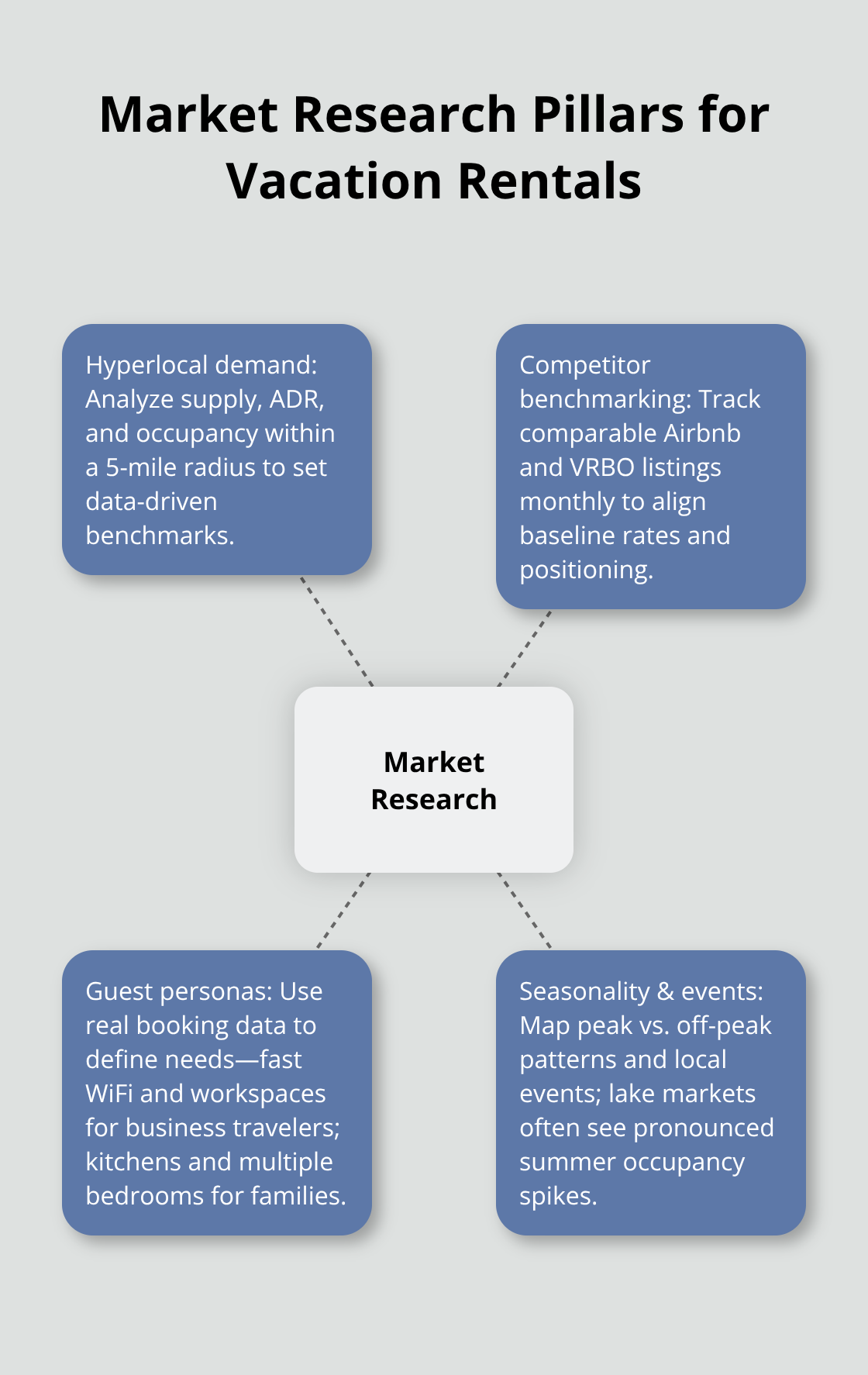
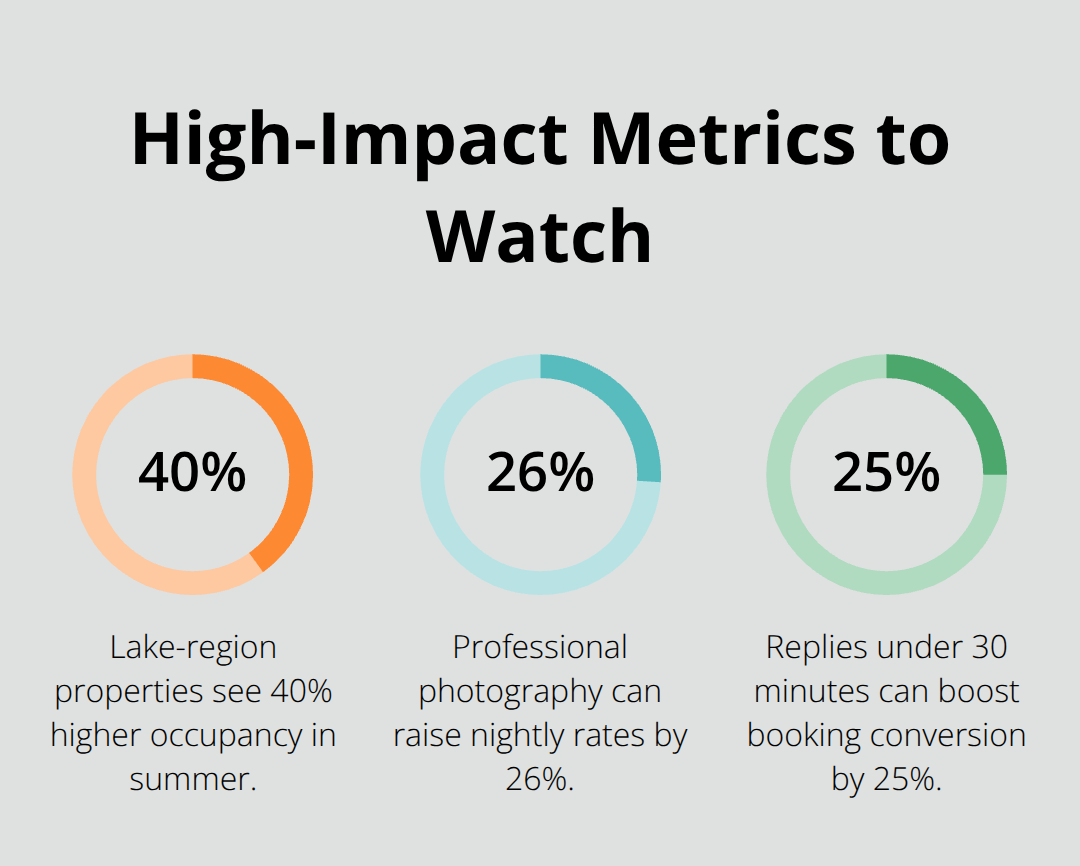
The vacation rental market is expected to reach US$107.87bn in 2025, with 1.11bn users by 2030, and a 6.70% CAGR. Focus on guest personas through actual data rather than assumptions. Business travelers need fast WiFi and workspace areas, while families prioritize kitchens and multiple bedrooms. Study seasonal patterns in your market – properties in lake regions see 40% higher occupancy during summer months. Track average daily rates during peak seasons versus off-peak periods to understand revenue fluctuations.
Financial Models for Profitable Operations
Your financial projections must include realistic occupancy rates based on local market data. The median monthly income for Airbnb rentals reaches $3,196 compared to $1,787 for traditional rentals according to Mashvisor research. Calculate total startup costs (property acquisition, renovation expenses, furnishing costs, and initial marketing budget). Monthly expenses should account for cleaning services, utilities, property management fees, insurance, and maintenance reserves. Dynamic pricing strategies can optimize revenue – AI-powered tools and smart automation are driving profitability, with dynamic pricing systems increasing RevPAR by +10.7%. Project cash flow for 12-18 months ahead, factor in seasonal demand variations and local events that drive bookings.
Operations Framework for Consistent Service
Operations strategy determines your property’s long-term viability. Define your management approach – self-managed properties require 10-15 hours weekly for guest communication, cleaning coordination, and maintenance oversight. Professional property management companies typically charge 20-30% of gross revenue but handle all operations. Establish standard procedures for check-in processes, cleaning protocols, and guest communication timelines. Response times under 30 minutes increase conversion rates by 25%. Create maintenance schedules for HVAC systems, appliances, and property exteriors to prevent costly emergency repairs. Document all processes in detail to maintain consistency whether you manage personally or delegate responsibilities.
These foundational elements prepare you to tackle the financial framework that transforms your business plan from concept to profitable reality.
Creating Your Financial Framework
Your vacation rental startup costs vary dramatically based on property condition and location. Property acquisition represents your largest expense – expect $200,000 to $800,000 for lake properties in Northern Minnesota, depending on size and waterfront access. Renovation costs typically run 15-25% of purchase price for older properties. Complete furnishing setups require $15,000 to $40,000 including beds, sofas, kitchen equipment, and linens. Initial marketing budget should include professional photography at $800-1,500, platform listing fees, and first-month advertising spend of $2,000-3,000. Legal and licensing costs add another $1,500-3,000 for permits, business registration, and insurance setup.
Monthly Operating Expenses That Shape Profitability
Monthly operating expenses directly affect your cash flow projections. Professional cleaning services cost $80-150 per turnover, with properties averaging 12-18 cleanings monthly during peak season. Utilities run $200-400 monthly depending on property size and season.
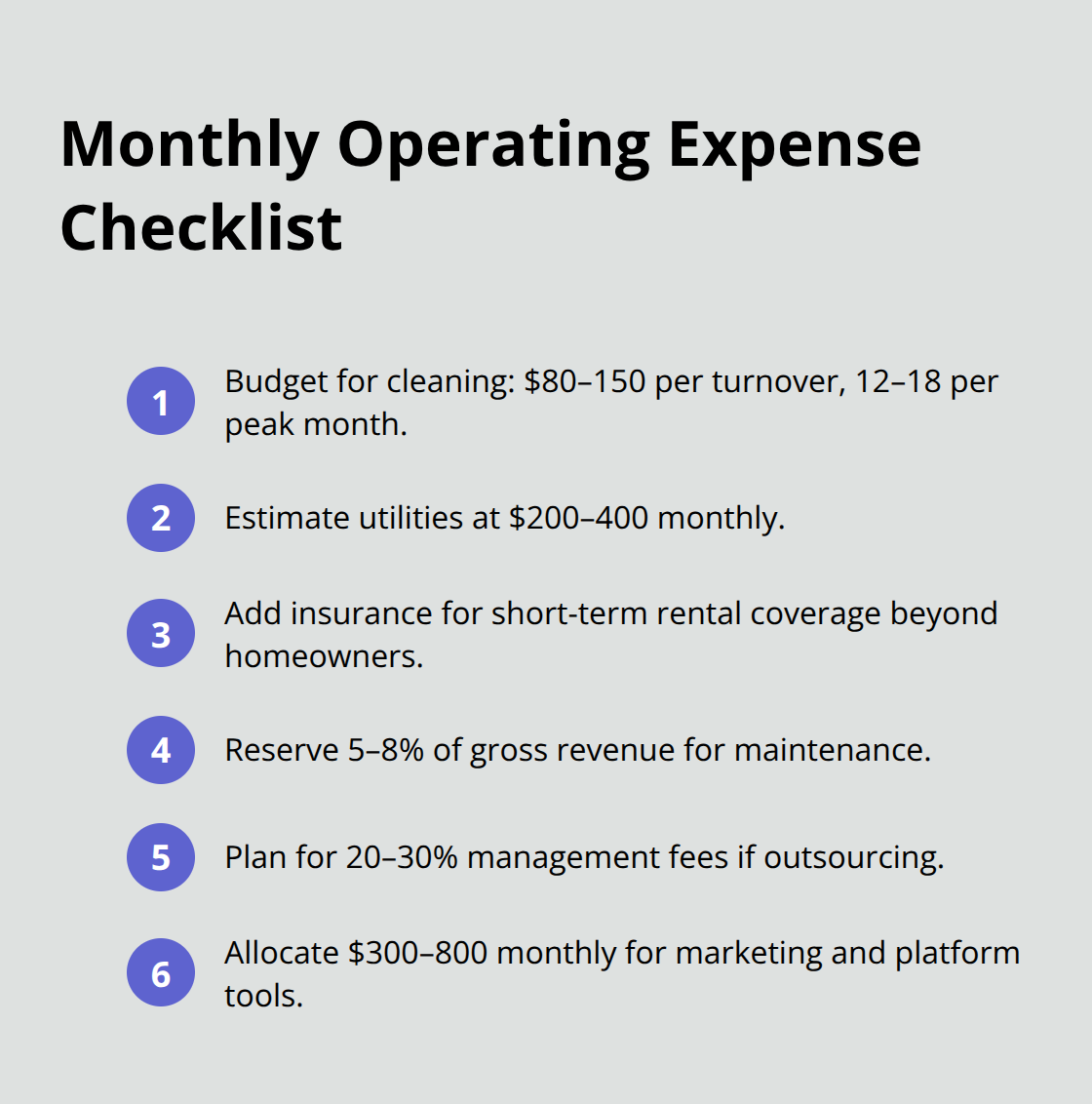
Property insurance for short-term rentals requires additional coverage beyond standard homeowner policies, with homeowners paying a median of $1,904 monthly housing costs in 2023. Maintenance reserves should equal 5-8% of gross revenue to cover appliance repairs, HVAC servicing, and property upkeep. Property management fees range from 20-30% of gross revenue if you hire professionals (companies like Up North Property Management handle all operations for this fee structure). Marketing expenses including platform fees, advertising, and listing optimization tools add $300-800 monthly.
Revenue Forecasting Based on Market Data
Revenue forecasting requires analysis of actual booking data from comparable properties. Northern Minnesota lake properties generate $150-350 nightly rates during summer peak season, dropping to $75-150 during off-peak months. Occupancy rates typically reach 70-85% during June through August, falling to 30-45% in winter months. Properties with hot tubs or unique amenities command 20-30% premium rates. Dynamic pricing tools like PriceLabs or Wheelhouse optimize rates automatically through comprehensive comparison features. Calculate conservative projections at 60% annual occupancy with average daily rates 10% below market peaks. Factor in platform commissions of 3-5% and payment processing fees of 2.9% when projecting net revenue.
These financial projections provide the foundation for your marketing strategy and operational decisions that will drive guest acquisition and property success.
Marketing and Operational Strategies
Guest Acquisition Through Multi-Platform Strategy
Professional photography can increase bookings by 20-40% and rates by 26% – invest $1,200-1,500 for high-quality images taken during golden hour with wide-angle lenses. List simultaneously on Airbnb, VRBO, and Booking.com to maximize visibility, but implement channel management software to prevent double bookings. Airbnb charges 3% host fees plus 14-16% guest fees, while VRBO takes 5% commission with lower guest fees.
Optimize your listing title with location-specific keywords like lakefront, downtown, or ski access that guests actually search. Response times under 30 minutes increase booking conversion by 25% – set up automated responses for common inquiries about WiFi speeds, parking, and pet policies. Social media marketing works best on Instagram with property photos tagged to specific locations (generating 15-20% of direct bookings for active accounts).
Streamlined Guest Communication Systems
Guest communication requires systematic approaches rather than reactive responses. Send automated messages 7 days before arrival with check-in instructions, WiFi passwords, and local recommendations. Install keyless entry systems costing $200-400 to eliminate key exchanges and enable remote access management.
Implement guest feedback systems through post-stay surveys, addressing negative reviews within 24 hours to maintain platform rankings and booking momentum. Stock properties with backup linens, toiletries, and basic supplies to handle 90% of guest needs without intervention.
Professional Cleaning and Maintenance Operations
Professional cleaning between stays costs $80-150 but maintains 4.8+ star ratings that drive repeat bookings. Schedule deep cleaning monthly during peak season and quarterly during off-peak periods. Maintenance response times determine guest experience – establish relationships with local contractors for 24-hour emergency repairs.
Companies like Up North Property Management handle all these operations (including marketing, bookings, cleaning, and maintenance) to keep properties in top condition while homeowners enjoy hassle-free income.
Final Thoughts
Your sample business plan for vacation rental property transforms from concept to profitable reality through systematic execution. Start by finalizing your financial projections with conservative occupancy estimates and realistic expense calculations. Document all operational procedures including guest communication protocols, cleaning schedules, and maintenance timelines.
The biggest mistake property owners make is underestimating monthly operating costs by 30-40%. Factor in cleaning services, utilities, insurance, and maintenance reserves before calculating profit margins (another common error involves targeting too broad an audience instead of focusing on specific guest personas based on actual market data). Properties requiring 10-15 hours weekly for operations often overwhelm new owners, leading to poor guest experiences and declining reviews.
Begin implementation by securing financing and identifying your target property. Complete market analysis within your chosen location, then establish relationships with local contractors and cleaning services. Up North Property Management offers full-service vacation rental management in Northern Minnesota, handling all operations while homeowners enjoy hassle-free income. Execute your plan methodically rather than rushing into operations without proper systems in place.