

Starting a vacation rental business without a solid plan is a recipe for financial trouble. We at Up North Property Management have seen too many property owners jump in unprepared, only to struggle with pricing, occupancy, and cash flow.
A vacation rental property business plan isn’t optional-it’s the foundation that separates profitable operations from money-losing headaches. This guide walks you through the exact steps you need to build one.
Finding the Right Location and Understanding Your Market
Analyze Your Local Market Data
The global vacation rental market reached USD 89.32 billion in 2023 and will hit USD 119.0 billion by 2030, according to Grand View Research. That growth matters, but what matters more is whether your specific property sits in a location that captures that demand. Location isn’t just about proximity to tourist attractions-it’s about understanding seasonality, competitor density, and what guests actually pay in your area. The North American market represents about 24% of global vacation rental revenue and will grow at 2.9% annually through 2030, but this growth is uneven. Some markets are saturated while others have genuine opportunity.
Before you commit capital to a property, you need concrete data about your local market. Start by analyzing occupancy rates and average daily rates on Airbnb, Vrbo, and Booking.com for comparable properties within a 5-mile radius of your target location. Pull three to six months of historical data if possible-single-month snapshots mislead. Look for properties with similar size, amenities, and guest type.
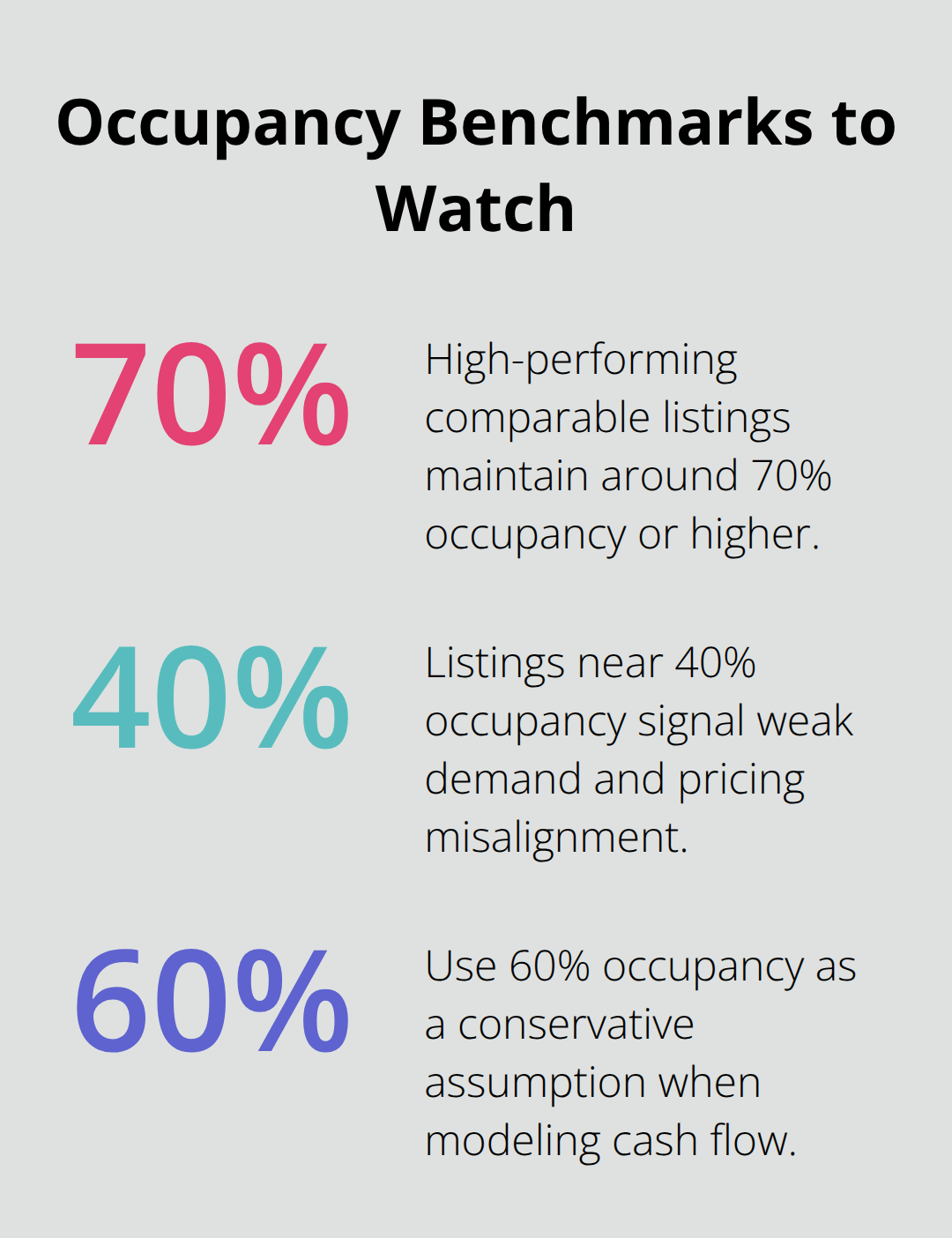
Pay attention to which properties maintain 70% occupancy or higher versus those languishing at 40%. That gap tells you whether your location can support consistent bookings.
Map Seasonal Patterns and Revenue Reality
Seasonal patterns matter enormously. A beach property in Florida operates differently than a ski resort in Colorado or a lake cabin in Northern Minnesota. Properties in Northern Minnesota, for example, see strong summer demand from families seeking outdoor recreation in the beautiful Northern Lakes Area, but winters require either a different guest type or acceptance of lower occupancy. Map out month-by-month occupancy and pricing patterns for at least twelve months.
If summer rates hit $250 per night but winter drops to $80, your annual revenue planning must reflect that reality. Median US monthly Airbnb income per property sits around $3,196 compared to $1,787 for traditional long-term rentals, according to Mashvisor, but this average masks extreme variation by location and season. Your specific market will deviate significantly from national averages.
Calculate Your True Startup Investment
Your startup costs depend directly on property selection. Calculate acquisition costs, closing costs, furnishing expenses, and pre-opening marketing spend. If you purchase a property, factor in down payment, mortgage terms, property taxes, and insurance before you ever list it. If you pursue rental arbitrage-leasing a property and renting it short-term-your costs are lower but your control is limited.
Set Prices Based on Real Market Data
Competitive pricing analysis is non-negotiable. Tools like Guesty PriceOptimizer use dynamic pricing algorithms to adjust rates based on demand, local events, and seasonal trends. Don’t assume you can command premium prices just because your property is nice. Market demand, competitor supply, and local attractions determine what guests will pay. If ten similar properties in your area rent at $120 per night and you price at $180, you’ll sit empty while they book consistently.
Run the numbers conservatively. If local data shows 60% average occupancy, don’t project 80% in your financial model. If comparable properties average $150 per night, don’t assume you’ll hit $200. Conservative projections prevent the cash flow disasters that occur when property owners ignore actual market conditions. With solid market research and realistic assumptions in place, you’re ready to build the financial projections that will guide your investment decisions and operational strategy.
Building Your Financial Model
Your financial model is where theory meets reality. This is where you stop guessing and start calculating whether your property will actually make money. A vacation rental financial model is a mathematical representation of your property’s performance, covering revenues, costs, and future projections. Without it, you’re flying blind on pricing, occupancy targets, and break-even timelines.
Project Your Annual Revenue
Start with three concrete inputs: the number of nights you expect to rent annually, your average daily rate, and realistic occupancy assumptions grounded in the market data you gathered. If comparable properties in your area maintain 65% occupancy at $140 per night, your model should use those figures, not optimistic alternatives. Calculate total annual nights available (365 minus blocked dates for maintenance or personal use), multiply by your projected occupancy rate, then multiply by your nightly rate. If you own a property renting 200 nights annually at $140 per night, your gross revenue is $28,000 before taxes and cleaning fees. That’s your starting point.
Account for Every Expense Category
Now itemize every expense. Fixed costs include mortgage payments, property taxes, insurance, and licensing fees-these don’t change regardless of occupancy. Variable costs shift with bookings: professional cleaning between guests typically runs $150 to $300 per turnover, utilities scale with guest usage, and maintenance costs average 5 to 10% of gross revenue annually. The IRS allows you to deduct mortgage interest, real estate taxes, casualty losses, maintenance, utilities, insurance, and depreciation on Schedule E when you file your taxes. Don’t skip supplies, linens, towel replacement, or platform commissions-Airbnb takes 3% of booking value, Vrbo charges similar rates.

Build a spreadsheet that separates these expenses by category and month, accounting for seasonal variation. Winter months might require higher heating costs while summer demands increased cleaning frequency.
Calculate Break-Even and Target Occupancy
Your break-even occupancy is the point where revenue covers all expenses; if your total annual expenses are $18,000 and you charge $140 per night, you need approximately 129 nights booked to break even. Anything beyond that is profit. Most property owners should target 70 to 75% occupancy to achieve healthy cash flow and account for unexpected maintenance or slower periods.
Set Prices That Maximize Profit, Not Just Rate
Pricing strategy must balance maximizing revenue against maintaining competitive occupancy. Dynamic pricing tools adjust rates based on demand patterns, local events, and seasonality, helping you capture premium rates during peak periods while remaining competitive during shoulder seasons. The goal isn’t highest nightly rate-it’s highest profit per booking. A property renting 250 nights at $120 per night generates $30,000 revenue; the same property renting 180 nights at $160 per night generates only $28,800. Higher rates don’t guarantee higher profit if occupancy suffers. Test your pricing assumptions with multiple scenarios: conservative (60% occupancy), realistic (70% occupancy), and optimistic (80% occupancy). See which scenario still delivers positive cash flow and acceptable ROI.
Track Return Metrics and Update Quarterly
Track your return metrics closely: cap rate tells you annual profit as a percentage of property value, cash-on-cash return shows annual profit divided by your actual cash invested, and payback period reveals how many years until your initial investment is recovered. Most property owners should expect 15 to 25% annual cash-on-cash returns in strong markets, though this varies dramatically by location and property quality. Update your financial model every quarter with actual data on occupancy, rates achieved, and expenses incurred. Conservative projections that prove accurate beat optimistic projections that disappoint every single time. With your financial model locked in place, you’re ready to develop the marketing strategy that will actually fill those booked nights and attract the right guests.
Getting Guests to Book Your Property
Distribute Across Multiple Platforms
List your vacation rental on Airbnb, Vrbo, and Booking.com rather than relying on a single platform. Properties listed across multiple sites see roughly 20% more bookings than single-platform listings, according to Tokeet. Different travelers search different sites, and you need visibility where they look. However, managing multiple calendars manually invites double bookings and lost revenue. A channel manager syncs your availability across all platforms automatically. When a guest books on Airbnb, your Vrbo calendar updates instantly, eliminating scheduling chaos and protecting your income.
Create Listings That Convert Inquiries
Your listing quality matters as much as distribution. Professional photos attract more inquiries than those with smartphone images. Write descriptions that explain what makes your property different, not generic amenities everyone expects. Instead of stating the kitchen has appliances, explain that it’s fully equipped for family dinners or that the Wi-Fi speed supports remote work. Address limitations honestly too. If your property sits a short walk from the beach rather than beachfront, state that upfront. Guests appreciate transparency and leave better reviews when expectations match reality. Your listing title should include your location and primary appeal-Northern Minnesota lakefront cabin with dock access or downtown loft near breweries-not vague descriptions like cozy getaway.
Leverage Reviews and Ratings
Reviews and ratings impact search ranking on booking platforms. Properties with more reviews and higher ratings appear higher in search results, generating more visibility and bookings. Encourage guests to leave reviews without being pushy. Send a follow-up message 24 hours after checkout thanking them for their stay and including a direct link to leave a review. Respond to every review, both positive and negative. A thoughtful response to a negative review shows potential guests that you take feedback seriously and address problems.
Drive Bookings During Slow Seasons
Seasonal marketing campaigns amplify bookings during shoulder seasons when demand naturally dips. If your property performs well in summer but struggles in fall, create targeted campaigns offering 15% discounts for September and October bookings, positioning your property as an ideal escape for leaf-peeping or outdoor activities. Email past guests directly about seasonal promotions instead of relying only on platform visibility. Past guests cost nothing to reach and have already experienced your property, making them far more likely to return or refer friends. Build an email list by requesting contact information during checkout. Track which marketing efforts actually drive bookings by monitoring where inquiries originate. If 60% of your bookings come from Airbnb and only 10% from Vrbo, you know where to focus your effort.
Personalize Guest Communication
Guest communication and experience drive repeat bookings and referrals more reliably than any discount. Respond to inquiries within two hours during business hours-slow response times kill bookings. Send a welcome guide 48 hours before arrival with Wi-Fi passwords, parking details, house rules, and local recommendations. Include specific suggestions based on guest type (families might appreciate playground locations while couples might prefer romantic dinner spots).
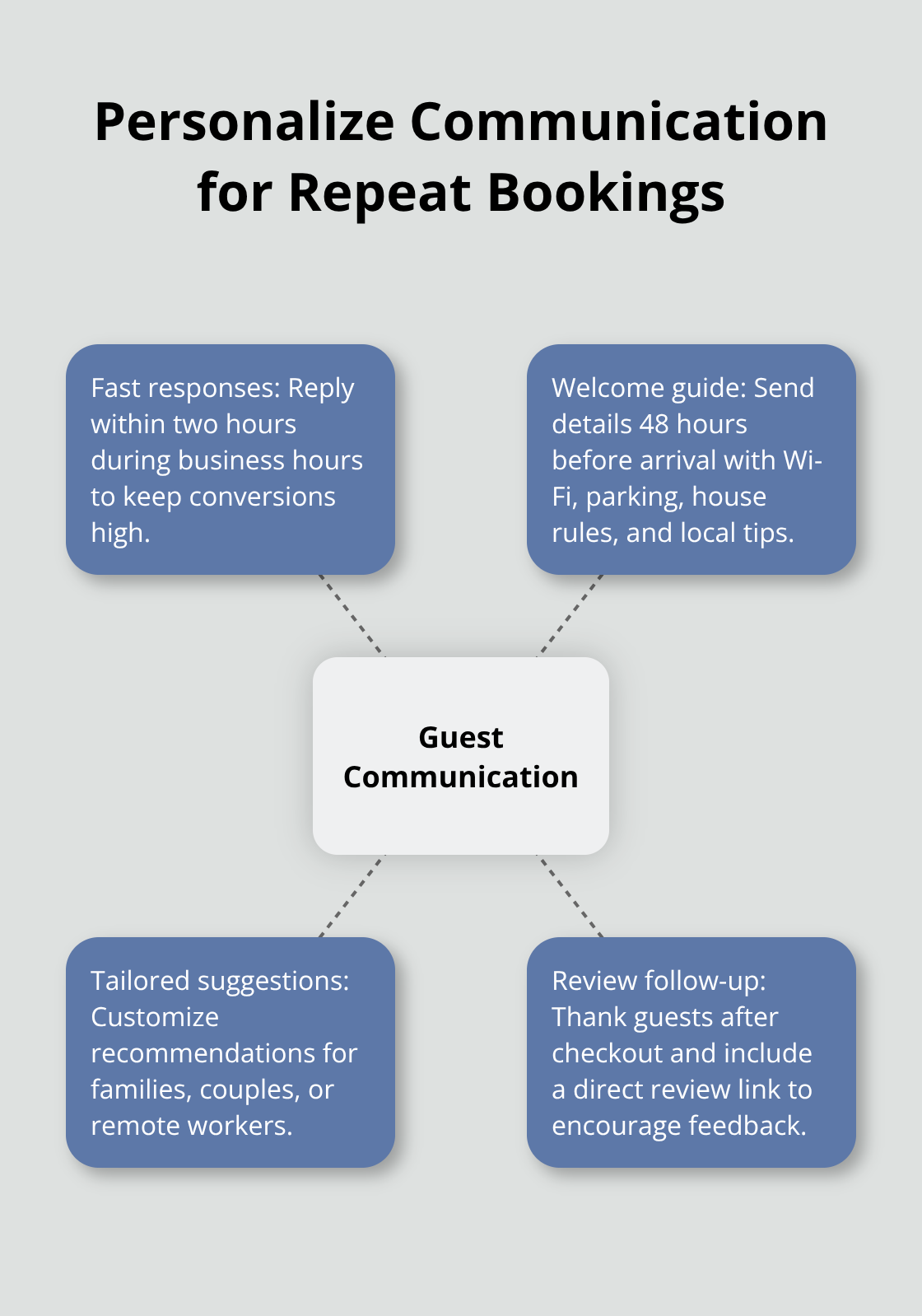
This level of personalization costs almost nothing and generates significantly higher satisfaction scores.
Final Thoughts
Your vacation rental property business plan now guides every decision you make. You’ve analyzed your local market with real occupancy and pricing data, built a financial model grounded in conservative assumptions, and developed a marketing strategy that drives bookings across multiple platforms. Review your plan quarterly against actual performance and adjust pricing, budgets, and marketing allocation based on what the numbers reveal.
Success in vacation rentals demands more than planning-it demands execution. You need a property that stays clean and well-maintained, responsive communication that builds guest trust, and pricing that balances occupancy with profit. Many property owners find that outsourcing management to professionals frees them to focus on ownership decisions while someone else handles daily operations, cleaning, and maintenance.
Up North Property Management offers full-service vacation rental management in Northern Minnesota, handling marketing, bookings, cleaning, and maintenance so your property stays in top condition and generates consistent income. Your next step is simple: choose your property, validate your assumptions with real market data, and launch your vacation rental property business plan into action.