
Minnesota winters are brutal, and cabin winterization isn’t optional-it’s the difference between a protected investment and a disaster waiting to happen. Frozen pipes, ice dams, and moisture damage can cost thousands to repair come spring.
We at Up North Property Management have seen firsthand what happens when owners skip winterization. The good news is that following a systematic approach prevents nearly all cold-weather damage.
Securing Your Cabin’s Exterior Before Winter Arrives
Your roof and gutters form the first line of defense against Minnesota’s harsh winter conditions. Clean gutters prevent ice dams, which form when melted snow refreezes at the eaves and forces water back under shingles, causing interior damage and rot. According to Consumer Reports, loose shingles and clogged gutters rank among the leading causes of preventable winter damage. Inspect your roof for missing or damaged shingles, paying special attention to areas near valleys and chimneys where water collects. Repair issues now rather than waiting until spring when damage compounds. Clear gutters completely of leaves and debris before the first freeze. Check that downspouts direct water at least four to six feet away from your foundation to prevent ice buildup and basement seepage.
Weatherproofing Windows and Doors
Cold air leaks through gaps around windows and doors, forcing your heating system to work harder and creating thermal pathways that chill nearby pipes. Consumer Reports recommends using peel-and-stick foam weatherstripping or silicone caulk to seal visible cracks around frames. Door sweeps block drafts at the base of exterior doors and cost very little. Seal weatherstripping around all entry points, including basement windows and garage doors if water supply lines run through the garage. These simple steps cost under fifty dollars but reduce heat loss significantly and protect plumbing in vulnerable areas. Closing exterior shutters (if available) provides additional insulation and deters winter break-ins.
Eliminating Water Exposure Outdoors
Shut off all exterior faucets and leave them in the open position to prevent water from freezing inside the valve, which can crack the fitting and cause spring leaks. Drain garden hoses and store them indoors. If your cabin has an outdoor pool or spa, drain it completely to prevent freeze damage to pumps and filtration systems. Disconnect any exterior water features or decorative elements that hold water. Ice expands with tremendous force, and even small amounts of trapped water in outdoor fixtures cause permanent damage requiring costly replacement. These exterior preparations protect your investment and set the stage for the interior work ahead-starting with your plumbing system, which faces the greatest risk during Minnesota winters.
Winterizing Your Cabin’s Plumbing and Heating Systems
Your plumbing system faces the greatest risk during Minnesota winters, and burst pipes remain the leading cause of winter property damage. The difference between a protected cabin and a flooded disaster comes down to one critical action: removing every drop of water from your lines before temperatures drop below freezing. Shut off the main water supply, then open every faucet in the cabin to drain the system completely. This step alone prevents the majority of freeze damage, but it is not enough on its own.
After gravity draining, use an air compressor to blow compressed air through every water line, working from the highest point downward toward a common drainage point. This removes residual water that gravity alone cannot reach. An inexpensive rubber-nosed spray attachment on a small compressor works effectively for this task. Do not skip the compressed air step-tiny amounts of trapped water in confined spaces expand when frozen and rupture pipes or fixtures with tremendous force.
After blowing out lines, add food-grade propylene glycol antifreeze to every drain trap, including sinks, showers, toilets, and the water heater. This pink antifreeze is safe for septic systems and costs only a few dollars per gallon, providing inexpensive insurance against plumbing failures. Ensure the toilet fill tank receives glycol flushing as well, not just the bowl. Drain your water heater completely and shut it down for the season to prevent overheating and leaks-many cabin owners overlook this step entirely, which is a costly mistake.
Protecting Pipes in High-Risk Locations
Pipes in unheated spaces like basements, attics, crawl spaces freeze first. If water supply lines run through your garage, keep the garage door closed during winter to limit exposure to freezing temperatures. Insulating exposed pipes with foam pipe insulation or heat tape costs only a few dollars and can save thousands in water damage-this is the single most cost-effective preventive measure available.
For long-term protection, add insulation to attics, basements, and crawl spaces to keep pipe temperatures higher throughout winter. In cabinets near exterior walls, open kitchen and bathroom cabinet doors to allow warmer air to circulate around plumbing, removing any cleaning products first if children visit the cabin. During extreme cold snaps, let cold water drip slowly from faucets served by exposed pipes to keep water moving and prevent ice formation.
Preparing Your Heating System for Winter
Your heating system requires equal attention before winter arrives. Schedule a furnace or HVAC maintenance appointment with a local Minnesota expert who will inspect the heat exchanger, test for carbon monoxide leaks, clean filters, check burners, and verify operation meets manufacturer specifications. Set your thermostat to vacation mode or shut down the system if you plan to winterize completely.
If you leave the heat on during absence, maintain a minimum temperature of 55 degrees Fahrenheit to protect pipes-this single setting prevents most freeze damage. Consider a backup heat source like electric space heaters for occasional visits or extended absences, using GFCI outlets in bathrooms and avoiding extension cords for safety. If your cabin has a fireplace, sweep the chimney and close the damper when not in use to prevent drafts and moisture intrusion that damage interior spaces.
With your plumbing and heating systems secured, the next critical step involves preparing the interior of your cabin for extended absence-removing perishables, securing valuables, and installing monitoring systems that alert you to temperature drops or moisture problems before they become expensive disasters.
Securing Your Cabin During Winter Absence
You have drained your plumbing and serviced your heating system, but leaving a cabin unoccupied for months without proper interior preparation invites disaster. Food spoilage creates odors that attract rodents, perishables freeze and burst, and without monitoring systems you won’t know if a pipe has frozen or moisture has infiltrated the structure until spring reveals thousands in damage. The interior of your cabin requires as much attention as the exterior and plumbing systems.
Remove Perishables and Secure Food Storage
Start by removing every perishable food item from your refrigerator and freezer. Spoiled food creates powerful odors that draw mice and other pests into your cabin, and items stored in bottles or jars will crack or burst when frozen solid. Prop open refrigerator and freezer doors completely to prevent mold growth and odor accumulation in sealed compartments.
For items you must store, use heavy-duty plastic bins with tight-fitting lids to keep pests away from soft goods, linens, and furniture. Place sofa cushions and mattresses against walls rather than leaving them exposed, as rodents burrow into soft materials for nesting. Dryer sheets scattered throughout the cabin repel pests effectively at minimal cost.
Reduce Fire Risk and Protect Electronics
Unplug all appliances to reduce fire risk during storms and to prevent power surges from damaging electronics if lightning strikes nearby. Close all interior curtains and blinds to provide passive insulation and prevent heat loss through windows, though opening south-facing curtains on sunny winter days allows solar heat to warm interior spaces naturally.
Install Monitoring Systems for Early Detection
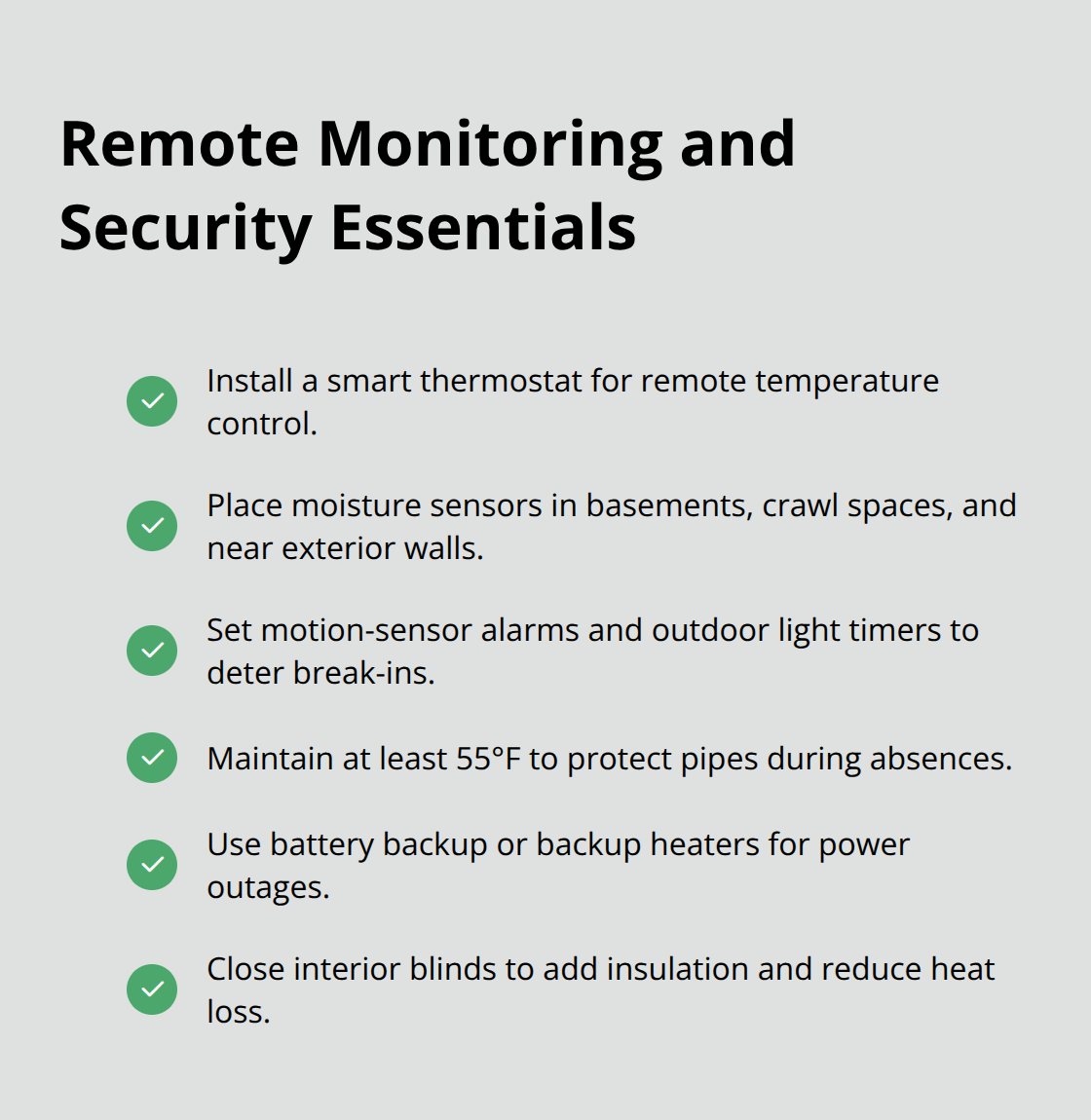
The most important step you can take is installing temperature and moisture monitoring systems that alert you immediately to problems. Smart thermostats like Nest allow you to monitor cabin temperature remotely and adjust settings from your phone, preventing pipes from dropping below critical freezing thresholds without requiring your physical presence. Moisture sensors placed in basements, crawl spaces, and near exterior walls detect humidity spikes that indicate roof leaks, foundation seepage, or interior condensation before mold develops. These systems cost between one hundred and five hundred dollars installed but prevent tens of thousands in water damage.
Maintain Minimum Temperature and Backup Heat
Set your thermostat to maintain a minimum of fifty-five degrees Fahrenheit throughout your absence, which protects pipes while reducing heating costs compared to higher settings. If your cabin experiences extended power outages in winter, a battery backup for your heating system or backup electric heaters in critical areas provide supplemental warmth when your primary system fails.
Deter Winter Break-Ins and Secure the Property
Secure your property by closing exterior shutters if available, setting motion-sensor alarms, and using timers on outdoor lights to deter winter burglaries, which increase significantly when cabins sit vacant for months.
Final Thoughts
Cabin winterization protects your Minnesota property from thousands of dollars in preventable damage, and the steps outlined in this guide form a complete defense against winter’s harshest conditions. Burst pipes, ice dams, and moisture infiltration strike cabins that lack proper preparation, not those that follow a systematic approach. The optimal window for winterization runs from late September through mid-October, before snow falls and temperatures drop below freezing.
Most owners complete winterization between three hundred and fifteen hundred dollars, depending on cabin size and whether they hire professionals or handle tasks themselves. This investment pays dividends by preventing emergency repairs that cost five to ten times more than preventive work. Schedule annual maintenance with a local heating and plumbing professional who understands Minnesota winters and catches problems before they become disasters.
If managing winterization feels overwhelming, we at Up North Property Management handle full-service vacation rental management in Northern Minnesota, including winterization, maintenance, and year-round property care. Visit Up North Property Management to learn how we keep cabins protected and earning income even during winter months.