

Buying a lake property comes with hidden rules you need to know about. Lake associations control everything from how you use the water to what you pay each year, and these rules vary wildly from one community to another.
At Up North Property Management, we’ve seen buyers get blindsided by restrictions and fees they didn’t anticipate. This guide walks you through the key rules and costs so you can make an informed decision before signing anything.
Lake Access and Usage Rights
Water Activities and Navigation Rules
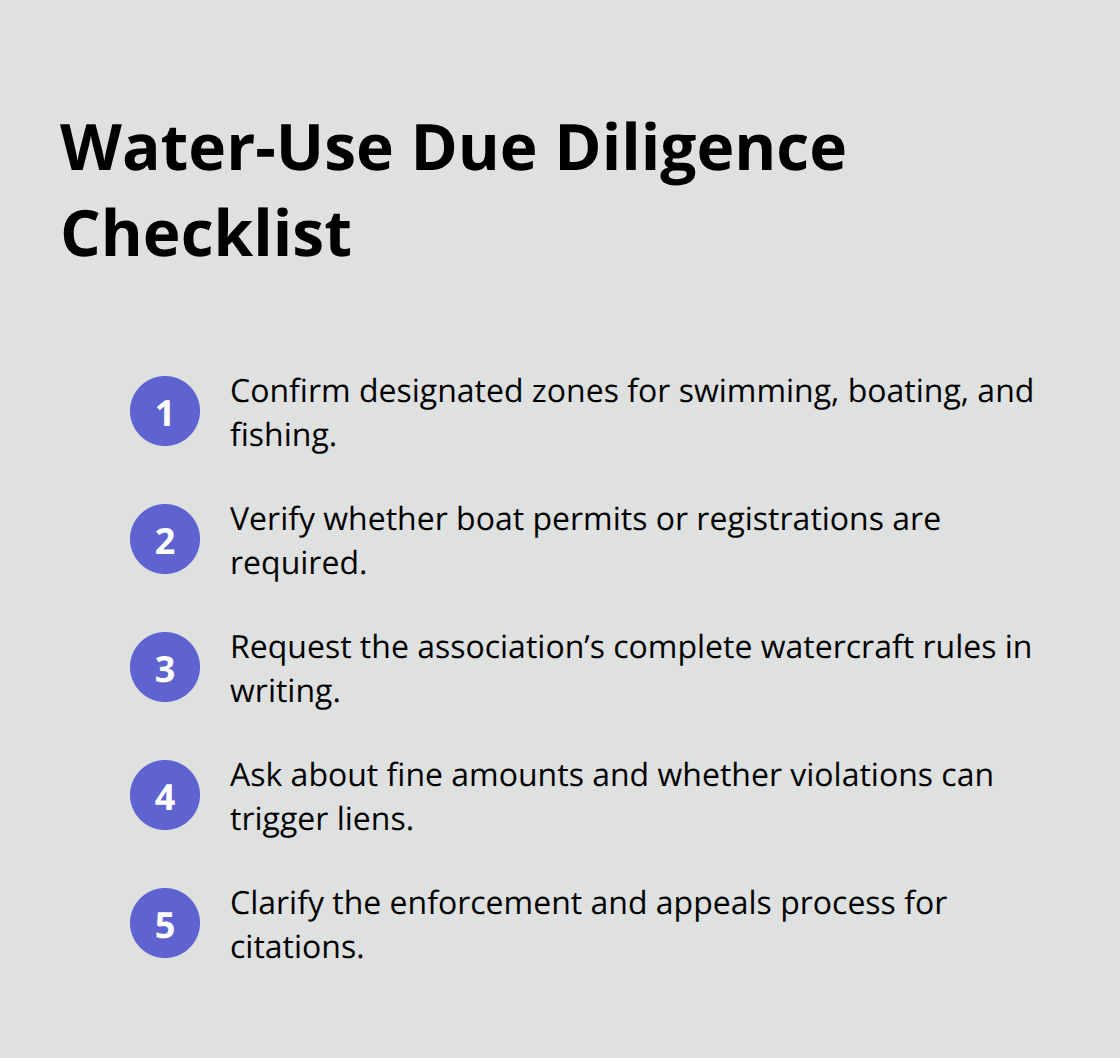
Lake associations enforce specific rules about water activities, and these restrictions directly affect how you’ll use your property year-round. Speed limits, jet ski bans, swimming zones, and fishing regulations vary dramatically between lakes. Some associations prohibit personal watercraft entirely, while others allow unlimited boating during daylight hours. Before purchasing, contact the association and request their written rules on watercraft-don’t rely on what neighbors tell you. Wisconsin’s nearly 400 lake associations each set their own standards, and what’s permitted on one lake may be forbidden on another just miles away.
Ask specifically about designated zones for different activities, whether you need permits for your boat, and what happens if you violate these rules. Fines for violations can range from $50 to several hundred dollars, plus potential enforcement liens on your property. The association’s written documentation reveals exactly what you can and cannot do, so obtain these rules before you commit to the purchase.
Dock and Shoreline Restrictions
Dock and shoreline rules present another layer of complexity that catches many buyers off guard. Most associations restrict dock size, materials, and placement to protect water quality and maintain uniform aesthetics. Some require approval before you install or upgrade a dock, and certain lakes prohibit permanent structures entirely, allowing only seasonal docks removed each winter. Shoreline vegetation rules and native plants requirements are equally strict-many associations mandate native plants and prohibit seawalls or bulkheads without permits.
The fill area of your property determines whether you have direct water access or must use community docks, which limits your freedom and increases your dependence on shared amenities. Verify these details with a survey and review the association’s architectural guidelines before closing. If you plan to rent your property as a vacation rental, check whether the association permits short-term guests to use the water-some communities restrict guest access entirely or require written permission from the association.
Seasonal Access and Timing Constraints
Seasonal access periods matter significantly for your year-round enjoyment. Some northern lakes close boat ramps during winter months or restrict water use during spawning seasons to protect fish populations. These timing constraints affect when you can actually access and use the water, so understanding them helps you plan your property use realistically. The association’s seasonal calendar determines your practical access windows throughout the year.
Financial Obligations and Membership Costs
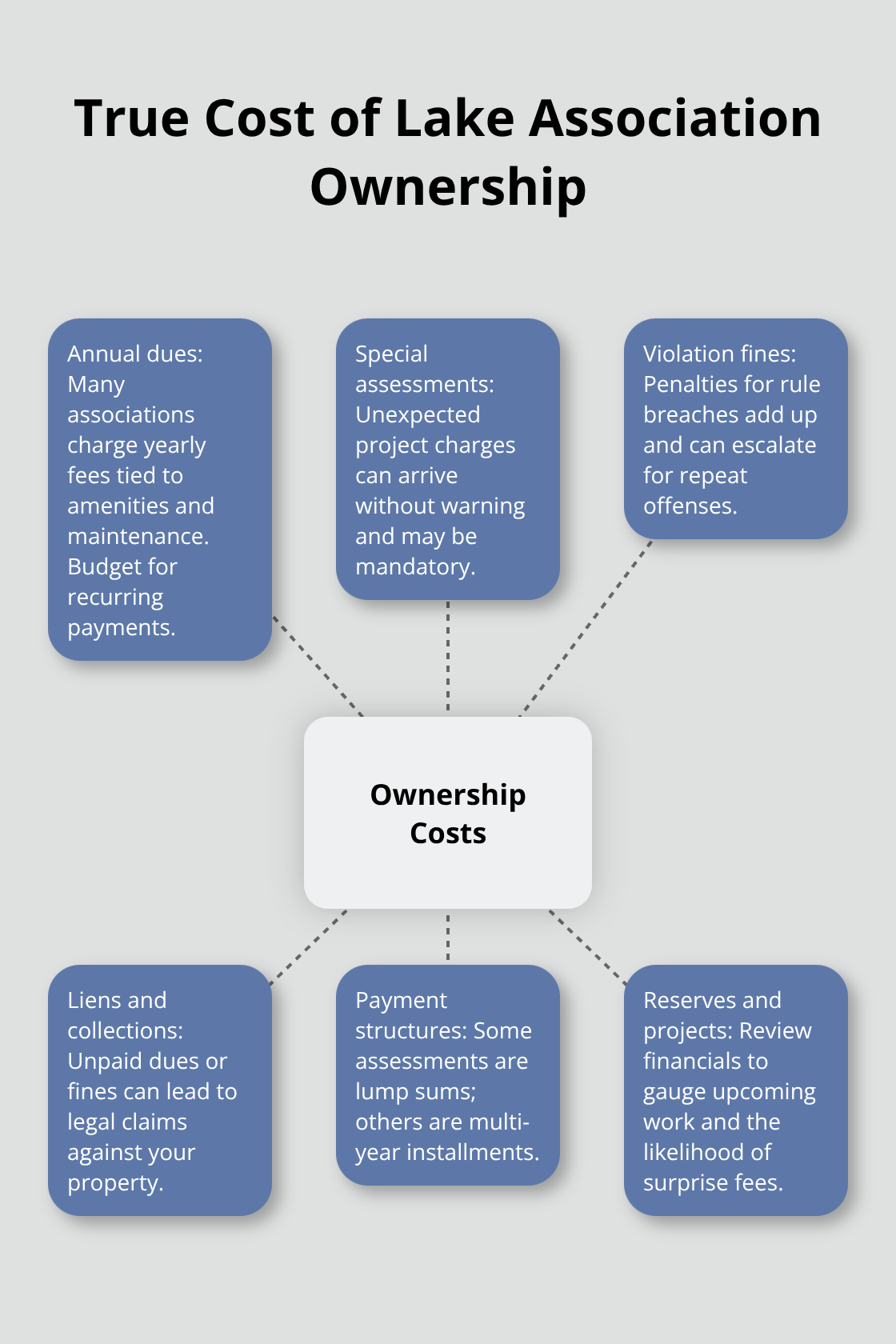
Lake association fees operate nothing like typical homeowners association dues. Most associations charge annual membership fees ranging from $200 to $1,500 depending on the lake’s size, amenities, and maintenance needs, but the real financial burden emerges through special assessments that arrive without warning. You need to request the association’s financial statements and assessment records for the past five years before you purchase-this reveals whether the community relies on surprise fees to fund projects. A lake association that suddenly assesses $3,000 per property for dredging or invasive species control can devastate your annual budget, and you cannot opt out of these costs without selling the property.
Annual Dues and Assessment Fees
Special assessments fund major maintenance like shoreline restoration, dock replacement, water quality treatment, and aquatic plant management, and these projects are unavoidable in lake communities. Indiana’s Hidden Valley Lake POA enforces liens against properties with unpaid dues or assessments, meaning the association can place a legal claim on your home if you miss payments. Some associations structure assessments as monthly installments spread over several years, while others demand lump-sum payments within 90 days. Contact the association’s treasurer directly and ask about pending projects, reserve fund status, and whether any assessments are planned for the next three to five years.
Violation Fines and Enforcement Costs
Violation fines for breaking boating rules, dock restrictions, or noise ordinances add another layer of costs-these typically range from $50 to $500 per violation, with repeat offenses triggering larger penalties and enforcement action. The association’s bylaws determine whether they can place liens on your property to recover unpaid fines, making compliance financially mandatory, not optional. Review the enforcement section of the governing documents carefully because some associations aggressively pursue collections while others rarely enforce rules, and this affects both your financial exposure and your quality of life in the community.
Understanding these financial obligations helps you calculate your true ownership costs. The next chapter examines the specific restrictions and regulations that govern how you actually use your lake property once you own it.
Common Restrictions and Regulations
Environmental Rules and Shoreline Protection
Lake associations enforce strict environmental protections that directly affect your landscaping and property maintenance costs. Native vegetation requirements along shorelines mean you cannot simply plant whatever you want-associations prohibit chemical treatments without approval and mandate specific plant species to protect water quality. This translates to higher landscaping expenses and longer project timelines compared to typical suburban properties. Many associations also restrict seawalls, bulkheads, and erosion-control structures without permits, forcing you to work through an approval process that can take weeks or months. Request the association’s environmental guidelines before purchasing and budget accordingly for compliant landscaping work.
Watercraft Restrictions and Boat Rules
Boat restrictions vary dramatically between lakes and shape how you actually use the water. Some associations limit engine horsepower, prohibit jet skis entirely, or ban boats over a certain length. Others allow unlimited boating during daylight hours with minimal restrictions. A few communities restrict watercraft to electric motors only or designate specific launch times. These rules exist to reduce noise and protect water quality, but they fundamentally change your recreational options. Contact the association and request their complete watercraft policy in writing-do not rely on verbal explanations from neighbors or real estate agents, as enforcement standards vary widely.
Noise Ordinances and Nuisance Standards
Noise ordinances establish quiet hours that typically run from 10 p.m. to 8 a.m., though some communities extend restrictions to weekday afternoons. These rules cover boat engines, music, construction activity, and general property use. Violations trigger fines ranging from $50 to $500 per incident, and repeat offenses can result in liens against your property.
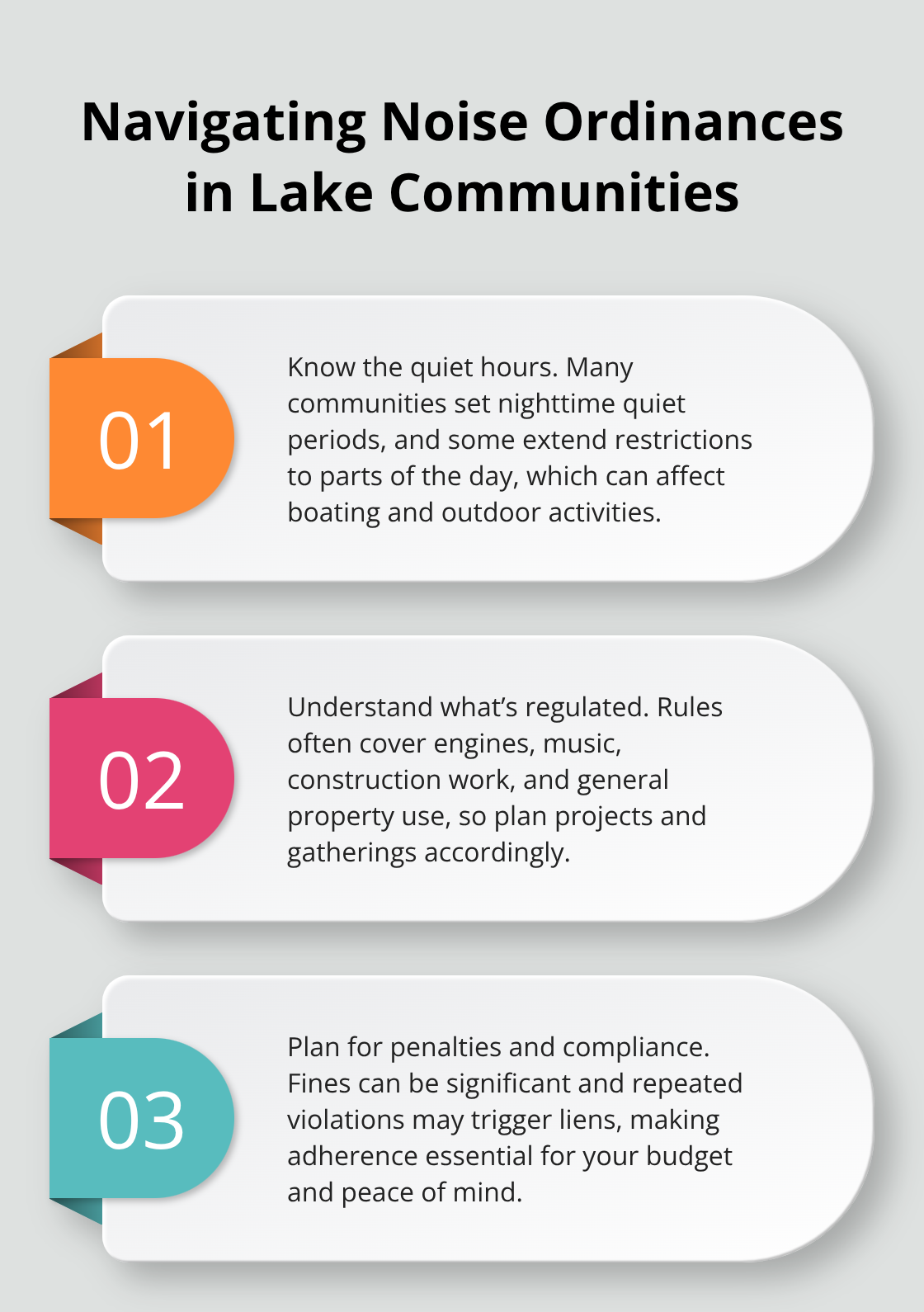
The association’s noise policy directly affects your lifestyle-a strict ordinance means limited evening boating and early morning quiet requirements, while a relaxed policy offers more freedom but may indicate weak overall enforcement.
Enforcement Philosophy and Real-World Impact
The enforcement reality matters far more than the written rules themselves. Some associations aggressively fine residents for minor violations while others rarely enforce anything, creating vastly different living experiences despite identical written rules. Contact current residents directly and ask whether they have received citations for violations and how responsive the association is to enforcement complaints. Request the association’s violation history for the past three years, including citation counts and fine amounts, because this reveals their actual enforcement philosophy. A lake association that enforces rules consistently protects property values and water quality but also creates a strict living environment, while one that ignores violations offers more freedom but risks declining property values and environmental degradation. Neither extreme is ideal, but knowing which you’re getting before you buy prevents costly surprises later.
Final Thoughts
Buying lake property requires far more due diligence than purchasing a standard home, and the rules, fees, and restrictions directly impact your finances, your lifestyle, and your property’s long-term value. Start by requesting the association’s governing documents, CC&Rs, bylaws, and financial statements for the past five years-these documents reveal the true cost of ownership, including pending assessments and enforcement patterns. Contact current residents about their actual experience living under these rules, and ask whether they’ve received citations or feel the association enforces fairly.
Verify water access with a survey and confirm dock restrictions in writing before closing. Check whether your intended use aligns with the lake association’s rules on rentals, watercraft, and seasonal access. Review the enforcement section carefully because some associations aggressively pursue violations while others rarely enforce anything, and this dramatically affects your experience.
If you’re considering a vacation rental investment, understand that many lake associations restrict short-term guest access or require written permission for rentals. Up North Property Management handles the complexity of vacation rental management in Northern Minnesota, managing marketing, bookings, cleaning, and maintenance so you can focus on ownership without the operational headaches. Visit our website to learn how professional management simplifies lakefront property ownership.