

Minnesota’s lakes are home to diverse wildlife, from loons and bears to deer and fish. Encountering these animals during your stay can be thrilling, but it requires knowledge and caution.
Here at Up North Property Management, we’ve seen guests have both wonderful and risky interactions with lake wildlife. This guide covers how to observe animals safely while respecting their natural habitats.
What Animals Will You Actually See at Minnesota Lakes
Minnesota’s lakes host wildlife that falls into three distinct categories, and knowing which animals inhabit your specific area matters far more than generic wildlife knowledge. The Minnesota DNR identifies wolves, black bears, moose, and raccoons as the primary land mammals around the North Shore region, with moose habitat starting around Tettegouche State Park and extending inland through northeastern Minnesota. Loons dominate Minnesota’s lake ecosystem-these diving birds populate across the state’s 11,000 lakes, and their haunting calls signal healthy water systems. Waterfowl including ducks, geese, and mergansers congregate in specific zones depending on season, with spring and fall migrations bringing temporary population surges. Fish species vary dramatically by lake depth and temperature, but walleye, northern pike, and lake trout represent the most common game fish you’ll encounter if you fish during your stay.

The Mammals You Need to Know About
Black bears inhabit the North Shore watershed and move between forest and shoreline habitats to search for food, making them the land mammal most likely to approach human-occupied areas. Moose are considerably larger and more unpredictable than bears-they can be protective and potentially aggressive if they feel threatened, creating genuine danger if you encounter one near water. Raccoons are statewide residents except in two northeast Minnesota counties, meaning your specific location determines whether these trash-raiding animals pose a genuine threat to your food storage. Wolves live in family packs with a typical structure that includes a mother, father, siblings, and yearling pups, but wolf sightings in the Arrowhead region are genuinely rare and wolves pose no threat to humans according to Minnesota wildlife data. Deer populations fluctuate based on winter severity and chronic wasting disease prevalence-the Minnesota DNR now tracks CWD test results from harvested deer, with hunters able to check whether their area shows positive cases on the DNR website.
Aquatic Life Demands Practical Attention
Fish and aquatic invertebrates depend entirely on the Lake Superior watershed’s health, which connects land, rivers, and the lake itself through spawning habitats and nutrient cycles. Snapping turtles inhabit Minnesota lakes and will actively steal fish from your catch, which is why you must clean fish promptly and dispose of scraps away from camp. The same water systems that support game fish also support mayflies, dragonflies, and other invertebrates that form the food chain foundation-protecting these creatures means protecting the entire ecosystem that supports larger animals. Great Lakes fish species rely on specific spawning habitats that rivers draining into Lake Superior create, making tributary areas and deeper zones more likely to host concentrated fish populations during certain seasons.
Why This Knowledge Shapes Your Stay
Understanding which animals live in your specific lake region allows you to prepare appropriate food storage methods and maintain realistic expectations about wildlife encounters. Your vacation rental location determines which precautions matter most-a property near moose habitat requires different awareness than one in raccoon territory. The North Shore’s high park visitation means wildlife encounters may occur more frequently, so you’ll want to stay alert and respect wildlife distances throughout your stay. This foundation of animal knowledge directly informs the safety practices you’ll adopt when you actually encounter these creatures during your time at the lake.
How to Stay Safe When Wildlife Approaches
The distance between you and a wild animal determines whether an encounter becomes a memory or an emergency. Maintain at least 200 feet from bears, moose, and wolves-roughly the length of two football fields-because animals at this distance have time to move away from you rather than feeling cornered. If you encounter a moose near water, back away slowly while keeping your eyes on the animal; moose are unpredictable and can charge if they perceive a threat, and their size makes them far more dangerous than bears. The Minnesota DNR emphasizes that if a wolf approaches aggressively, you should not run but instead stay calm, clap or make noise, and slowly back away while maintaining eye contact.
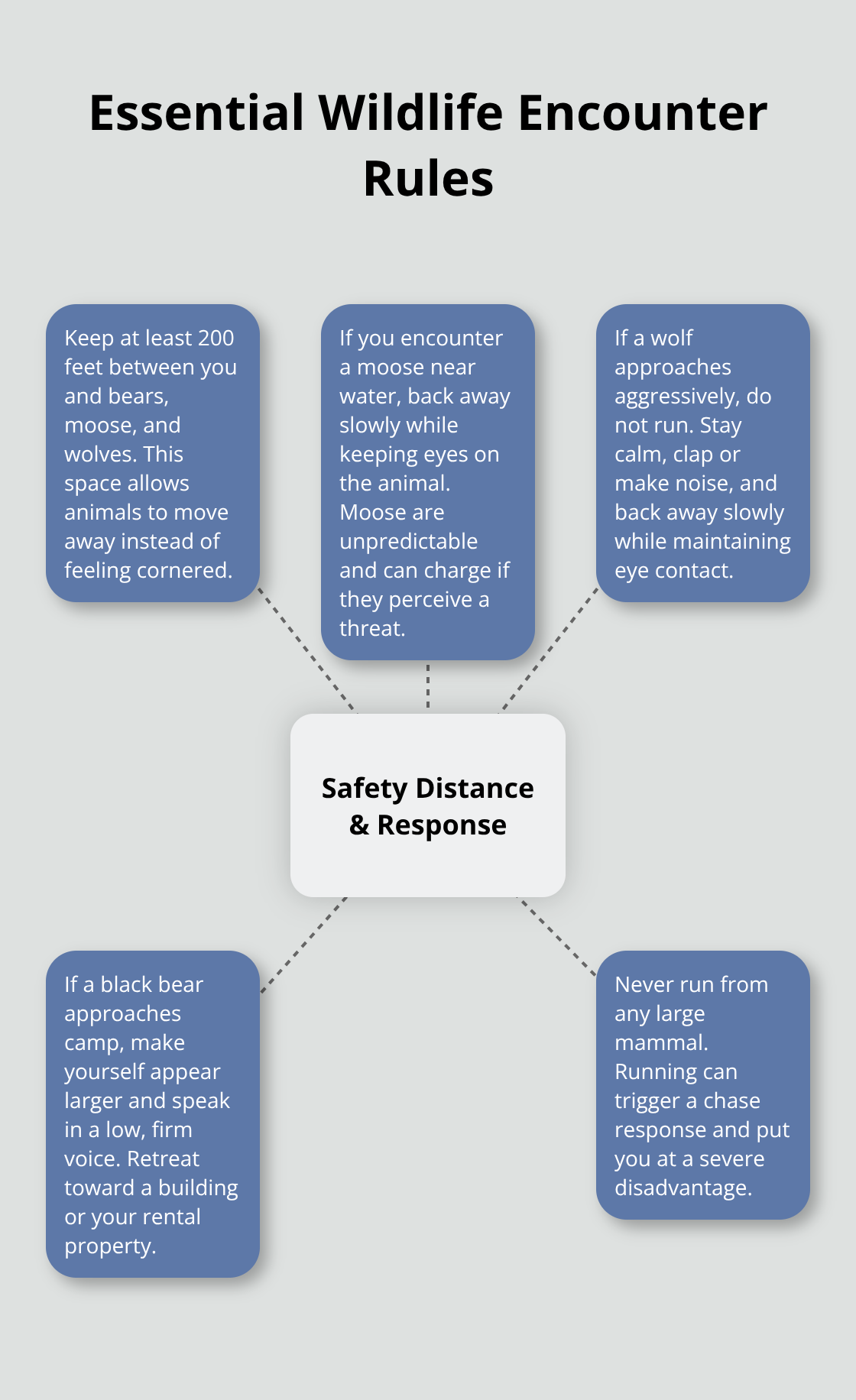
Black bears typically flee from humans, but if one approaches your camp, make yourself appear larger, speak in a low firm voice, and retreat toward your rental property or a building. Never run from any large mammal, as running triggers a chase response that puts you at severe disadvantage.
Store Food Like Your Safety Depends on It
Food storage determines whether wildlife visits your property casually or becomes habituated to human food sources. Never leave food in vehicles or coolers outside your rental-store everything in plastic totes with tight-fitting lids, which reduce odors that attract raccoons, squirrels, and chipmunks that can raid camps and cause property damage. Use bear-resistant containers such as Ursack bags when camping in bear country, and hang garbage and food waste from tree branches at least 12 feet high and 6 feet from tree trunks if bear-resistant storage isn’t available. Clean your catch immediately if you fish during your stay, disposing of fish scraps far from camp because snapping turtles and other wildlife will actively steal fish left unattended.
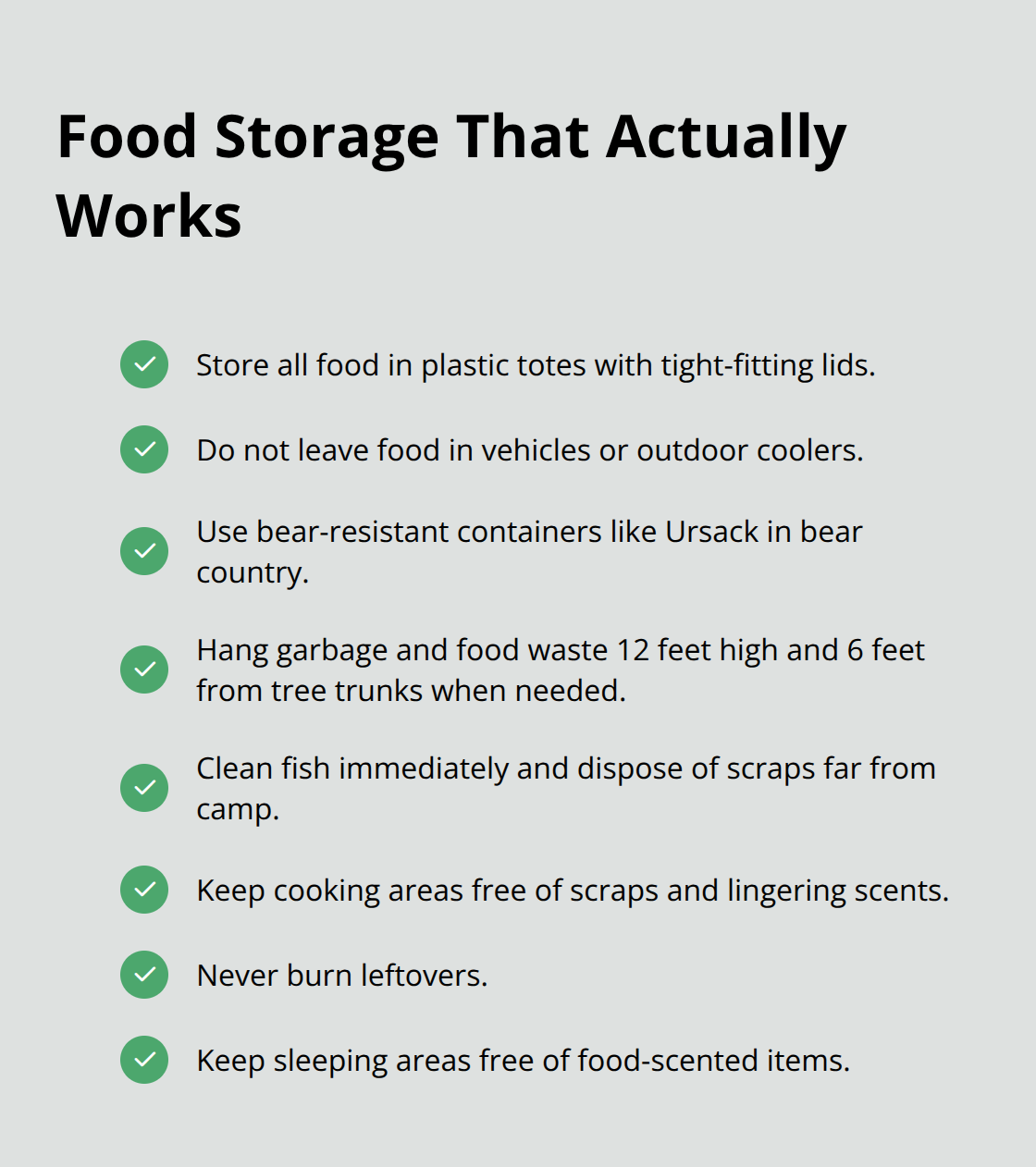
Do not leave waste in cooking grates or fire pits; keep cooking areas completely free of scraps and lingering scents that attract rodents and larger mammals. Never burn leftovers, as burning creates smoke and odors that travel long distances and signal food availability to passing wildlife. Keep your sleeping area free of any food-scented items, including toiletries and cooking gear, because mice and squirrels will investigate anything that smells edible. The Minnesota DNR advises securing garbage in bear-resistant containers or hanging systems as your first line of defense-this single practice prevents the dangerous situations where wildlife becomes aggressive defending food sources.
What Actually Works if You Encounter an Aggressive Animal
If a bear approaches aggressively and distance isn’t increasing, bear spray provides immediate protection-deploy a two-second burst when the bear is 15-30 feet away. Climbing a tree works as a last resort for bears, though moose can knock down saplings and wolves rarely attack humans in Minnesota’s Arrowhead region. If you encounter any animal acting strangely or displaying aggression, back away slowly without making sudden movements, avoid eye contact that signals challenge, and contact the Minnesota DNR at 888-646-6367 or 651-296-6157 immediately after reaching safety. Report all wildlife interactions to the land manager overseeing the area where the encounter happened, because these reports help the DNR track animal behavior patterns and protect both human visitors and wildlife populations. Never attempt to photograph, feed, or touch any wild animal regardless of how calm it appears-fed wildlife becomes dangerous wildlife because animals lose their natural fear of humans and associate people with food sources.
Prepare Before Wildlife Encounters Happen
Your preparation before arrival shapes how you respond when wildlife appears at your property. Research which animals inhabit your specific lake region and what food storage methods work best for that location. Contact the Minnesota DNR at 888-646-6367 or 651-296-6157 before your stay if you have questions about local wildlife behavior or safety protocols. Guests who arrive prepared with proper food storage supplies and knowledge of local animals respond calmly and effectively when encounters occur, transforming potentially dangerous situations into manageable wildlife observations.
Wildlife Viewing at Minnesota Lakes: Timing, Location, and Technique
Dawn and Dusk Offer Your Best Viewing Windows
Dawn and dusk represent your best windows for spotting wildlife around Minnesota lakes, and this timing matters far more than random wandering during daylight hours. The Minnesota DNR’s Traveler’s Guide to Wildlife in Minnesota identifies approximately 120 top wildlife viewing hotspots across the state, and timing your visits to early morning or late evening increases your encounter odds significantly because animals feed and move during these cooler periods when human activity drops. Loons vocalize most actively at dawn, making this the ideal time to position yourself near shorelines with binoculars ready. Moose and black bears shift toward water edges during these hours to drink and forage, while waterfowl congregate in predictable zones as light changes.
Your Minnesota lake rental location determines which specific animals appear during these windows-properties near Tettegouche State Park offer moose viewing opportunities that inland properties cannot match, so research your exact region before planning viewing times. State Parks, State Forests, Scientific and Natural Areas, and Wildlife Management Areas provide the most reliable locations for structured wildlife observation, and the Minnesota DNR’s Recreation Compass mobile app helps you locate these designated areas while you’re already at the lake.
Position Yourself at Habitat Edges
Focus your observations at habitat edges where forests meet water, at pond margins, and in treetops around shorelines because animals naturally congregate at these transition zones rather than open water or dense forest interiors. Move slowly along shorelines, stay quiet to avoid spooking animals, and maintain patience-wildlife viewing requires standing still for extended periods rather than constantly searching new locations. Spring and fall migrations bring temporary population surges of waterfowl, making these seasons superior for viewing ducks and geese compared to summer months.
Equipment That Works Without Crossing Safety Boundaries
Binoculars and telephoto camera lenses transform distant wildlife into clear subjects without requiring dangerous approach distances that violate safety zones. A spotting scope provides superior magnification for identifying specific species from far distances, allowing you to confirm whether that distant shape is actually a moose or just a dark rock. Bring binoculars with at least 8x magnification and 42mm objective lenses, which balance light-gathering ability with reasonable weight for extended holding.
Never use photography as an excuse to violate distance requirements-if you need to zoom so heavily that the animal becomes concerned or changes behavior, you’re too close regardless of your equipment quality. Pre-trip research using the Traveler’s Guide to Wildlife in Minnesota helps you identify which species are most likely at your specific lake and during your specific season, allowing you to prepare appropriate equipment and realistic expectations.
Respect Breeding Seasons and Wildlife Behavior
Respect breeding seasons by maintaining extra distance from nesting areas and never disturbing nests, eggs, or feathers-the Minnesota DNR prohibits disturbing these items in state parks, and breeding animals defend territories aggressively. Leave pets at home entirely because domestic animals disturb sensitive lake habitats and create dangerous situations when wildlife responds defensively to perceived threats. Be flexible during your viewing sessions and watch for any wildlife rather than fixating on a single target species, because unexpected sightings of raccoons, deer, or birds often occur when you’re positioned and quiet, increasing your overall encounter odds.
Final Thoughts
Safe lake wildlife encounters rest on three practices: maintaining appropriate distance from animals, storing food correctly, and arriving prepared with knowledge about your specific region. The Minnesota DNR’s resources and the viewing techniques covered throughout this guide transform wildlife observation from risky behavior into manageable experiences that respect both your safety and animal welfare. Your preparation before arrival matters more than any single safety rule-research which animals inhabit your lake region, contact the Minnesota DNR at 888-646-6367 or 651-296-6157 with location-specific questions, and gather proper food storage supplies before you arrive.
Responsible wildlife viewing means accepting that animals have priority in their natural habitats. Never feed wildlife, maintain required distances even when photographing, and leave nesting areas undisturbed during breeding seasons. These practices protect both animal populations and future visitors who deserve the same lake wildlife experiences you’re enjoying.
When you book a vacation rental with Up North Property Management, you choose properties managed by people who know these regions and respect the wildlife that makes them special. Your Minnesota lake vacation becomes truly memorable when you observe wildlife responsibly, prepare thoroughly, and respect the animals sharing these beautiful spaces. Contact local authorities if you encounter any animal acting unusually, and safe wildlife encounters will create lasting memories without compromising the ecosystems that make Minnesota lakes extraordinary destinations.