
Minnesota’s lake communities offer something most vacation destinations can’t match: genuine hospitality paired with world-class outdoor access. We at Up North Property Management have watched visitors return year after year to these same towns, and it’s not by accident.
The best lake communities balance growth with character, investing in both tourism infrastructure and environmental protection. This guide walks you through three standout regions that get this balance right.
What Makes a Lake Community Actually Welcoming
Authentic Events That Reflect Local Culture
Minnesota’s most welcoming lake communities share three concrete characteristics that separate them from ordinary vacation spots. First, they host year-round events that reflect local culture rather than feel manufactured for tourists. Crosslake’s WinterFest and St. Patrick’s Day Parade, Nisswa’s famous turtle races, and Lindström’s Karl Oskar Days celebrating Swedish heritage demonstrate how authentic community traditions create reasons for visitors to return. These events aren’t sideshows-locals participate in them regularly, which means visitors experience real town life rather than staged entertainment.
Recreational Infrastructure for Every Skill Level
Second, these communities invest heavily in recreational infrastructure that works for multiple skill levels. Walker on Leech Lake offers everything from family-friendly boating and fishing to snowmobiling in winter through the Chippewa National Forest. Brainerd anchors access to five lakes plus dedicated park spaces like Lum Park and Kiwanis Park along shorelines, giving visitors immediate options without research. The Paul Bunyan State Trail running through Nisswa provides over 100 miles of paved paths for biking, skating, and walking-infrastructure that serves both casual users and serious recreationalists.
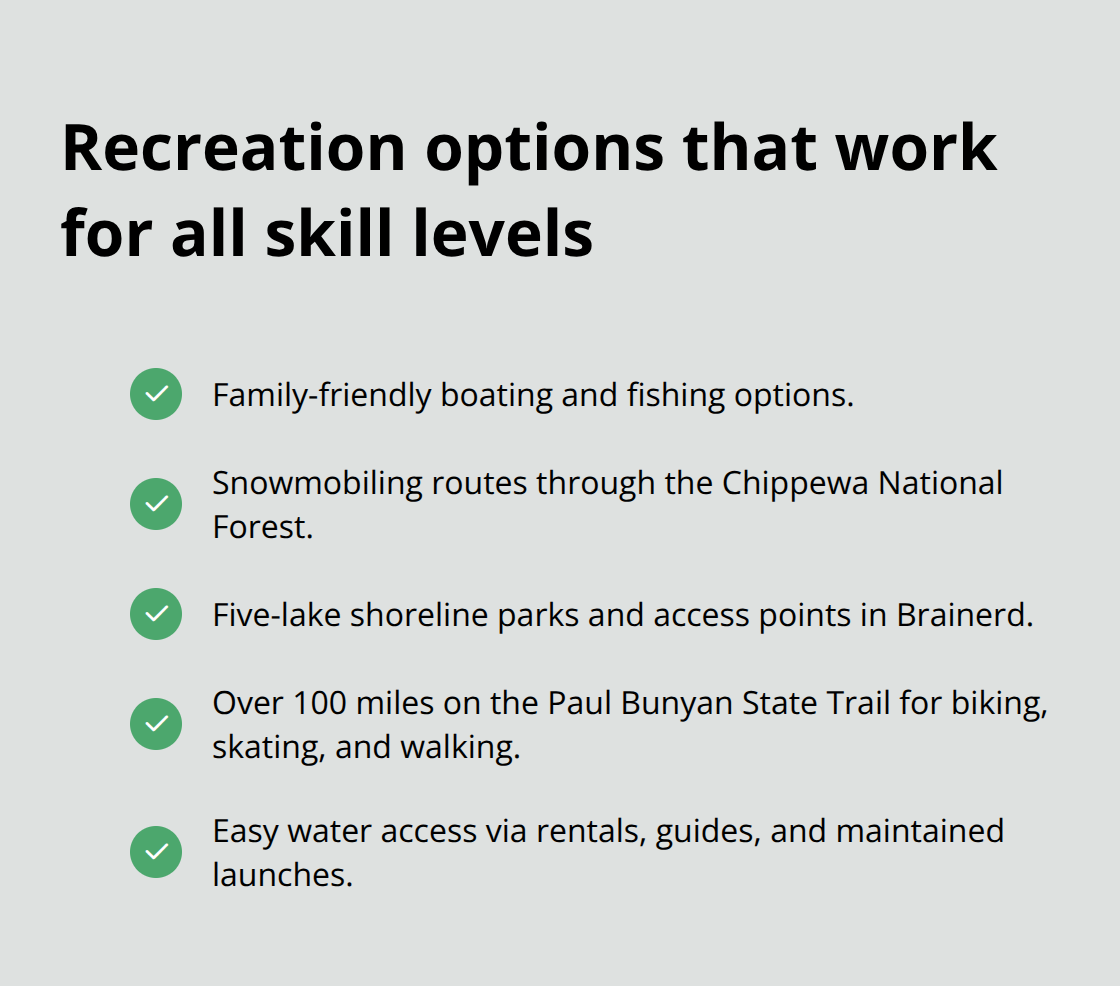
Minnesota has 822,450 registered watercraft, and communities that facilitate water access through rentals, guides, and maintained launch facilities see stronger visitor loyalty.
Lodging and Hospitality That Anticipate Needs
Third, welcoming communities pair accessible lodging with genuine hospitality services that anticipate visitor needs. Resorts like Madden’s on Gull Lake and Grand View Lodge offer on-site dining, golf, and family programming that eliminate the friction of planning separate activities. Professional vacation rental management transforms properties from functional spaces into memorable experiences. Quality operators handle aggressive marketing to reach the right guests, concierge services that answer questions before they become problems, and reliable cleaning and maintenance that ensure guests arrive to genuinely welcoming spaces. When visitors encounter consistent quality across lodging, dining, and services, they stop treating these communities as transactional destinations and start thinking of them as second homes.
The communities that excel at this balance-maintaining local character while providing reliable tourist infrastructure-build the kind of visitor loyalty that sustains their economies across seasons. This foundation of authentic engagement, accessible recreation, and quality hospitality creates the conditions for what happens next: the specific regions that have mastered all three elements.
Three Regions That Deliver on Every Front
Brainerd: The Multi-Lake Family Hub
Brainerd sits at the intersection of five lakes-Rice, Boom, Gull, Pelican, and North Long-making it Minnesota’s most accessible multi-lake hub for families who want variety without constant travel. Gull Lake Cruises operate year-round, the annual Ice Fishing Extravaganza in January attracts serious anglers, and the Gichi-ziibi Center for the Arts maintains consistent cultural programming. Lum Park and Kiwanis Park offer direct shoreline access with maintained facilities, eliminating the uncertainty of finding where to launch or picnic. Vacation rental properties in Brainerd maintain strong occupancy rates because visitors know they won’t exhaust activities-whether they book in July for water sports or January for ice fishing.
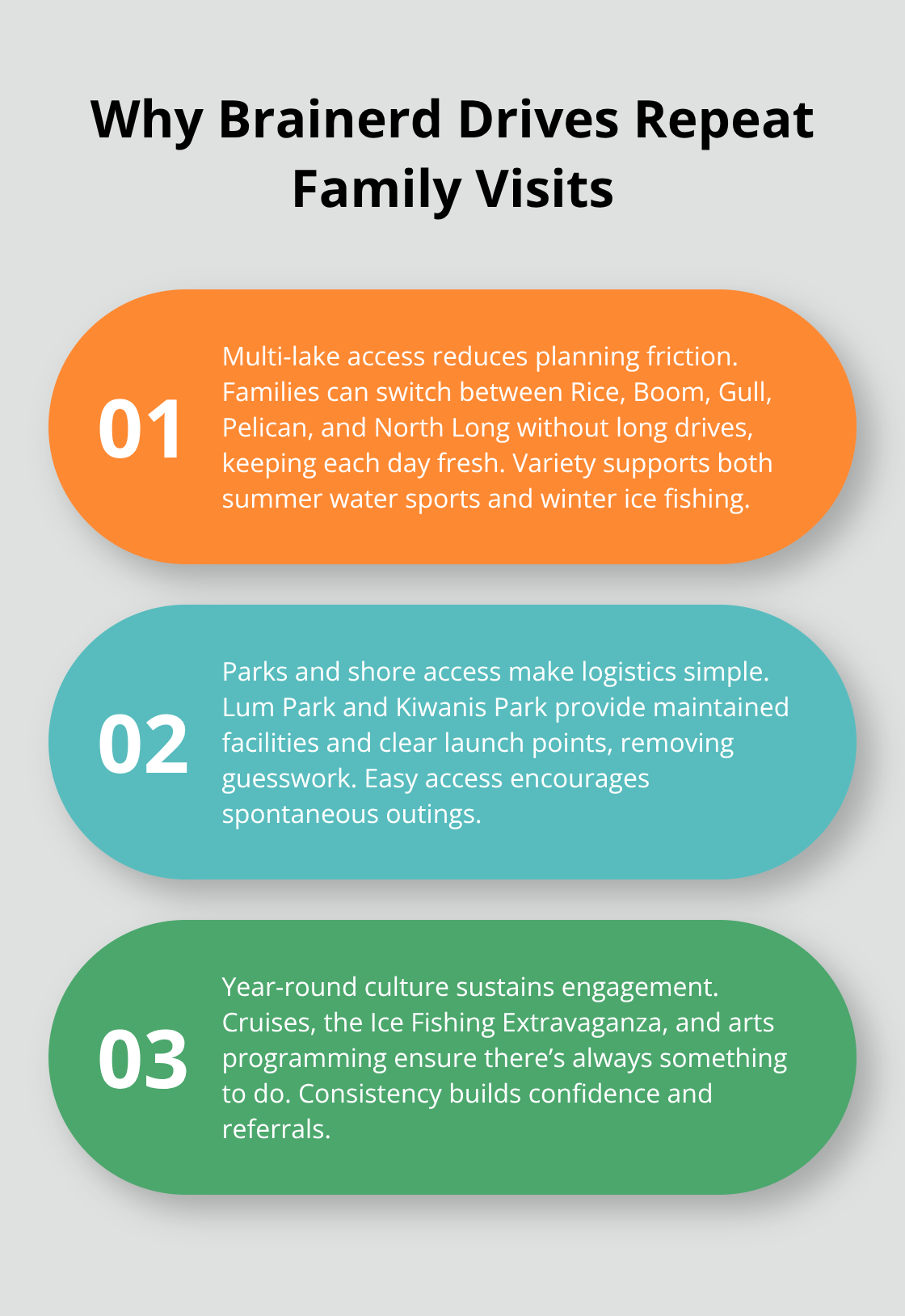
The infrastructure here supports repeat visits across seasons, which means guests return and refer friends.
Mille Lacs Lake: The Fishing-Focused Destination
Mille Lacs Lake, roughly 75 miles north of the Twin Cities, operates on a different model. It’s Minnesota’s second-largest lake and functions almost entirely around fishing, with guides available year-round and licensing straightforward through the Minnesota Department of Natural Resources. Families specifically choose Mille Lacs for structured fishing experiences rather than open-ended recreation, which means marketing to this audience requires precision-you’re attracting serious anglers and their families, not casual swimmers. The proximity to the Twin Cities means weekend trips dominate the calendar, creating reliable but compressed booking windows.
Leech Lake: The Northwoods Gateway
Leech Lake, anchored by Walker, represents the third model: it’s the gateway to Northwoods living. Walker combines lake access with Chippewa National Forest proximity, snowmobiling infrastructure, and local establishments like Jimmy’s Family Restaurant and Northern Lights Casino that create a complete experience. Winter drives traffic here more than summer because ice fishing and snowmobiling attract dedicated enthusiasts willing to travel farther. Properties in this region appeal to guests seeking genuine wilderness immersion rather than resort convenience, which means your marketing message shifts entirely-emphasize isolation, forest access, and seasonal adventure rather than family amenities.
Matching Your Marketing to Each Region’s Strengths
Each region demands different marketing approaches and attracts distinct visitor profiles. Brainerd works best for families planning week-long summer vacations with varied activities. Mille Lacs serves serious anglers and fishing-focused groups booking specific seasons. Leech Lake captures adventure-oriented guests and winter sports enthusiasts willing to drive north for authentic backcountry experience.
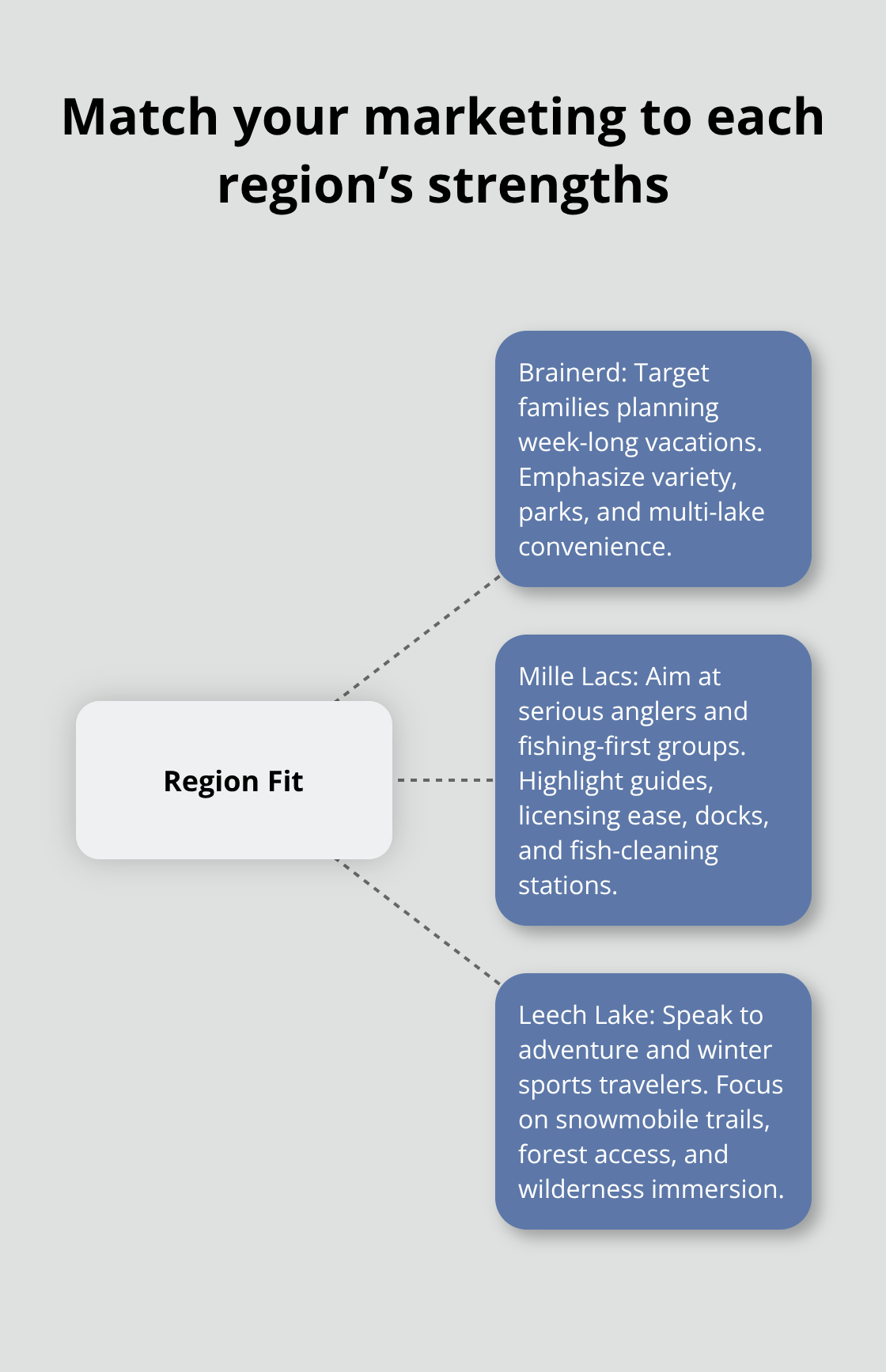
The mistake many property owners make is treating all three regions identically, using generic lake-community messaging that fails to resonate with any audience specifically.
Your rental description, photos, and pricing should reflect what each lake community actually offers. Brainerd properties need family-focused language, multiple activity photos, and flexible check-in policies. Mille Lacs rentals should highlight proximity to fishing guides, dock space, and fish-cleaning stations. Leech Lake properties require emphasis on forest views, snowmobile trail access, and rustic authenticity. Minnesota’s 11,842 lakes mean competition for visitor attention is fierce, and vague positioning guarantees your property sits empty while competitors with clear positioning fill their calendars. The communities that understand their distinct identity-and market accordingly-capture the guests who actually want what they offer. This precision in positioning determines which properties thrive across seasons and which ones struggle to fill their calendars, which leads directly to the infrastructure and support systems that separate successful rental operations from those that merely exist.
Why These Lake Towns Keep Growing Without Losing Their Soul
Infrastructure Investment Protects Environmental Assets
Minnesota’s strongest lake communities reject the false choice between prosperity and preservation. Brainerd, Mille Lacs, and Leech Lake all demonstrate that infrastructure investment and environmental stewardship operate as complements rather than conflicts. Brainerd’s five-lake network required coordinated park development across Lum Park, Kiwanis Park, and maintained public access points, yet the community protected shoreline buffer zones and restricted sprawl to specific districts. Mille Lacs maintained its fishing-first identity while upgrading guide services and licensing infrastructure through the Minnesota Department of Natural Resources, avoiding the resort-saturation trap that destroys fishing destinations. Leech Lake’s Walker invested in snowmobile trail systems and Chippewa National Forest access roads without fragmenting forest ownership or encouraging overdevelopment that would eliminate the wilderness appeal drawing visitors north.
Property Values Rise With Environmental Protection
The economic reality supporting this balance is straightforward: property values in established lake communities with strong environmental protections appreciate faster than those in areas experiencing unchecked development. Nisswa’s three-lake network and Paul Bunyan Trail infrastructure create pricing power for vacation rentals, while communities that over-commercialized their waterfronts experience guest complaints about crowding and declining return visits. Visitors pay premium rates for authenticity, which means protecting what makes each place distinct generates more long-term revenue than short-term extraction.
Local Businesses Coordinate Rather Than Compete
Local business networks in these towns actively coordinate marketing efforts rather than competing destructively. Grand Marais galleries, restaurants, and the North House Folk School function as an integrated visitor experience where one attraction drives traffic to others, expanding total visitor spending rather than fragmenting it. Walker’s Northern Lights Casino, Jimmy’s Family Restaurant, and lakeside lodges create similar ecosystem effects. Communities that formalize these partnerships through tourism boards or chamber coordination see measurable visitor retention improvements.
Cultural Programming Extends Shoulder Seasons
Brainerd’s Gichi-ziibi Center for the Arts anchors cultural programming that extends the shoulder seasons, filling what would otherwise remain empty weeks between summer and winter peaks. The strongest lake towns recognize that supporting local operators through preferential vendor relationships, cooperative marketing budgets, and infrastructure investment costs less than replacing failed businesses with corporate chains that leak revenue out of state. These three regions excel because they invested in the specific infrastructure their visitor base actually demands while protecting the environmental and cultural assets that differentiate them from generic vacation destinations.
Final Thoughts
Minnesota’s lake communities succeed because they refuse to choose between welcoming visitors and protecting what makes them worth visiting. Brainerd’s five-lake infrastructure, Mille Lacs’ fishing-focused identity, and Leech Lake’s wilderness access each demonstrate that authentic hospitality and environmental stewardship reinforce each other. Visitors return to these places year after year because they encounter genuine local culture, reliable recreational access, and quality services that anticipate their needs.
The pattern across these regions is consistent: communities that invest in infrastructure matching their specific character attract guests who actually want what they offer. Brainerd families book repeatedly because the multi-lake setup eliminates planning friction, while Mille Lacs anglers return because guides and dock facilities work seamlessly. Leech Lake adventurers come back because snowmobile trails and forest access remain protected and maintained, creating the visitor loyalty that sustains local economies across seasons.
Planning your next Minnesota lake getaway means matching your priorities to the right lake community rather than treating all lake towns identically. If your family wants varied activities without constant travel, Brainerd delivers; if you’re serious about fishing, Mille Lacs offers year-round structure; if you seek genuine wilderness immersion, Leech Lake provides authentic backcountry experience. Work with Up North Property Management to handle the details that transform a rental property into a memorable experience, managing marketing, bookings, cleaning, and maintenance so your stay arrives ready.