

Minnesota lakeside cabins demand more than good intentions-they need a solid plan. Whether you’re dealing with brutal winters or summer humidity, we at Up North Property Management know that cabin life Minnesota tips make the difference between a property that thrives and one that deteriorates.
This guide covers what actually works: winterizing systems, maintaining spaces across seasons, and protecting your investment year-round.
Winterproofing Your Minnesota Cabin
Roof and Insulation Protection
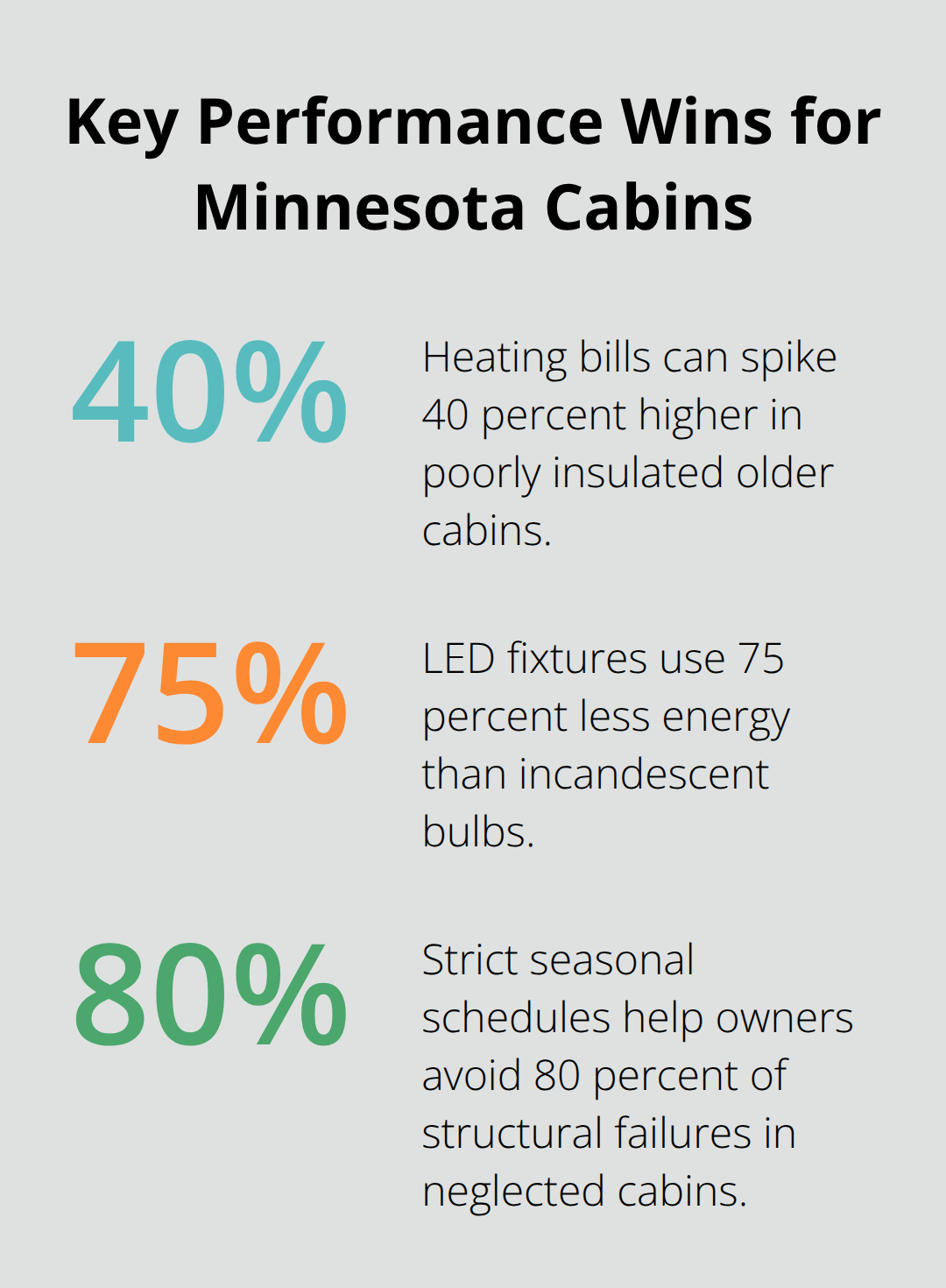
Your cabin’s structural integrity depends on preparation that starts in fall, not when the first blizzard arrives. Contractors must inspect your roof before snow loads accumulate-Minnesota receives an average of 50 inches of snow annually, and ice dams form when heat escapes through poor insulation. Check for gaps where the roof meets walls, examine flashing around chimneys and vents, and verify that gutters slope correctly to prevent water pooling. Attic insulation to an R-60 can provide a good barrier to heat loss, with code minimum for new buildings at R-49; older cabins often have R-19 or less, which guarantees frozen pipes and heating bills that spike 40 percent higher than properly insulated homes. Blown-in cellulose or fiberglass costs between 1,500 and 3,000 dollars but pays for itself within three to five winters through reduced heating expenses.
Plumbing System Winterization
Your plumbing system fails catastrophically when water freezes inside pipes, and Minnesota’s freeze-thaw cycles accelerate this damage. Drain all exterior lines before November, blow out water from outdoor faucets with compressed air, and add antifreeze to P-traps and rarely used drains. Install heat tape on vulnerable supply lines under the cabin, particularly along exterior walls and in unheated crawl spaces. If your cabin sits vacant during winter, leave cabinet doors open under sinks to allow warm air circulation, and set your thermostat to around 55°F-yes, even when unoccupied.
Moisture Control and Mold Prevention
Moisture and mold thrive in cabins with poor ventilation and temperature swings. Condensation collects on windows and walls when warm air meets cold surfaces, creating mold colonies within weeks. Install exhaust fans in bathrooms that vent outside (not into the attic), use a dehumidifier during humid months, and ensure crawl space vents remain clear of debris. Sump pumps and interior drainage systems prevent groundwater from entering basements during spring thaw; Minnesota’s clay soils retain water poorly, so proper grading away from the foundation and working gutters are non-negotiable. Apply a moisture barrier to basement walls if you lack one, and inspect the foundation annually for cracks where water enters.
With your cabin’s foundation and systems protected against winter’s harshest conditions, you can shift focus to the systems that keep your family comfortable year-round-and that’s where proper heating and plumbing upgrades make all the difference.
Making Your Lakeside Cabin Comfortable Year-Round
Your cabin’s comfort depends on systems that work without drama and spaces designed for how you actually live. The previous chapter addressed keeping your structure intact through Minnesota winters, but now we focus on the climate control and layout decisions that determine whether your family wants to spend time there or avoids it. A lakeside cabin with poor heating zones wastes money and creates cold bedrooms that guests avoid. Similarly, outdoor spaces that lack weather protection become unusable the moment rain arrives, turning your investment into an expensive storage unit.
Heating Zones and Window Strategy
The solution is deliberate design that matches Minnesota’s seasonal reality: brutal winters demand efficient heat zones, while summer humidity requires dehumidification alongside air conditioning. Open-plan living areas work well for gathering, but they create heating nightmares in winter if every square foot demands equal warmth. Install a zoned heating system with separate thermostats for bedrooms, living areas, and guest quarters so you heat only occupied spaces. Radiant floor heating under tile or concrete in bathrooms and kitchens costs 8 to 12 dollars per square foot but provides superior comfort and reduces overall heating demand compared with forced air alone.
Window placement matters more than most cabin owners realize: south-facing glass captures winter sun to reduce heating costs, while north-facing walls should minimize glazing to prevent heat loss. Double or triple-glazed windows with low-emissivity coatings cost 30 to 50 percent more upfront but cut heating expenses by 15 to 20 percent annually. Interior lighting should include dimmer switches in living areas and bedrooms since Minnesota’s long winter nights create psychological challenges without proper illumination control. Task lighting in kitchens and reading areas prevents eye strain, while ambient lighting in hallways and bedrooms reduces nighttime tripping hazards for visiting family.
Outdoor Living Spaces That Work
Outdoor living spaces separate mediocre cabins from ones your family actually uses. A screen porch with a wood-burning fireplace extends your season, protecting against mosquitoes while maintaining the outdoor feel that lakeside life demands. Decks and patios should face south or southwest to capture afternoon warmth, and they need proper drainage underneath to prevent rot and mold in Minnesota’s wet climate. Install exterior lighting on timers or motion sensors to enhance security and create ambiance for evening gatherings, with LED fixtures that consume 75 percent less energy than incandescent bulbs.
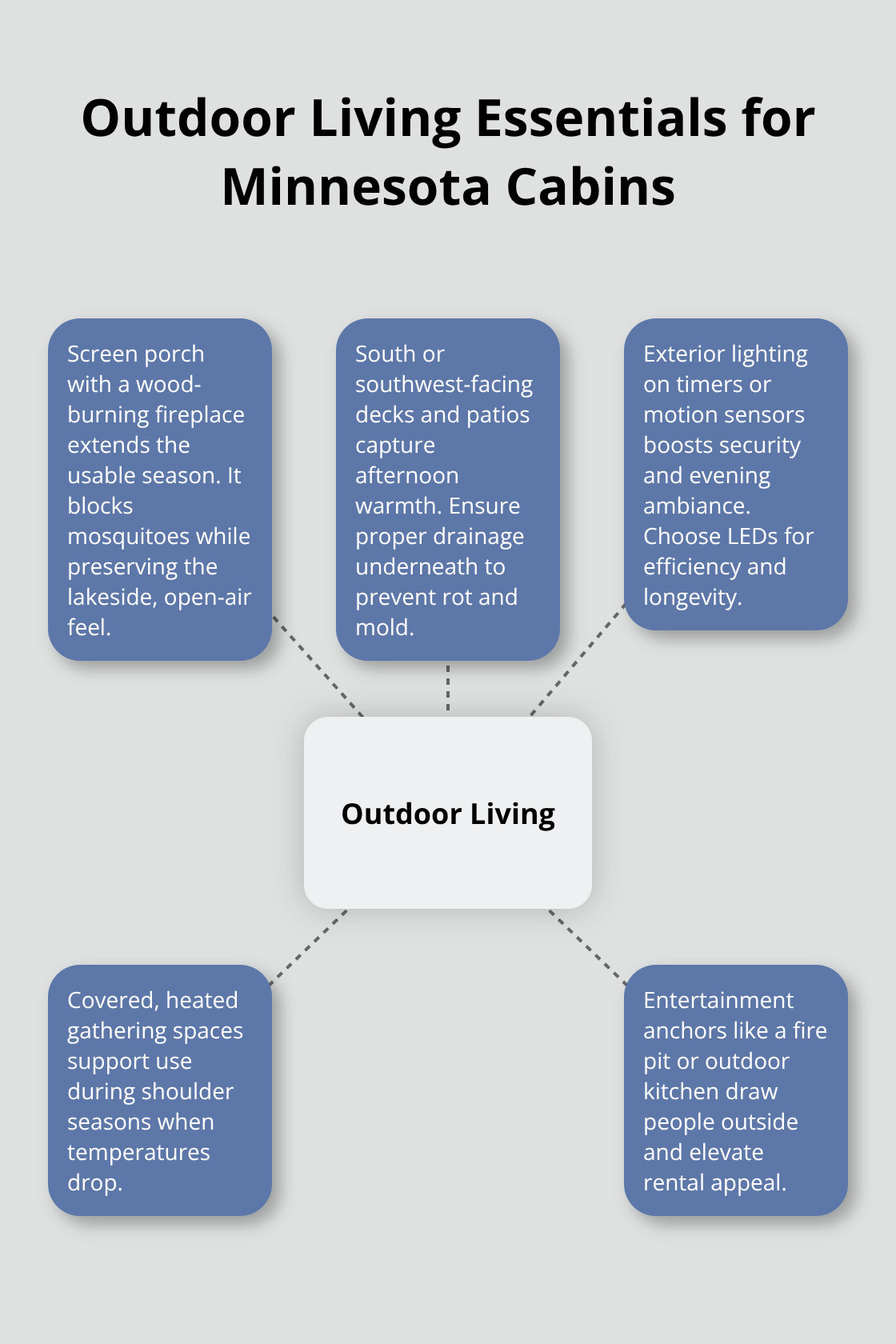
Entertainment areas need intentional design: a fire pit or outdoor kitchen draws people outside, while covered spaces with heating allow use during shoulder seasons when temperatures drop. If you rent your cabin through a vacation rental service, these outdoor amenities become marketing assets that justify higher nightly rates. Guests specifically seek properties with functional decks, fire pits, and covered gathering spaces according to Airbnb’s 2024 travel trends report.
The combination of zoned heating, strategic window placement, and deliberate outdoor space design transforms a cabin from a seasonal burden into a property that genuinely accommodates your lifestyle across all four seasons. Yet comfort means nothing if your cabin deteriorates from neglect-which is why the next chapter addresses the seasonal maintenance tasks that protect your investment and keep systems running smoothly throughout the year.
Seasonal Maintenance Keeps Your Cabin Investment Protected
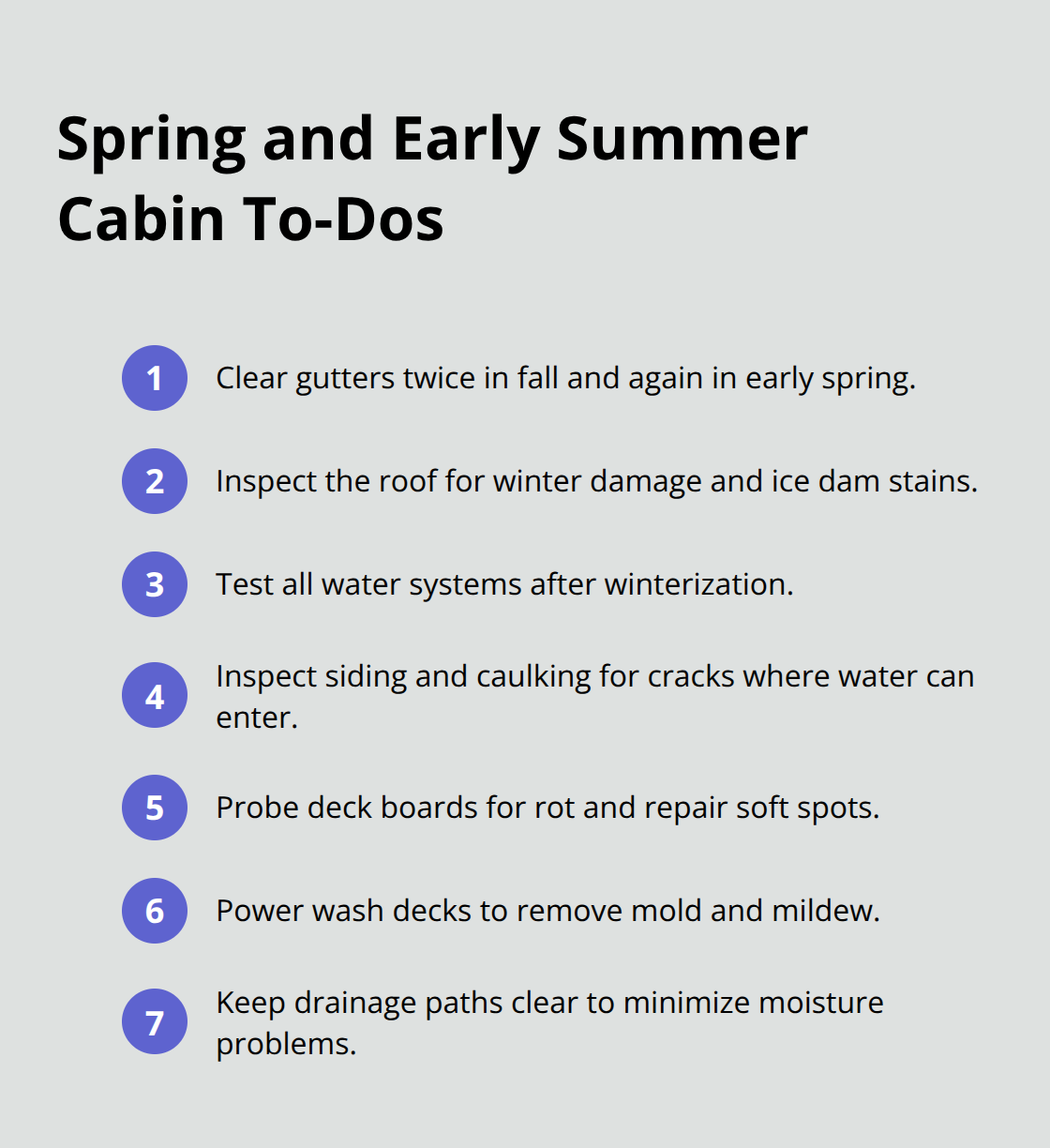
Minnesota cabins face unique challenges that seasonal neglect turns into expensive problems fast. Freeze-thaw cycles crack foundations, unoccupied periods invite pest invasions, and heavy snow loads damage roofs when gutters clog in fall. Cabin owners who maintain properties on a strict seasonal schedule avoid 80 percent of the structural failures we see in neglected cabins. Spring demands immediate action: inspect your roof for winter damage and ice dam stains that signal moisture penetration, test all water systems after months of winterization, and clear gutters of debris that accumulated over fall and winter.
Spring and Early Summer Tasks
Minnesota receives 50 inches of snow annually, and that weight stresses roofs and gutters relentlessly. Gutters clogged with leaves and pine needles back up water that freezes, creating ice dams that force water under shingles and into attic spaces. Clear gutters twice in fall (mid-October and late November) and again in early spring before heavy rains arrive. Inspect exterior siding and caulking for cracks where water enters, check deck boards for rot by pressing a screwdriver into suspicious soft spots, and power wash the deck surface to remove mold and mildew that thrive in Minnesota’s humid environment.
Summer Pest and Outdoor Management
Summer maintenance shifts focus to pest management and outdoor systems. Mosquitoes breed in standing water, so empty bird baths and planters weekly, and inspect dock areas for stagnant water that collects in boat lifts or pooled sections. Carpenter ants invade cabins through wood-to-ground contact and damaged siding-maintain a 6-inch clearance between soil and any wood structure, and treat exterior wood with preservative stain every 2-3 years to prevent decay that attracts insects.
Fall Preparation Before Winter Arrives
Fall preparation is where most cabin owners fail, and this negligence cascades into winter disasters. Shut off exterior water lines and blow them out with compressed air by early November, before the first hard freeze. Drain all garden hoses and store them indoors, disconnect propane grills and store tanks outside in a shed away from the cabin, and add antifreeze to P-traps in guest bathrooms and utility sinks that rarely drain during winter. Move outdoor furniture, grills, and decorative items inside or under heavy tarps, secure loose gutters with additional brackets, and trim tree branches hanging over the roof-wet snow accumulates on branches and snaps them onto your cabin. Check basement or crawl space sump pumps by pouring water into the pit to confirm they activate; a failed pump during spring thaw floods your foundation and costs thousands in water damage remediation.
Winter Monitoring and Wildlife Control
Winter monitoring requires remote vigilance: install motion-sensor cameras and check them weekly for signs of break-ins or wildlife damage, monitor heating system performance through smart thermostats that alert you to temperature drops indicating furnace failure, and arrange monthly property checks with a local service provider who can respond quickly to emergencies. Wildlife becomes aggressive during winter-rodents enter through gaps smaller than a dime, so seal holes around pipes and vents with steel wool and caulk, and set snap traps in basements and crawl spaces rather than relying on poison that leaves carcasses rotting inside walls. Deer strip bark from young trees during harsh winters, so wrap vulnerable saplings with plastic tree guards or hardware cloth before November. Professional cabin care providers who understand Minnesota’s climate can handle these tasks systematically, reducing your stress and protecting your property when you cannot visit in person.
Final Thoughts
Cabin ownership in Minnesota demands commitment, but the payoff justifies the effort. You now understand that winterizing your roof and plumbing systems prevents catastrophic failures, that zoned heating and strategic window placement create comfort without waste, and that seasonal maintenance tasks protect your investment across all four seasons. Cabin life Minnesota tips work because they address the specific challenges your property faces: freeze-thaw cycles, heavy snow loads, moisture infiltration, and pest invasions that destroy unprepared cabins.
The reality is simple: cabins that thrive have owners who plan ahead. Define your cabin’s purpose early-whether it’s a year-round residence or seasonal getaway-and build a comprehensive budget that includes land, construction, ongoing property taxes, maintenance, and utilities. Work with professionals who understand Minnesota’s climate and shoreline regulations, consult the Minnesota Department of Natural Resources for official guidelines on shoreline development and maintenance, and ensure your architect performs a site analysis that evaluates topography, views, and solar orientation to optimize your design.
Professional cabin care providers handle the seasonal work that most owners cannot manage alone. Spring opening tasks, fall winterization, pest control, and winter monitoring require local knowledge and reliable execution, and Up North Property Management offers full-service vacation rental management in Northern Minnesota, handling marketing, bookings, cleaning, and maintenance so your property stays in top condition. The emotional value of cabin ownership competes with financial practicality, and honest assessment determines whether Minnesota lakeside cabin ownership delivers returns that spreadsheets cannot measure.