

Long-term Minnesota rentals deliver what most investors want: steady income and predictable returns. We at Up North Property Management have seen firsthand how this strategy outperforms short-term alternatives in our market.
The right approach to tenant screening, pricing, and maintenance separates successful portfolios from struggling ones. This guide walks through the strategies that actually work.
Why Long-Term Rentals Beat the Volatility Game
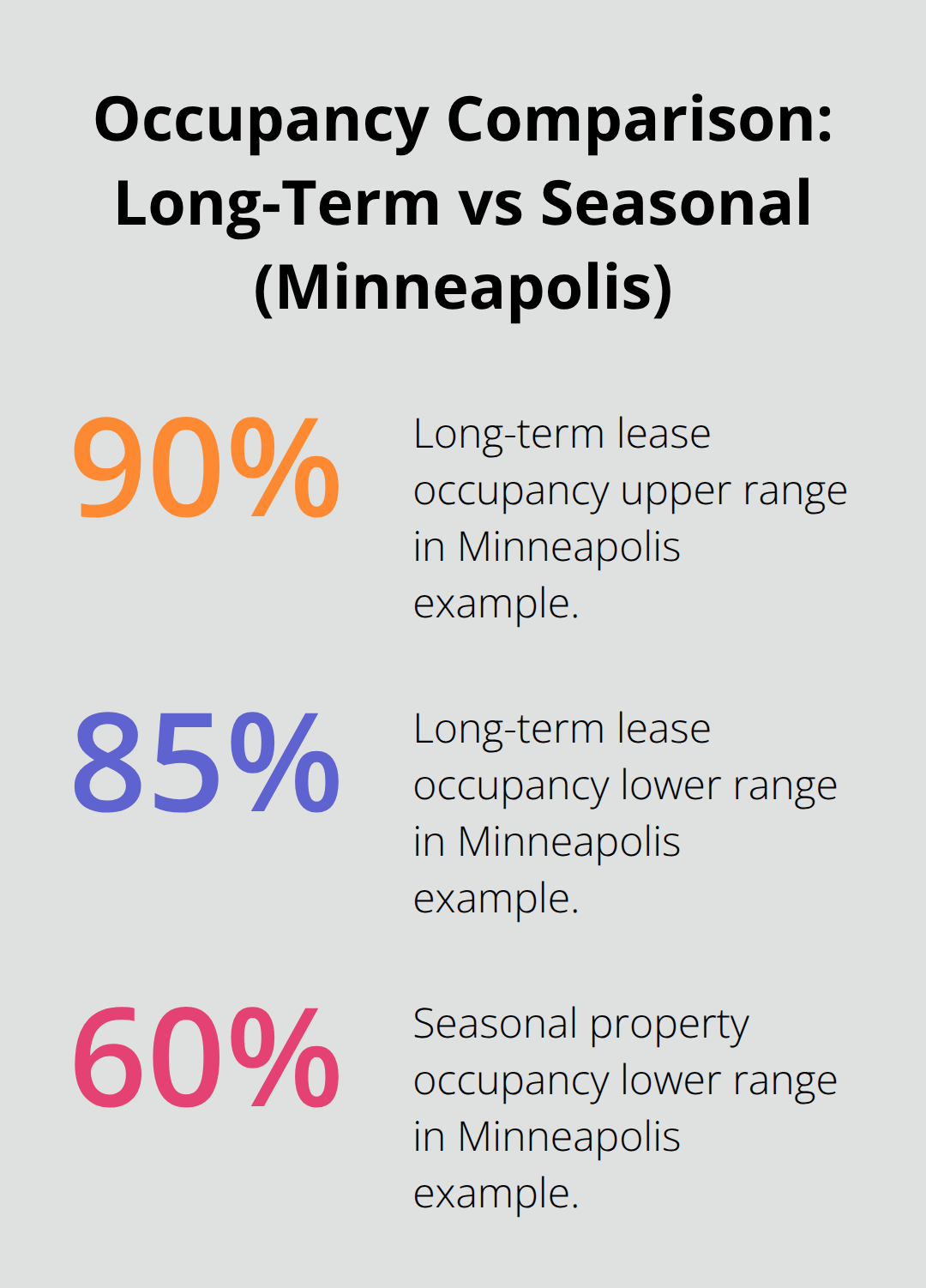
Minnesota’s rental market rewards consistency, and long-term leases deliver exactly that. Year-round tenants generate rent every month without the gaps that plague short-term operators. A tenant signed to a 12-month lease produces predictable revenue that you can count on for budgeting, mortgage payments, and reinvestment. Short-term rentals spike during summer and shoulder seasons but crater in winter, forcing owners to manage seasonal swings and the costs that accompany them. Properties with stable, long-term tenants outpace vacation rental portfolios in terms of actual cash landing in accounts month after month. The National Association of Realtors provides research on rental property returns, but those returns depend on occupancy. A Minneapolis property with an 85-90% occupancy rate on long-term leases beats a seasonal property at 60-70% occupancy, especially when factoring in turnover costs.
Long-term tenants reduce that drain significantly.
Neighborhoods Where Tenants Stay Longer
In Linden Hills, tenant retention runs strong and demographics favor longer stays. Owners benefit from larger units with outdoor space that tenants want to keep. The math is straightforward: fewer turnovers mean lower costs and higher net income. Properties in transit-accessible areas like Uptown and North Loop, where working professionals cluster, maintain occupancy rates above 90% because demand remains constant throughout the year.
Vacancy Risk Separates Winners from Losers
Long-term leases eliminate the uncertainty that short-term rental owners face. A property with five-year-old tenants paying $1,400 monthly generates $16,800 annually with virtually zero vacancy risk once signed. Compare that to a vacation property that might sit empty for weeks between bookings, requiring constant marketing and price adjustments to fill gaps. Minnesota winters amplify this risk for short-term operators-tourism drops sharply from November through March, leaving properties dark and generating zero income. Long-term tenants need housing year-round. Your vacancy rate becomes a function of lease timing and tenant quality, not seasonal demand. Financial planning becomes straightforward when rent arrives on the same day each month, regardless of weather or tourism trends. You can project cash flow 12 months ahead, schedule maintenance during predictable windows, and build reserves without gambling on peak seasons.
Income You Can Actually Plan Around
Predictability matters more than most investors realize. A long-term rental generating $1,500 monthly income lets you commit to a mortgage payment, insurance, property taxes, and maintenance budgets with confidence. Hennepin County property taxes represent a major recurring expense-reviewing tax assessments and consulting a local tax advisor helps, but you need stable income to absorb potential increases. Short-term rentals force you to reserve larger cash buffers because occupancy fluctuates. Long-term rentals let you operate leaner and reinvest surplus income faster. When you sign a tenant to a two-year lease at $1,400 per month, you lock in $33,600 in committed income. You can model property appreciation, equity buildup through principal paydown, and tax deductions for mortgage interest, maintenance, and depreciation without hedging against vacancy spikes. This certainty appeals to investors building generational wealth-you compound steady returns over decades rather than chasing short-term peaks.
What Tenant Screening Actually Prevents
The stability long-term rentals provide depends entirely on tenant quality. Thorough background checks and credit verification separate reliable payers from problem tenants. A tenant with a solid payment history and stable employment reduces the risk that income stops mid-lease. Clear lease agreements and property rules establish expectations upfront, preventing disputes that drain time and money. Regular communication and maintenance schedules keep properties in condition and tenants satisfied, which drives renewal rates higher. When tenants renew leases (rather than move out), you avoid the full cost of turnover and the weeks or months of vacancy that follow. Properties with strong tenant retention generate the predictable income that makes long-term rental investing work.
How to Screen Tenants Who Actually Pay and Stay
Tenant quality determines whether long-term rentals deliver the stability promised in the previous section. A tenant with poor credit history and employment gaps will break your income projections faster than any market downturn. Rigorous screening upfront prevents months of collection attempts, legal costs, and vacancy later.
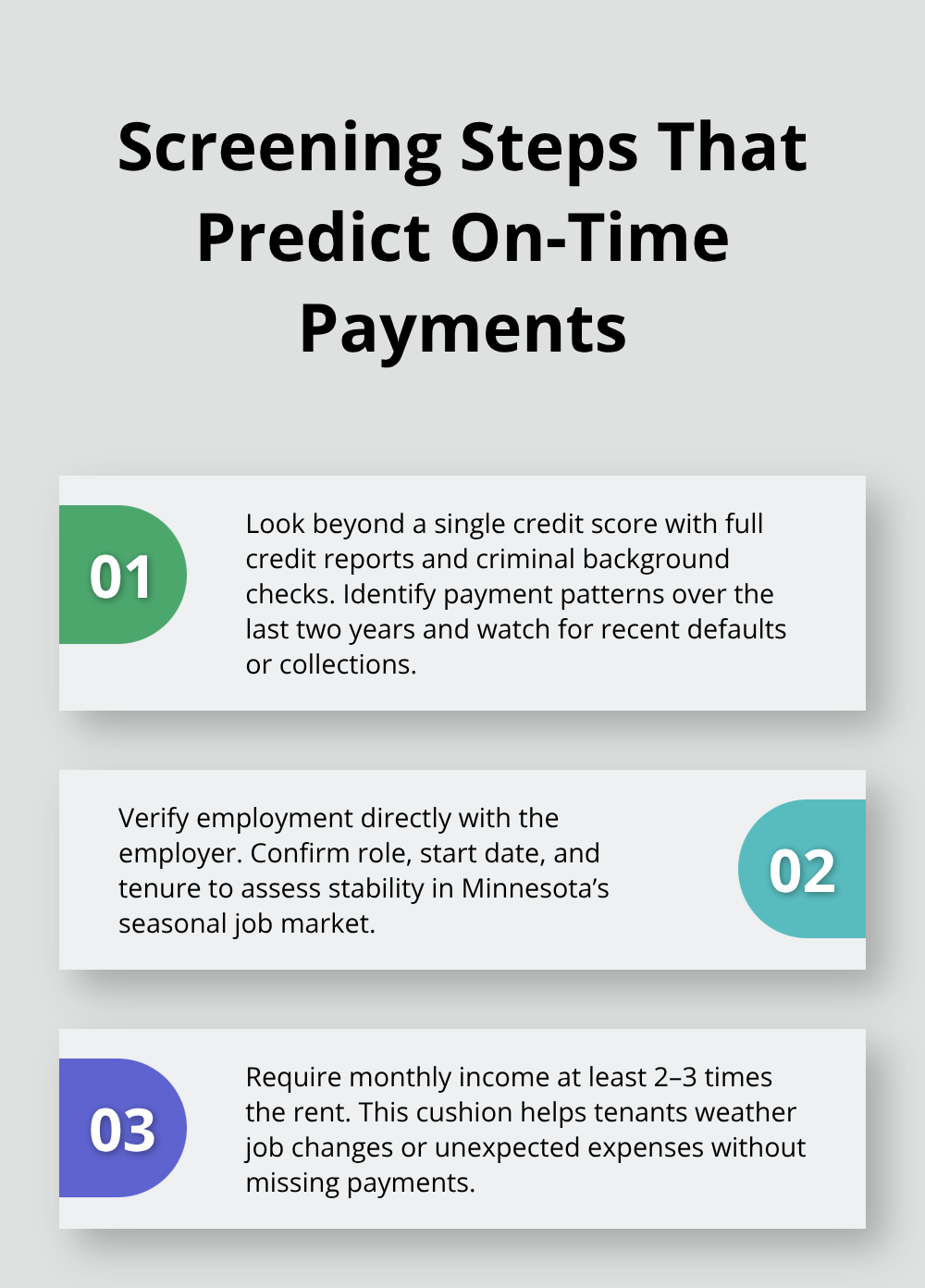
Start with credit verification and background checks that go beyond a simple credit score. Look at payment patterns over the last two years-a tenant who consistently paid late but eventually paid tells you something different than someone with recent defaults.
Verify Employment and Income Stability
Employment verification matters more than most landlords realize. Call the employer directly and confirm the tenant works there, the position they hold, and their tenure. A tenant three months into a new job carries more risk than someone stable for five years, especially in Minnesota’s seasonal economy where layoffs spike in winter months. Verify employment and income stability by requiring monthly income to be at least two or three times the monthly rent. This ratio protects you if a tenant loses a job or faces unexpected expenses.
Check References and Eviction History
Check references from previous landlords specifically about payment timeliness and property condition. A previous landlord who mentions late payments or damage reveals something a credit report might not fully capture. Reject applicants with eviction history in the last five years. Minnesota Statute 504B.321 requires a detailed written 14-day notice to pay before eviction proceedings, but you want to avoid that process entirely through upfront screening.
Write Clear Lease Terms That Protect You
Clear lease agreements prevent disputes that waste your time and income. Write lease terms that specify exactly when rent is due, what late fees apply (capped at 8 percent of unpaid rent under Minnesota law), and consequences for lease violations. Include utility billing disclosure requirements-as of January 1, 2025, leases must disclose how monthly utility bills are calculated if you aportion charges. State maintenance expectations, quiet hours, and guest policies to avoid conflicts later.
Schedule Regular Maintenance and Inspections
Regular maintenance communication and scheduled inspections keep properties in rentable condition and show tenants you actively manage the property. A tenant living in a well-maintained unit renews their lease at a higher rate than one in a neglected property. Schedule inspections quarterly and document conditions with photos. Hennepin County winters demand durable exterior and interior maintenance-invest in weather-resistant finishes and preventive maintenance to lower vacancy risk and repair costs during cold months. Respond to maintenance requests within 14 days or per inspector orders; Minnesota Statute 504B.161 requires landlords to keep rental units in reasonable repair and comply with health and safety laws.
Properties that meet these standards attract and retain quality tenants who pay on time and stay longer. This tenant stability feeds directly into the income predictability that makes long-term Minnesota rentals outperform other strategies. With strong tenants locked in place, you can now focus on pricing your property competitively and protecting your investment through strategic financial decisions.
Maximizing Property Value and Minimizing Risk
Pricing your Minnesota rental property correctly determines whether you capture market value or watch competitors pull in higher rents from similar units. Owners often leave thousands annually by guessing at prices instead of anchoring to data. Start by comparing rents for similar units in your target neighborhood, adjusting for parking, furnishing, and amenities. Walkable neighborhoods like Uptown and North Loop command premium rents because tenants pay for location and convenience. A two-bedroom in North Loop with modern finishes, secure entry, and in-unit laundry justifies $1,650 monthly; the same unit without those features drops to $1,350. Powderhorn’s proximity to transit attracts working professionals willing to pay more for bike storage and off-street parking. Pull comps monthly, not annually. Rental markets shift with employment, school calendars, and seasonal demand. If three similar properties in your area recently leased at $1,400 and you list at $1,550, expect longer vacancy and tenant quality issues. Vacancy costs money fast-a single month empty costs you $1,400 in lost rent plus $500 in turnover cleaning and repairs. Underpricing by $100 monthly means you recover that month’s vacancy in just five months of occupancy.
Strategic Pricing Based on Local Market Data
Price aggressively but accurately based on current neighborhood data, and you fill units faster with better tenants. Hennepin County property taxes represent your largest recurring expense after the mortgage. Review tax assessments and consult a local tax advisor to challenge inflated valuations. Many owners overpay property taxes simply because they never questioned their assessment. When you price correctly, you account for these costs and still maintain healthy cash flow.
Property Maintenance and Upgrade Investments
Properties in good condition rent faster and attract tenants who stay longer and pay on time. Minnesota winters destroy poor maintenance. Water damage, cracked caulk, failing weatherstripping, and worn roofing lead to expensive repairs and tenant complaints. Invest in durable, weather-resistant finishes upfront rather than react to winter damage later. Linden Hills properties with larger units and outdoor space perform well because owners maintain them proactively. Modern appliances, quality flooring, updated bathrooms, and reliable HVAC systems justify higher rents. Northeast Minneapolis offers value-add potential through renovations. Inspect for structural updates needed, check zoning for added units or finished basements, and obtain contractor estimates before purchasing. Budget for permits and holding costs, then compare post-renovation rents to comparable properties to confirm your investment returns. A $15,000 kitchen renovation that supports a $150 monthly rent increase pays for itself in 100 months of occupancy. Tenants renew leases at higher rates when properties are maintained well. Respond to repair requests within 14 days and schedule quarterly inspections to catch problems before they escalate. A tenant living in a maintained property stays longer than one in a neglected unit, directly reducing your vacancy risk and turnover costs. Schedule maintenance during predictable windows when you know tenant occupancy, and prioritize preventive work over emergency repairs, which cost 40 percent more and disrupt tenant satisfaction.
Insurance and Legal Protections for Landlords
Minnesota rental law protects tenants extensively, which means you must understand your obligations and structure leases carefully. Late fees cannot exceed 8 percent of unpaid rent under Minnesota Statute 504B.177. Eviction for nonpayment requires a detailed written 14-day notice to pay before you can file in court. That timeline matters: a tenant who ignores the notice costs you 30-45 days before the eviction hearing, plus court fees and attorney costs.
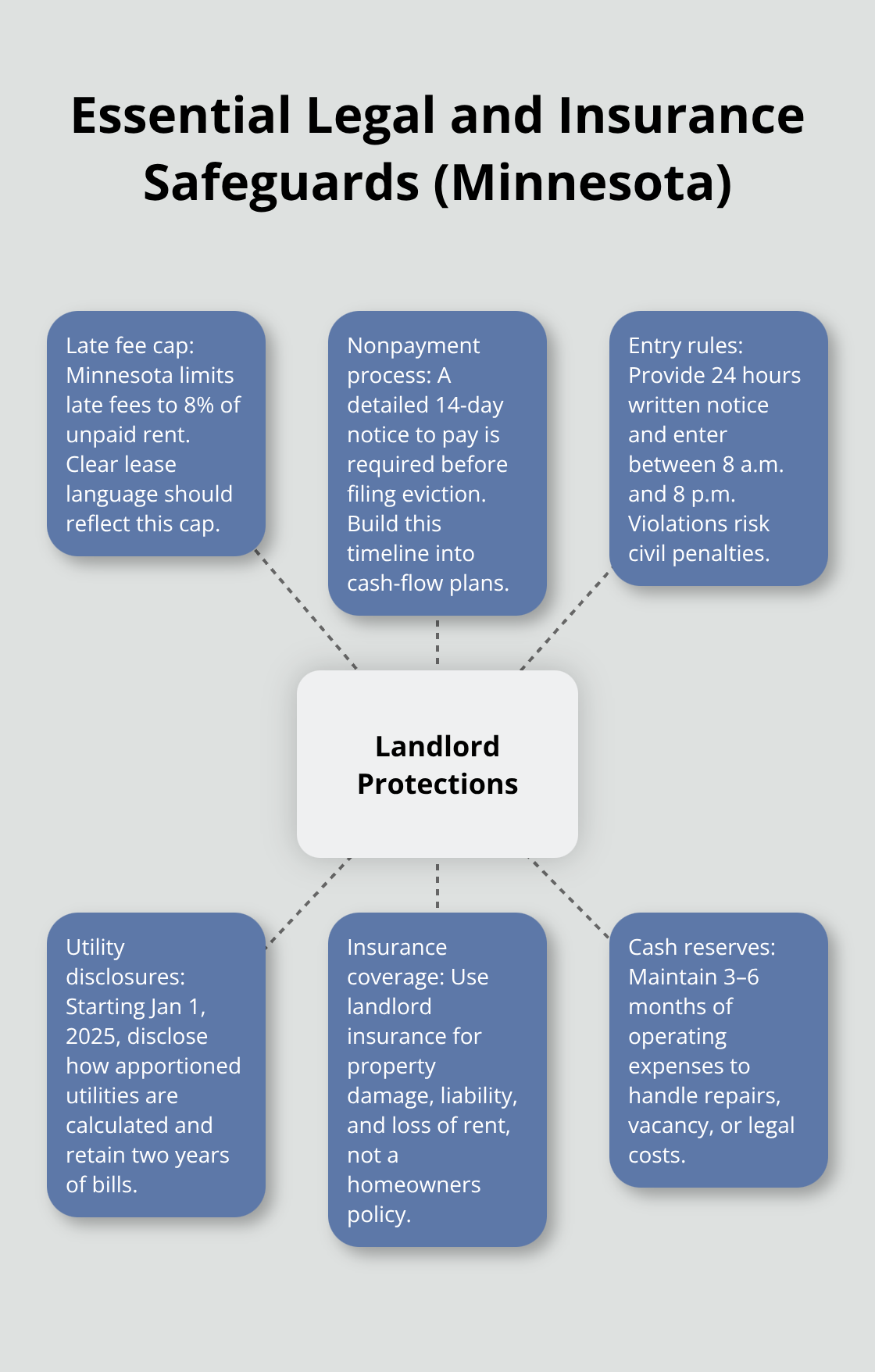
Clear lease language prevents disputes. Specify when rent is due, how much late fees are, utility billing calculations if you apportion charges, and maintenance expectations. As of January 1, 2025, leases must disclose how monthly utility bills are calculated if you charge tenants apportioned amounts. Landlords must provide actual bills on request and keep two years of bills available. Violations expose you to tenant claims and regulatory penalties. Tenant privacy protections require 24 hours written notice before entry between 8 a.m. and 8 p.m. for reasonable business purposes. Violations can trigger civil penalties up to $500 per violation. Tenants cannot face penalties for calling police or seeking emergency help. Violations allow tenants to sue for $250 or actual damages plus attorney fees. Insurance protects against liability claims, property damage, and lost rent. A standard homeowners policy excludes rental properties. Landlord insurance covers property damage, liability, and loss of rent if the property becomes uninhabitable. Hennepin County winters create freeze-thaw cycles that burst pipes and damage foundations. Ensure your policy covers water damage and business interruption. A $50,000 water damage claim without proper coverage wipes out years of rental income. Maintain adequate reserves equal to three to six months of operating expenses (mortgage, taxes, insurance, and maintenance). This buffer absorbs unexpected repairs, vacancy, or legal costs without forcing you to liquidate other investments or miss payments.
Final Thoughts
Long-term Minnesota rentals deliver what short-term strategies cannot: predictable income, lower vacancy risk, and the financial stability that builds wealth over decades. The strategies outlined in this guide-rigorous tenant screening, accurate market-based pricing, and proactive maintenance-separate investors who succeed from those who struggle. When you combine quality tenants with well-maintained properties in strong neighborhoods, you create a portfolio that generates consistent cash flow regardless of seasonal demand or market volatility.
Building a stable rental portfolio requires discipline and attention to detail. Screen tenants thoroughly to avoid payment problems and evictions that drain months of income. Price properties based on current neighborhood data, not guesses, so you capture market value while filling units quickly. Maintain properties to Minnesota winter standards so tenants stay longer and you avoid expensive emergency repairs. Understand your legal obligations under Minnesota rental law so you protect yourself from costly disputes and penalties.
The foundation of portfolio stability is tenant retention-when tenants renew leases instead of moving out, you avoid the full cost of turnover and the weeks of vacancy that follow. If you own properties in Northern Minnesota and want to explore how professional management can optimize your returns, Up North Property Management handles the operational details that consume time and create stress.