
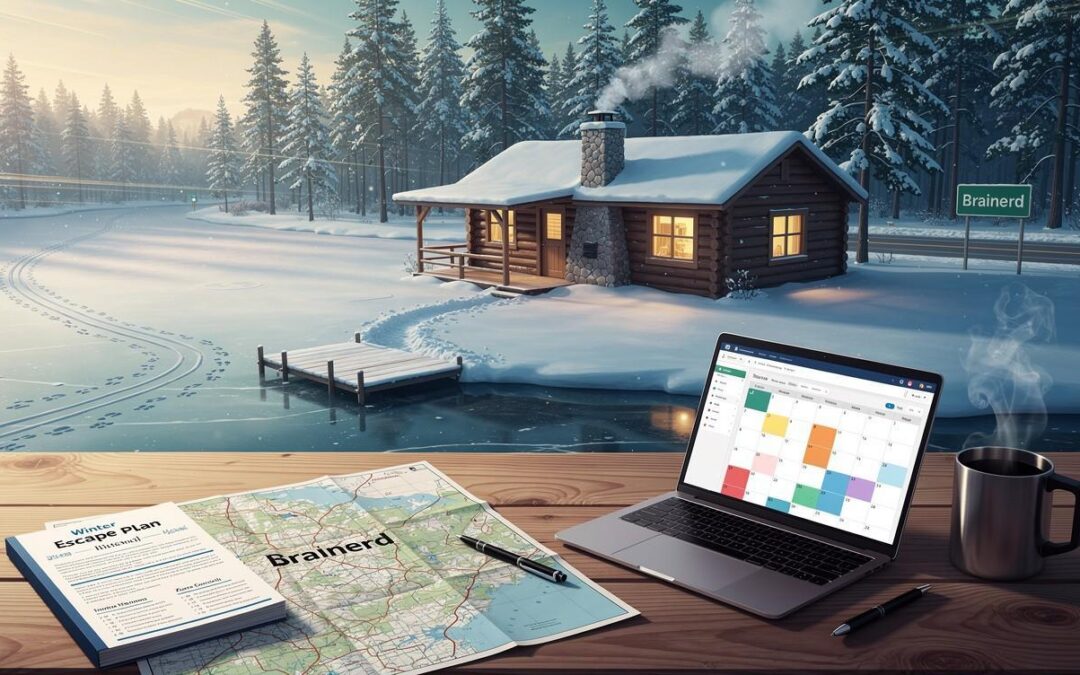
Brainerd transforms into a winter wonderland when temperatures drop, offering some of Minnesota’s best cold-weather experiences. At Up North Property Management, we’ve watched countless guests discover why Brainerd winter retreats rank among the region’s most rewarding getaways.
This guide walks you through everything you need-from selecting the right activities to booking accommodations and packing smart. Whether you’re chasing ice fishing adventures or carving through snowy trails, we’ll help you plan a winter escape you won’t forget.
What Winter Activities Make Brainerd Worth Visiting
Ice Fishing on Pelican Lake
Brainerd’s winter lineup attracts serious outdoor enthusiasts because the activities here deliver real experiences, not tourist fluff. Ice fishing on Pelican Lake dominates the winter calendar-the Brainerd Jaycees Ice Fishing Extravaganza, founded in 1991, draws thousands of anglers annually and has donated over $200,000 to local charities since its inception. Pelican Lake Fish House Rentals offers year-round guiding services if you’ve never fished through ice before, which matters because success depends on knowing where fish congregate under frozen surfaces.
The water stays fishable from December through early March, though late January and February typically see the best conditions. Book your fish house rental at least three weeks ahead during peak season-availability shrinks fast once the holidays pass. This advance planning prevents disappointment and locks in prime locations on the lake.
Cross-Country Skiing and Snowshoeing
Cross-country skiing and snowshoeing trails branch across the region with legitimate mileage. The Cut Lake Trail features a 17-kilometer track-set with shelters and fireplaces, making it practical for families who need rest stops. Cuyuna Lakes State Trail runs eight miles through the recreation area and connects to the broader trail network, so you can extend your distance if conditions permit.
The Paul Bunyan Trail spans 115 miles from Brainerd to Bemidji and delivers scenic lake and forest views, though tackling the entire route requires multi-day planning and solid fitness. Most visitors tackle 15 to 25-mile segments instead, which proves more realistic for a weekend trip. Spring snow conditions deteriorate rapidly after mid-March, so plan your trip for January through early March to maximize trail quality.
Downhill Skiing and Fat Biking
Mount Ski Gull provides downhill skiing alongside family-friendly programs and equipment rentals across multiple slopes-this matters for visitors who want vertical terrain without driving to Lake Superior. Winter events like the Cuyuna Lakes Icykel Fat Tire Race, which offers 10k, 20k, and 40k routes on groomed trails, show that fat biking has gained serious traction in the region.
Gull Lake Lighted Trail enables safe, scenic night riding under lights-a genuine advantage if you work during daylight hours and want evening adventures. These options mean you can structure your days around your schedule and energy levels rather than forcing yourself into rigid activity windows.
When to Visit and How to Book Your Winter Escape
Timing Your Trip for Peak Snow Conditions
Late January through early February represents the sweet spot for Brainerd winter trips because snow conditions peak during this window and most holiday crowds have cleared out. The Brainerd Lakes Area receives consistent snowfall from December onward, but January delivers the most reliable base depth for ice fishing and trail activities. March brings warming trends that deteriorate snow quality rapidly, especially on trails exposed to afternoon sun. If you visit before mid-January, you risk thinner ice on lakes and inconsistent trail grooming.
Securing Accommodations Early
Book your accommodations at least six to eight weeks ahead if you’re targeting late January or early February, since peak-season availability disappears quickly. Properties with concierge services matter here because your rental contact can coordinate gear rentals, guide bookings, and activity logistics while you finalize travel details. Vacation rental managers who offer full-service support handle everything from snowmobile reservations to dinner reservations at local restaurants, streamlining your entire trip.
Structuring Your Day-by-Day Schedule
Your day-by-day schedule should anchor around specific activities rather than vague time blocks. If ice fishing on Pelican Lake ranks first on your list, book your fish house rental immediately after securing accommodations. Structure your first full day around fishing because you’ll want morning light and manageable energy levels for your initial experience with ice conditions.
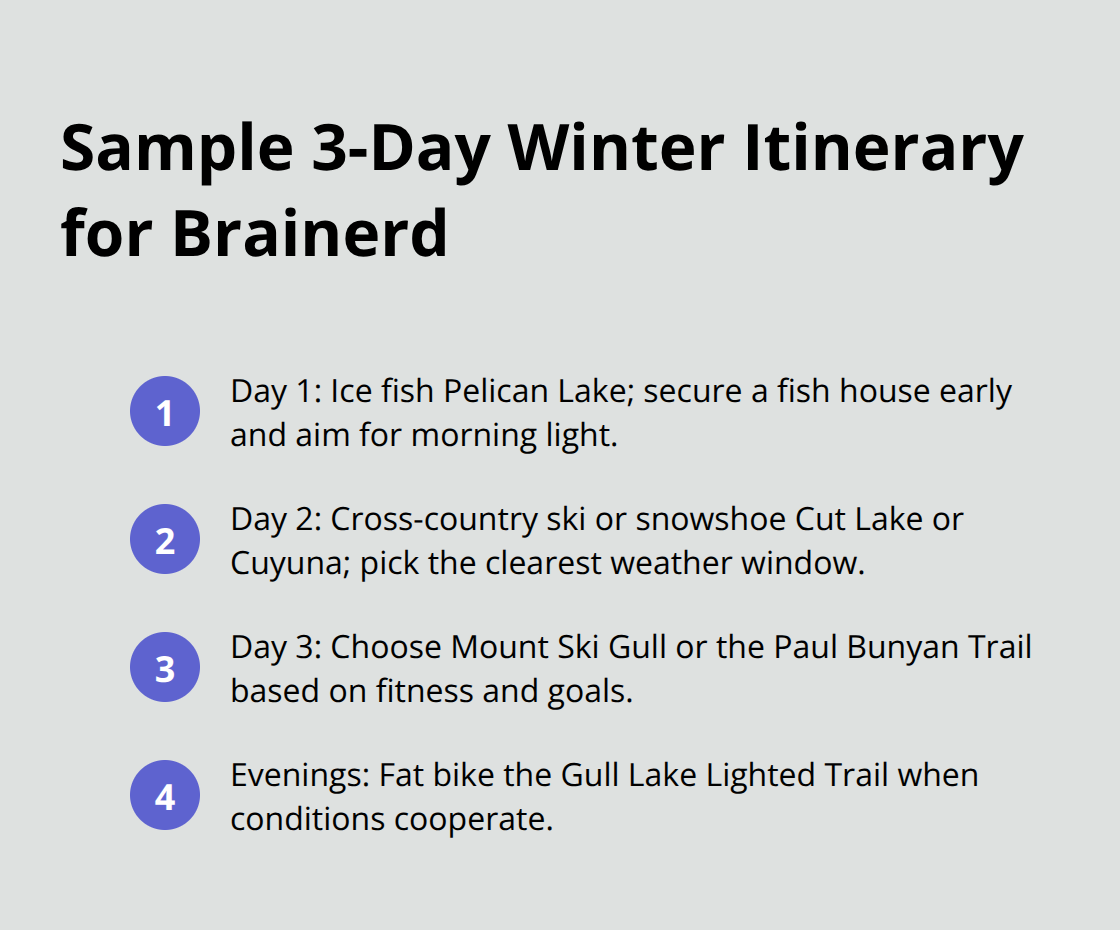
Reserve your second day for cross-country skiing or snowshoeing on trails like Cut Lake or Cuyuna Lakes State Trail, which require less advance booking but demand better weather windows. Block your third day for either Mount Ski Gull if you want downhill terrain or the Paul Bunyan Trail for longer-distance skiing, depending on your fitness level. Evening activities like fat biking on Gull Lake Lighted Trail work best on nights when weather cooperates, so keep these flexible in your schedule.
Checking Conditions Before You Head Out
Check trail conditions through the Brainerd Lakes Area Snowmobile Trails website before finalizing each day’s plan, since grooming reports change based on recent snowfall and temperature swings. This structured approach prevents wasted time figuring out what’s open and where to go, letting you maximize actual adventure time over logistical scrambling. With your itinerary locked in and accommodations booked, you’ll want to focus on what gear and clothing actually protects you against Brainerd’s winter elements.
What to Pack and How to Budget Your Winter Trip
Essential Gear for Brainerd’s Extreme Cold
Brainerd’s winter demands specific gear choices that separate comfortable trips from miserable ones. Layering matters more than single heavy jackets because you’ll transition between active outdoor time and warming up indoors repeatedly throughout each day. Start with moisture-wicking base layers like merino wool or synthetic materials that pull sweat away from your skin, then add a fleece or wool mid-layer for insulation, and finish with a waterproof outer shell that blocks wind and wet snow.
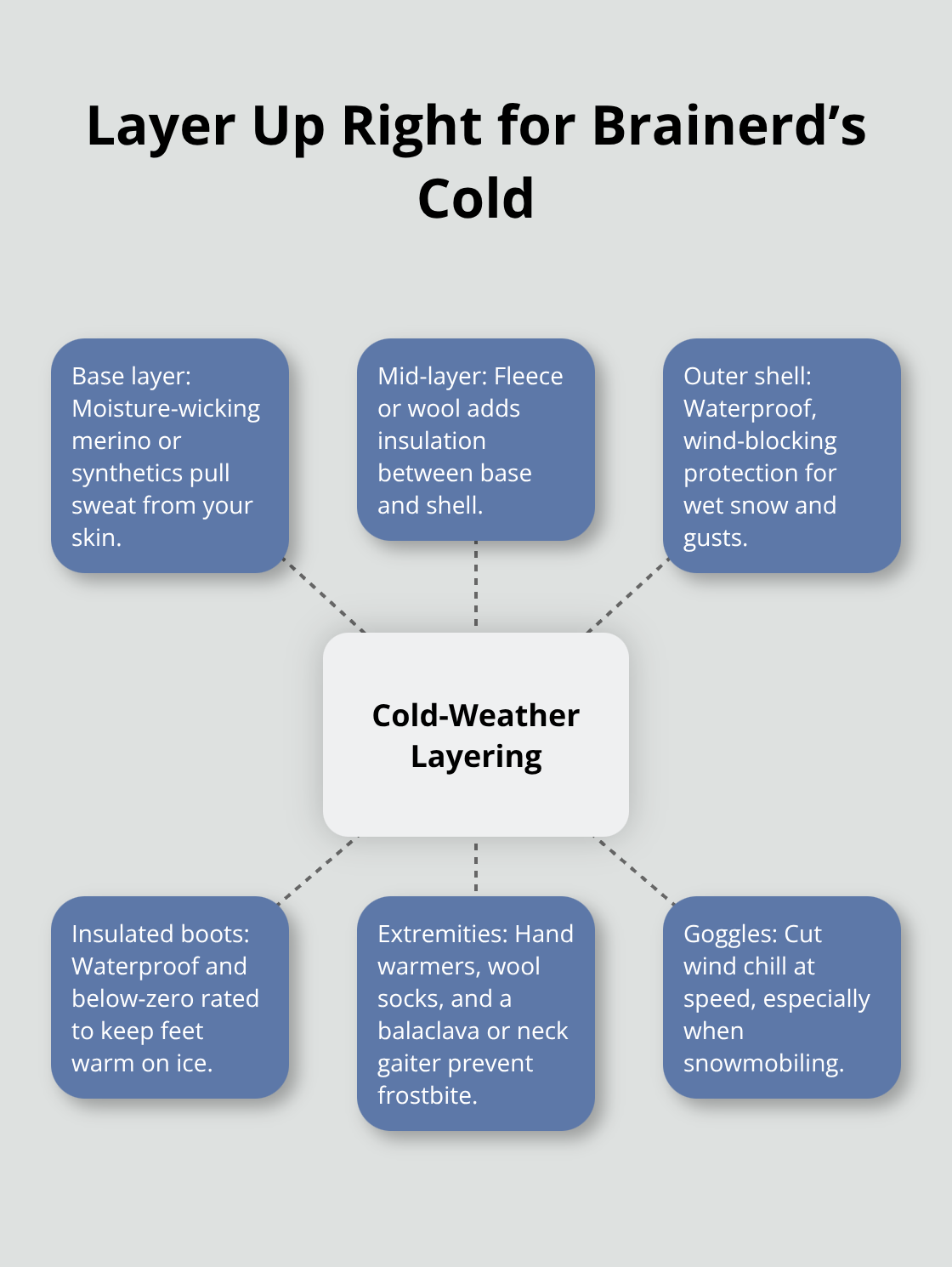
Insulated, waterproof boots rated for temperatures below zero make the actual difference between enjoying ice fishing and counting minutes until you can thaw your feet indoors. Brands like Sorel and The North Face produce legitimate cold-weather boots that cost $150 to $250, and skimping here guarantees a ruined trip. Hand warmers, wool socks rated for extreme cold, and a balaclava or neck gaiter protect extremities where frostbite develops fastest. Goggles matter for snowmobile riding because wind chill at speed drops temperatures dramatically below what thermometers show.
Activity-Specific Equipment Rentals
You don’t need to own specialized equipment for every winter activity. Ice fishing requires fish houses, augers, and rods-Pelican Lake Fish House Rentals provides year-round equipment and guides if you’ve never fished through ice before. Snowmobile rentals typically run $150 to $200 daily through local outfitters like SPR Motorsports & Marine near Pequot Lakes, which stock top brands including Polaris, Can-Am, and Yamaha.
Cross-country skis and snowshoes rent affordably at local shops, and Mount Ski Gull offers downhill equipment rentals alongside lift tickets. Fat bikes for the Cuyuna Lakes Icykel Fat Tire Race or Gull Lake Lighted Trail also rent locally, so you can test activities before investing in personal gear. This rental approach lets you try multiple sports without hauling equipment across Minnesota.
Budgeting for Your Three to Four-Day Trip
Budget planning for Brainerd winter trips can start from affordable options when you include accommodations, activities, meals, and gear rentals. Vacation rental properties in the area start around $99 per night for basic options and climb to $300 plus for luxury lakefront homes with hot tubs and fireplaces, so your lodging choice drives overall costs significantly.
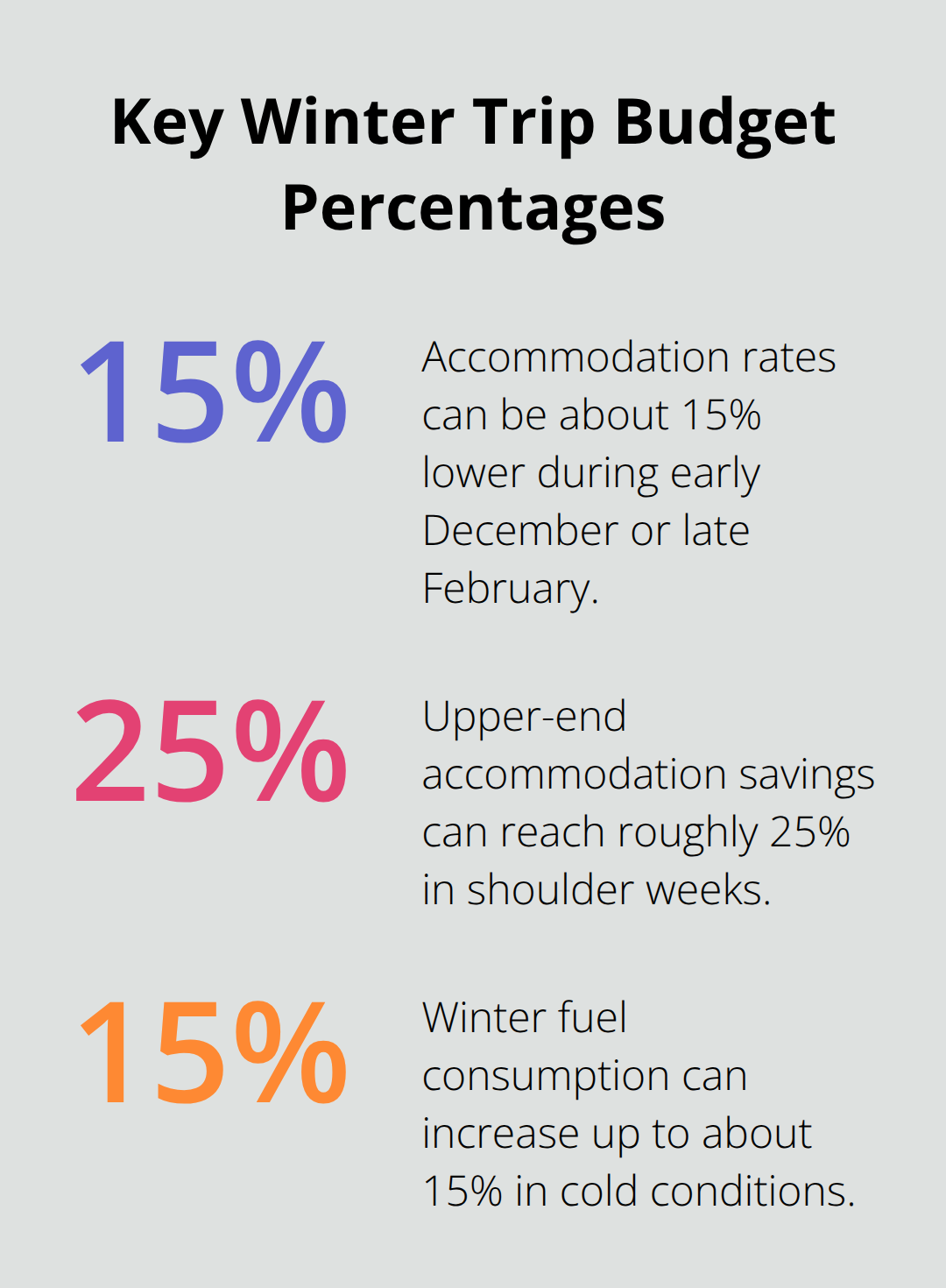
Activity costs vary widely: ice fishing guide services through Pelican Lake Fish House Rentals cost roughly $300 to $400 for a full day, while cross-country skiing on public trails costs nothing beyond trail pass fees if required. Snowmobile rentals typically run $150 to $200 daily, and Mount Ski Gull lift tickets average $45 to $65 per day depending on season timing. Road conditions from the Twin Cities require standard winter tires or chains, and winter fuel consumption increases 10 to 15 percent over normal driving due to engine inefficiency in cold temperatures, so budget extra for gas.
Timing Your Trip to Maximize Savings
Travel timing matters for costs: visiting during shoulder seasons like early December or late February typically offers 15 to 25 percent lower accommodation rates than peak late January and early February weeks, though snow reliability decreases outside the peak window. Front-load your spending on accommodations with concierge services because rental managers coordinate activity bookings, gear rentals, and restaurant reservations, eliminating the scrambling that wastes time and money on redundant bookings or missed opportunities. Properties managed through full-service vacation rental companies handle marketing, bookings, cleaning, and maintenance, ensuring your rental arrives in top condition without hidden surprises that inflate costs mid-trip.
Final Thoughts
Brainerd winter retreats deliver genuine experiences that justify the planning effort. Ice fishing on Pelican Lake connects you to a tradition that has drawn thousands of anglers since 1991, while cross-country skiing on Cut Lake and the Paul Bunyan Trail offers miles of forest and lake scenery without crowds. Mount Ski Gull and fat biking on Gull Lake Lighted Trail round out your options, so you can structure days around your fitness level and interests rather than settling for whatever feels convenient.
The timing matters more than most visitors realize-late January through early February provides peak snow conditions, manageable crowds, and reliable trail grooming that transforms your trip from frustrating to rewarding. Booking accommodations six to eight weeks ahead prevents the scramble that kills momentum, and selecting properties with concierge services eliminates the logistical headaches that drain energy before you even start your first activity. Packing smart separates comfortable trips from miserable ones, since insulated boots, layered clothing, and activity-specific rentals cost far less than replacing a ruined vacation with another trip.
Brainerd deserves your winter getaway because the region combines legitimate outdoor activities with reliable infrastructure and accessible accommodations. Start your booking process now through Up North Property Management, which handles everything from property management to concierge services that coordinate your entire itinerary. With your lodging locked in and your activity schedule structured, you’ll arrive in Brainerd ready to experience Minnesota’s winter at its finest.