
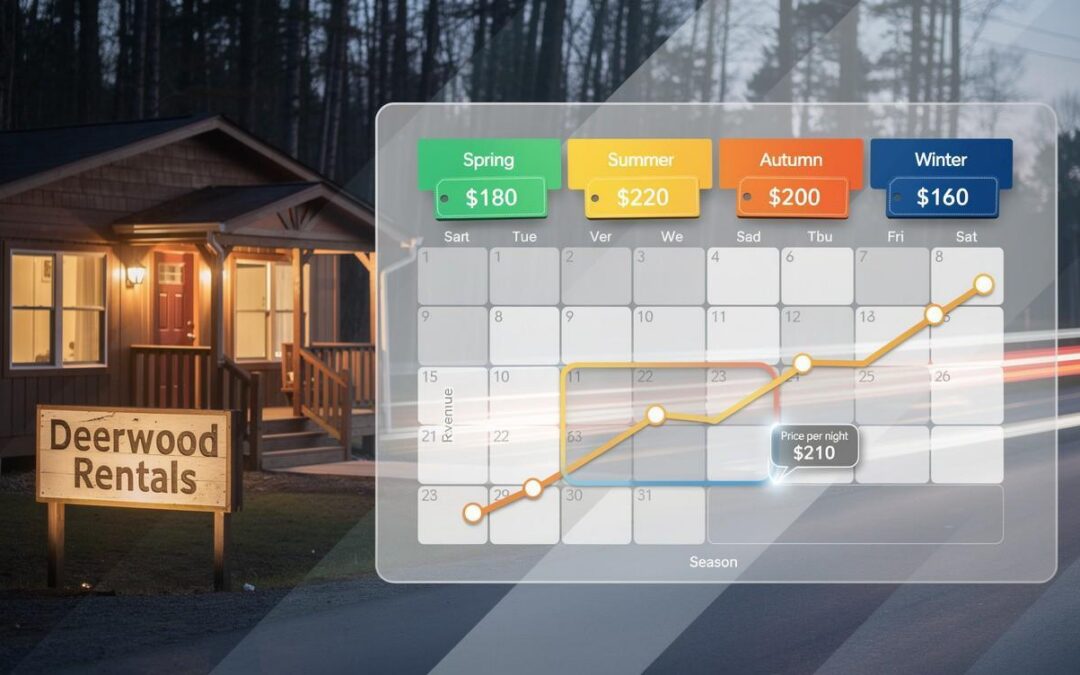
Deerwood seasonal rentals can generate wildly different income depending on when you list your property. The difference between peak season rates and off-season pricing often determines whether you break even or build real wealth from your investment.
We at Up North Property Management have seen property owners leave thousands on the table by using flat-rate pricing year-round. This guide shows you exactly how to adjust your rates strategically across every season.
When Deerwood Rental Demand Peaks and Valleys
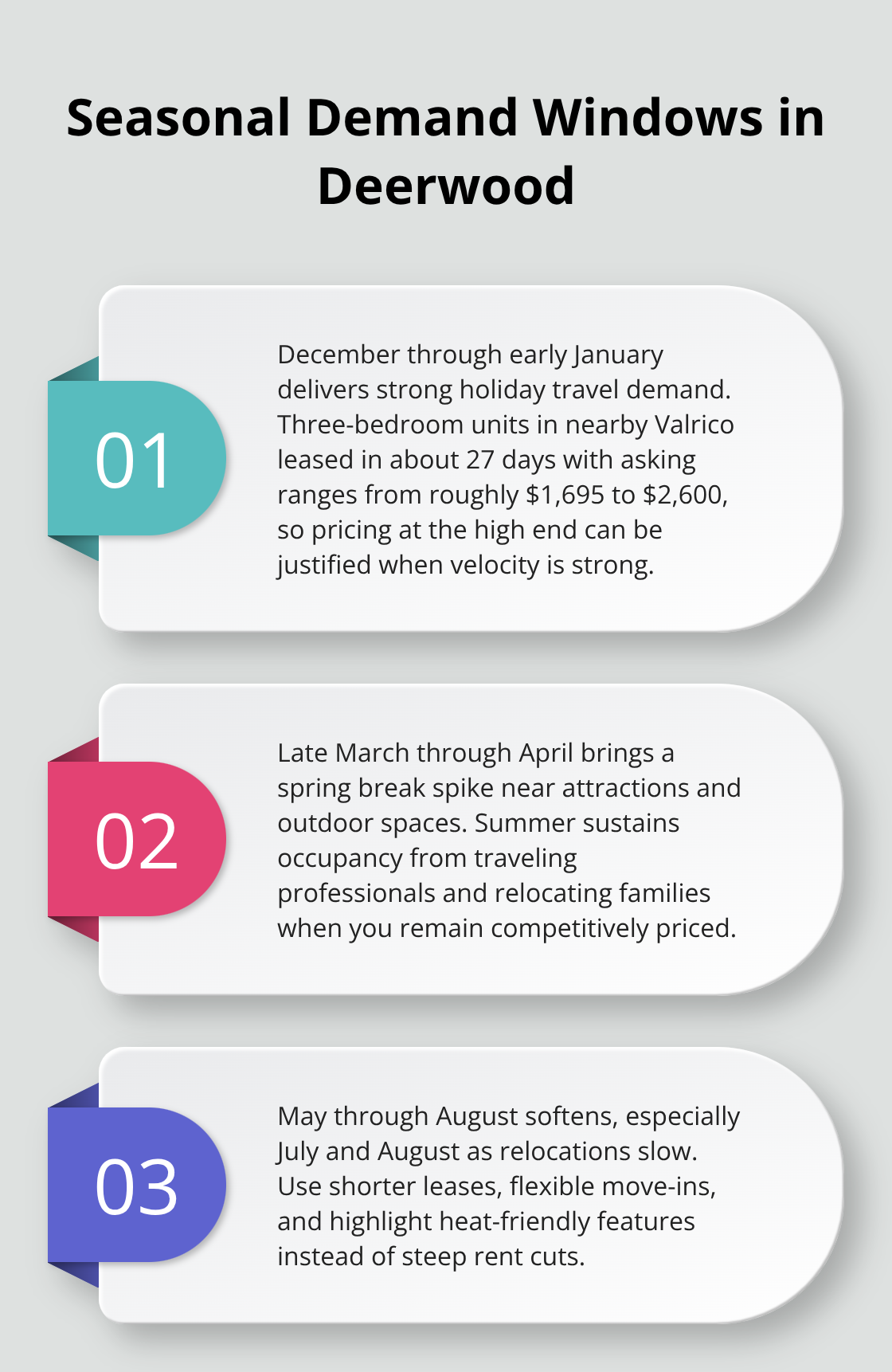
Deerwood’s rental demand follows predictable patterns tied to school calendars, holidays, and regional tourism. December through early January sees strong demand from holiday travelers and families visiting the Jacksonville area, with 3-bedroom units leasing in approximately 27 days according to December 2025 Valrico rental data. This speed matters because faster occupancy allows you to raise rates without fear of extended vacancies. The sweet spot for December pricing sits at the higher end of your market range-3-bedroom units in nearby Valrico rented from $1,695 to $2,600 monthly, so pricing aggressively during this window makes financial sense.
Spring and Summer Demand Windows
Spring break season (late March through April) drives another demand spike, particularly for properties near family attractions and outdoor spaces. Summer months attract traveling professionals and families relocating before the school year, creating sustained occupancy if you price competitively. These patterns reflect actual rental activity in your market, and ignoring them means leaving thousands uncaptured.
The May-Through-August Challenge
May through August presents a different challenge. While summer draws some demand, July and August often see softer activity as families take vacations elsewhere and relocation slows. Most property owners fail here: they drop rates too steeply instead of deploying targeted strategies. Rather than cutting $500 off monthly rent, consider shorter lease terms, flexible move-in dates, or highlighting features that appeal during heat and humidity (in-unit laundry, updated HVAC systems, proximity to springs and outdoor recreation). Tools like AirDNA and Zumper show seasonal rent peaks by neighborhood, letting you identify exactly which weeks in your off-season still command premium rates.
Shoulder Season Pricing Strategy
September through November sits in the shoulder zone-demand exists but it’s not peak, so your pricing should reflect that reality without desperation discounting. Track your actual days-on-market against pricing; if units sit longer than 30 days, your rate is too high for that season. If they lease in under 10 days, you’ve underpriced and should test increases at renewal. This data-driven approach to seasonal adjustments sets the foundation for the dynamic pricing models that maximize returns across all market conditions.
How to Price Deerwood Rentals Against Competition and Market Events
Timing Your Rate Increases Around Local Events
Local events and holidays create pricing windows that most Deerwood owners ignore. Jacksonville hosts the Florida-Georgia football game annually in late October and November, drawing visitors who book accommodations weeks in advance. Properties within 90 minutes of Orlando benefit from theme park holidays-spring break, summer breaks, and Christmas-when families rent for extended stays and accept premium rates without hesitation. You must price 4–6 weeks ahead of these events rather than waiting until demand appears. Zumper and AirDNA both track seasonal demand spikes by neighborhood and show exactly which weeks command higher rates in your specific Deerwood area. If you wait until October to raise rates for the Florida-Georgia game, you’ve already missed the booking window when families plan travel. Set rates in August or early September, then monitor competitor listings daily to ensure you’re positioned correctly.
Understanding Why Competitors Lease Faster
Competitor analysis isn’t about matching prices-it’s about understanding why certain properties lease faster and at higher rates. A competitor charging $2,400 for a 3-bedroom might achieve that rate because they offer in-unit laundry, updated kitchens, or parking for multiple vehicles. If your property lacks these features, pricing at $2,400 guarantees extended vacancies. Use Zillow and Redfin to track price-per-square-foot trends in Deerwood; if nearby 3-bedroom units average $1.20 per square foot and yours is 1,800 square feet, your baseline sits around $2,160 monthly. Then layer in premiums or discounts based on condition, amenities, and current market positioning. This tells you that speed and occupancy matter more than extracting maximum rate in every season.
Using Data Analytics to Eliminate Pricing Guesswork
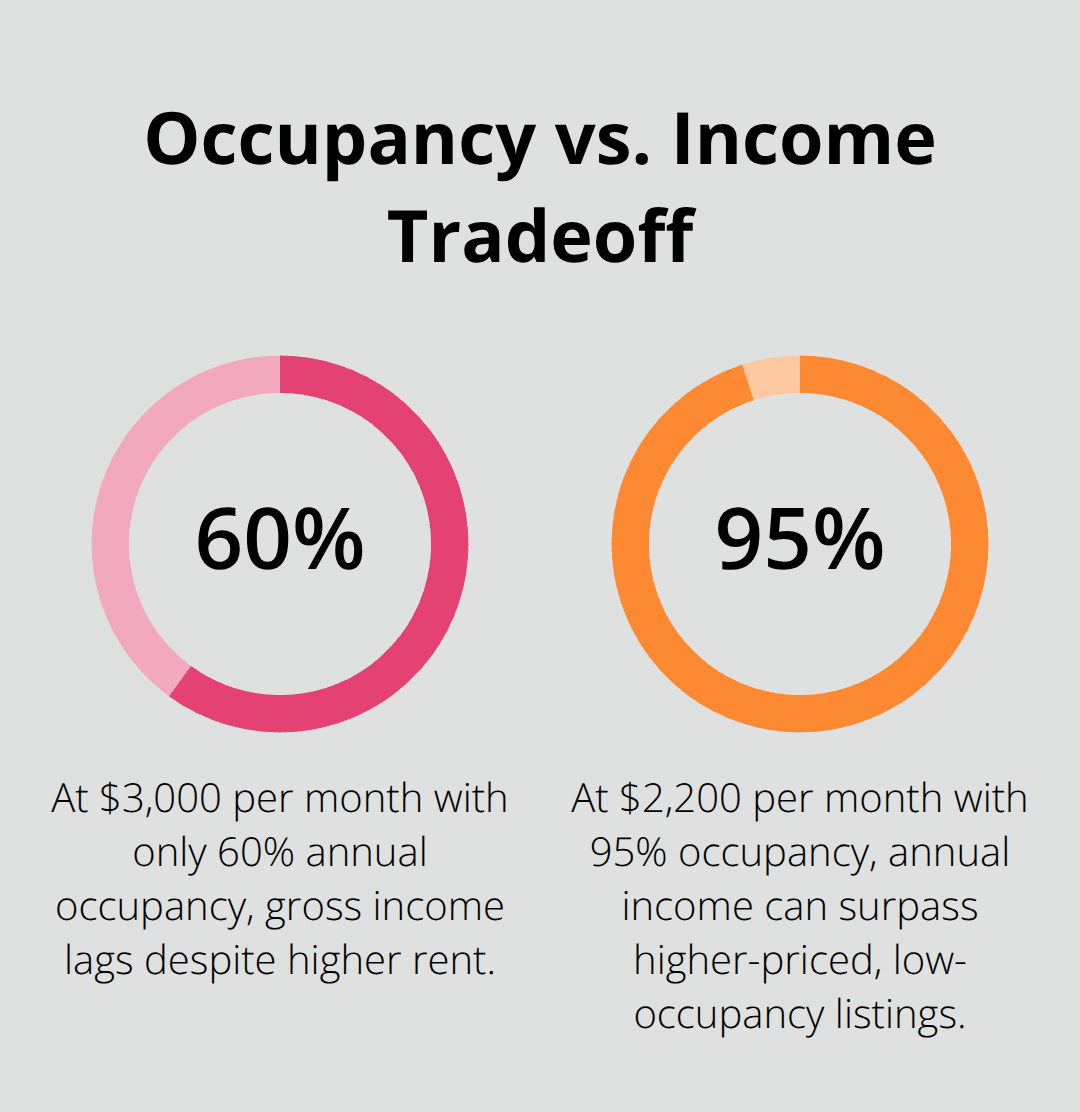
Data analytics remove guesswork from seasonal pricing entirely. Rentometer provides micro-market rent comparisons by building address and shows you exactly where your property ranks among similar units in Deerwood. If you’re the 7th-most-expensive 3-bedroom in a neighborhood with 15 comparable properties, you have a positioning problem that rate cuts alone won’t solve-you need better marketing or genuine differentiation. Dynamic pricing based on occupancy rates and seasonal demand ensures you capture maximum income without overpricing. AirDNA goes further by showing occupancy rates alongside pricing for short-term rentals, revealing whether high-priced listings achieve high occupancy or sit vacant frequently. A property renting at $3,000 monthly but occupied only 60% of the year generates less income than one renting at $2,200 with 95% occupancy.
Run scenario analyses using your actual numbers: calculate gross income at different price points with realistic occupancy assumptions based on comparable properties in your submarket. If raising rates $200 monthly drops occupancy from 95% to 85%, your gross income actually declines-the math shows you’re overpriced. Conversely, if dropping rates $150 increases occupancy from 75% to 92%, you’ve found better pricing. Track days-on-market as a pricing indicator; properties sitting longer than 30 days signal overpricing for the current season, while those leasing in under 10 days indicate underpricing. Adjust within 7–10 days rather than waiting for lease renewals to capture pricing power.
Leveraging Location and Walkability Data
Mashvisor and Local Logic assess neighborhood walkability and business activity, which directly influence what renters pay. A Deerwood property near shopping, restaurants, and parks commands 10–15% premium pricing versus identical units in less walkable areas. Understanding these micro-location factors prevents you from competing purely on price when your property’s location justifies higher rates. Set baseline rates quarterly using current comps and days-on-market data, then implement tactical adjustments for holidays and events. This layered approach to dynamic pricing-combining seasonal windows, competitive positioning, and occupancy analytics-consistently outperforms flat-rate pricing and generates substantially higher annual income from Deerwood rentals.
With your pricing strategy locked in place, the next step involves selecting the right tools and systems to automate these adjustments without constant manual intervention.
Making Seasonal Pricing Automatic and Transparent
Automating Rate Adjustments Across All Platforms
Manual rate adjustments every month cost you pricing windows and lost income. Property management software like Hostaway, Vacasa, and AppFolio automate rate changes based on rules you define, eliminating human error and ensuring rates update weeks before demand peaks. Hostaway integrates with 400+ booking channels and applies your seasonal pricing rules across all platforms simultaneously, preventing the costly mistake of advertising different rates on Airbnb versus your direct website. AppFolio’s rate management tools let you set price floors and ceilings by season, then automatically adjust based on occupancy thresholds you specify. If occupancy drops below 75% in September, the system reduces rates by 8% without your intervention. This automation matters because manual pricing adjustments consume 4–6 hours monthly per property, and most owners simply skip the work during busy seasons. When rates stay flat while competitors adjust for the Florida-Georgia game in November or spring break in March, your occupancy suffers immediately.
Communicating Price Increases to Retain Renters
Communication about price increases determines whether renters renew at higher rates or search elsewhere. Transparency prevents resentment and increases renewal rates significantly. When you notify renters 60 days before lease renewal, explain the pricing increase with specific market data: tell them that comparable 3-bedroom units in Deerwood now rent for $2,300 monthly according to current Zillow listings, and your property increased from $2,100 to $2,225 to reflect current market conditions. Renters accept modest increases (5–8%) when you justify them with concrete market data rather than claiming vague reasons like rising costs. Transparent communication increases renewal rates compared to sudden price jumps.
Weekly Monitoring Prevents Competitive Gaps
Monitor your actual performance weekly using Rentometer and Zillow to confirm your rates remain competitive, then adjust immediately if market conditions shift. If comparable properties drop rates in August, your rates should follow within 7 days to prevent vacancy spikes. Most owners check pricing monthly or quarterly, missing the 2–3 week windows when competitors undercut their rates and capture bookings. Set calendar reminders for weekly pricing reviews and commit 30 minutes each Monday to comparing your current rates against three to five comparable properties in Deerwood. This disciplined approach prevents the slow erosion of occupancy that occurs when you ignore competitive pricing for extended periods.
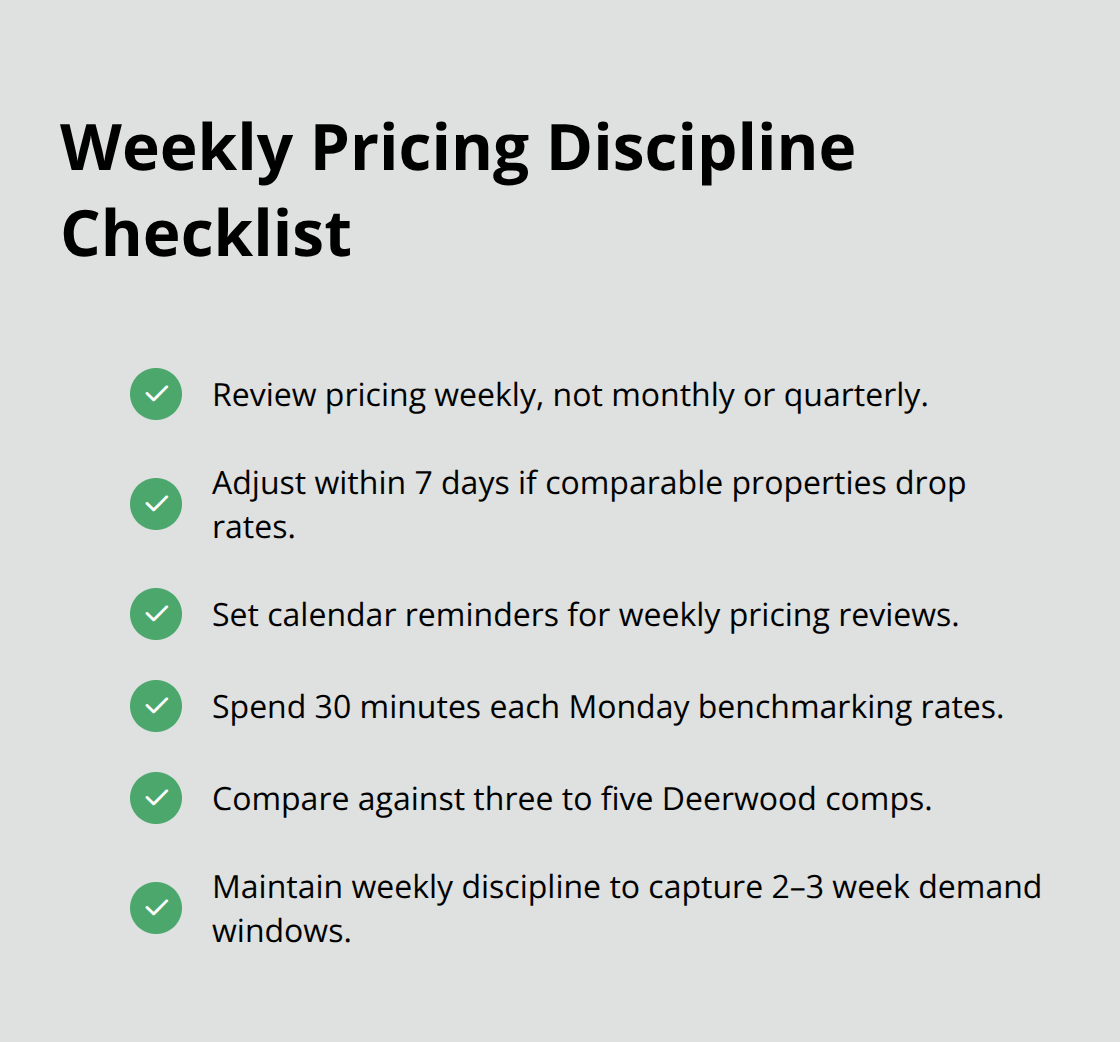
Properties that maintain weekly pricing discipline consistently outperform those that adjust quarterly, capturing seasonal demand windows and maximizing occupancy throughout the year.
Final Thoughts
Seasonal pricing for Deerwood seasonal rentals transforms your property from a static asset into an income-generating machine. Property owners who build real wealth apply three core practices: they price aggressively during peak windows like December and spring break, they adjust rates based on actual market data rather than guesswork, and they monitor competitor pricing weekly to stay competitive. A property owner who raises rates $200 during peak season and maintains occupancy at 92% generates roughly $2,400 more annually than one using flat-rate pricing, which compounds to $12,000 in additional income over five years from a single strategic adjustment.
Dynamic pricing strategies attract better renters because you fill vacancies faster and maintain consistent occupancy throughout the year. Renters who lease quickly tend to be more serious about the property and less likely to break leases early, which also reduces your maintenance costs when units turn over less frequently. Most importantly, seasonal pricing positions your Deerwood property for appreciation since lenders and future buyers evaluate rental properties based on actual income generated, not potential income (a property consistently generating $28,000 annually appraises higher than one generating $24,000 with flat rates, even though the physical property is identical).
Start implementing seasonal pricing immediately by pulling current comparable rents from Zillow and Rentometer for your specific Deerwood neighborhood, then set your baseline rate using price-per-square-foot data and add 12-15% premiums for December and spring break. Monitor your days-on-market weekly and adjust within 7-10 days if you sit longer than 30 days or lease faster than 10 days. If managing seasonal pricing feels overwhelming, Up North Property Management specializes in full-service vacation rental management and handles marketing, bookings, and rate optimization so you collect income without the operational burden.