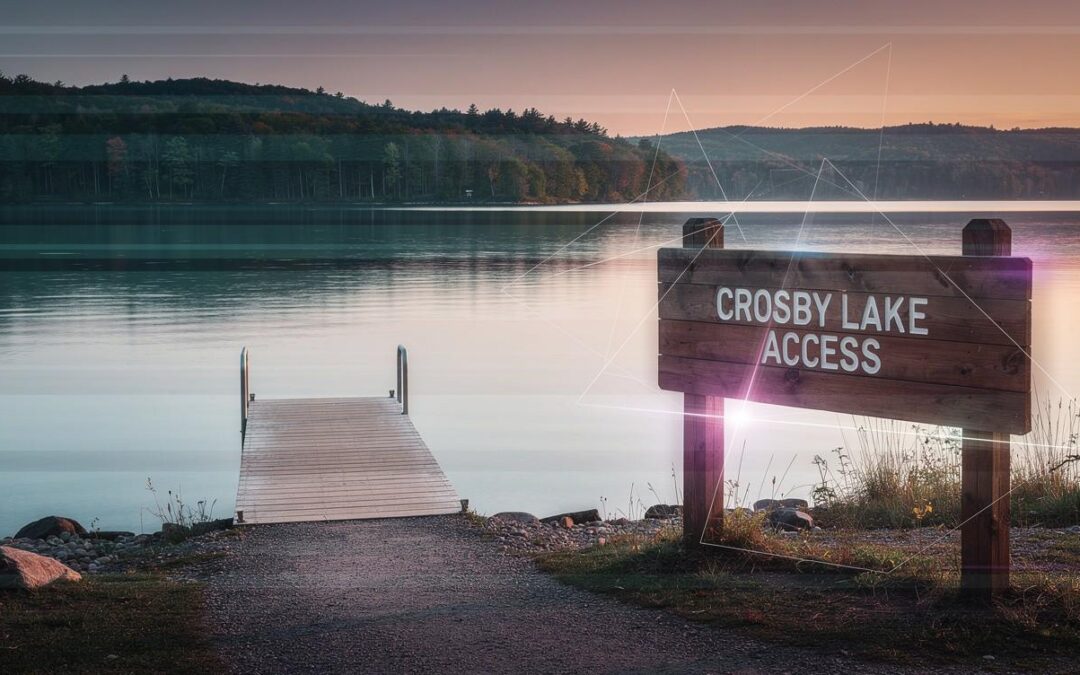
Crosby lake access isn’t just a nice-to-have feature-it’s one of the biggest factors determining your property’s value and rental potential. We at Up North Property Management have seen waterfront properties command premiums of 25% to 50% over comparable inland homes in this market.
Understanding your water rights protects your investment and opens doors to higher income streams. This guide walks you through what you need to know about lake access in Crosby.
How Water Access Transforms Property Values in Crosby
Water access directly translates to higher property values in Crosby, and the numbers prove it. Properties with direct lake access command 25% to 50% premiums over comparable inland homes in Northern Minnesota. A 3-bedroom home on an inland lot might sell for $350,000, while the same home with direct waterfront access could fetch $450,000 to $525,000. This isn’t speculation-it’s what buyers in this market actually pay.
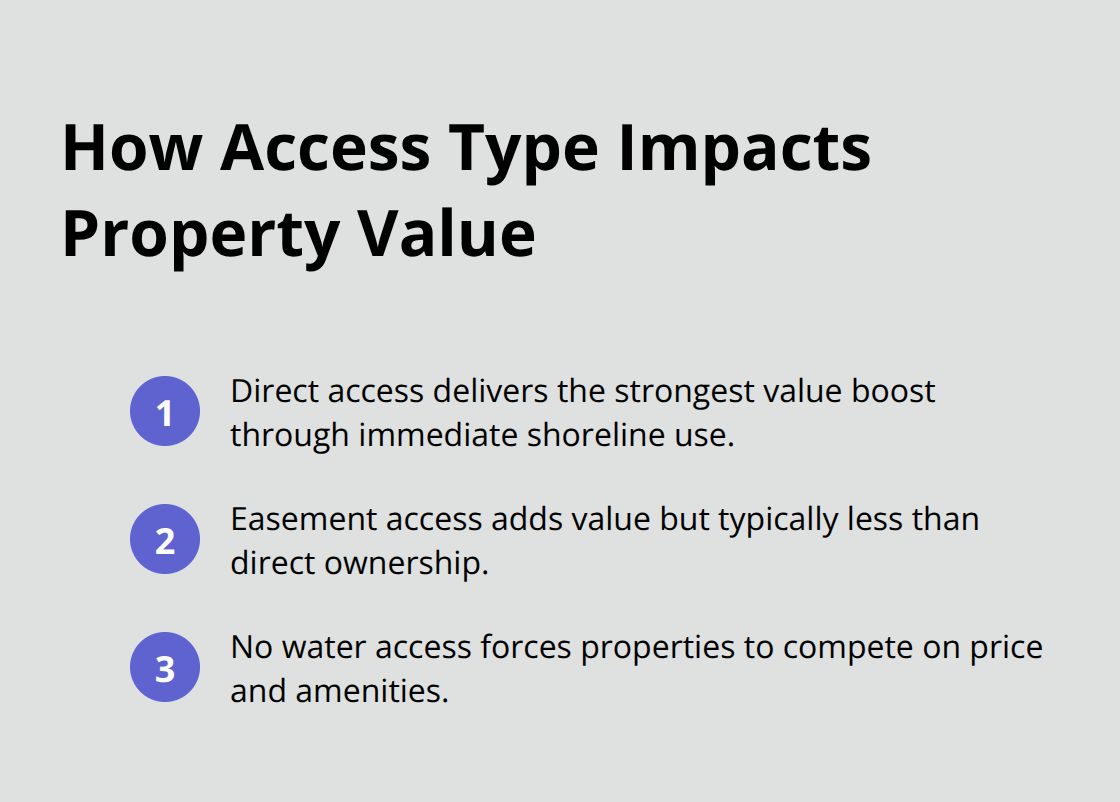
The type of access matters significantly. Direct access, where your property borders the lake, provides the strongest value boost because buyers gain immediate shoreline use. Easement rights, which give you legal access to the water but not direct frontage, add value but typically less than direct ownership. An easement might add 10% to 15% to your property value, while direct access adds substantially more.
Understanding this distinction helps you accurately price rentals and know what you’re protecting.
Direct Waterfront Properties Command Premium Rental Rates
Direct waterfront properties in Crosby attract guests willing to pay premium nightly rates. Vacation rental properties with dock access or beach frontage command 30% to 40% higher rates than similar homes one or two blocks away from the water. A furnished 3-bedroom home inland might rent for $200 per night in peak season, while the same home with direct lake access rents for $260 to $280 per night.
Over a summer season with 12 weeks of bookings, that difference amounts to $8,400 to $11,200 in additional revenue. Guests specifically search for water access when booking vacations in Northern Minnesota-it’s not a secondary feature. The Cuyuna Lakes area has seen significant growth in recreation infrastructure, with the trail system expanding from 25 miles to 70 miles since 2011, drawing more visitors to the region. This increased tourism demand directly benefits waterfront properties because visitors want direct lake experiences alongside trail access.
Why Waterfront Properties Win in a Competitive Market
Properties without water access must compete on price, location convenience, or unique amenities. Waterfront properties compete on experience. Guests pay more because they value the direct connection to the lake that your property provides. This competitive advantage persists across seasons and market conditions.
Easement Rights Offer Value With Trade-Offs
If your property has lake access through an easement rather than direct frontage, you still hold valuable rights. Easements allow legal passage and use of the water, which satisfies many renters and adds measurable value to your property. However, easements create complications that direct access avoids.
Easement properties depend on shared access routes, which means maintenance responsibilities, potential disputes with neighbors, and limited exclusivity. A guest paying premium rates expects private or semi-private access, not a narrow path shared with five neighboring properties. This perception gap means easement properties typically appreciate slower than direct waterfront homes and attract different buyer profiles.
When marketing easement properties for vacation rentals, transparency matters. Clearly describe access conditions in your listings so guests understand what they’re getting. Some renters prefer this arrangement because it’s more affordable while still providing water access. The key is positioning it correctly rather than pretending it matches direct access value. Understanding these distinctions prepares you to navigate the legal framework that governs these rights in Minnesota.
Legal Framework for Lake Access in Crosby
Minnesota water law distinguishes between riparian rights and public access in ways that directly affect your property value and rental income. Riparian property owners in Minnesota hold inherent rights to use adjacent water for domestic purposes, recreation, and navigation, but these rights come with specific limitations that many property owners misunderstand. The state treats lakes as public resources in terms of navigation rights, meaning the public can boat and fish on most waters even if your property borders the lake. However, your riparian status gives you exclusive rights to the shoreline itself and direct access from your land.
This distinction matters enormously when you market vacation rentals or defend your property boundaries. A guest renting your waterfront home expects exclusive beach or dock access, not crowds of fishermen launching from a public access point near your property. Understanding this boundary between your exclusive rights and public navigation rights prevents costly disputes and helps you accurately represent what renters receive.
How Easement Rights Work in Practice
Minnesota law recognizes easement rights as legitimate property interests, meaning your legal right to cross someone else’s land to reach water holds real enforceability. When you own property with easement access rather than direct riparian frontage, you purchase a documented legal right, not a privilege that someone can revoke. However, easement agreements often contain specific language about maintenance responsibilities, usage times, and permitted activities.
Before purchasing a property with easement rights, request the actual easement document and have a Minnesota real estate attorney review it. Many disputes arise because property owners assume easement rights include unlimited use when the original agreement actually restricts access to certain hours, limits the number of users, or requires contribution to maintenance costs. The practical reality is that properties with ambiguous easement language sell for less and attract fewer premium renters because the access situation creates uncertainty.
Common Water Access Disputes and Prevention
Disputes over water access in Crosby typically stem from boundary disagreements, maintenance responsibility conflicts on shared access routes, and misunderstandings about what riparian rights actually permit. The most common conflict involves shoreline erosion or modifications where one property owner dredges, builds retaining walls, or alters the waterline in ways that affect neighboring properties. Minnesota requires permits for most shoreline work, and neighbors have standing to challenge unpermitted modifications.
Before making any improvements to your waterfront property, contact the Minnesota Department of Natural Resources to determine permit requirements. A permit application costs far less than a lawsuit with a neighbor over unauthorized dredging or dock expansion.
Managing Public Access Adjacent to Your Property
Another frequent dispute involves public access points adjacent to private property. If your waterfront home sits next to a public boat launch or fishing access area, the law permits public use of that access point even though your property is private. Some owners attempt to obstruct public access with fencing or signage, which creates liability and legal problems. The best approach is accepting that public access exists nearby and positioning your rental property to emphasize what makes your private access superior.
Guests paying premium rates for your property want exclusive dock access, private beach area, or direct waterline frontage that public access users do not have. This positioning strategy turns a potential liability into a marketing advantage.
Easement Maintenance and Shared Responsibility
Disputes also arise when easement holders and easement-granting properties disagree about maintenance. If your easement crosses someone else’s land, that landowner typically maintains the path, but the agreement should specify whether you contribute financially or through labor. Clarifying these obligations upfront prevents resentment and conflict.
When purchasing any property with water access in Crosby, have a Minnesota real estate attorney review all access documentation. This investment of a few hours and $400 to $800 eliminates the risk of inheriting expensive disputes or discovering that your access rights are weaker than you believed. With your legal foundation solid, you can now focus on how to leverage your water access for maximum rental income and guest satisfaction.
Turning Waterfront Properties Into High-Income Rentals
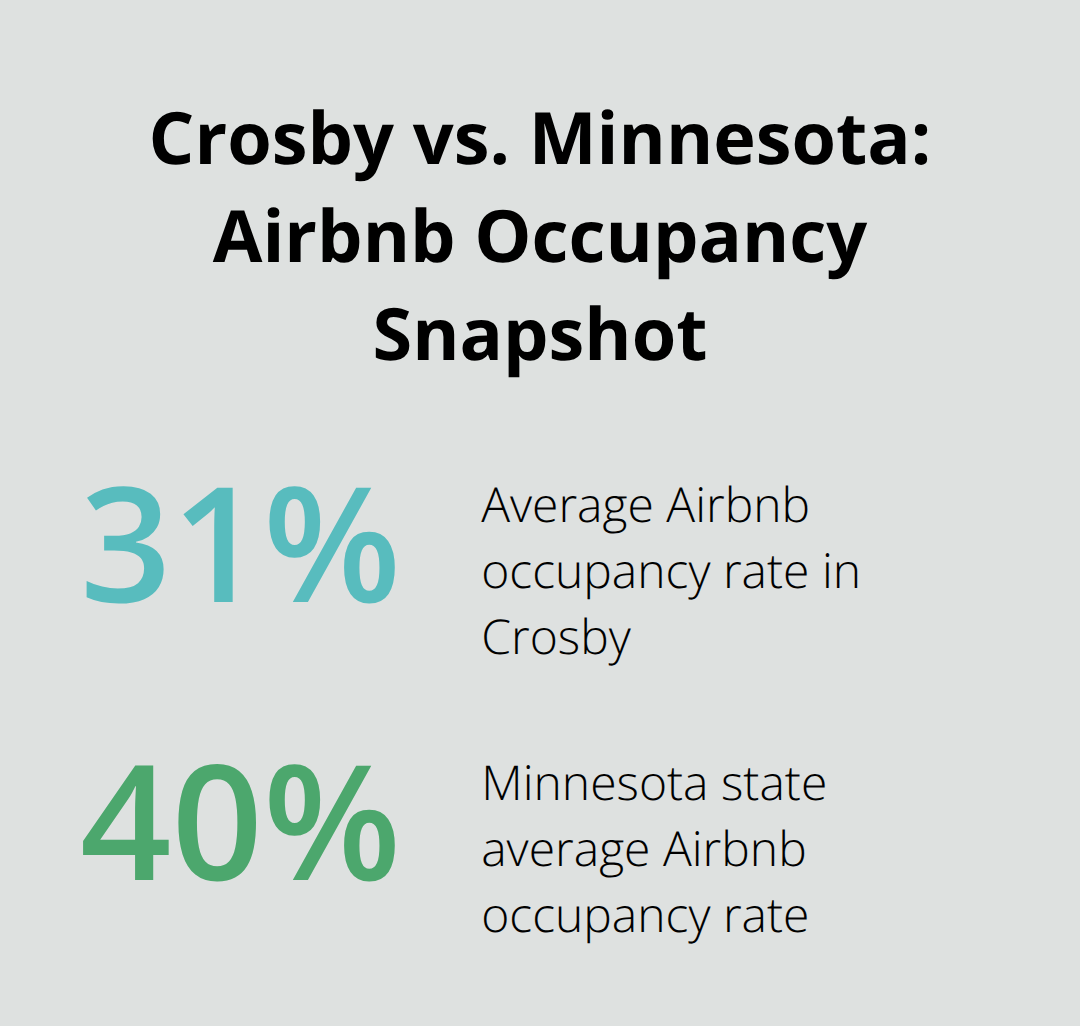
Waterfront properties in Crosby generate substantially higher rental income than inland homes, and the premium justifies itself through guest demand and booking velocity. The average Airbnb occupancy rate in Crosby is currently 31%, which is below the Minnesota state average of 40%. Guests searching for Northern Minnesota vacations actively filter for water access, making waterfront properties significantly easier to book and maintain consistent occupancy throughout summer months. The Cuyuna Lakes expansion has intensified visitor traffic to the region, creating stronger demand for properties offering direct lake experiences.
This expanded trail network draws outdoor enthusiasts who specifically seek accommodations combining trail access with waterfront amenities, making your lake frontage a competitive asset that attracts multiple visitor segments simultaneously.
Pricing Strategy That Reflects Your Water Access
Waterfront properties command 30% to 40% higher nightly rates than inland homes, but many owners leave money on the table through underpricing. If comparable inland 3-bedroom homes rent for $200 per night, your waterfront property should command $260 to $280 minimum during peak season. Over a 12-week summer season at full occupancy, this pricing difference generates $8,400 to $11,200 in additional revenue compared to underpricing. The critical mistake many owners make is matching their rates to the inland market rather than pricing against other waterfront properties. Research actual booking rates for similar waterfront homes in Crosby and surrounding areas, then position your property at the top of that range if your dock access, beach frontage, or water views are superior. Guests making vacation decisions have already decided water access is worth premium pricing; your job is capturing that willingness through accurate rate-setting.
Marketing Waterfront Properties Effectively
Waterfront properties require different marketing approaches than inland homes because the water access is the primary selling feature. Your listing descriptions should lead with dock access, beach conditions, water views, or specific water activities guests can pursue directly from your property. Mention whether your property has a private dock, boat lift capacity, sandy beach area, or proximity to specific water recreation. Generic descriptions like waterfront property or lake view substantially underperform compared to specific details about what guests actually experience when they arrive. Photography matters enormously for water properties; professional photos showing dock access, water views from bedrooms, and beach areas convert browsers into bookers far more effectively than standard interior shots. Many waterfront property owners invest in professional photography only for interior spaces, then use phone photos for the most important asset-the water access. This is backwards.
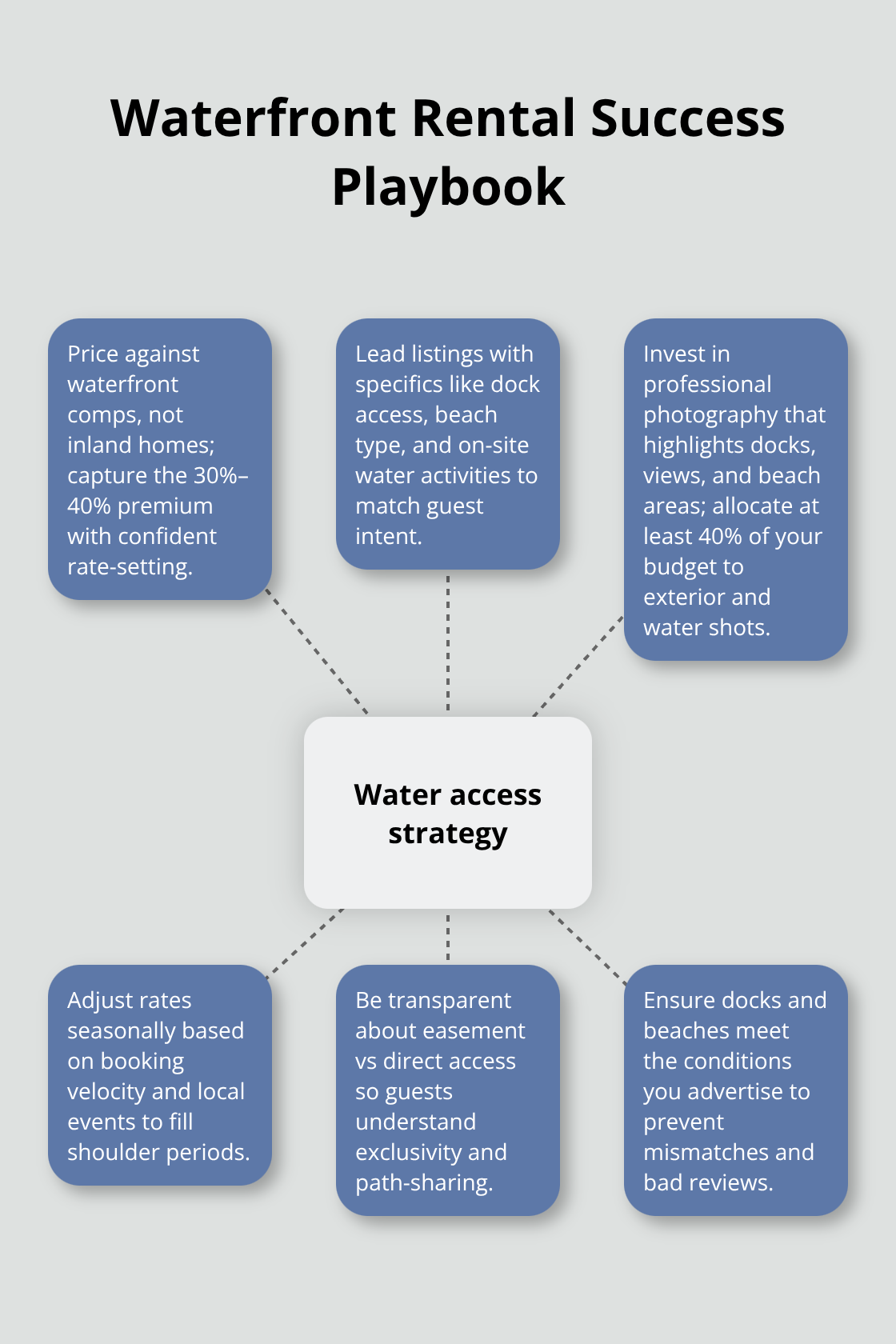
Allocate at least 40% of your photography budget to exterior and water-access shots that showcase why guests are paying premium rates.
Seasonal Demand and Rate Adjustment
Waterfront properties in Crosby experience dramatic seasonal demand swings that require active rate management. Summer months from June through August command premium rates because water activities are optimal, but shoulder seasons in May and September present opportunities to attract guests with slightly reduced rates while maintaining strong revenue. Winter properties with ice access for snowshoeing or cross-country skiing represent an emerging market as interest in winter recreation grows, though demand remains lower than summer. Rather than maintaining flat rates year-round, adjust pricing quarterly based on actual booking velocity and local events. If your property books solid through mid-August at $280 per night but shows open dates in late August, reduce rates to $240 for those dates and fill inventory rather than leave nights vacant. The trail expansion and growing recreation infrastructure mean visitor interest extends earlier into spring and later into fall than historical patterns, so test adjusted rates during these periods instead of assuming summer-only demand.
Handling Guest Expectations for Water Access
Guests paying premium rates expect specific water experiences, and your marketing must match reality. If you advertise dock access, ensure your dock accommodates the boat sizes guests typically bring. If you highlight beach frontage, confirm the beach remains accessible throughout your rental season (erosion and water level changes affect this). Mismatches between marketing promises and actual conditions generate negative reviews and cancellations that damage your occupancy rates far more than honest descriptions of limitations. Waterfront properties with easement access rather than direct riparian ownership require transparent communication about what guests actually receive. A guest paying $280 per night expects to understand whether they have exclusive beach access or share a path with neighboring properties. Clarity prevents disappointment and positions your property accurately in the market.
Final Thoughts
Crosby lake access transforms your property from a seasonal retreat into a revenue-generating asset that appreciates faster than inland homes. Waterfront properties command 30% to 40% premium rental rates, attract consistent guest demand, and build wealth through compounding appreciation over five-year ownership periods. The financial case is straightforward: water access pays for itself through higher nightly rates and better occupancy that inland properties cannot match.
Understanding your legal rights protects your investment and prevents costly disputes. A Minnesota real estate attorney reviews your access documentation for a few hundred dollars, which saves thousands in potential litigation over boundary disagreements or maintenance conflicts. Whether you hold riparian ownership or easement access, clarity about what Minnesota law permits and what your documentation actually states determines whether your property generates smooth income or becomes entangled in neighbor disputes.
If managing these details feels overwhelming, Up North Property Management handles vacation rental operations throughout Northern Minnesota, managing marketing, bookings, maintenance, and guest services so you receive income without operational burden. Have a Minnesota real estate attorney review your access documentation before purchasing or renting your waterfront property, then contact professional management to maximize your rental revenue.