Owning a cabin in Minnesota comes with real challenges-frozen pipes, roof damage, and equipment failures can derail your lakehouse dreams fast. We at Up North Property Management have helped countless cabin owners navigate these issues, and we know what actually works.
This guide covers the cabin life tips Minnesota owners need to keep their properties running smoothly year-round, from winterizing basics to long-term maintenance strategies.
Preparing Your Cabin for Year-Round Living
Winterizing Pipes and Insulation
Minnesota winters are brutal, and frozen pipes cost cabin owners thousands in repairs every year. The Minnesota Department of Natural Resources reports that winter damage accounts for a significant portion of seasonal property claims. This damage is almost entirely preventable with the right approach. Start winterizing in September, not November. Your goal is to remove all water from pipes, drains, and outdoor fixtures before temperatures drop below freezing.
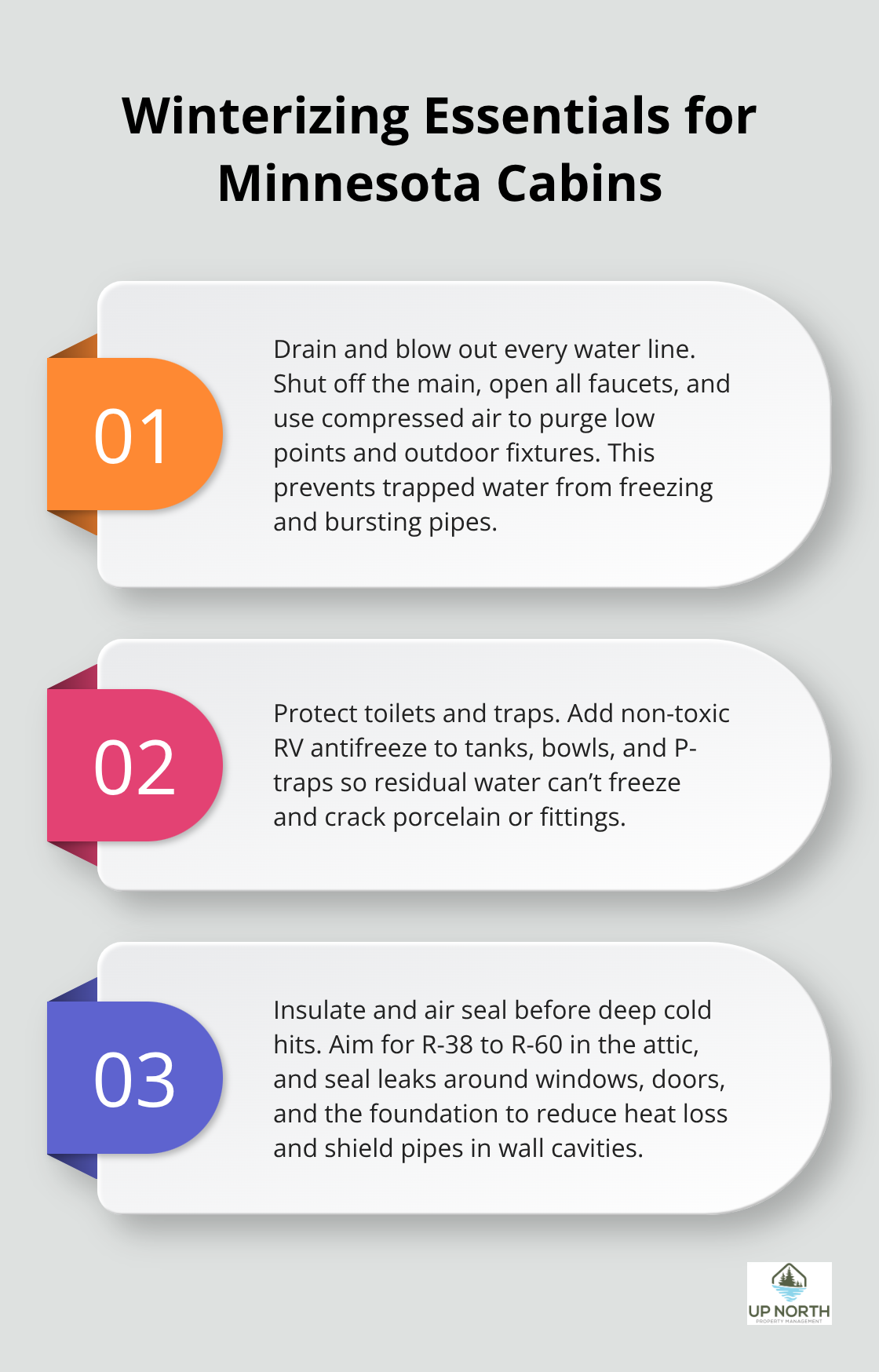
Shut off the main water supply and drain every line systematically, starting from the lowest points in your plumbing system. Open all faucets and let gravity do the work. For your toilet tanks and bowls, add RV antifreeze (not automotive antifreeze, which is toxic) to prevent ice formation. Blow compressed air through the lines to remove remaining water that sitting alone creates pockets where freezing can occur.
Insulation matters just as much as draining. Check your cabin’s attic insulation levels and try for at least R-38 to R-60 depending on your Minnesota location. Inadequate insulation forces your heating system to work harder, drives up energy costs, and fails to protect pipes in wall cavities. Seal air leaks around windows, doors, and foundation cracks before winter arrives. A thermal imaging camera from a rental company costs about fifty dollars for a day and reveals exactly where heat escapes.
Upgrading Heating Systems for Cold Months
Your heating system needs to maintain consistent temperatures even when you’re absent for weeks. Space heaters alone won’t work because they create dangerous hot spots and consume enormous amounts of electricity. A properly functioning furnace or boiler keeps pipes from freezing and protects your entire investment. If your cabin relies on an old heating system, upgrade now rather than waiting for failure at minus-twenty degrees.
Modern high-efficiency furnaces reduce heating costs compared to older units, according to the Department of Energy. Set your thermostat to at least fifty-five degrees even when the cabin sits empty. This temperature prevents pipe freezing while minimizing fuel waste. Install a smart thermostat that allows remote monitoring so you know your heating system runs properly without driving north in a snowstorm.
Maintaining Plumbing and Water Supply During Freezing Temperatures
For cabins with limited insulation, add a backup heating source like a wood stove or propane heater. This redundancy protects you if your primary system fails during the coldest weeks of the year. Check all exposed pipes in basements, crawl spaces, and exterior walls regularly throughout winter. Wrap vulnerable pipes with foam insulation or heat tape to add an extra layer of protection.
Water supply lines that run through unheated spaces need special attention. Insulate them before the first freeze arrives, and keep cabinet doors under sinks open so warm air from your home circulates around pipes. If you leave your cabin unoccupied for extended periods, consider installing a whole-house humidifier to maintain moisture levels that prevent wood damage and reduce heating strain. These systems work together to keep your property safe while you’re away, setting the stage for the ongoing maintenance tasks that protect your investment year-round.
Essential Maintenance Tasks Every Cabin Owner Should Know
Regular Roof and Gutter Inspections
Your roof and gutters take the heaviest beating in Minnesota winters. Ice dams form when heat escapes through inadequate attic insulation, melting snow that refreezes at the eaves and backs water under shingles. Professional roof inspections should happen twice per year – spring and fall. Walk your roof in early October before leaves clog gutters, and again in April after winter ends. Look for missing or curled shingles, damaged flashing around chimneys, and debris accumulation.
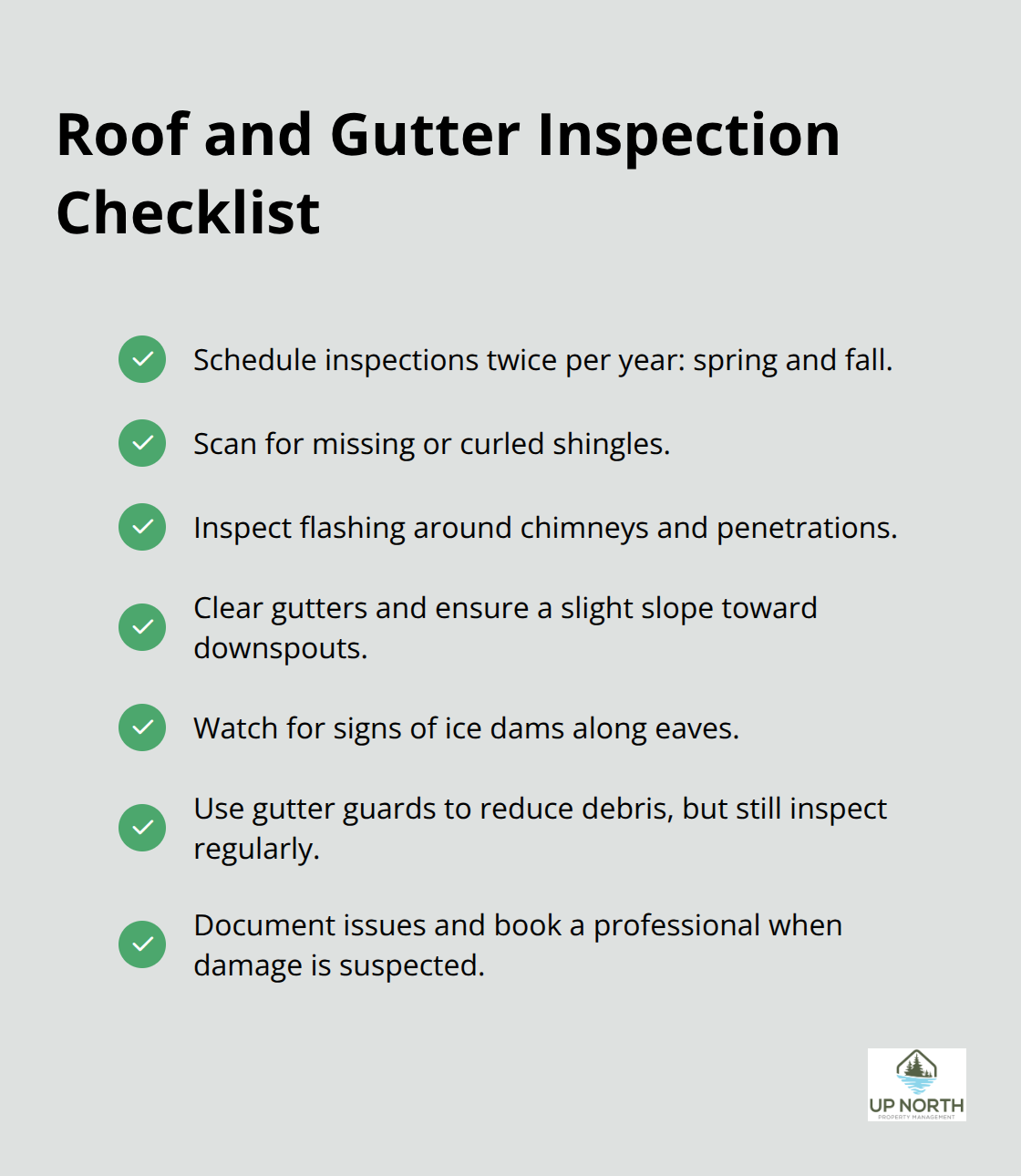
Gutters should slope toward downspouts at a quarter-inch per ten feet of length. If yours are clogged or sagging, water pools and freezes, creating weight that tears gutters away from fascia. Install gutter guards to reduce cleaning frequency, but understand they don’t eliminate the need for inspection. Minnesota’s heavy snow loads mean a roof inspection is not optional maintenance-it’s insurance against catastrophic water damage that costs tens of thousands to repair.
Deck and Exterior Wood Treatment
Deck and exterior wood surfaces deteriorate fast in Minnesota’s freeze-thaw cycles. Wood expands and contracts as temperatures swing, opening cracks where water infiltrates and causes rot. Stain or seal your deck every 1–3 years, not annually as some contractors claim. Pressure-wash before staining to remove algae and mildew that prevent proper adhesion.
Use a semi-transparent stain rather than paint because it allows the wood to breathe while providing protection. Check deck posts and railings for soft spots (probe with a screwdriver-if it sinks easily, rot has started) and replace damaged sections immediately. This proactive approach prevents structural failure that threatens safety and property value.
Wildlife Prevention and Pest Control
Wildlife and pests represent a threat that many cabin owners underestimate. Raccoons tear open soffits looking for insects, squirrels chew through siding to access attics, and mice enter through gaps as small as a dime. Seal foundation cracks, install chimney caps, and trim tree branches hanging over your roof to eliminate entry points.
Check for droppings or damage regularly because early intervention costs far less than dealing with established infestations. Set traps inside your cabin before winter arrives rather than waiting for problems to appear when you’re miles away. These maintenance tasks form the foundation of protecting your cabin’s structure, but comfort and convenience matter just as much when you’re actually enjoying your lakehouse retreat.
Maximizing Comfort and Convenience at Your Lakehouse
A cabin without hot water and reliable power isn’t a retreat-it’s a survival situation. Countless cabin owners invest heavily in winterization and structural maintenance only to overlook the systems that actually make a cabin enjoyable. Water heating, storage, internet, and power infrastructure deserve the same attention you give your roof, because these systems fail just as often and create far more frustration during your time away.
Optimizing Water Heating and Kitchen Efficiency
Tankless water heaters designed for cold climates outperform traditional tanks in Minnesota cabins because they heat water on demand rather than maintaining a constantly heated reservoir that wastes energy when you’re absent. Install a unit rated for outdoor temperatures below freezing-models from Navien and Rinnai specifically handle Minnesota winters without performance loss. Size your unit correctly by calculating peak demand: a family shower plus kitchen use typically requires 8–10 gallons per minute capacity.
Pair your tankless heater with a recirculating pump that delivers hot water instantly to distant fixtures, eliminating the waste of running water while waiting for warmth. Kitchen efficiency improves dramatically when you add a separate small water heater near your sink for dishes and hand washing, reducing demand on your main system and cutting energy costs significantly.
Creating Functional Storage Solutions
Many cabin owners underestimate storage needs because they visit seasonally and accumulate equipment-fishing gear, snow removal tools, seasonal decorations, and extra bedding consume space quickly. Build vertical storage in your garage or utility room using wall-mounted shelving rated for heavy loads, not flimsy wire racks that collapse under weight. Label everything clearly because you won’t remember what you stored in March when you return in July.
Dedicate one closet to seasonal items so you can access what you need without excavating piles of off-season equipment. Weatherproof exterior storage boxes protect equipment from Minnesota’s moisture and temperature swings, but position them away from your foundation to prevent water damage during heavy rains.
Setting Up Reliable Internet and Power Systems
Internet and power reliability separate frustrating cabin visits from genuinely relaxing ones. Satellite internet speeds Northern Minnesota areas from Starlink or Viasat, making video calls and streaming possible where traditional broadband doesn’t reach. Hardwire your connection to a router rather than relying on WiFi, which degrades over distance and through cabin walls.
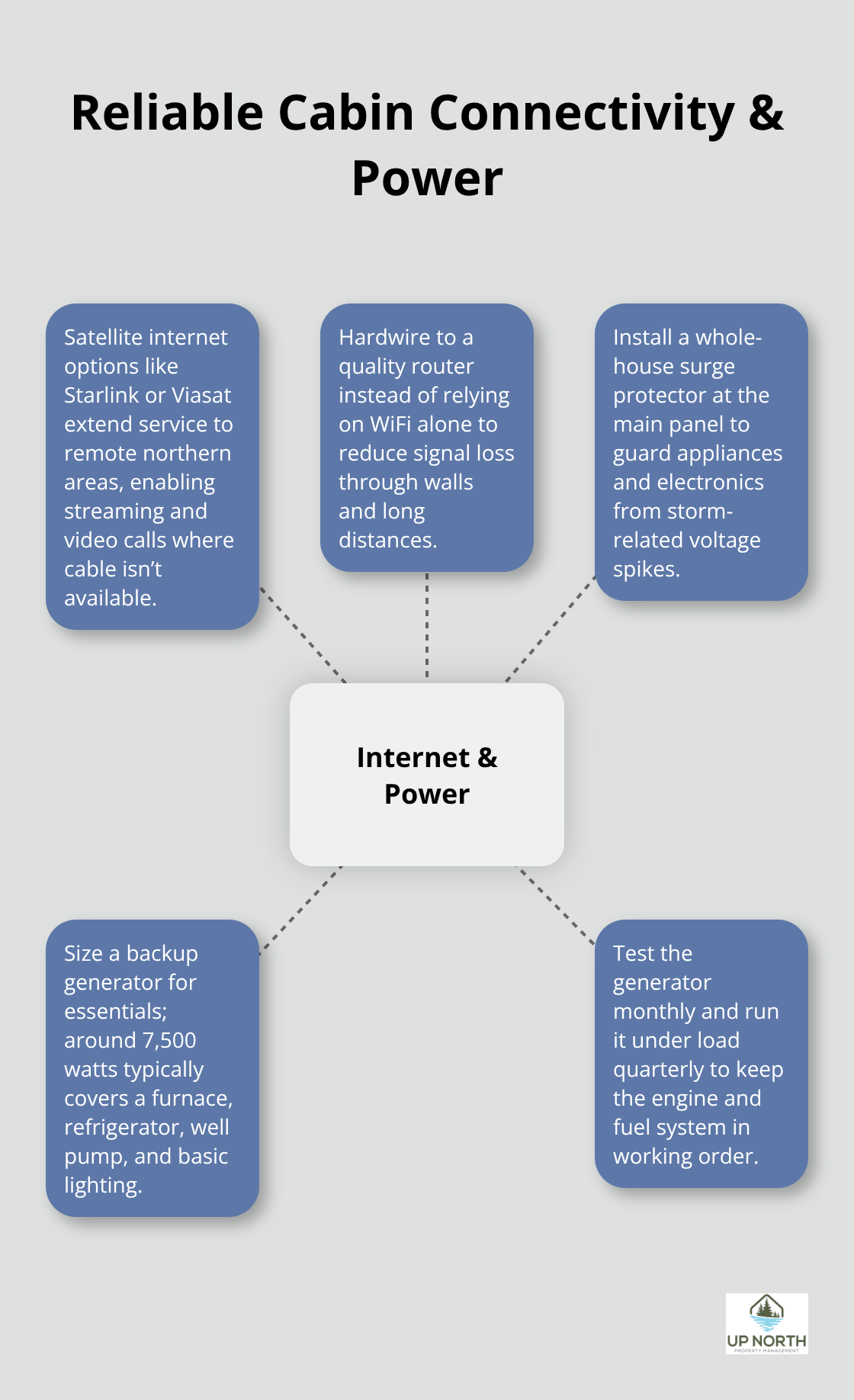
For power resilience, install a whole-house surge protector at your main electrical panel to protect appliances and electronics from the voltage spikes common during Minnesota thunderstorms. A backup generator sized for essential loads (refrigerator, furnace, well pump if applicable) keeps your cabin functional during outages. Size it conservatively: a 7,500-watt generator powers a furnace, refrigerator, and basic lighting without overload. Test your generator monthly and run it under load quarterly to prevent fuel system degradation. These infrastructure improvements transform your cabin from a property you maintain into a space you actually want to spend time in.
Final Thoughts
Owning a cabin in Minnesota requires consistent attention to winterization, maintenance, and infrastructure. The cabin life tips Minnesota owners need most come down to this: start your preparations early, inspect regularly, and address problems before they become expensive disasters. Frozen pipes, roof damage, and equipment failures happen fast when you’re not watching, but proper systems prevent them entirely.
Many cabin owners reach a point where managing everything themselves becomes overwhelming. Between seasonal inspections, equipment maintenance, guest coordination if you rent your property, and emergency repairs, the workload grows quickly. Professional support makes sense when the details consume more time than you have available. Up North Property Management handles vacation rental management for cabin owners across Northern Minnesota, managing marketing, bookings, cleaning, and maintenance coordination so you focus on enjoying your property instead.
Start with the fundamentals: winterize properly, inspect twice yearly, and invest in reliable systems. These actions protect your investment and reduce stress dramatically. Your cabin should be a retreat, not a source of constant worry.