
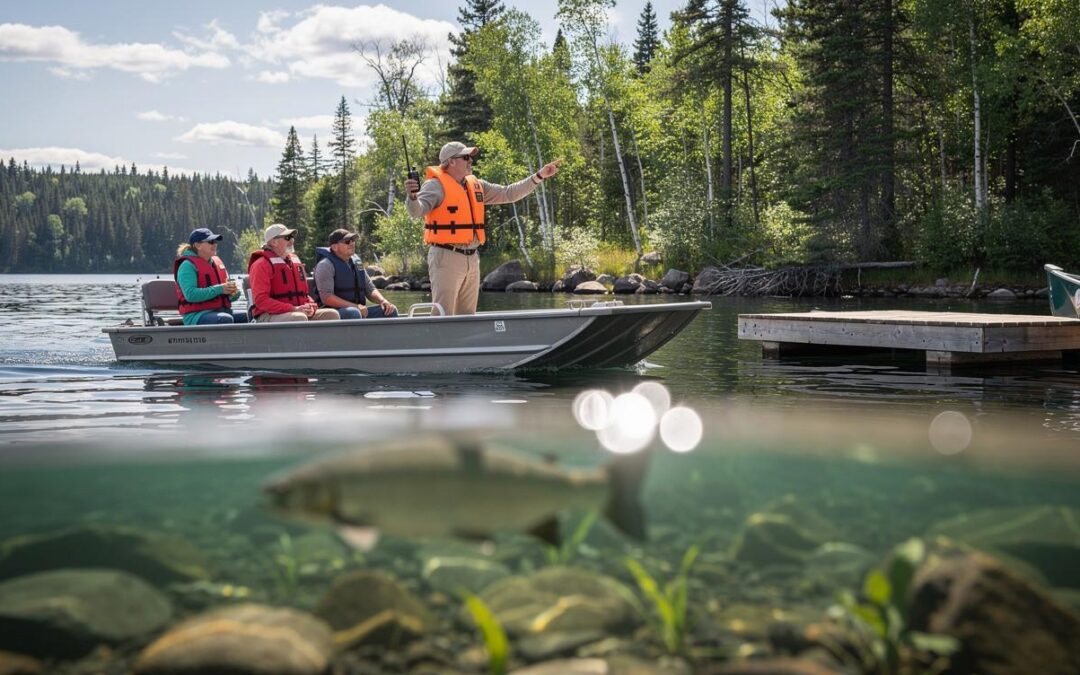
Minnesota’s lakes offer some of the clearest waters in the country, with visibility that makes every outing memorable. Guided lake tours in MN connect you with expert local guides who know these waters inside and out.
At Up North Property Management, we’ve seen firsthand how professional guides transform a simple boat ride into an unforgettable experience. Safety, local knowledge, and personalized service are what separate a good tour from a great one.
Why Minnesota Lakes Stand Out for Guided Tours
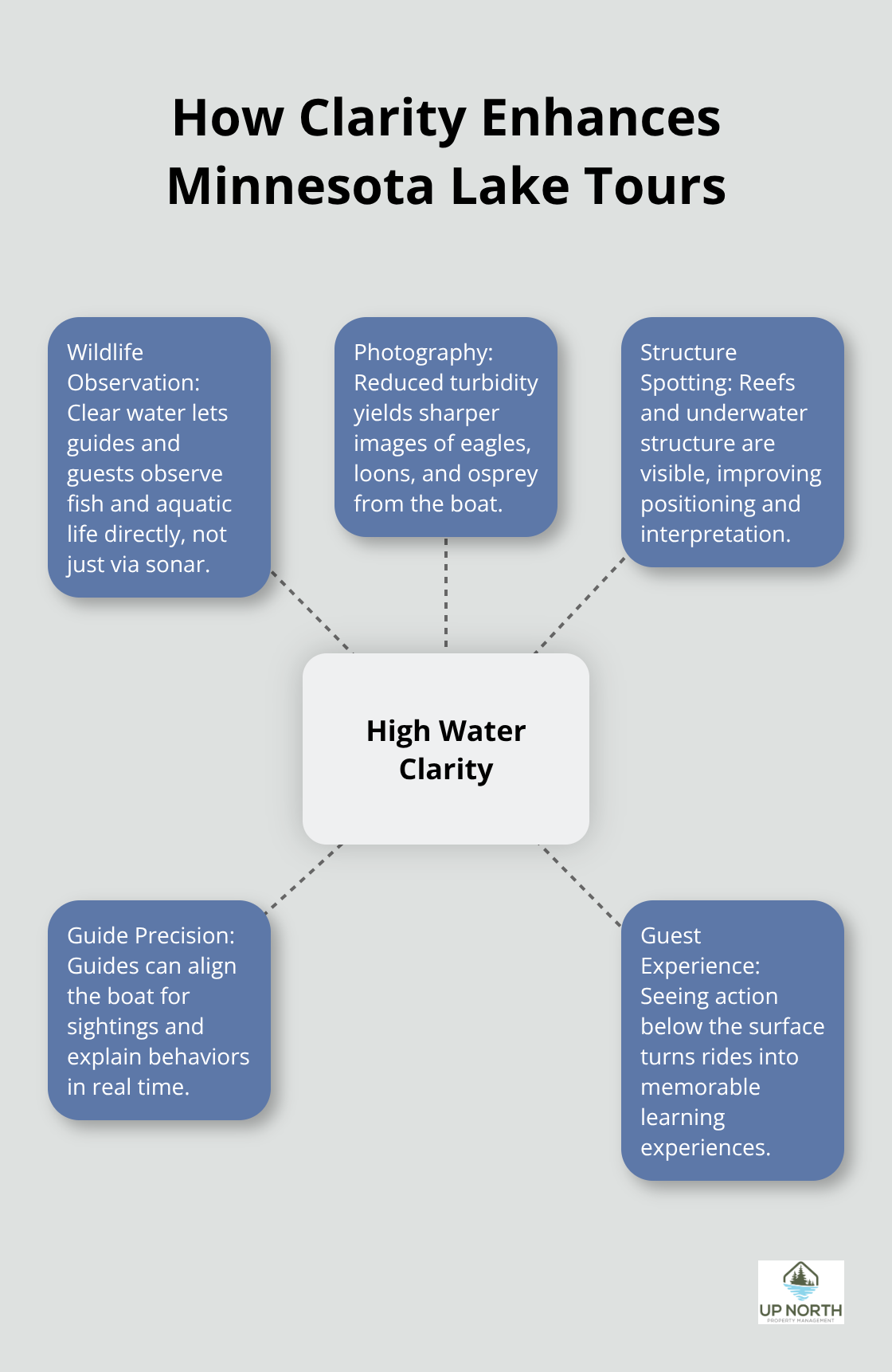
Minnesota’s lakes deliver exceptional clarity that directly impacts what you see underwater and above. The state’s 11,842 lakes maintain visibility that regularly exceeds 20 feet, with some northern lakes pushing 40 feet or more during peak seasons. This clarity matters because it transforms a boat ride into genuine wildlife observation. When your guide positions the boat over a reef or structure, you’re not guessing at what’s below-you’re watching it happen. This visibility also means photographers capture clearer shots of eagles, loons, and osprey without the murky water that plagues southern lakes.
Water Quality Sets Minnesota Apart
Minnesota’s lakes benefit from strict water quality standards and natural filtration systems. The state’s Department of Natural Resources monitors over 1,000 lakes annually, and most maintain clarity ratings that support both fish populations and recreational use. Mille Lacs Lake, one of the state’s largest at 132,000 acres, consistently ranks among the cleanest in the region. This matters for your tour experience because clearer water allows your guide to spot fish activity, point out underwater structures, and identify species with precision. Poor water quality in other states forces guides to rely on sonar and guesswork. Minnesota guides work with what they can actually see.
Wildlife Viewing Opportunities Are Legitimate
Minnesota lakes host walleye, northern pike, musky, and bass populations that attract serious anglers and casual observers alike. The state stocks over 25 million fish annually across its lake system. Beyond fish, you’ll encounter bald eagles, which have rebounded from near extinction to over 1,500 nesting pairs in Minnesota. Loons are equally abundant, with the state supporting roughly 12,000 breeding pairs (making them far more common than most visitors expect). These aren’t rare sightings-they’re regular occurrences on guided tours. Your guide knows exactly where eagles congregate during specific seasons and which bays hold the densest loon populations. This knowledge transforms random boat rides into predictable wildlife encounters that actually deliver what tours promise.
What Expert Guides Bring to the Water
A professional guide doesn’t just operate a boat-they read the water and interpret what happens around you. Guided tours led by trained professionals on Minnesota lakes understand seasonal patterns, fish behavior, and wildlife habits that casual boaters miss entirely. They position your boat to maximize sightings and explain the ecological reasons behind what you observe. This expertise (combined with their knowledge of safety protocols and equipment) separates a memorable tour from a frustrating one where you see nothing but water. The next section covers how these professionals maintain the standards that make Minnesota lake tours reliable and safe.
What Makes a Guide Trustworthy on Minnesota Lakes
Credentials and Licensing Requirements
Professional guides on Minnesota lakes hold credentials that matter far more than generic certifications. The Minnesota Department of Natural Resources licensing exam requirements for fishing guides covers fish identification, water safety protocols, and state fishing regulations. This isn’t optional or ceremonial-guides who fail this exam cannot operate legally. Beyond licensing, reputable tour operators require their guides to complete CPR and first aid certification through the American Red Cross or equivalent organizations. A guide’s willingness to show you their credentials upfront signals they take safety seriously. Ask potential tour operators for proof before booking.
Experience and Pattern Recognition
Guides with 5+ years of experience on specific lakes develop pattern recognition that matters when you search for wildlife or fish. They understand how seasonal temperature changes affect where eagles nest, when loons establish territories, and which structures hold fish during specific months. This accumulated knowledge separates someone who operates a boat from someone who reads the water. A guide who has spent hundreds of days on Mille Lacs knows the lake’s moods in ways no newcomer can match.
Safety Equipment and Protocols
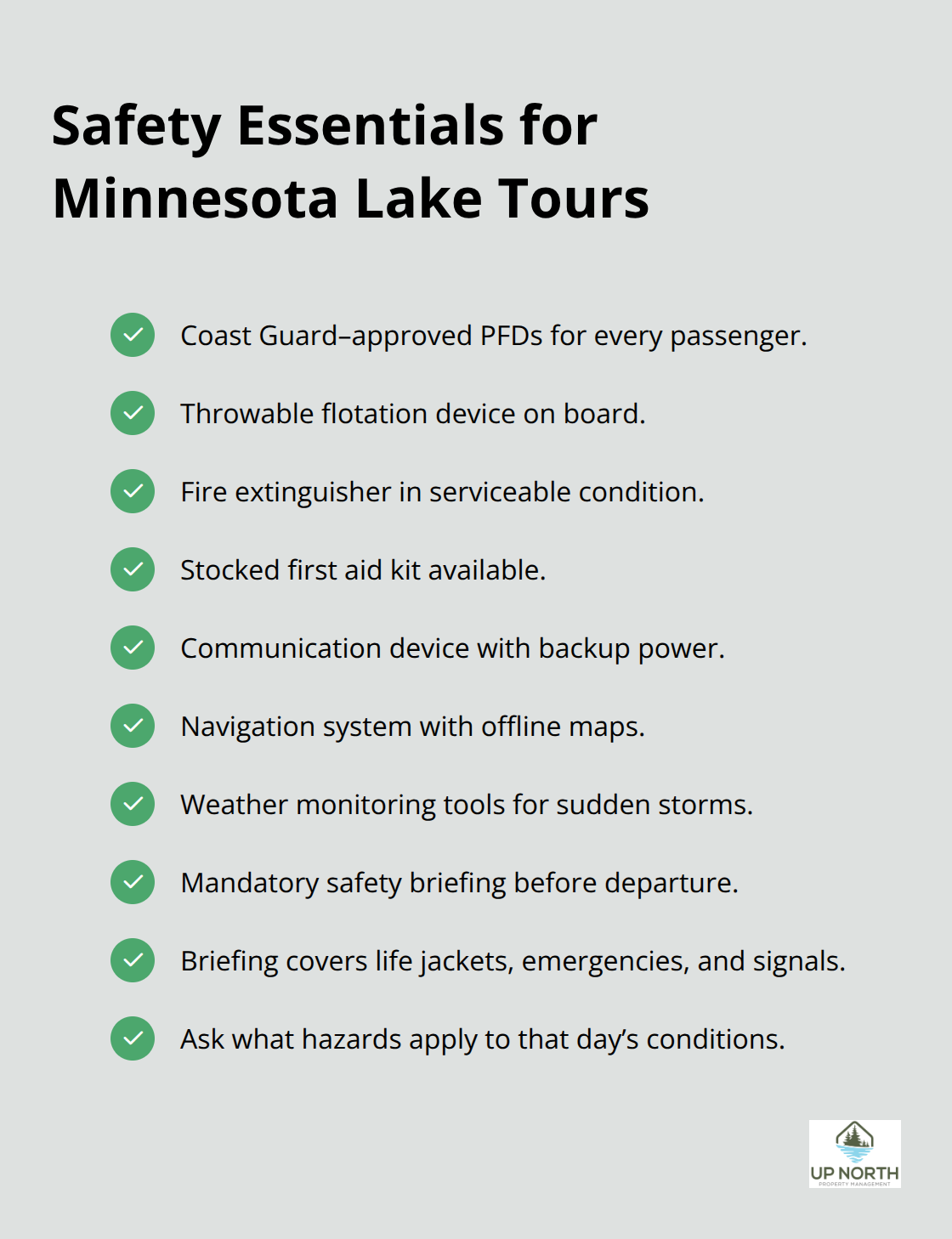
Safety equipment on Minnesota lake tours follows federal standards, but quality operators exceed minimum requirements. All boats must carry Coast Guard approved Personal Flotation Devices, in good and serviceable condition, for every passenger, along with throwable flotation devices, fire extinguishers, and first aid kits-these are mandatory. Responsible operators add additional equipment: communication devices with backup power, navigation systems with offline maps (in case electronics fail), and weather monitoring tools that predict sudden storms common on larger lakes.
Ask your guide what safety briefing happens before departure. Professional operators conduct mandatory safety briefings covering life jacket usage, emergency procedures, and communication signals. This briefing should take 5–10 minutes and address specific hazards relevant to that day’s conditions. If a tour operator skips this step or rushes through it, question their commitment to your safety.
Personalized Service and Small Groups
Personalized service distinguishes exceptional tours from mediocre ones. Tours limited to 4–6 people allow guides to customize the experience based on what you actually want to see and learn. Larger commercial operations with 20+ passengers cannot adapt when conditions change or when individual interests diverge. The guide adjusts route, pacing, and focus when groups stay small.
Experienced guides know when conditions shift from safe to risky and adjust routes or suggest rescheduling without defensiveness. They prioritize your experience over completing a predetermined itinerary. This flexibility and responsiveness to weather and water conditions determine whether your tour becomes a story you tell for years or a forgettable afternoon on the water.
Where to Find the Best Guided Lake Tours in Minnesota
Mille Lacs Lake: The Premier Tour Destination
Mille Lacs Lake dominates Minnesota’s guided tour scene because it delivers on every front that matters: size, fish populations, wildlife density, and accessibility. At 132,000 acres, Mille Lacs holds roughly 3.5 million walleye and supports one of the state’s most active bald eagle populations. Tours operating from the lake’s eastern shore near Isle and Brainerd access prime eagle nesting areas and shallow bays where loons congregate during breeding season (May through August). The lake’s depth variations-ranging from 20 feet in shallow bays to over 40 feet in deeper basins-create distinct ecosystems that guides use to predict where you’ll encounter specific wildlife.
Northern Minnesota Routes Beyond Mille Lacs
Northern Minnesota routes also access smaller lakes like Onamia Lake and Boy River, which offer calmer waters and fewer tour operators, meaning you’ll experience more solitude than the busier Mille Lacs circuit. These alternatives attract visitors who prefer quieter conditions and more intimate group sizes. Guides on these smaller lakes develop deep familiarity with local patterns, often spotting wildlife that larger tour operations miss. The trade-off involves less guaranteed availability and fewer tour operators to choose from, so advance booking becomes essential.
Peak Seasons for Wildlife and Water Conditions
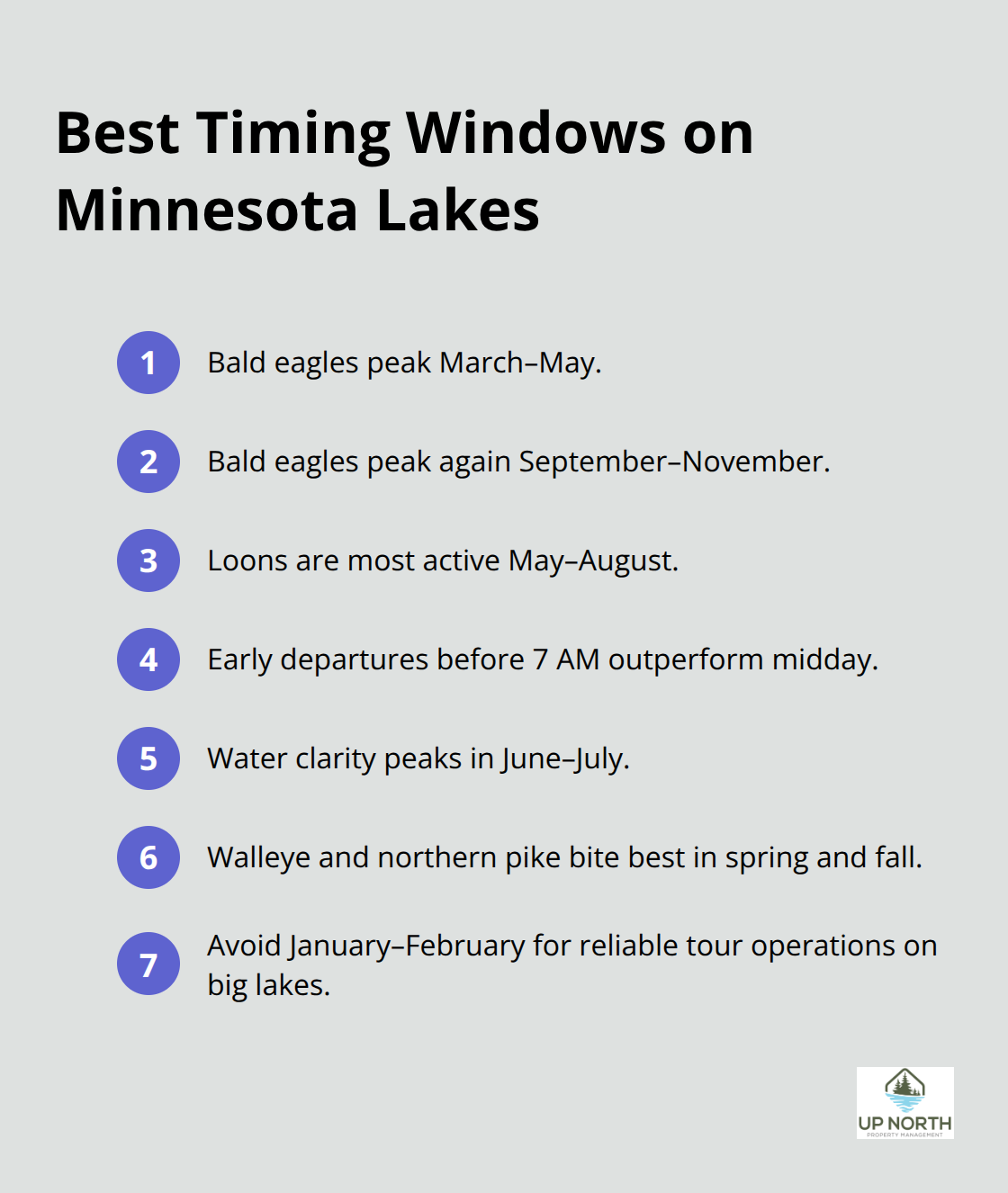
Timing your tour matters more than most visitors realize, and seasonal patterns dictate what you’ll actually see. Bald eagle activity peaks from March through May when birds return to nesting sites and from September through November during migration periods-outside these windows, eagle sightings drop significantly. Loon breeding season runs May through August, making summer the best window for hearing their distinctive calls and observing nesting behavior, though early morning departures (before 7 AM) yield better results than midday tours.
Water Clarity and Fish Activity Windows
Water clarity reaches its peak in early summer (June and July) when spring runoff subsides and before algae blooms develop in late summer. Walleye and northern pike are most active during spring (April through May) and fall (September through October) when water temperatures favor feeding activity. Tours should avoid mid-winter conditions on larger lakes due to unpredictable weather patterns and reduced guide availability-January through February sees the fewest reliable tour operations across Minnesota’s major lakes.
Planning Around Operator Schedules
Contact tour operators directly about their specific seasonal schedules because many reduce operations or close entirely during shoulder seasons, and availability varies dramatically between Mille Lacs and smaller northern lakes. Operators in areas like Isle and Brainerd maintain more consistent year-round schedules than remote northern locations, though even these experience seasonal fluctuations. Your tour preferences (eagle watching versus loon observation versus fish activity) should align with the season you select, and your guide can recommend optimal timing once you communicate what you want to experience.
Final Thoughts
Guided lake tours in Minnesota deliver what casual boating cannot: expert interpretation of water conditions, predictable wildlife encounters, and safety protocols managed by professionals who know these lakes intimately. Licensed guides carry credentials proving they’ve passed DNR exams covering safety protocols and fish identification, and they operate boats equipped with backup communication devices, offline navigation systems, and weather monitoring tools that exceed federal minimums. When your guide positions the boat over a structure and explains why walleye congregate there, or points out an eagle’s nest and describes seasonal nesting patterns, you experience Minnesota’s lakes through accumulated knowledge that takes years to develop.
Planning your guided lake tours in Minnesota requires matching your interests to seasonal windows and selecting operators who prioritize small group sizes and personalized service. If eagle watching drives your decision, book between March and May or September through November; if loon observation matters more, summer months from May through August offer the best window, particularly during early morning departures. Water clarity peaks in June and July, making these months ideal for photography and underwater observation, while availability varies significantly between Mille Lacs Lake and smaller northern lakes since many operators reduce operations during shoulder seasons.
Professional tour services cost more than renting a boat independently, but the difference justifies itself immediately through superior safety standards and personalized attention. Operators conduct mandatory safety briefings before departure and adjust routes when conditions shift from safe to risky, prioritizing your safety and experience over completing a predetermined itinerary. If you’re planning a Minnesota lake vacation, consider staying at one of the exclusive vacation rentals managed by Up North Property Management, which offers fully equipped properties throughout the Northern Lakes Area and can help coordinate guided lake tours alongside your accommodation.