
Buying a cabin in Northern Minnesota often means exploring financing options beyond traditional bank mortgages. At Up North Property Management, we’ve seen property owners discover that rental property financing through alternative methods can open doors that conventional loans keep closed.
The right funding strategy depends on your timeline, credit situation, and investment goals. This guide walks you through the options that work best for cabin properties in our region.
Why Traditional Bank Mortgages Fall Short for Cabin Investors
The Second-Home Penalty
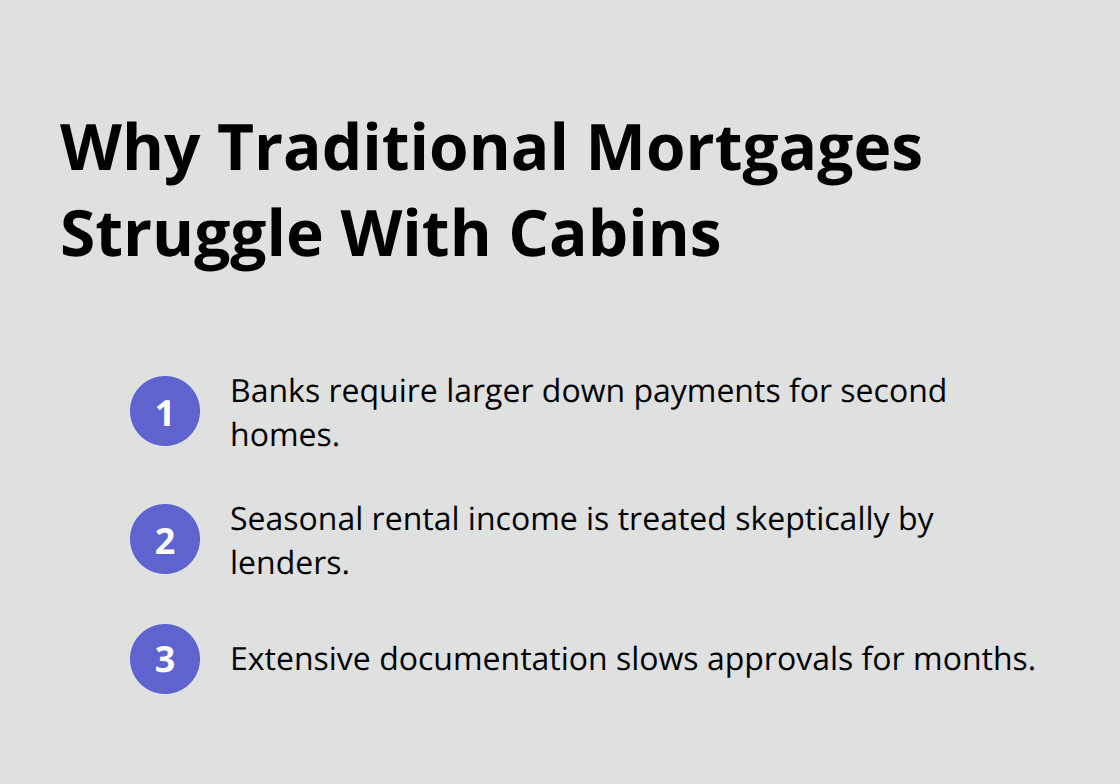
Bank mortgages work fine for primary residences, but cabin properties operate under different rules that traditional lenders don’t always accommodate well. Conventional financing creates real obstacles for cabin owners. Banks typically require 20-25% down for second homes, treat seasonal rental income skeptically, and demand extensive documentation that takes months to process. For a cabin in Northern Minnesota, this means your lender might reject legitimate rental income from vacation stays or require you to prove occupancy patterns that don’t match how you actually plan to use the property.
Interest rates also matter significantly here. Conventional mortgages for second homes typically run higher than primary residence rates because they hold more risk. That difference compounds over 30 years and substantially increases your total cost.
Appraisal and Valuation Challenges
The appraisal process itself becomes problematic because comparable sales for vacation properties are sparse in many areas. Appraisers struggle to justify the value your cabin actually commands when few similar properties have sold recently. This mismatch between market reality and appraised value can kill deals or force you to accept lower loan amounts than the property warrants.
The Seasonal Income Catch-22
Seasonal properties present another friction point with traditional lenders. Most banks won’t count rental income from a cabin unless you have documented history. This creates a catch-22 for new investors: if you’re buying a cabin to generate vacation rental income, you can’t use that income to qualify for the loan. Your income potential remains invisible to the lender’s underwriting process.
Why Alternative Financing Wins
Hard money lenders and private financing sources skip many of these restrictions entirely. They evaluate properties based on actual market value and rental potential rather than rigid underwriting boxes. Owner financing arrangements let you negotiate terms directly with sellers, sometimes including flexible down payments or interest rates that reflect your specific situation.
A 10% Down Program from specialty lenders reduces upfront cash requirements substantially compared to traditional 20% down requirements, making alternative financing genuinely competitive. Home equity lines of credit against your primary residence offer another path if you’ve built substantial equity. These alternatives work because they acknowledge what traditional banks ignore: a cabin’s value comes partly from its income-generating potential, not just its appraised value as a structure. Understanding which alternative method fits your situation requires examining each option’s specific advantages and drawbacks.
Three Practical Paths Beyond Traditional Bank Loans
Hard Money and Bridge Financing for Speed
Hard money lenders operate on fundamentally different criteria than banks. They focus on property value and exit strategy rather than your credit score or income documentation. For cabin investors in Northern Minnesota, this means approval timelines compress from months to weeks. Hard money loans typically carry interest rates between 8-12% and require 20-30% down, but the speed matters more than the rate for time-sensitive purchases.

Bridge financing works similarly, allowing you to acquire a cabin quickly while your primary home sells. You pay interest-only payments temporarily, then refinance into permanent financing once your primary residence closes. This approach solves the timing problem that kills many cabin deals. The tradeoff is clear: you accept higher short-term costs to capture an opportunity that conventional financing would miss entirely.
Owner Financing Arrangements
Owner financing arrangements in Northern Minnesota’s cabin market let you negotiate directly with sellers who understand their property’s vacation rental potential better than distant bank underwriters. Sellers often carry mortgages because they recognize rental income that traditional lenders dismiss. Down payments can drop to 10-15% instead of the 20-25% banks demand.
Interest rates vary widely depending on market conditions and seller motivation, but many range from 5-7%. This method works best when you’ve identified a specific property and established rapport with the seller. Sellers become your partners in the transaction rather than obstacles to overcome.
Home Equity and Cash-Out Refinancing
Home equity lines of credit against your primary residence offer another route if you’ve accumulated substantial equity. You borrow against what you’ve already built rather than convincing a new lender to take a chance on a seasonal property. Cash-out refinancing accomplishes similar goals by replacing your current mortgage with a larger loan and pocketing the difference.
If your primary home has appreciated significantly, this approach can fund your cabin purchase entirely without additional loans. The mathematics work especially well in Minnesota’s current market where many homeowners have substantial equity positions. These alternatives share a common advantage: they acknowledge that cabin properties generate income and build wealth differently than primary residences, making them legitimate investments rather than luxury purchases that banks view skeptically.
Once you’ve selected your financing method, the next step involves understanding how to maximize that investment through professional management and consistent rental income.
Turn Rental Income Into Your Financing Solution
How Rental Income Strengthens Your Financing Position
A well-managed cabin in Northern Minnesota’s popular lake areas generates $25,000 to $45,000 annually in vacation rental income, depending on location, season length, and property quality. That income directly reduces or eliminates your monthly financing payments, fundamentally changing the economics of your investment. When you finance through hard money lenders or owner financing arrangements, this rental income becomes the justification for the financing itself. Unlike traditional banks that dismiss seasonal income, alternative lenders evaluate properties partly on their actual revenue-generating capacity. A cabin that produces $35,000 annually in documented rental income strengthens your financing position.
The Performance Gap Between Professional and Self-Management
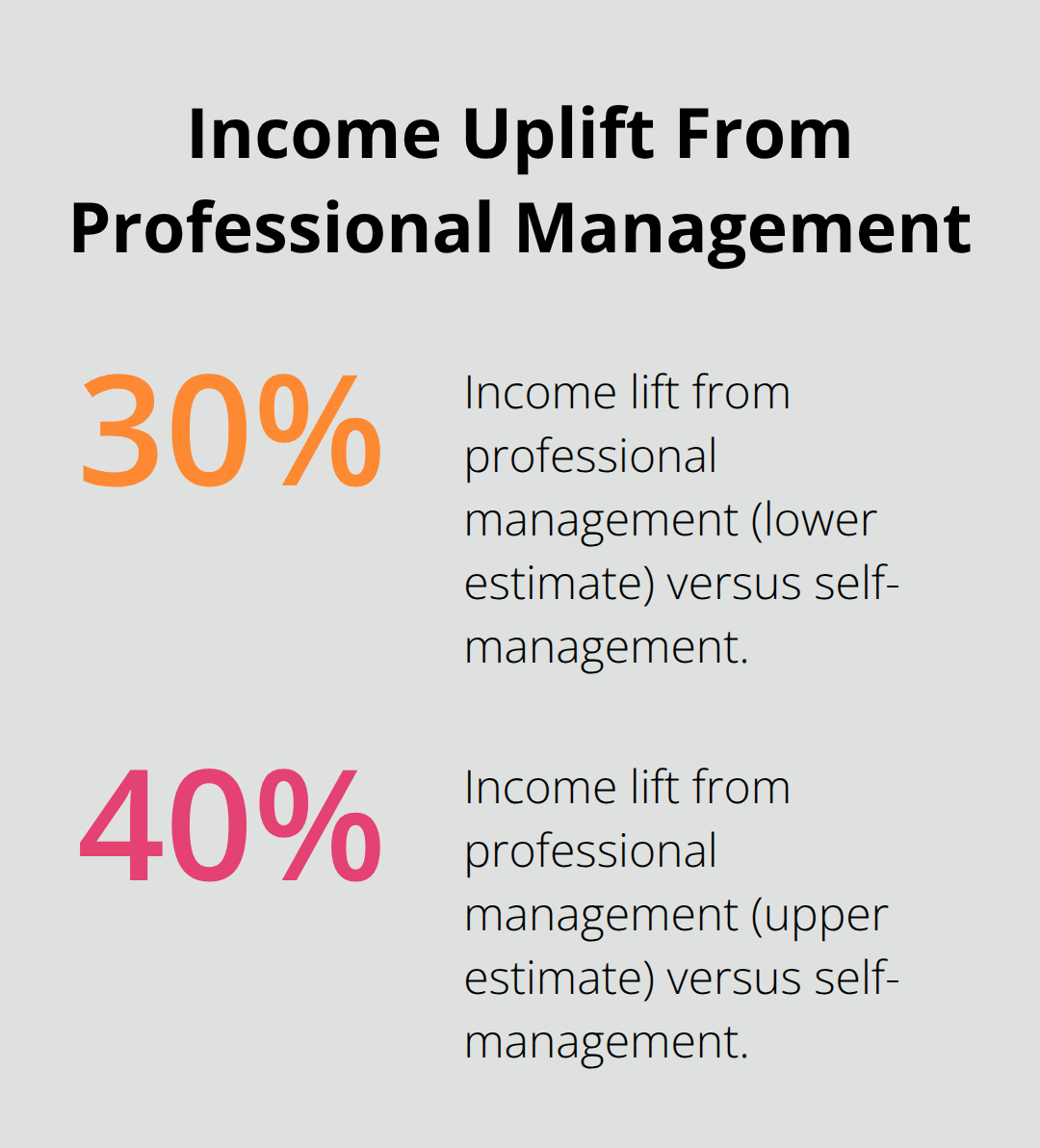
Property owners who attempt self-management typically underperform compared to professionally managed properties because they miss bookings, charge lower rates, and fail to optimize their calendar. Professional property management increases vacation rental income 30-40% compared to self-management through distribution breadth, pricing optimization, and booking strategies. Professional management handles the operational complexity that kills most owner-managed rental attempts: marketing across multiple platforms, guest communications, cleaning coordination between stays, immediate maintenance responses, and administrative tasks that consume countless hours.
Why Professional Management Matters for Your Investment
This income difference directly affects your financing capacity and equity-building speed. A cabin generating higher rental revenue qualifies for larger alternative loans and allows faster paydown of your principal balance. Up North Property Management handles full-service vacation rental management in Northern Minnesota, managing marketing, bookings, cleaning, and maintenance to keep properties in top condition. After accounting for management fees, property taxes, insurance, and maintenance reserves, a well-managed Northern Minnesota cabin still produces substantial net income that strengthens your overall financial position.
Maximizing Returns Through Strategic Management
Alternative financing works best when paired with professional management that proves the income potential that traditional lenders refused to acknowledge. The mathematics are straightforward: documented rental income transforms how alternative lenders evaluate your cabin investment. A property that demonstrates consistent revenue becomes less of a speculative purchase and more of a legitimate income-producing asset that justifies the financing terms you negotiate.
Final Thoughts
Choosing the right financing path for your Northern Minnesota cabin depends on your timeline, available capital, and investment goals. Hard money loans deliver speed when you need to close quickly, owner financing lets you negotiate directly with sellers who understand vacation rental potential, and home equity solutions work well if you’ve built substantial equity in your primary residence. Each option outperforms traditional bank mortgages for cabin properties because they acknowledge what conventional lenders ignore: seasonal properties generate real income that justifies the investment.
The financing method matters less than pairing it with professional management that proves your cabin’s actual revenue potential. A property generating documented rental income transforms from a speculative purchase into a legitimate income-producing asset, which changes everything about your rental property financing conversations with alternative lenders. They evaluate properties based on real market value and demonstrated cash flow rather than rigid underwriting criteria designed for primary residences.
Up North Property Management handles the operational complexity that transforms rental property financing from a risky bet into a predictable income stream. Professional management across marketing, bookings, cleaning, and maintenance ensures your cabin performs at its actual potential rather than underperforming through self-management, which directly strengthens your financing position and accelerates your equity-building timeline.