
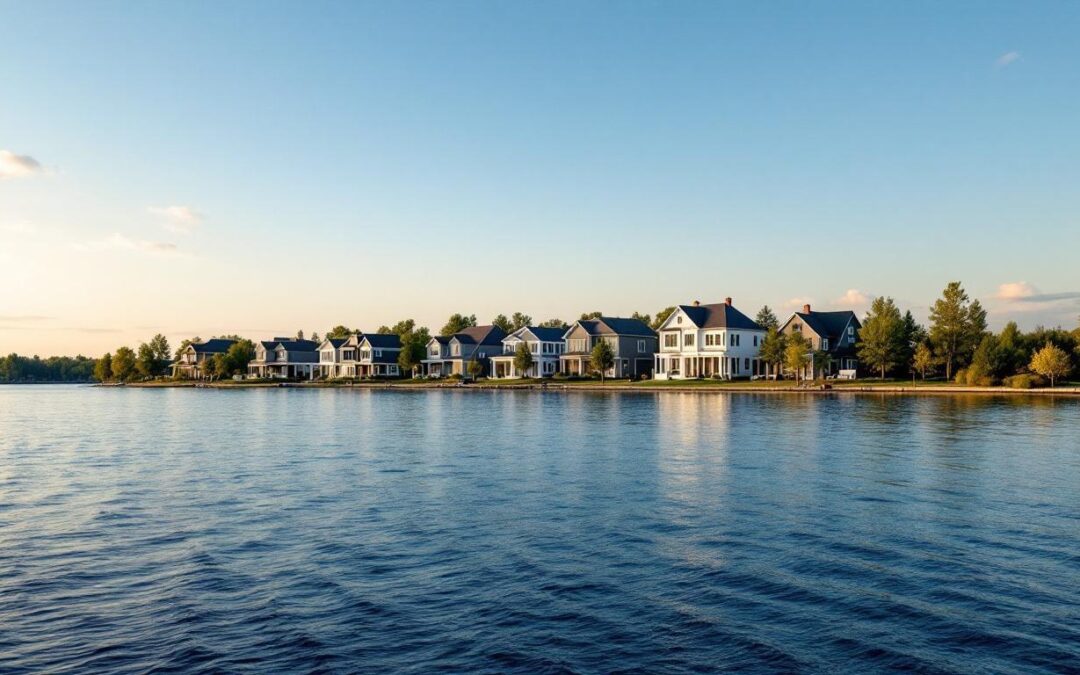
Detroit Lakes lakefront homes offer more than just a view-they represent a lifestyle that combines recreation, investment potential, and year-round enjoyment. Whether you’re looking to purchase a waterfront property or explore vacation rental opportunities, the market here delivers genuine value.
We at Up North Property Management have guided countless buyers and property owners through this process. This guide walks you through everything from understanding what makes these properties special to managing them for maximum returns.
What Makes Detroit Lakes Waterfront Properties Special
Detroit Lakes waterfront properties command premium prices for good reason. The market spans roughly $270,000 to over $2 million, with most lakefront homes sitting between 2,300 and 3,500 square feet. Properties move quickly here-sample listings show days on market ranging from 12 to 36 days, indicating strong buyer demand. Nearby markets like Hawley average around $399,000 and Lake Park around $409,000, but Detroit Lakes waterfront commands higher prices due to direct lake access and dock availability. Private boat slips appear in nearly every premium listing, signaling that serious lakefront buyers prioritize docking infrastructure. The area supports multiple lakes including Big Floyd, Lake Sallie, Pickerel, Buchanan, Otter Tail, Pelican, and Rush, each offering distinct water conditions and seasonal recreational appeal. West-facing properties on Lake Sallie attract buyers specifically for sunset views, proving that orientation and aesthetics directly influence value. Minnesota Department of Natural Resources dock permits may be required for certain docks, which property owners must factor into planning and improvement costs. This regulatory framework actually protects property values by preventing overdevelopment and maintaining water quality standards.
Water Quality Supports Active Recreation
Detroit Lakes region lakes support active fishing, swimming, and boating throughout summer and into fall. Water quality varies significantly by lake, so testing before purchase matters more than general reputation. Swimming season peaks June through August, but serious boaters use these lakes spring through early November. Winter access becomes difficult-ice typically forms by December, making water recreation impractical until spring thaw. Properties with enclosed docks, heated boathouses, or covered slips command higher prices because they extend usable seasons. Waterfront rentals frequently include pontoons, kayaks, paddle boards, and pedal boats, turning properties into revenue generators that average 4.9 to 5.0-star guest ratings. The investment case strengthens when owners understand that premium amenities directly correlate with booking frequency and nightly rates.
Seasonal Demand Shapes Rental Income
Seasonal demand peaks sharply in July and August, often requiring full-week minimum stays, which means rental income concentrates heavily into two months. Spring and fall shoulder seasons offer lower rates but consistent bookings from families avoiding peak crowds. Summer vacationers fill properties at premium nightly rates, while offseason travelers seek quieter experiences at reduced prices.
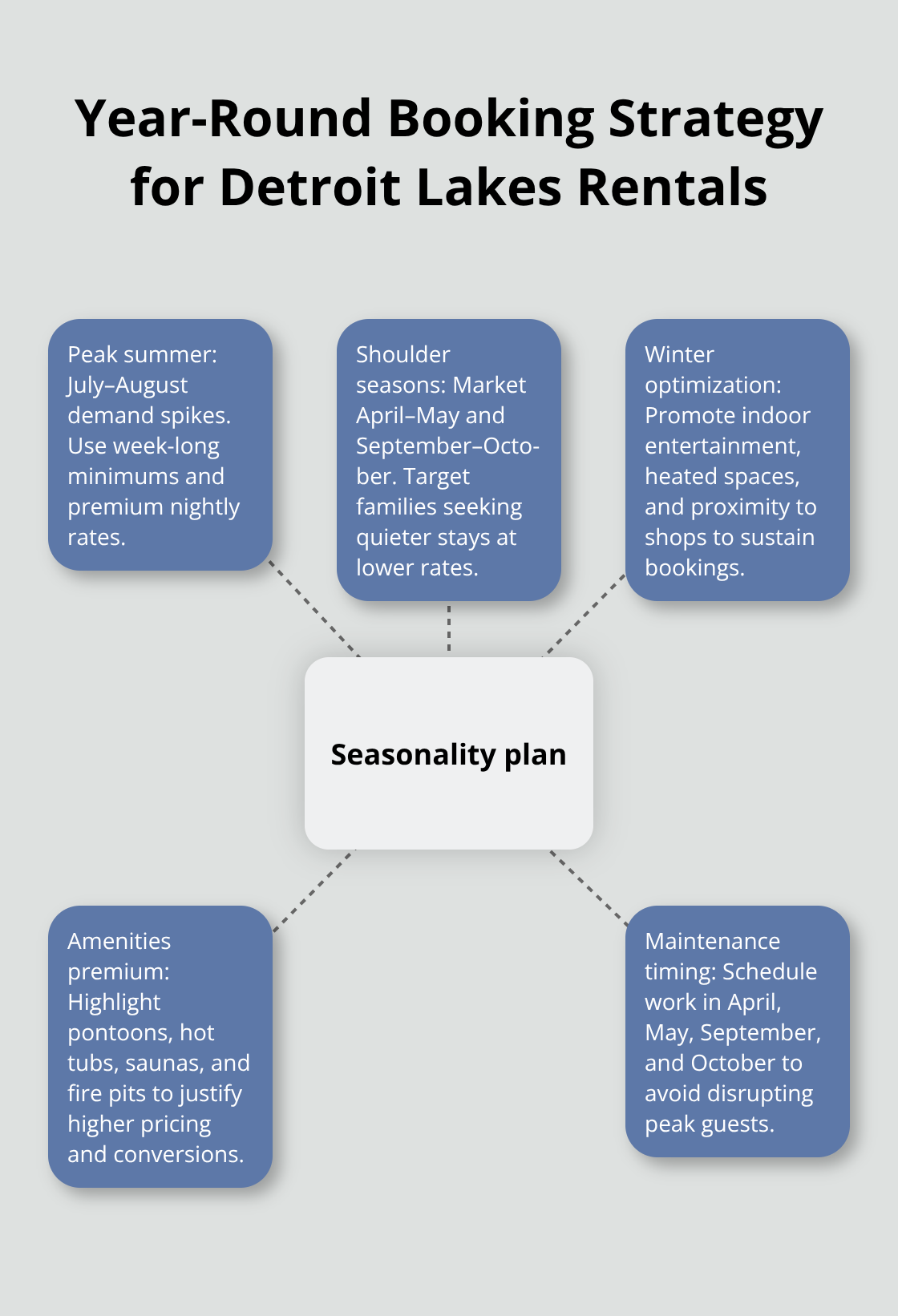
Properties that offer year-round appeal (heated spaces, indoor entertainment, proximity to winter activities) capture bookings across all seasons. Owners who understand these patterns can price strategically and market to different guest types throughout the year. The rental market rewards properties that combine water access with indoor amenities, since Minnesota winters limit outdoor water recreation but don’t eliminate vacation demand.
Finding Your Ideal Detroit Lakes Lakefront Home
Detroit Lakes waterfront inventory spans 75+ active listings across multiple lakes, giving you genuine choice rather than settling for whatever’s available. Prices range from $269,900 to $2,195,000, but most serious waterfront homes cluster between $350,000 and $800,000-the sweet spot where you get dock access, 3-5 bedrooms, and 2,300-3,500 square feet without premium luxury pricing. Properties in neighborhoods like Roosevelt, Northport, and Downtown sit closest to amenities and restaurants, while more secluded options on Big Floyd and Pickerel lakes appeal to buyers seeking privacy. Properties sell fast once priced correctly-hesitation costs money here, with days on market typically running 12-36 days. Nearby benchmarks matter: Hawley averages $399,000 and Lake Park around $409,000, but Detroit Lakes waterfront commands 15-25% premiums due to superior dock infrastructure and water access. ZIP code 56501 centers around $358,000 average, while 56573 and 56549 offer slightly lower entry points. Inventory fluctuates seasonally, peaking in spring and early summer when buyers actively search, so start your search March through May to access maximum selection and negotiating leverage.
Match Your Water Activities to the Right Lake
Finding the right property requires specificity about what you actually use the water for. If boating matters more than swimming, prioritize west-facing properties on Lake Sallie or larger lakes like Otter Tail and Pelican, which support powerboats and pontoons year-round through November. Properties with enclosed docks or heated boathouses extend your usable season and command higher resale value.

If you’re targeting rental income, Detroit Lakes short-term rentals average $379 daily rates because guests value proximity to restaurants and shops. Water quality varies significantly by lake, so test before purchase rather than relying on general reputation.
Navigate Permits and Regulations
Local real estate experts understand dock permits, shoreline regulations, and which lakes maintain consistent water quality-generic agents miss these details. Verify that any property you consider has Minnesota Department of Natural Resources dock authorization or can obtain it without major expense, since dock restrictions vary significantly by lake and shoreline type. Properties listed on MLS platforms show accurate current inventory, but agent networks often know about off-market deals before they’re publicly listed. A lakefront specialist identifies properties that match your specific needs rather than showing you everything available.
The right property sets the foundation for either a personal retreat or a profitable rental operation. Understanding your priorities-whether water access, proximity to town, or investment potential-narrows your search significantly and accelerates your path to ownership. Once you’ve identified your ideal home, the next decision involves whether to keep it as a personal escape or convert it into a vacation rental that generates consistent income.
Turning Your Detroit Lakes Home Into a Booking Machine
Converting a Detroit Lakes lakefront home into a vacation rental requires aggressive marketing and operational discipline. Detroit Lakes rental properties average $379 daily rates during peak season, but only if you position them correctly in a crowded marketplace. Superhost properties on platforms like Airbnb maintain 4.9 to 5.0-star ratings because owners treat marketing and guest experience as non-negotiable investments rather than afterthoughts.
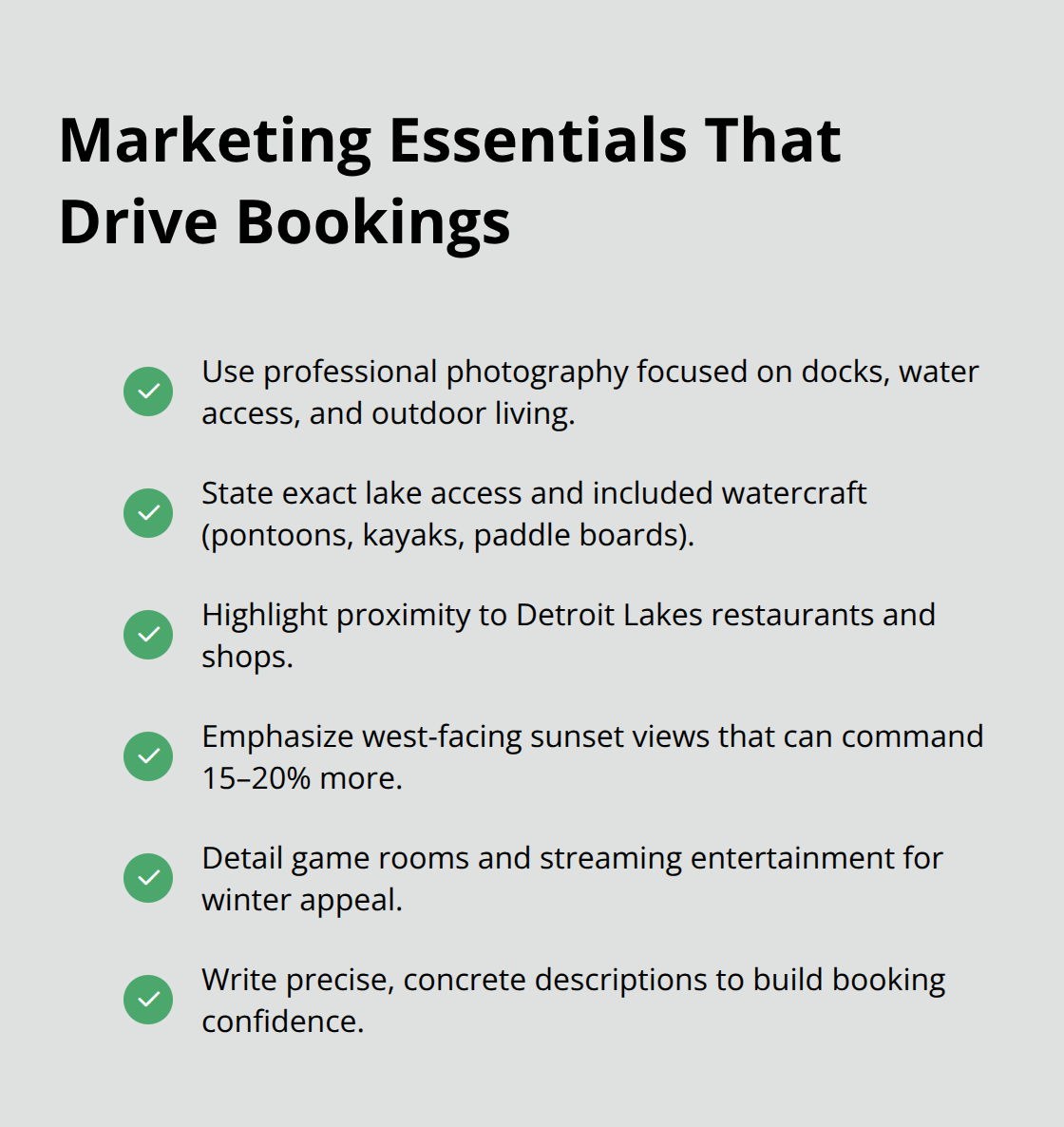
Your property competes against dozens of similar lakefront homes, so differentiation matters enormously. Properties that highlight specific amenities like included pontoons, hot tubs, saunas, and fire pits capture premium pricing and consistent bookings. West-facing lake homes on Lake Sallie that emphasize sunset views attract guests willing to pay 15-20% more than comparable properties with generic marketing descriptions.
Professional Marketing Drives Bookings
Professional photography showing your dock, water access, and outdoor living spaces converts browsers into bookers far more effectively than smartphone snapshots. Your listing should communicate exactly which lakes your property accesses, what watercraft are included, and how close you are to Detroit Lakes downtown amenities, since guests searching for vacation rentals make these decisions based on concrete details, not vague appeals.
Detailed descriptions covering water recreation options, proximity to downtown restaurants and shops, and specific game room amenities outperform generic listings across all seasons. Properties with this level of specificity attract guests who book with confidence rather than hesitation.
Peak Season Demands Strategic Pricing
Seasonal demand peaks sharply in July and August, when full-week minimum stays command premium nightly rates, but the rental income opportunity extends far beyond summer if you understand how to market shoulder seasons effectively. Spring (April-May) and fall (September-October) attract families avoiding peak crowds and willing to accept lower rates in exchange for quieter experiences and easier booking availability.
Winter months seem unprofitable until you position your property for offseason travelers seeking indoor entertainment, heated spaces, and proximity to restaurants and shops rather than water recreation. Properties that invest in game rooms, streaming entertainment, and comfortable indoor gathering spaces capture winter bookings that generate meaningful income during months when competing properties sit vacant.
Year-Round Income Beats Peak-Season Reliance
Rental demand concentrates so heavily into July and August that owners who rely solely on peak season income face cash flow gaps for nine months annually. Year-round vacation rental income strategies compound your annual returns significantly-a property earning $4,500 weekly in July but zero in January generates $234,000 annually, while the same property earning $2,000 weekly year-round generates $104,000 annually despite lower peak rates.
Maintenance Timing Protects Your Investment
Maintenance and turnover costs spike during peak season because rapid guest rotations create wear and cleaning demands that require professional cleaning services between each booking. Schedule maintenance during April, May, September, and October to prevent emergency repairs during July and August when guest satisfaction directly impacts your ratings and future bookings.
Final Thoughts
Detroit Lakes lakefront homes represent one of Minnesota’s most compelling real estate opportunities, combining immediate lifestyle benefits with genuine investment returns. Properties here move fast-12 to 36 days on market-because serious buyers recognize that dock access, water quality, and proximity to amenities create lasting value. Whether you purchase for personal enjoyment or rental income, the fundamentals remain strong, and waterfront properties command 15-25% premiums over nearby markets like Hawley and Lake Park because water access doesn’t depreciate.
Rental properties generate $379 daily rates during peak season, with Superhost properties maintaining 4.9 to 5.0-star ratings that drive consistent bookings throughout the year. Year-round income strategies-marketing shoulder seasons and winter amenities-transform seasonal properties into reliable revenue generators that earn $100,000+ annually. Properties with enclosed docks, heated boathouses, and premium outdoor living spaces deliver experiences that justify their higher prices and attract guests willing to pay premium rates.
We at Up North Property Management handle the operational complexity that deters many owners from pursuing rental income. Full-service vacation rental management covers marketing, bookings, cleaning, and maintenance, transforming your Detroit Lakes lakefront property into a hassle-free income stream while you enjoy the lifestyle benefits of ownership. Contact us to discuss how your waterfront home can generate consistent returns without consuming your time.