
Lakes hold secrets that most people never imagine. From meteorite craters filled with water to underground systems hidden beneath our feet, these bodies of water tell incredible stories.
We at Up North Property Management love sharing fun facts about lakes that will change how you see these natural wonders. Get ready to learn about color-changing waters, record-breaking depths, and wildlife found nowhere else on Earth.
How Lakes Form Through Natural Forces
Meteorite Impact Craters Create Perfect Lakes
Meteorite impacts create some of Earth’s most perfectly circular lakes. Clearwater Lakes in Quebec formed 290 million years ago when two asteroids struck within moments of each other, creating twin circular lakes that remain visible from space today. The Pingualuit Crater in northern Quebec holds one of the world’s purest freshwater lakes, with water so clean that visibility reaches 35 meters deep.
These impact craters make ideal lake basins because the shock creates a sealed bowl that prevents water from draining away. Scientists have identified over 180 confirmed impact craters on Earth, with many containing lakes that provide pristine water sources for local communities. The circular shape and sealed bottom make these lakes particularly stable water sources.

Underground Lake Systems Span Continents
Hidden beneath our feet lie massive underground lake systems that dwarf surface waters. The Ogallala Aquifer stretches across eight US states and holds 3.5 billion acre-feet of water. Dragon’s Breath Cave in Namibia houses the world’s largest underground lake, extending 430 feet below ground with a surface area larger than two football fields.
These underground systems form when water dissolves limestone bedrock, creating vast caverns that fill with groundwater. Lake Vostok in Antarctica sits buried under 2.5 miles of ice and contains water that has been isolated for 15 to 25 million years (making it older than many surface ecosystems). Underground lakes maintain constant temperatures year-round, making them valuable water sources during droughts when surface lakes fail.
Seasonal Color Changes Transform Lake Appearance
Some lakes transform their colors dramatically throughout the year, creating natural spectacles that attract visitors worldwide. Lake Hillier in Australia maintains its bright pink color year-round due to algae and bacteria that thrive in its salty waters. The pink hue intensifies during warmer months when these microorganisms multiply rapidly.
Crater Lake in Oregon shifts from deep blue to turquoise depending on weather conditions and algae growth patterns. The lake’s extraordinary depth (1,943 feet) and pure water create these color variations as light penetrates different depths. These seasonal transformations occur because temperature changes affect the microscopic life that influences water color, creating a natural calendar that locals use to track seasons.
Amazing Lake Ecosystems and Wildlife
Lake ecosystems harbor some of Earth’s most extraordinary life forms that exist nowhere else on the planet. Lake Baikal in Siberia contains endemic species found exclusively within its waters, including the Baikal seal, the world’s only freshwater seal species. This 25-million-year-old lake evolved in complete isolation, which created species like the transparent golomyanka fish that comprises 70% oil and lives at depths of 1,600 meters. The Baikalian amphipods grow to unusual sizes in the lake’s cold, oxygen-rich waters, with some species that reach lengths of 9 centimeters compared to their typical 2-centimeter ocean relatives.
Extreme Conditions Create Unexpected Life
Lakes with seemingly impossible conditions support ecosystems that challenge our understanding of life itself. Mono Lake in California maintains salt levels three times higher than ocean water, yet millions of brine shrimp flourish in its alkaline waters with a pH of 10. These shrimp feed massive bird populations during migration seasons, with over one million eared grebes that stop at Mono Lake each fall. Lake Natron in Tanzania reaches temperatures of 60 degrees Celsius and has a pH of 12, which creates an environment so harsh it can calcify animals, yet flamingos breed successfully on its shores because the extreme conditions produce the algae they need for their pink coloration.

Migration Routes Depend on Lake Systems
Bird migration patterns center around specific lake systems that provide critical stopover points during transcontinental journeys. The Great Lakes support significant portions of North America’s waterfowl populations, with Lake Erie alone that hosts over 2 million ducks during peak migration periods. Lake Titicaca at 12,500 feet elevation serves as a breeding ground for three flamingo species that migrate between Bolivia and Peru (demonstrating how high-altitude lakes create unique migration corridors). The Rift Valley lakes in East Africa support over 4 million lesser flamingos that move between lakes based on algae availability, which creates one of the world’s most spectacular wildlife migrations centered entirely around lake ecosystems.
These remarkable ecosystems pale in comparison to the record-breaking statistics that some lakes achieve through their sheer size and unusual properties.
Record-Breaking Lake Statistics and Phenomena
Lake Baikal in Siberia dominates freshwater records with a depth of 5,315 feet and contains 19% of Earth’s unfrozen freshwater. This single lake holds more water than all five Great Lakes combined, with 5,670 cubic miles of water that would take 330 years to drain if the outflow continued without replenishment. The Caspian Sea technically qualifies as a lake and contains 18,800 cubic miles of saltwater (making it larger by volume than Lake Baikal but with entirely different water chemistry). Lake Superior ranks as North America’s volume champion with 2,900 cubic miles of water, enough to flood the entire continental United States to a depth of one foot.
Temperature Extremes That Defy Logic
Lake Vanda in Antarctica maintains liquid water at its bottom despite surface temperatures of minus 50 degrees Fahrenheit because salt concentrations create a density barrier that traps heat from geothermal sources. The bottom water reaches 77 degrees Fahrenheit while the surface remains frozen year-round. Lake Nyos in Cameroon sits atop volcanic activity that heats deep waters to dangerous temperatures while it keeps surface waters cool, which creates the conditions that led to the deadly 1986 carbon dioxide release that killed 1,746 people. These temperature inversions occur in fewer than 200 lakes worldwide (making them geological rarities that scientists study to understand deep-water chemistry).
Rapid Water Level Changes Break Records
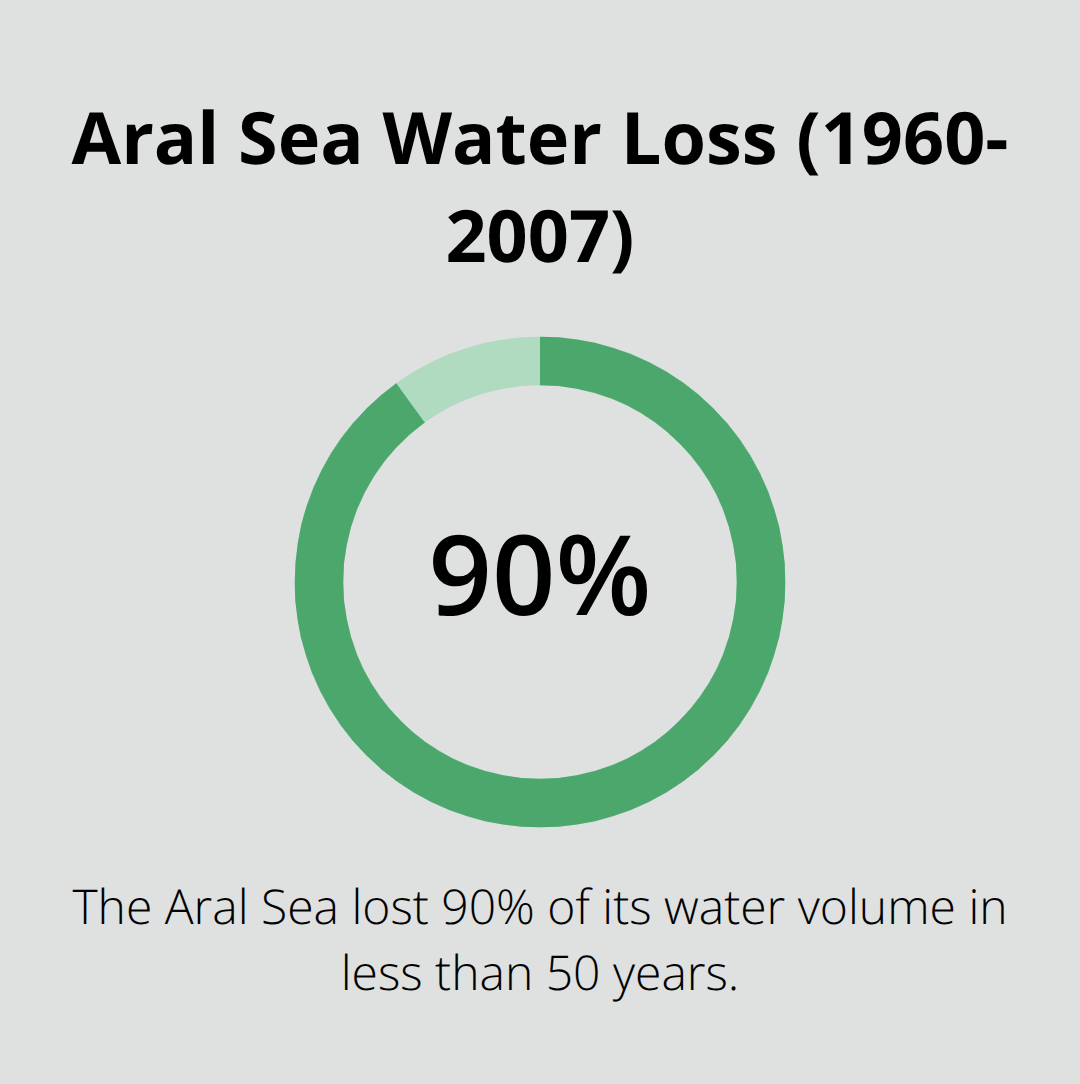
The Aral Sea lost 90% of its water volume between 1960 and 2007, as it shrank from 26,300 square miles to just 2,600 square miles in less than 50 years due to irrigation diversions. This represents the fastest large-scale lake disappearance in recorded history. Lake Chad in Africa fluctuates dramatically based on rainfall patterns, as it expands from 1,000 square miles to over 10,000 square miles within single decades. These rapid changes affect millions of people who depend on lake resources for fish and agriculture, which demonstrates how quickly natural water systems can transform entire regional economies.
Final Thoughts
These fun facts about lakes reveal the extraordinary diversity of our planet’s freshwater systems. Meteorite impact craters hold pristine water while underground lakes span continents, and these natural wonders demonstrate nature’s incredible creativity. Lake Baikal’s 25-million-year isolation created species found nowhere else, while extreme environments like Mono Lake support millions of birds despite salt levels that would kill most life forms.
The rapid disappearance of the Aral Sea and dramatic fluctuations of Lake Chad show how quickly these vital ecosystems can change. Lakes provide 20% of the world’s freshwater and support countless species (making conservation efforts essential for future generations). These water bodies face pressure from climate change, pollution, and human development that threatens their stability.
We at Up North Property Management witness how Northern Minnesota’s pristine lakes attract visitors who seek natural beauty and recreation. Our vacation rental management services help property owners share these remarkable lake experiences while they maintain environmental integrity. Each visit to these waters deepens appreciation for irreplaceable natural treasures that continue to surprise us with their hidden secrets.