

At Up North Property Management, we often field questions about the impact of short-term rentals on property values. This topic has sparked heated debates in many communities.
Do short-term rentals decrease property values? The answer isn’t straightforward and depends on various factors.
In this post, we’ll explore both the positive and negative effects of short-term rentals on local real estate markets.
How Short-Term Rentals Boost Property Values
Short-term rentals can significantly increase property values in many areas. This trend stands out in popular tourist destinations and urban centers where demand for temporary accommodations runs high.
Higher Income Potential
Properties used for short-term rentals often generate more income than traditional long-term rentals. This comprehensive guide explores the pros and cons of long-term and short-term rentals, giving property owners a deeper understanding of each option. This increased income potential makes these properties more valuable to investors and can drive up overall property values in the area.
Attracting Investment
The promise of higher returns attracts more investors to neighborhoods with thriving short-term rental markets. This influx of investment often leads to property improvements and renovations, which in turn increase the value of surrounding properties. The rapid expansion of short-term rental platforms has spurred many cities to adopt new regulations to mitigate the loss of long-term rental units.
Economic Boost
Short-term rentals contribute to the local economy by bringing in tourists who spend money at local businesses. This economic activity can lead to job creation and increased demand for housing, further driving up property values.

Property Upgrades and Maintenance
Owners of short-term rentals (often referred to as “hosts”) typically invest more in property upgrades and regular maintenance to attract guests and maintain positive reviews. These improvements not only enhance the specific property but can also elevate the overall aesthetic and value of the neighborhood.
Increased Property Demand
The potential for additional income through short-term rentals can make properties in certain areas more desirable. This increased demand can lead to higher property values as buyers compete for homes with short-term rental potential.
While short-term rentals can have numerous positive effects on property values, it’s important to consider potential drawbacks. The next section will explore some challenges associated with the proliferation of short-term rentals in residential areas.
The Dark Side of Short-Term Rentals
Short-term rentals don’t always boost property values. In some cases, they negatively impact local real estate markets and communities. Let’s explore some potential drawbacks.
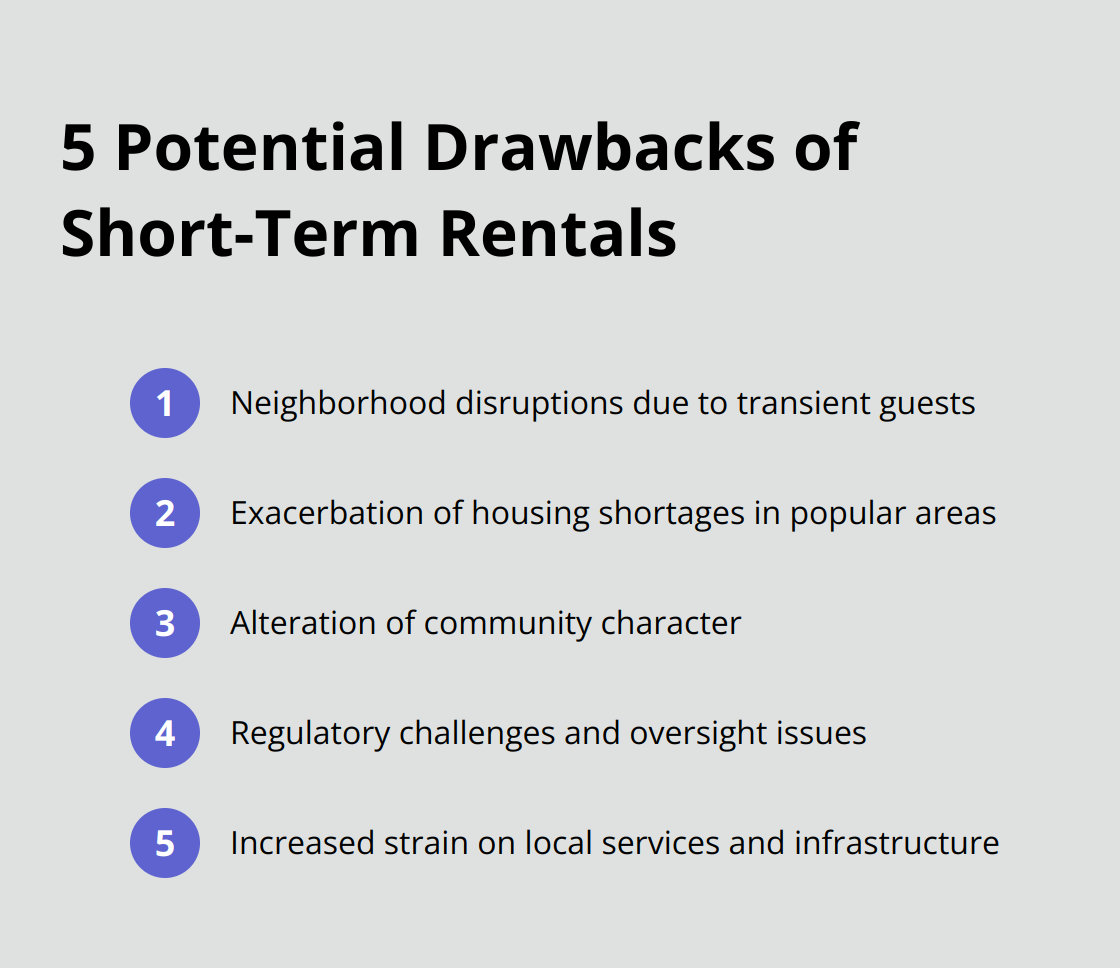
Neighborhood Disruptions
The transient nature of short-term rentals often leads to increased noise and disturbances in residential areas. This makes an area less desirable for long-term residents and potentially decreases property values.
Housing Shortage Woes
Short-term rentals can worsen housing shortages in popular areas. This trend prices out local residents and changes the fabric of communities.
Community Character at Risk
The influx of tourists and temporary residents alters the character of a neighborhood. This shift makes an area less attractive to potential long-term buyers, potentially impacting property values.
Regulatory Challenges
Many cities struggle to regulate short-term rentals effectively. This lack of oversight can lead to safety concerns, tax evasion, and unfair competition with traditional lodging options. These issues (if left unchecked) can negatively impact the overall desirability and value of properties in affected areas.
Strain on Local Services
The influx of short-term visitors can strain local services and infrastructure. This includes increased trash production, parking issues, and wear on public amenities. Over time, these factors can detract from a neighborhood’s appeal and potentially lower property values.
The impact of short-term rentals on property values isn’t always straightforward. Various factors influence whether these rentals will boost or decrease local real estate prices. In the next section, we’ll examine the key elements that determine how short-term rentals affect property values in different markets.
What Shapes Short-Term Rental Impact?
The influence of short-term rentals on property values varies across markets. Several key factors determine whether these rentals will boost or decrease local real estate prices. Property owners, investors, and local policymakers must understand these elements.

Regulatory Environment
Local regulations and zoning laws shape the short-term rental landscape. Cities with strict regulations often see less impact on property values, as the number of short-term rentals remains limited. New York City’s recent crackdown on Airbnb-style rentals aims to free up an estimated 10,000 apartments for long-term residents (potentially stabilizing rental prices in certain neighborhoods).
Areas with lax regulations may experience more significant property value fluctuations. In tourist hotspots like Miami Beach, where short-term rentals abound, property values have seen substantial increases. However, this trend raises concerns about affordability for local residents.
Management Standards
The quality of property management can make or break the success of short-term rentals in a given area. Well-managed properties tend to have a positive impact on neighborhood aesthetics and can even increase surrounding property values. Professional management companies ensure properties remain well-maintained, which reduces the likelihood of neighborhood disruptions.
Poor management can lead to neglected properties and dissatisfied neighbors. This negative perception can spread, potentially lowering property values in the vicinity.
Market Dynamics
The balance between supply and demand in the short-term rental market significantly influences property values. In areas where demand outstrips supply (such as popular vacation destinations), short-term rentals can drive up property values. Because of the price advantage of those rentals, less popular tourist destinations become more attractive with the arrival of short-term vacation rentals.
However, market saturation can have the opposite effect. When too many properties in an area convert to short-term rentals, it can lead to a shortage of long-term housing options. This scenario often results in increased rental prices for locals and can potentially decrease overall property values as the neighborhood loses its residential character.
Local Economic Factors
The overall economic health of an area plays a significant role in how short-term rentals affect property values. In economically thriving regions, short-term rentals can contribute to growth and increased property values. However, in areas facing economic challenges, the influx of short-term rentals might exacerbate existing issues.
Community Sentiment
The attitude of local residents towards short-term rentals can influence their impact on property values. Communities that welcome tourists and see short-term rentals as an economic opportunity may experience positive effects on property values. Conversely, areas where residents oppose the proliferation of short-term rentals might see negative impacts due to community resistance and potential conflicts.
Final Thoughts
The impact of short-term rentals on property values varies widely depending on location, market conditions, and management practices. Professional property management companies like Up North Property Management can help ensure that short-term rentals contribute positively to neighborhoods. These companies maintain properties well, comply with local regulations, and foster good relationships with the community.
The future of short-term rentals and their effect on property values will likely depend on evolving regulations, market dynamics, and community attitudes. As cities address housing affordability issues, we may see stricter regulations to preserve long-term housing stock. The question “Do short-term rentals decrease property values?” has no simple answer, as it depends on various factors unique to each location.
Responsible management and community engagement will play key roles in the coexistence of short-term rentals with long-term residents. This balance will determine whether these rentals contribute positively or negatively to local property values. As the short-term rental market evolves, property owners must stay informed about local regulations and market trends to make sound decisions for their investments.