

Right to use property bought for vacation offers an alternative path to owning your dream getaway without the full financial commitment of traditional ownership.
We at Up North Property Management see growing interest in these arrangements as vacation costs continue rising. This ownership model provides access to premium vacation properties while avoiding many traditional ownership burdens.
What Does Right to Use Property Actually Mean
Right to use property grants you specific time periods to occupy a vacation property without owning the deed or title. The American Resort Development Association reports that over 9.9 million households participate in these arrangements across the United States. Your purchase provides access to a property for predetermined weeks or months annually, typically spanning 20 to 99 years depending on the contract structure.
How Usage Rights Replace Traditional Ownership
Traditional property ownership gives you permanent possession and full control over when you visit, renovate, or sell. Right to use arrangements restrict your access to specific time slots and limit modification rights. You cannot pass the property to heirs through inheritance like traditional real estate. However, you avoid property taxes. Maintenance responsibilities fall to the developer, which eliminates unexpected repair costs that typically range from $1,000 to $4,000 yearly for vacation properties.
Three Main Right to Use Structures
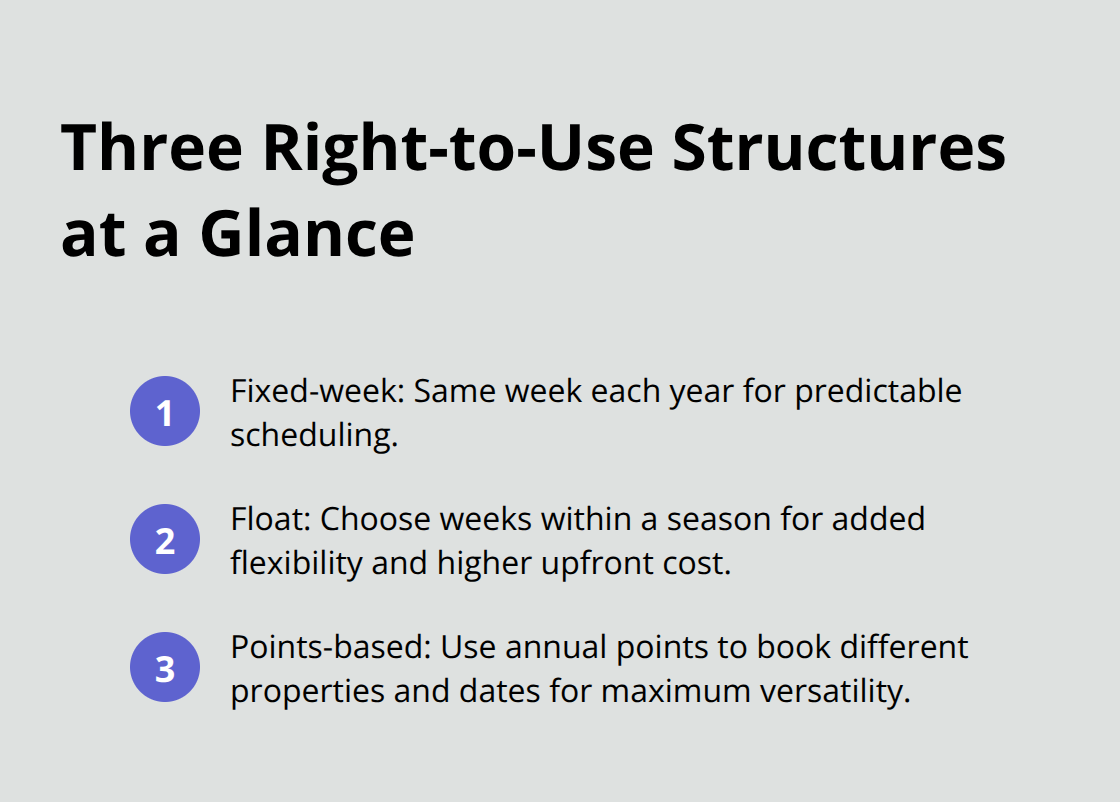
Fixed-week arrangements assign you identical weeks each year, such as the third week of July. Float arrangements allow selection within specific seasons and offer more flexibility for $2,000 to $5,000 additional upfront cost. Points-based systems provide the most versatility and let you book different properties and time periods with allocated annual points. Points systems typically cost 15% more initially but offer access to multiple resort locations.
Most contracts include annual maintenance fees that range from $800 to $2,500 (these cover property upkeep, utilities, and management services regardless of your chosen structure).
Contract Duration and Terms
Most right to use agreements span decades rather than years. Contracts typically run 20 to 50 years, though some extend to 99 years. The developer retains ownership throughout this period while you hold usage rights. Some agreements include automatic renewal clauses, while others require renegotiation at expiration. Contract length directly affects your total cost per vacation week over time.
Now that you understand the basic structure of right to use property, the next step involves careful evaluation of specific opportunities to find arrangements that match your vacation goals and budget.
How Do You Choose the Right Developer and Deal
The wrong developer costs you thousands in lost vacation weeks and potential legal battles. Too many buyers rush into contracts without proper research, then face bankrupt developers or properties that deteriorate rapidly. Start with the Better Business Bureau database to check complaint records and resolution patterns. Developers with A+ ratings and fewer than five complaints per 1,000 customers demonstrate reliability.
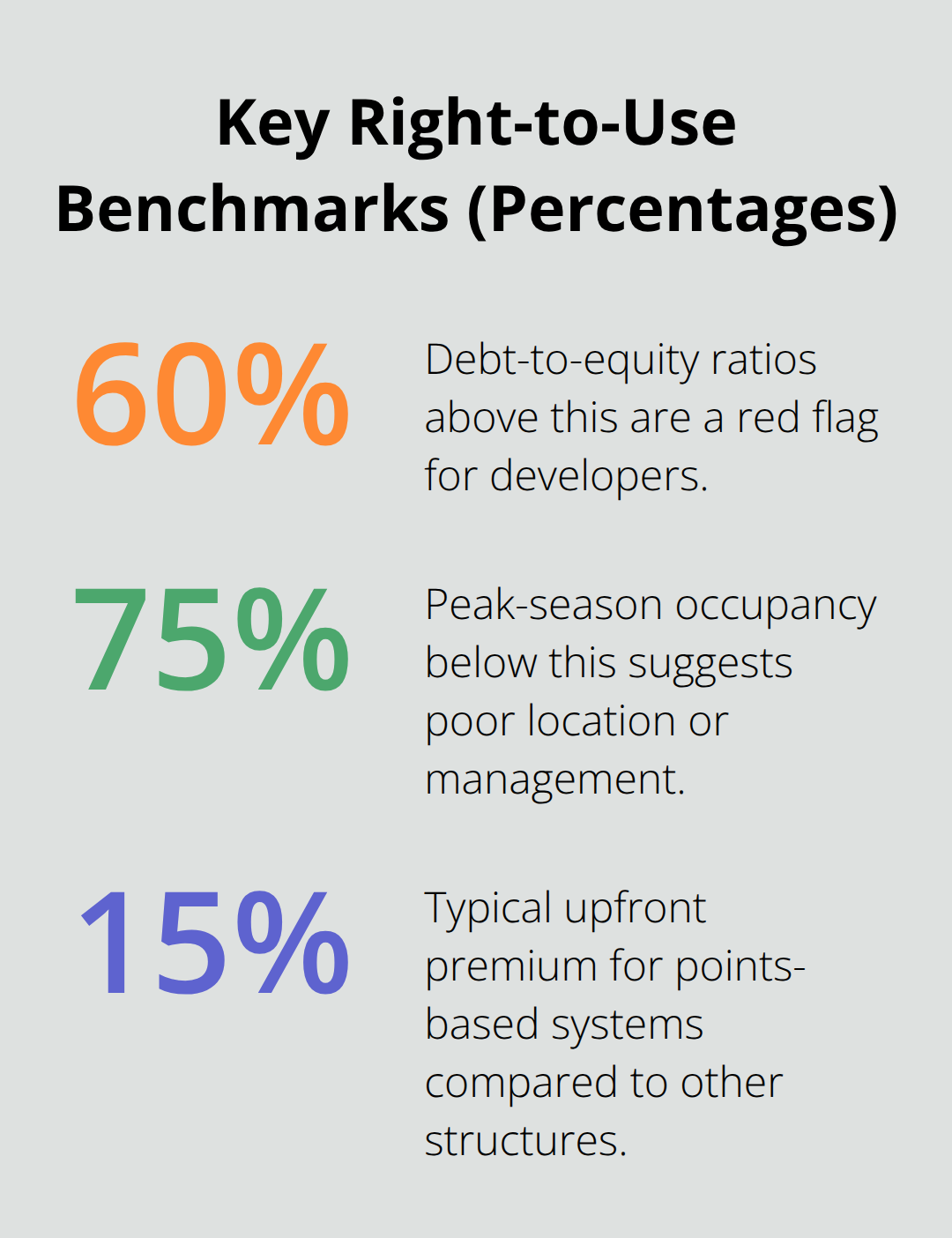
The Securities and Exchange Commission EDGAR database reveals financial filings for publicly traded resort companies and shows debt levels and revenue trends. Red flags include revenue decline over three consecutive years or debt-to-equity ratios that exceed 60 percent.
Developer Track Record and Property Portfolio
Established developers typically manage 15 or more resort properties across multiple states. Companies that operate for less than five years lack the financial stability for long-term contracts that span decades. Request occupancy rates for their properties during your target season. Properties with occupancy below 75 percent during peak periods indicate poor location choices or management problems. Visit three properties from the same developer before you sign any contract. Check maintenance quality, staff response times, and guest satisfaction ratings on TripAdvisor or similar platforms. Developers should provide audited financial statements that show cash reserves equal to at least six months of operating expenses.
Contract Analysis and Hidden Costs
Right to use contracts average 40 pages and contain clauses that dramatically affect your total investment. Annual maintenance fee increases typically range from 3 to 8 percent yearly, but some contracts allow unlimited increases during economic hardship periods. Special assessment clauses permit developers to charge additional fees for major repairs that cover unexpected expenses like large-scale renovations, urgent repairs, or legal costs. Exchange programs that let you visit different properties cost $150 to $300 per transaction plus additional fees. Cancellation policies vary drastically – some require 90-day notice while others impose penalties equal to 25 percent of your total contract value.
Calculate Your True Investment Cost
Add your purchase price, annual fees, special assessments, and exchange costs over the contract duration to determine your actual cost per vacation week. A $25,000 contract with $1,200 annual fees over 30 years totals $61,000 before special assessments or exchange fees. This calculation reveals whether the arrangement offers better value than traditional vacation rentals or hotel stays in the same location.
Once you understand developer evaluation and contract analysis, you need to master the negotiation process and secure proper legal protection for your investment.
How Do You Close Your Right to Use Deal
Negotiation Strategy and Price Reduction
The negotiation phase determines whether you overpay by thousands or secure genuine value from your right to use investment. Most developers start with inflated prices that include 40 to 60 percent markup above their minimum acceptable terms. Average timeshare costs reach $41,000, with fees pushing total costs to $56,000, making negotiation crucial for buyers.
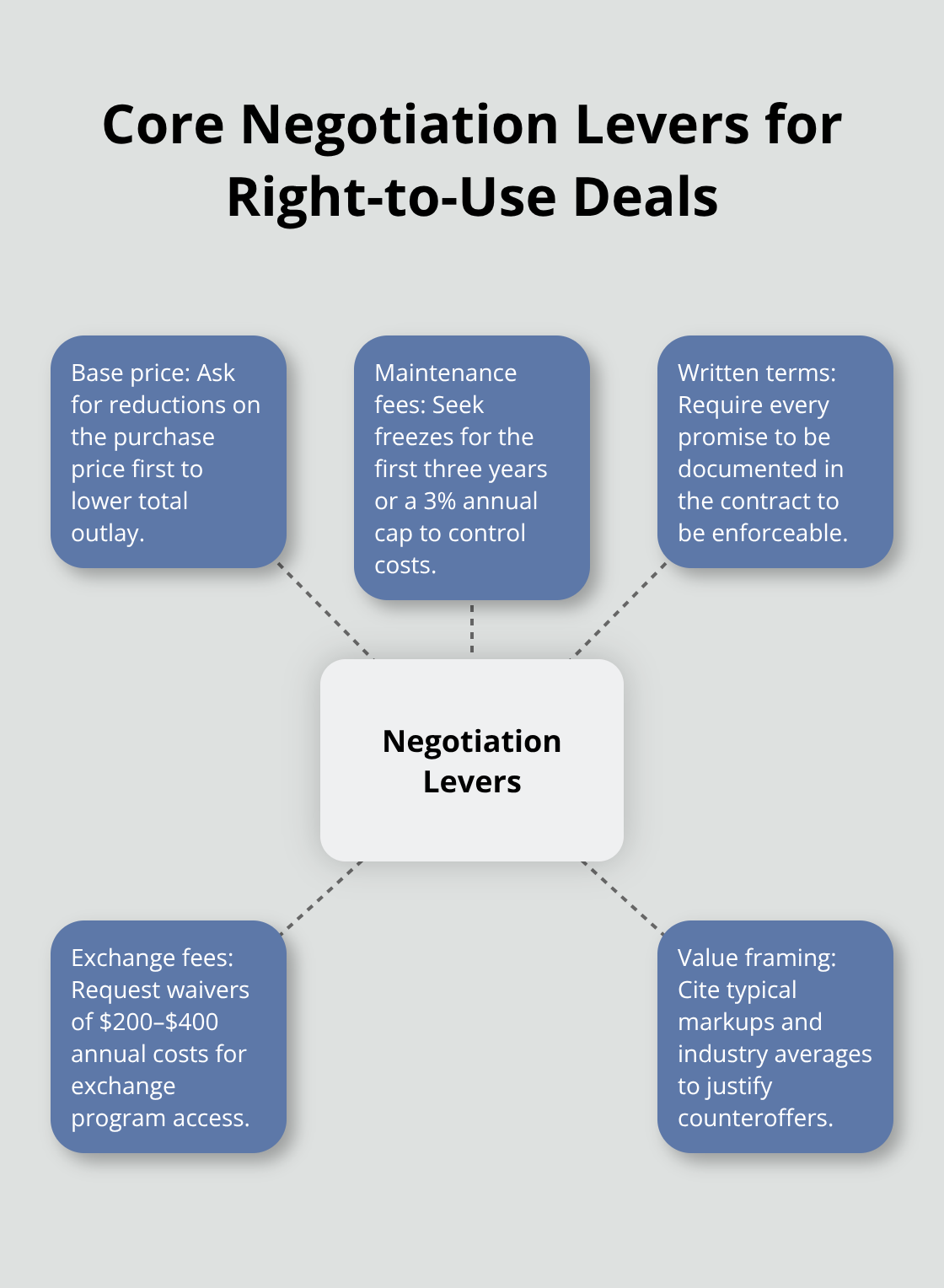
Request price reductions on the base purchase amount first, then target annual maintenance fee caps. Developers often agree to freeze maintenance fees for the first three years or limit increases to 3 percent annually. Demand written guarantees for all negotiated terms and refuse verbal promises that lack contract documentation. Exchange program access represents another negotiation opportunity – developers frequently waive $200 to $400 annual exchange fees for serious buyers.
Cancellation Rights and State Regulations
State laws vary dramatically when they address cancellation periods for right to use contracts. Most states give you 3–15 days to cancel a timeshare contract without penalties. The cancellation period starts when you receive the public offering statement, not when you sign the contract.
Most states require developers to provide a public offering statement that details all fees, restrictions, and financial information about the property. You must receive this document before the cancellation period begins. Some states also mandate a “cooling off” period that prevents immediate contract execution.
Transfer Policies and Exit Strategies
Transfer policies create the biggest long-term financial risk for buyers. Some developers charge $3,000 to $5,000 for ownership transfers to family members, while others prohibit transfers entirely. Resale restrictions often require developer approval for any transfer (this gives them veto power over your exit strategy).
Many contracts include right of first refusal clauses that allow developers to purchase your rights before you can sell to outside parties. These clauses typically offer below-market prices and limit your ability to recover your investment. Some developers also impose marketing restrictions that prevent you from advertising your rights through third-party resale companies.
Legal Review and Contract Protection
Legal review becomes essential before you sign because right to use contracts contain arbitration clauses that prevent court litigation. These clauses force disputes into private arbitration systems that typically favor developers. Real estate attorneys who specialize in timeshare law charge $500 to $1,500 for contract review but prevent costly mistakes that exceed $10,000 in hidden fees or unfavorable terms.
Attorneys examine maintenance fee escalation clauses, special assessment provisions, and termination procedures that most buyers overlook. They also verify that the contract complies with state disclosure requirements and identify any unusual restrictions that could affect your usage rights.
Final Thoughts
Right to use property bought for vacation delivers access to premium destinations without traditional ownership burdens. You avoid property taxes, major repairs, and year-round maintenance while you secure guaranteed vacation weeks at established resorts. The financial benefits become clear when you compare decades of hotel costs against a single upfront investment plus predictable annual fees.
Success depends on thorough developer research and contract analysis. You must examine financial stability, property portfolios, and maintenance fee structures before you commit to multi-decade agreements. You should negotiate price reductions, fee caps, and transfer rights while the developer wants your business (legal review prevents costly oversights in complex contracts).
We at Up North Property Management help Northern Minnesota property owners maximize returns through professional marketing, maintenance, and guest services. Whether you choose right to use arrangements or traditional ownership, proper management transforms vacation properties into profitable investments. The right approach delivers memorable experiences and solid returns for years ahead.