

A vacation rental property management agreement is the foundation of a successful relationship between you and your property manager. Without a clear, detailed agreement in place, misunderstandings about responsibilities, fees, and expectations can quickly damage your business.
We at Up North Property Management have seen firsthand how the right agreement protects both parties and keeps operations running smoothly. This guide walks you through the essential components, legal protections, and negotiation points you need to know before signing.
What Your Management Agreement Must Specify
Your property management agreement needs to state exactly what the manager will handle and what you will handle. This matters far more than most owners realize. The difference between a vague agreement and a detailed one often determines whether disputes happen at all.
Services and Responsibilities
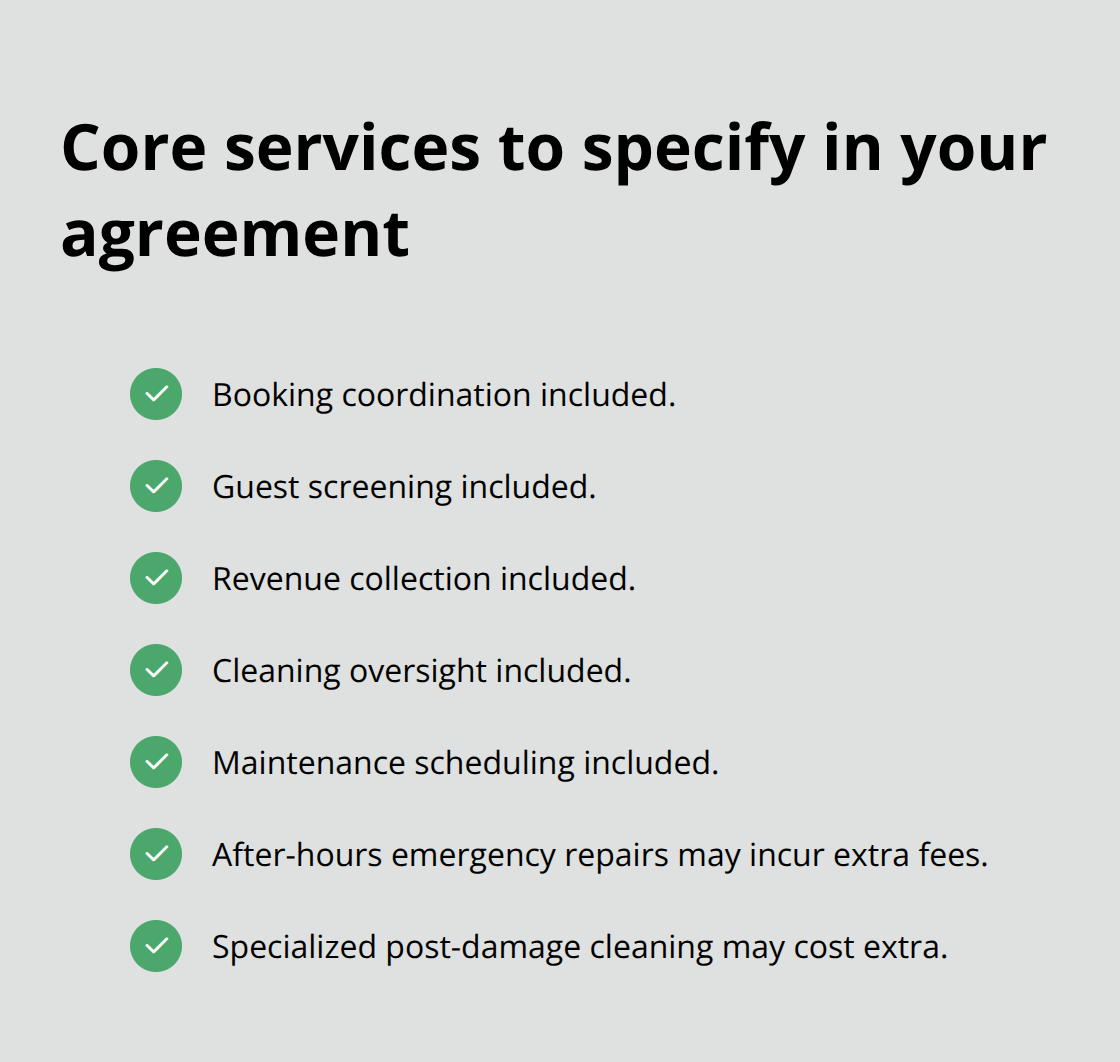
Specify which services fall under the management fee-booking coordination, guest screening, revenue collection, cleaning oversight, and maintenance scheduling should all appear explicitly. State which tasks cost extra, such as emergency repairs outside normal business hours or specialized cleaning after damage. Many agreements fail because owners assume certain services are included when the manager never committed to them.
Define who holds the security deposit, how long refunds take after a guest leaves, and the exact documentation required to justify any deductions. Clarify how the manager accesses the property, whether they can enter during guest stays, and what happens if an emergency occurs while you’re unavailable. Set a specific response time for guest issues-ideally within two hours during peak season. The more concrete your language here, the fewer arguments you’ll face later.
Fee Structure and Payment Terms
Choose a flat monthly fee or a percentage commission, but never both without absolute clarity on what each covers. Flat fees typically range from $300 to $600 monthly for vacation rentals in moderate markets, while commission-based management runs 10 to 50 percent of monthly rental income depending on the manager’s responsibilities and your property’s location.
Document exactly when you pay the manager-whether at booking, at guest check-in, or monthly in arrears-and specify how cleaning fees, platform charges, and taxes affect their compensation. If your manager collects revenue first and pays you after taking their cut, require that funds sit in a separate trust account, never mixed with operating expenses. State what happens if a guest cancels or doesn’t pay; clarify whether the manager absorbs the loss or you split it. Include language about price increases, noting that fees should not rise more than once per year and requiring 60 days’ written notice. Transparency on payment timing prevents cash flow surprises and keeps relationships healthy.
Contract Duration and Exit Strategy
Set a contract term of 12 months minimum for residential properties; vacation rentals often work better with 12 to 24 months since they take time to market and optimize. Include specific termination triggers so either party knows exactly when they can exit without penalty-typically 30 to 90 days’ written notice if performance is acceptable, but immediate termination if the manager fails to secure bookings within 90 days or violates local regulations.
Define what happens to outstanding payments, guest deposits, and ongoing commitments if the contract ends early. State whether the manager must transition operations smoothly, turn over all guest data and communications, and provide a final accounting within 15 days. Address what occurs if you want to use the property personally during the management term; most agreements restrict owner use to preserve occupancy and revenue. Include a renewal clause so you aren’t locked in automatically if the relationship isn’t working.
These specifics prevent messy exits and protect your income stream during transitions. Once you’ve locked down these operational details, you need to address the legal protections that shield both you and your manager from unexpected liability.
Legal Protections and Liability Coverage
Insurance Requirements and Coverage Limits
Your management agreement must spell out who carries insurance, what that coverage actually protects, and what happens when things go wrong. Most property owners skip this section entirely, assuming their homeowners policy covers vacation rental operations-it doesn’t. Standard homeowners insurance explicitly excludes short-term rentals, leaving you exposed to massive liability if a guest is injured or property is damaged during their stay.
Your property manager needs comprehensive general liability coverage of at least $1 million per occurrence, with your property listed as an additional insured. Verify this coverage exists before you sign anything. Request a certificate of insurance naming you specifically, and update your own policy to cover the rental activity itself. Many owners discover mid-dispute that their manager’s insurance doesn’t actually cover their property, making the indemnification clause worthless.
Dispute Resolution and Arbitration Procedures
When disputes arise-and they will-your agreement must define exactly how you’ll resolve them without expensive litigation. Include a clause requiring good-faith negotiation for the first 15 days after a disagreement surfaces. If that fails, specify whether you’ll use arbitration or mediation through a neutral third party rather than court proceedings.
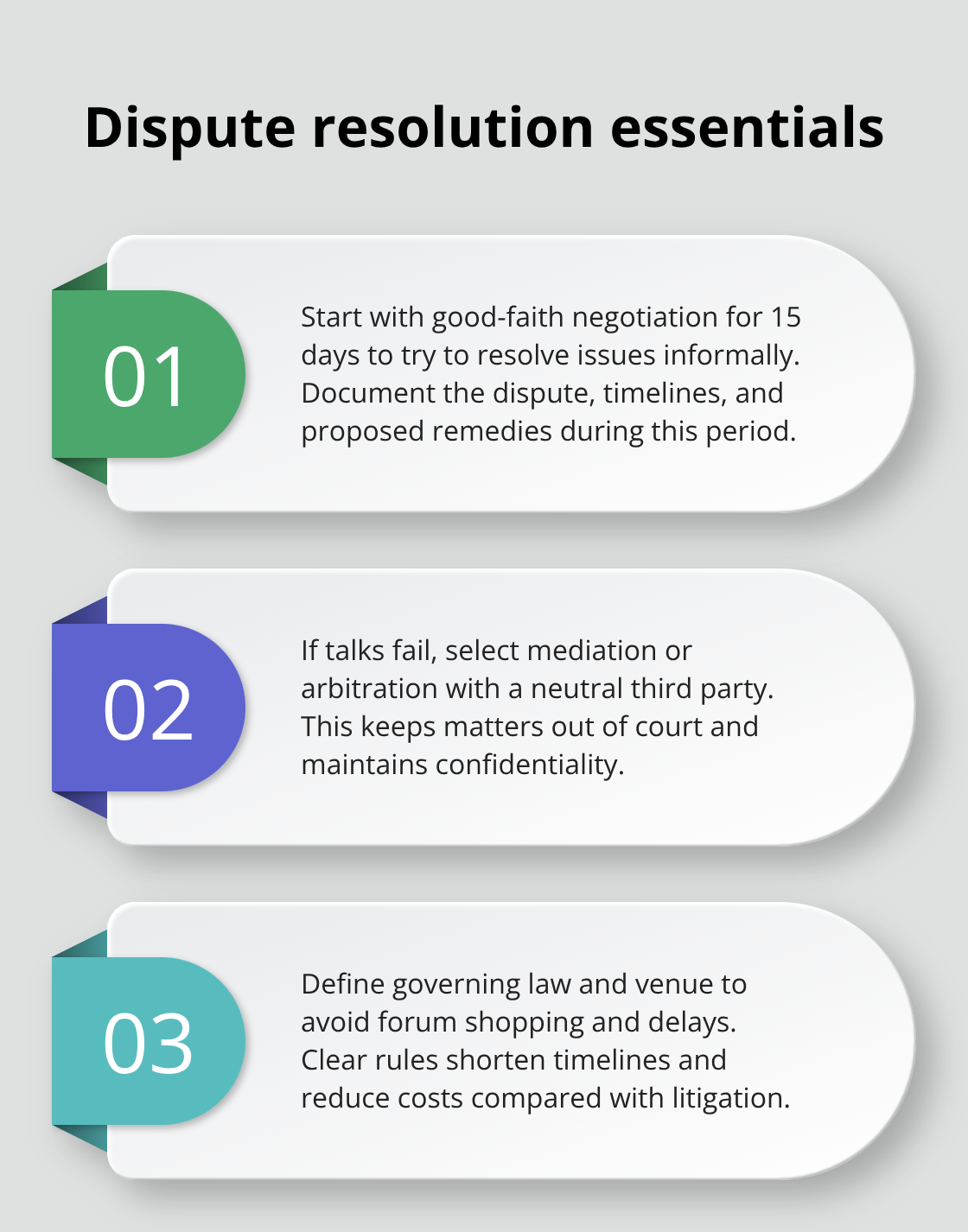
Arbitration typically costs $2,000 to $5,000 versus $15,000 to $50,000 for litigation, and it stays confidential. State which state’s laws govern the contract and where disputes are handled. This clarity prevents one party from dragging the other through years of legal proceedings over a disagreement that mediation could have solved in weeks.
Indemnification and Hold Harmless Clauses
The indemnification clause should require your manager to cover losses they directly cause-like negligent guest screening or failure to report maintenance issues-while you cover losses from your own decisions. A hold harmless clause protects each party from the other’s negligence in their respective areas of responsibility.
For example, the manager shouldn’t be liable if a guest injures themselves due to an existing property defect you failed to disclose, but they should be liable if they rent to a guest with a history of property damage and didn’t verify references. This distinction prevents one party from absorbing the other’s mistakes while keeping both accountable for their actual duties. With these legal protections locked in, you’re ready to focus on the terms that directly affect your bottom line-the negotiation points that separate a profitable management relationship from one that drains your income.
Key Negotiation Points for Property Owners
Commission Rates and Additional Fees
Commission rates and additional fees are where most owners get burned. Some managers charge a percentage of gross rental income but exclude their own platform fees, meaning you pay multiple layers of charges plus Airbnb’s fees plus their cleaning coordinator fee plus their guest screening fee. Others quote a flat monthly rate but then add per-booking charges, late-night guest issue fees, and emergency maintenance call fees.
You need to demand a detailed fee schedule that lists every single charge the manager will extract from your property’s revenue before you see a dime. Ask specifically whether their quoted rate includes revenue collection, guest screening, booking coordination, platform management, and cleaning oversight. If those services cost extra, calculate the real total commission on a sample month of bookings. A manager charging a base percentage plus per-booking fees might actually cost you significantly more on a property that books frequently.
Push back hard on nickel-and-diming arrangements. Demand an all-inclusive rate or a clear cap on additional fees. If a manager refuses transparency on fees, that’s your signal to walk away.
Marketing and Booking Control
Marketing and booking control determine whether your calendar stays full or sits empty. Most property owners assume the manager will aggressively market their rental, but many managers optimize for their own commission dollars rather than your occupancy. Require the agreement to specify exactly which platforms the manager will list your property on-Airbnb, VRBO, Booking.com, and any others relevant to your market.
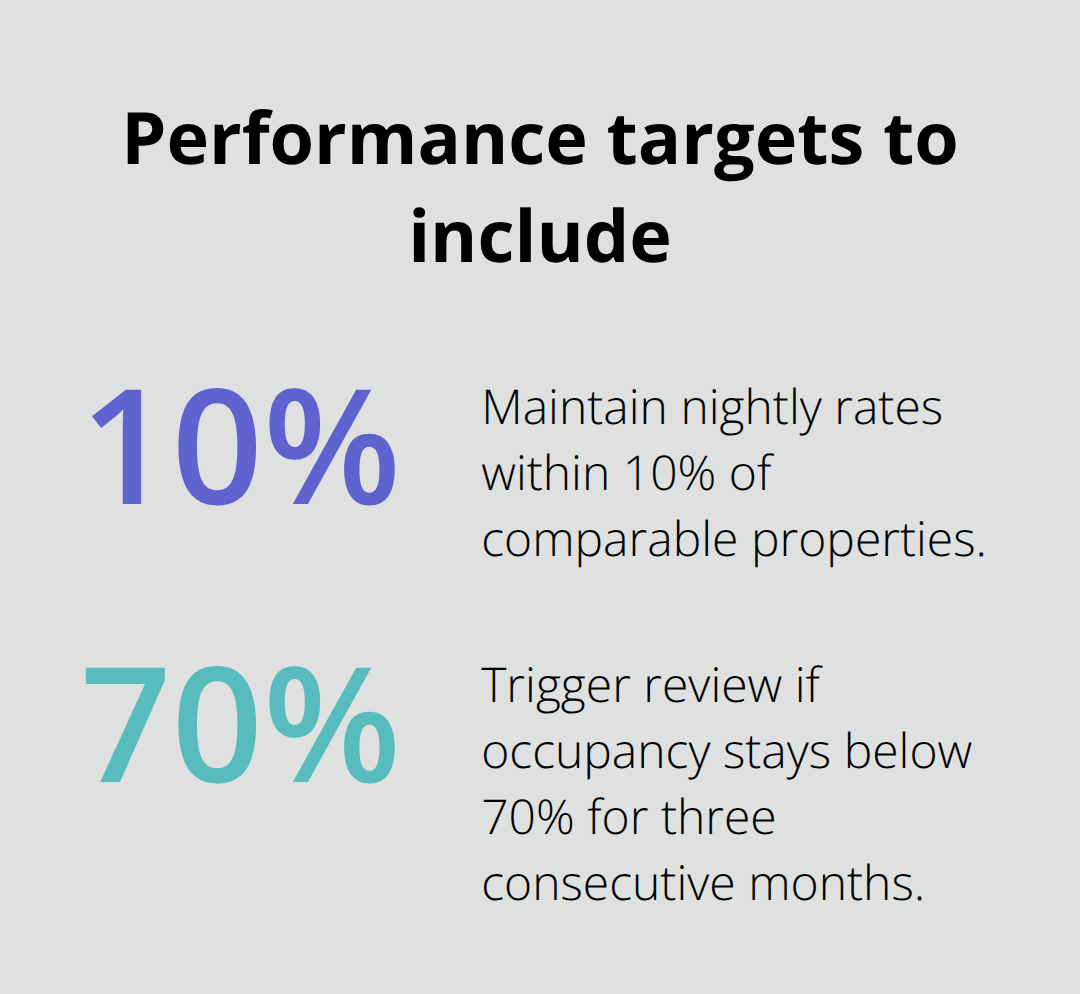
State that the manager must maintain competitive nightly rates within 10 percent of comparable properties in your area and adjust pricing weekly based on demand. Demand monthly reports showing your occupancy rate, average nightly rate, and revenue compared to the previous year and to competing properties. If your occupancy drops below 70 percent in three consecutive months without a documented market downturn, that’s grounds for termination.
Maintenance and Repair Authority
Control over maintenance and repairs matters far more than owners realize because a negligent manager can destroy your property’s condition while you remain unaware. Your agreement must define which repairs the manager can authorize without your approval and which require your written sign-off.
Set a 24-hour response time for guest-reported maintenance issues and require photo documentation of all repairs. State that the manager must obtain three quotes for any repair exceeding $500 and present them to you before work starts. Specify that the manager cannot use their own contractors without your approval-this prevents inflated repair bills and sloppy work that you’ll inherit later. Include language requiring the manager to maintain detailed maintenance records showing dates, costs, vendor information, and what was fixed. These specifics keep your property in good condition and prevent the manager from cutting corners that save them money but cost you thousands in property damage.
Final Thoughts
A solid vacation rental property management agreement protects your income, clarifies expectations, and prevents costly disputes. Have a local attorney review the agreement before you sign it-this costs $300 to $800 but saves you thousands in disputes, unexpected fees, or poorly managed properties. An attorney catches vague language, missing clauses, and terms that don’t comply with your state’s vacation rental laws while ensuring your indemnification and liability protections actually hold up if something goes wrong.
Once you finalize the agreement, provide a copy to your property manager and keep one for yourself. Reference it whenever disagreements arise, since a written agreement proves that both parties understood the deal from day one. The vacation rental property management agreement you sign today determines whether your property generates reliable revenue or becomes a source of constant friction.
If you manage a vacation rental in Northern Minnesota, Up North Property Management handles the full scope of management services, from marketing and bookings to cleaning and maintenance. The right property manager, backed by a clear agreement, transforms vacation rental ownership from stressful to profitable.