

Creating a solid vacation rental property management contract protects both property owners and management companies from costly disputes. Most property owners search for a vacation rental property management contract PDF template, but generic forms often miss important details.
We at Up North Property Management have seen too many owners sign agreements without understanding the fine print. The right contract sets clear expectations and prevents headaches down the road.
What Should Your Management Contract Include
A vacation rental management contract must specify exact commission rates and fee structures upfront. Most property management companies charge between 25% to 50% of collected rent according to industry data, but hidden costs often push total expenses higher. The Institute of Real Estate Management reports average fees range from 8% to 12% for traditional rentals, but vacation rentals command premium rates due to higher service demands. Your contract should itemize every fee (including cleaning charges, maintenance markups, and booking platform commissions) to avoid surprise expenses later.

Marketing and Guest Acquisition Terms
The contract must define marketing responsibilities and performance standards clearly. Effective vacation rental marketing requires structured marketing plans with SEO, seasonal promotions, and email marketing to attract and retain more guests. Your agreement should specify which platforms the manager will use, minimum photo quality standards, and response time requirements for guest inquiries. Include penalty clauses for extended vacancy periods and require monthly occupancy reports with competitor analysis to track performance effectively.
Financial Transparency and Payment Schedules
Payment terms need precise language about timing and methods. Property owners benefit from formal contracts that establish clear expectations and professional standards. Your contract should mandate monthly financial statements that show gross revenue, itemized expenses, and net owner payments. Specify payment schedules within 15 days of month-end and require separate accounts for security deposits. Include audit rights and require managers to maintain detailed expense receipts for tax purposes.
Maintenance Standards and Emergency Protocols
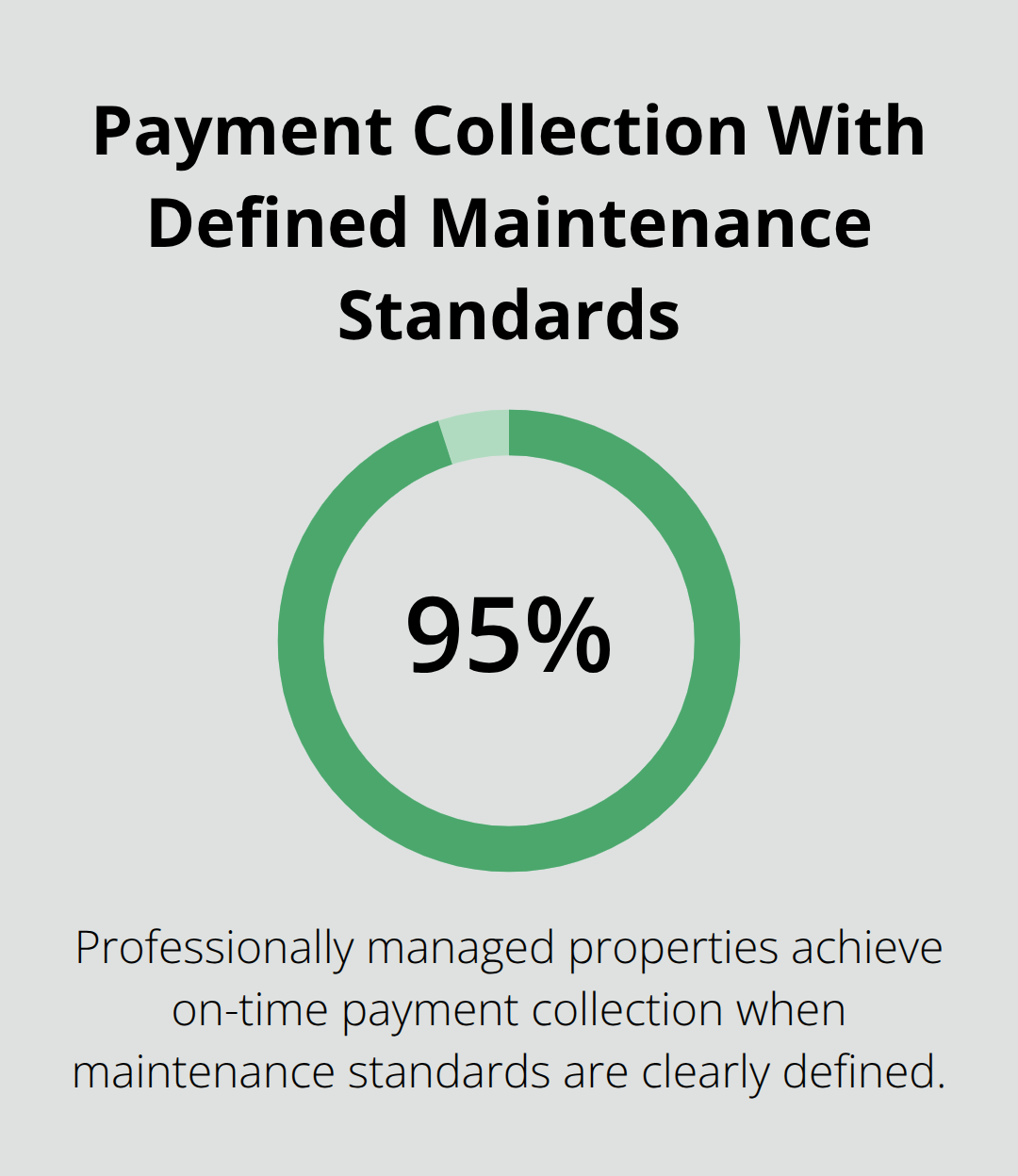
Maintenance clauses protect your property investment and guest satisfaction. TransUnion studies show professionally managed properties achieve 95% payment collection rates when maintenance standards are clearly defined. Your contract should establish maximum response times for different repair categories, require pre-approval for expenses over specific amounts, and mandate licensed contractors for major work. Include property inspection schedules and require photographic documentation of any damage or repairs completed.
Insurance and Liability Protection
Insurance requirements form the foundation of risk management in vacation rental contracts. Your agreement must specify minimum coverage amounts for property damage, liability claims, and business interruption (typically $1 million or higher for vacation rentals). The contract should clarify which party carries responsibility for different types of incidents and outline procedures for filing claims. These protection measures become even more important when you consider the legal considerations that govern your management relationship.
What Legal Protections Must Your Contract Include
Your vacation rental management contract needs ironclad liability protection that goes beyond basic insurance coverage. Standard homeowners policies exclude short-term rental activities, so your contract must require commercial liability insurance with minimum coverage of $2 million per occurrence.
The agreement should specify that your management company carries errors and omissions insurance to protect against booking mistakes or guest communication failures. This coverage shields you from financial losses when managers make reservation errors or fail to communicate important property details to guests.
Property Damage and Incident Response Protocols
Property damage protocols must establish clear responsibility chains with 24-hour incident reporting requirements. Your contract should mandate photo documentation within two hours of any guest-related damage to preserve evidence for insurance claims and security deposit deductions.
The agreement must outline specific procedures for different types of incidents, from minor property damage to serious guest injuries. Include automatic guest screening procedures and require background checks for all bookings over seven days to minimize risk exposure before problems occur.
Termination Rights and Performance Standards
Contract termination clauses protect you from underperforming managers who damage your revenue potential. Industry data shows that property management has a high turnover rate, yet many contracts trap owners with restrictive termination terms.
Your agreement should allow termination with 30 days written notice without penalty clauses or excessive fees. Include specific performance metrics like minimum occupancy rates (typically 65-75% for seasonal markets), maximum response times for guest inquiries, and required revenue benchmarks compared to local competitors.
Regulatory Compliance and Legal Requirements
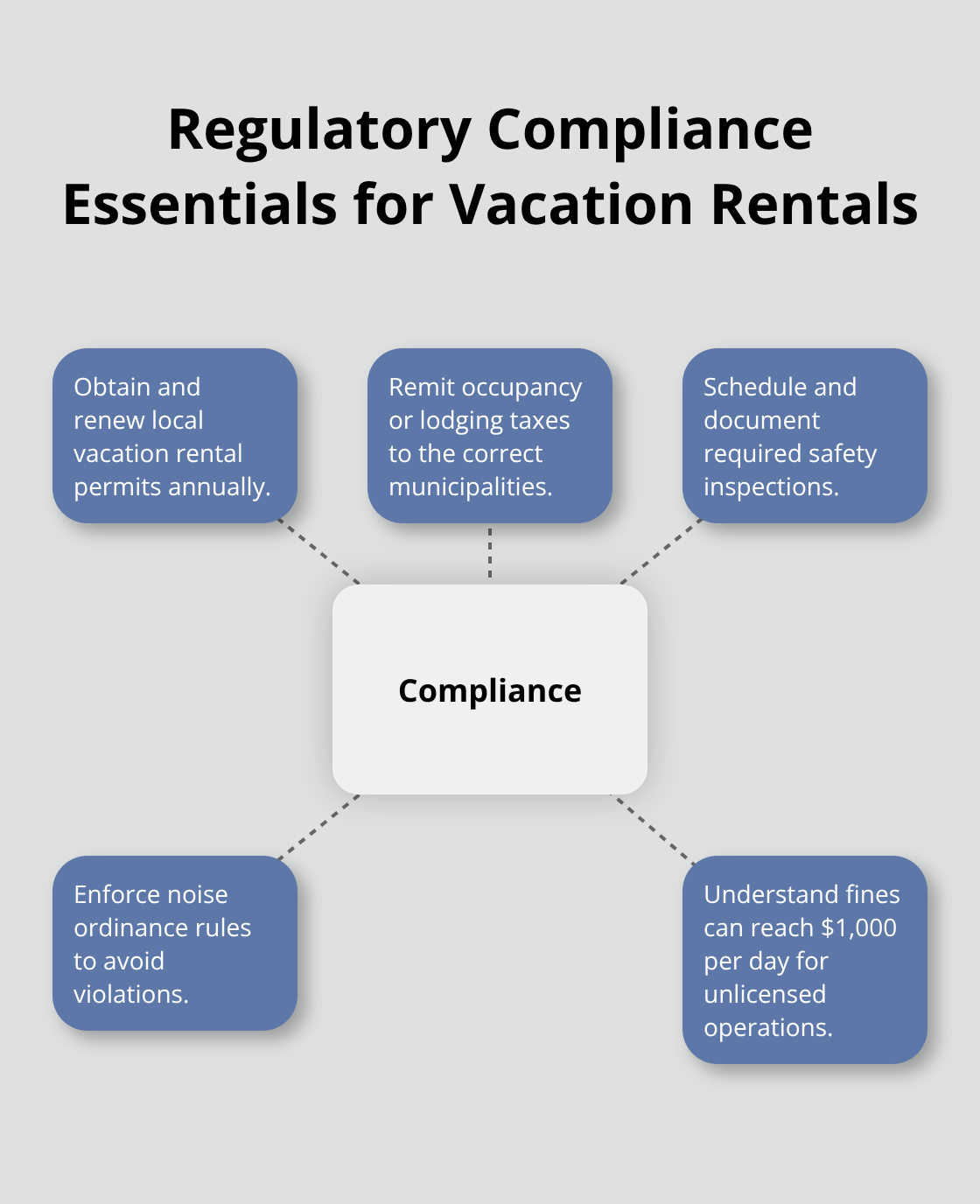
The contract must address compliance with local zoning laws, business licensing requirements, and tax collection obligations that vary by municipality. Many cities now require vacation rental permits with annual renewals, and your management company should handle all regulatory compliance.
This includes occupancy tax remittance, safety inspections, and noise ordinance compliance to prevent costly violations. Some municipalities impose fines up to $1,000 per day for unlicensed operations, making proper compliance essential for your business continuity.
Your legal protections work hand-in-hand with the negotiation strategies that determine your management company’s service quality and fee structure.
How Do You Negotiate the Best Management Deal
Vacation rental management negotiations require aggressive tactics and detailed market research to secure favorable terms. Most property owners accept the first proposal they receive, but this passive approach costs thousands annually. Property owners who negotiate their commission rates down from 35% to 28% simply present competitor quotes and local market data to achieve these results.
Research Multiple Management Companies
Start negotiations with proposals from at least five management companies in your area. The Institute of Real Estate Management shows that commission rates vary dramatically within the same market, with some companies charging 40% while others offer identical services for 25%. Present these competing offers during negotiations and demand written justification for any premium pricing. Request detailed breakdowns of all fees including cleaning charges, maintenance markups, and platform commissions that often add 8-12% to your total costs.
Set Performance Standards with Financial Penalties
Establish specific performance metrics with financial penalties for underperformance during contract negotiations. Your agreement must include minimum occupancy rates based on local market averages (typically 65-75% for seasonal properties according to Airbnb market data). Demand monthly competitor analysis reports that show your property’s ranking for similar listings within a two-mile radius. Include automatic rate adjustments if your property consistently underperforms market averages by more than 10% over consecutive months.
Demand Fast Communication Standards
Negotiate mandatory response time standards with penalty clauses for delayed guest communications. The vacation rental market was valued at USD 134.51 billion in 2024 and is projected to reach USD 256.31 billion by 2030, demonstrating the industry’s growth potential. Your contract should require 24/7 guest support with maximum four-hour response times for maintenance requests and one-hour responses for urgent issues. Demand weekly performance reports that track response times, guest satisfaction scores, and booking conversion rates to maintain accountability standards.
Final Thoughts
A comprehensive vacation rental property management contract protects your investment and maximizes revenue potential. The essential elements include transparent fee structures with itemized costs, specific performance metrics with penalty clauses, mandatory insurance requirements, and clear termination rights with 30-day notice periods. These components prevent costly disputes and maintain professional accountability standards.
Watch for red flags like vague fee descriptions, excessive termination penalties, limited liability coverage, or contracts without performance standards. Companies that refuse to provide competitor analysis reports or detailed expense breakdowns often hide additional costs that reduce your profits. Avoid generic vacation rental property management contract PDF templates that miss location-specific requirements and industry standards (these templates often lack the specific protections your property needs).
Property owners who seek management services should request proposals from multiple companies and negotiate commission rates aggressively. We at Up North Property Management provide full-service vacation rental management in Northern Minnesota with transparent contracts and comprehensive maintenance services. Our approach eliminates the guesswork for property owners in the Northern Lakes Area.