
Managing a vacation property with multiple owners creates unique challenges that require careful planning and clear communication. Without proper systems in place, disagreements over finances, usage schedules, and maintenance responsibilities can quickly turn a profitable investment into a source of conflict.
We at Up North Property Management have seen partnerships thrive when owners establish structured agreements from the start. The right approach transforms potential complications into smooth operations that benefit everyone involved.
What Legal Structure Works Best for Multiple Owners?
The ownership structure you choose determines how conflicts get resolved, how profits get distributed, and who bears liability when problems arise. Most successful multi-owner vacation properties operate through either a Limited Liability Company or a detailed Tenancy in Common agreement with comprehensive operating guidelines.
LLC Structure and Operating Agreements
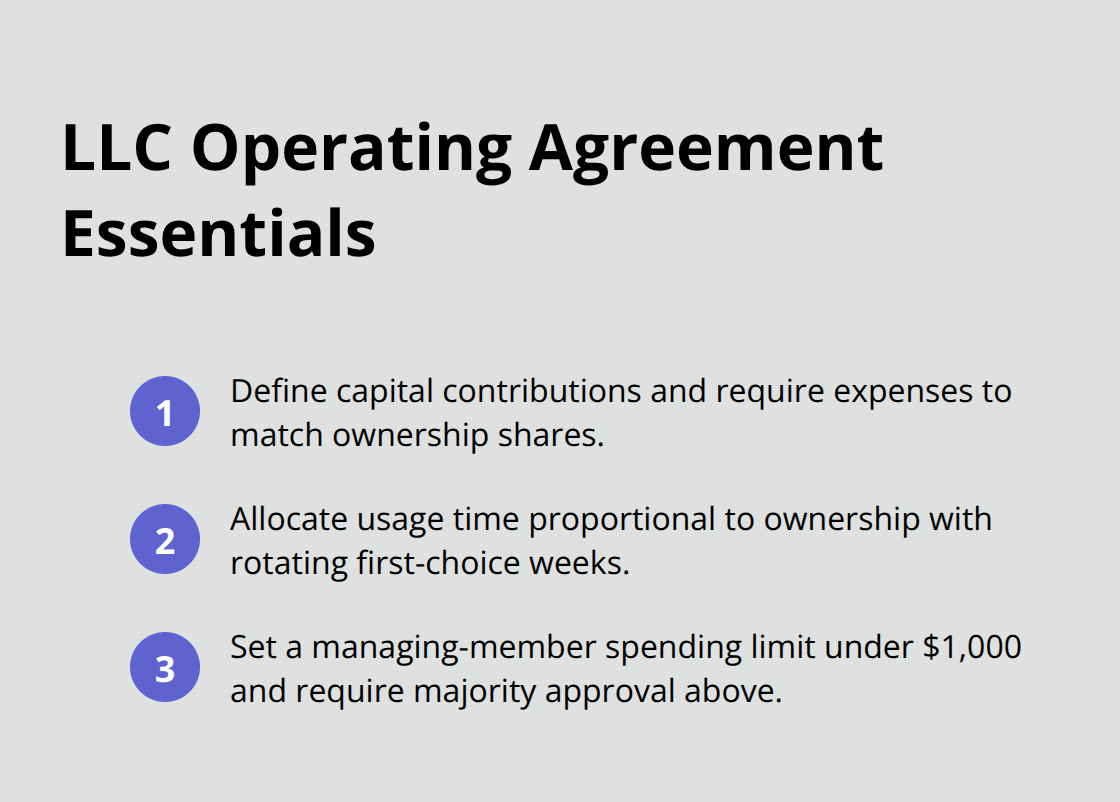
An LLC provides the strongest protection for individual owners while it creates clear decision-making authority. The LLC operating agreement should specify each owner’s capital contribution percentage, which typically ranges from 20% to 50% (depending on the number of partners). Financial responsibilities must match ownership percentages exactly – if you own 30% of the property, you pay 30% of all expenses including mortgage payments, property taxes, insurance, and maintenance costs.
Usage rights should allocate time based on ownership stakes, with prime weeks distributed proportionally. Most successful partnerships establish a rotation schedule where owners get first choice of their allocated weeks on alternating years. The operating agreement must designate one managing member who handles day-to-day decisions under $1,000, while major expenditures over this threshold require majority owner approval.
Decision-Making Protocols
Decision-making protocols should include mandatory 72-hour notice periods for non-emergency votes and require written documentation of all financial decisions. Property management responsibilities typically fall to the managing member, who receives either a management fee of 15-25% of gross rental income or additional usage time as compensation for their efforts.
Financial Accountability Systems
Each owner needs access to shared financial tracking through platforms like QuickBooks or FreshBooks that provide real-time expense visibility. Monthly financial statements should detail all income sources, operating expenses, and capital improvements with supporting receipts. Reserve funds for major repairs should be established based on annual rental income, with each owner contributing their proportional share quarterly.
Usage Coordination Methods
Successful properties use scheduling software like OwnerRez or Hostfully that prevents double-bookings and tracks owner usage versus rental periods. Peak season allocation requires advance planning – most groups assign high-demand weeks through an annual draft system where selection order rotates each year based on ownership percentage.
These structural foundations create the framework for smooth operations, but the real test comes when you implement systems to track income and expenses transparently across all owners.
How Do You Track Money in Multi-Owner Properties?
Financial transparency forms the backbone of successful multi-owner vacation rental partnerships. Every dollar that flows in and out of the property needs documentation that all owners can access in real-time. We recommend you establish a dedicated business checking account exclusively for the property, with all owners listed as account holders but only one designated as the primary manager.
Property Management Software for Financial Tracking
Property management software automates income tracking, expense categorization and trust accounting compliance across multiple properties. Monthly statements should break down net income by owner percentage, with detailed expense reports that show receipts for every transaction above $25. This system eliminates disputes about where money goes and provides the documentation you need for tax purposes.
Revenue Allocation Based on Usage vs Investment
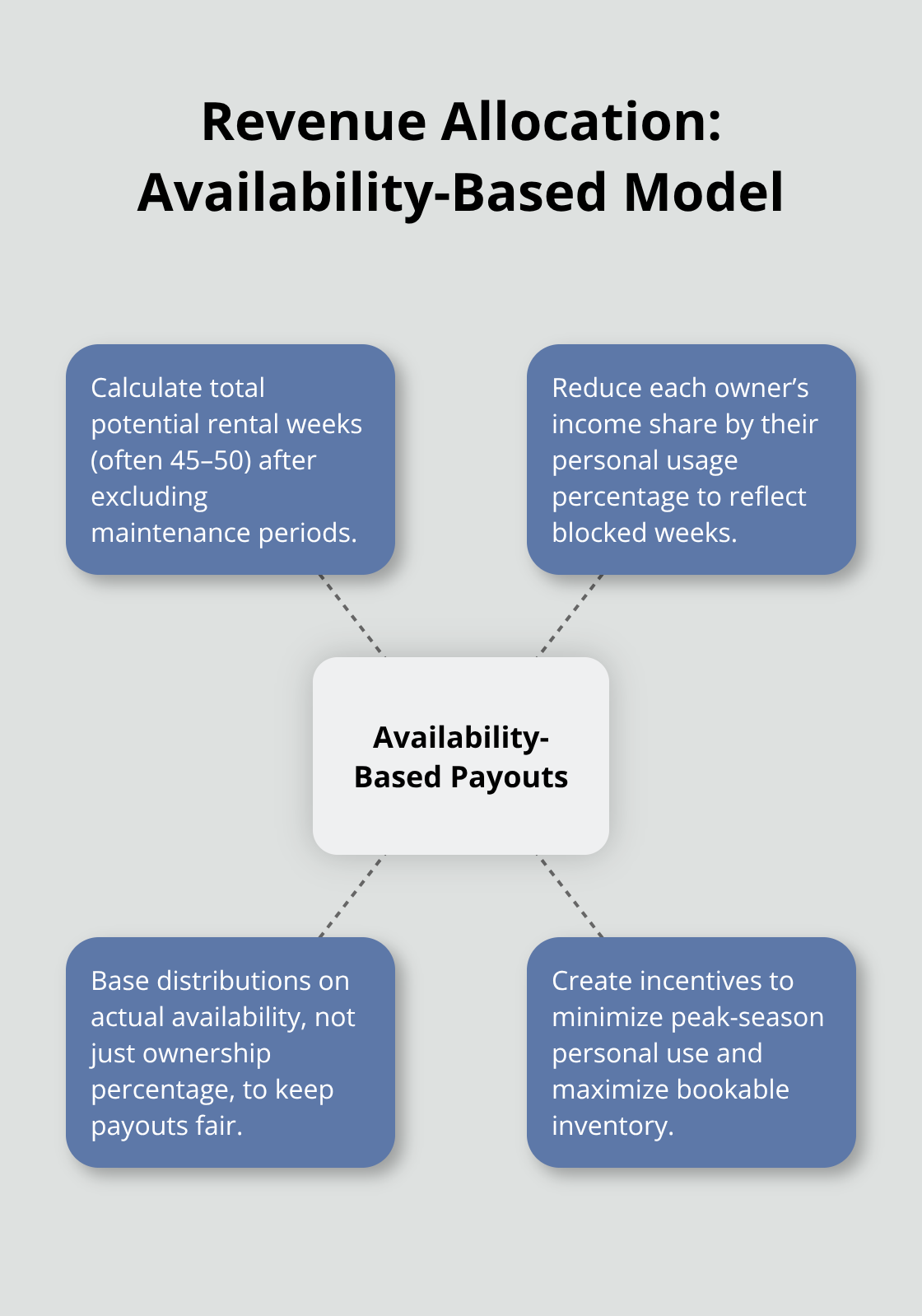
Revenue distribution gets complicated when owners use the property at different rates. The fairest model allocates rental income based on actual availability rather than ownership percentage. If Owner A blocks 8 weeks for personal use while Owner B only uses 3 weeks, Owner A receives proportionally less rental income to account for the lost booking opportunities.
Most successful partnerships calculate this by determining the property’s total potential rental weeks (typically 45-50 weeks excluding maintenance periods), then they reduce each owner’s income share by their personal usage percentage. This approach prevents conflicts over lost revenue and creates incentives for owners to limit excessive personal use during peak seasons.
Tax Reporting Requirements
Tax reporting requires each owner to receive a Schedule K-1 if structured as an LLC, or Form 1099 for partnership arrangements, with professional preparation costs shared equally among all parties. Beginning with tax year 2024, partners receiving property distributions from the partnership must file Form 7217 with their annual tax return. Professional tax preparation becomes essential for properties that generate significant rental income.
Reserve Fund Management and Distribution Schedules
Smart partnerships maintain operating reserves equal to 3-6 months of expenses before they distribute profits to owners. Quarterly distributions should occur within 30 days of quarter-end, with detailed financial summaries that show gross bookings, operating expenses, capital improvements, and reserve contributions.
These financial systems work best when you pair them with clear operational procedures that define who handles what aspects of property maintenance and guest management.
Who Handles Day-to-Day Property Operations
Property operations require designated roles rather than shared responsibilities that often lead to confusion and missed tasks. The most effective approach assigns one primary property manager among the owners who receives compensation for all guest communications, maintenance coordination, and cleaning oversight. This person becomes the single point of contact for all operational issues, while other owners focus on their financial contributions and strategic decisions.
Cleaning and Maintenance Task Assignment
Professional cleaning services cost $150-250 per turnover for vacation rentals, but many multi-owner properties reduce expenses through owner participation in specific tasks. The property manager should maintain relationships with 2-3 vetted cleaning companies and one reliable handyman who can respond to issues within 24 hours.
Routine maintenance follows a quarterly schedule with each owner responsible for one seasonal inspection: spring HVAC service, summer exterior maintenance, fall winterization, and winter interior deep cleaning. Emergency repairs under $500 get immediate attention from the property manager with owner notification, while larger repairs require majority approval within 48 hours to prevent guest disruption.
Guest Communication Systems
Guest communication must flow through one channel to prevent contradictory information and missed messages. Property management software like Hospitable or Guesty offers automation and customization for guest messaging through templated messages for check-in instructions, local recommendations, and checkout procedures.
The designated property manager handles all guest inquiries within 2 hours during business hours and maintains emergency contact availability for urgent situations. Check-in procedures should use keyless entry systems with unique codes for each booking (which eliminates the need for physical key exchanges and reduces coordination complexity among multiple owners).
Maintenance Response Protocols
Property managers must establish clear escalation procedures for different types of maintenance issues. Minor repairs like clogged drains or burnt-out light bulbs get handled immediately without owner consultation. Major systems failures (HVAC, plumbing, electrical) require immediate professional service with same-day owner notification and expense documentation.
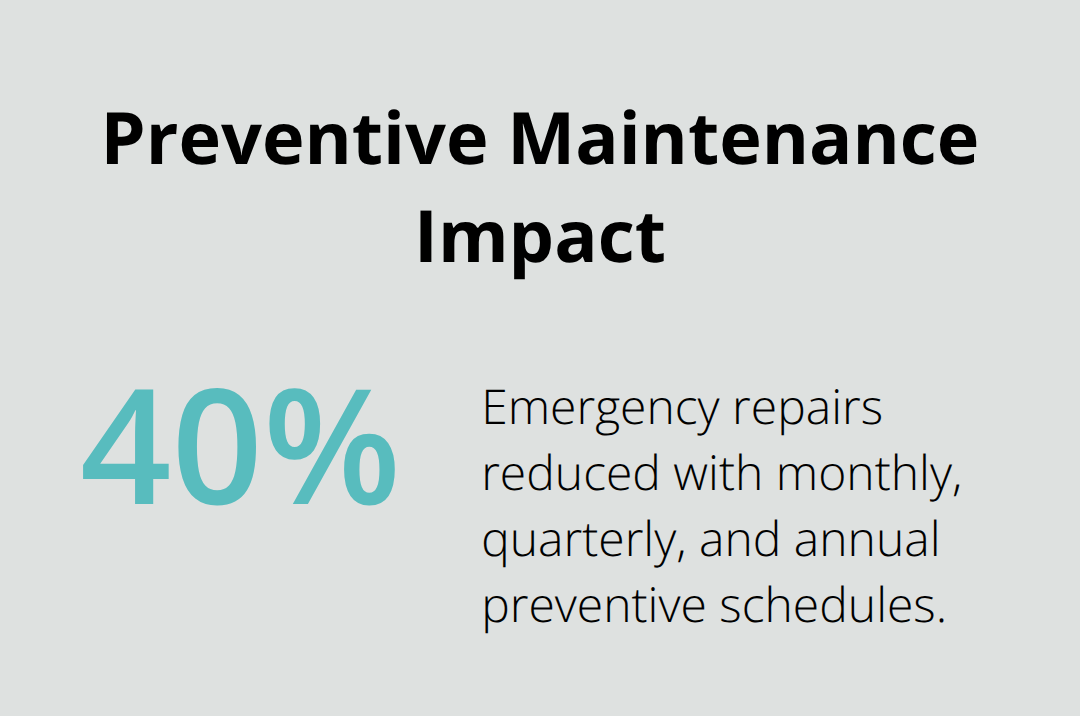
Preventive maintenance schedules should include monthly property inspections, quarterly deep cleaning of appliances, and annual professional inspections of all major systems. This proactive approach reduces emergency repairs by approximately 40% and maintains higher guest satisfaction ratings.
Technology Integration for Operations
Modern vacation rental operations depend on integrated technology systems that connect booking platforms, communication tools, and maintenance tracking. Smart home devices like programmable thermostats and water leak detectors provide remote monitoring capabilities that prevent costly damage and improve energy efficiency.
Property managers should use maintenance tracking software that logs all repairs, tracks warranty information, and schedules routine service appointments. This documentation proves valuable for tax purposes and helps identify recurring issues that might require permanent solutions rather than repeated temporary fixes.
Final Thoughts
Multi-owner vacation properties succeed when owners establish structured agreements, transparent financial systems, and clear operational protocols. Partnerships that thrive long-term prioritize communication over convenience and documentation over handshake deals. Professional property management services eliminate the operational burden that often strains owner relationships.
We at Up North Property Management handle every aspect of vacation rental operations, from marketing and booking management to maintenance oversight. Our full-service approach allows owners to focus on their investment returns while we manage the day-to-day complexities that can create conflicts between partners. The most successful vacation property with multiple owners arrangements establish detailed operating agreements that specify financial responsibilities and usage rights.
Your vacation property investment should generate income and appreciation without stress between partners. When operational systems work smoothly, owners can enjoy both their personal use time and rental income without constant coordination headaches that plague poorly managed partnerships (which often result from lack of clear protocols). Professional management services transform complex multi-owner arrangements into profitable, hassle-free investments that benefit everyone involved.