
Managing your own vacation rental property puts you in control of your income and guest experience. But it also means handling bookings, maintenance, finances, and marketing all at once.
We at Up North Property Management have seen firsthand what works and what doesn’t. This guide walks you through the systems and strategies you need to run your property successfully.
Building Systems That Actually Work
Choose the Right Property Management System
Self-managing a vacation rental means you run a small business, and small businesses fail without proper systems. Booking platforms, guest communication, and payment processing are interconnected-a mistake in one area cascades into problems everywhere else. Countless owners struggle because they manage calendars across multiple spreadsheets and email inboxes. That approach costs you money through double bookings, missed inquiries, and accounting errors that pile up at tax time.
A property management system (PMS) like Hostaway, Guesty, or OwnerRez solves this problem by syncing your calendar across Airbnb, Vrbo, Booking.com, and your own website in real time. You set your rates once, and the system updates all platforms simultaneously. This matters because self-managing without a PMS typically requires 15–20 hours per week. With a good PMS, you cut that down to 5–10 hours. The upfront cost pays for itself within the first month by preventing just one or two double-booking cancellations.
Automate Guest Communication
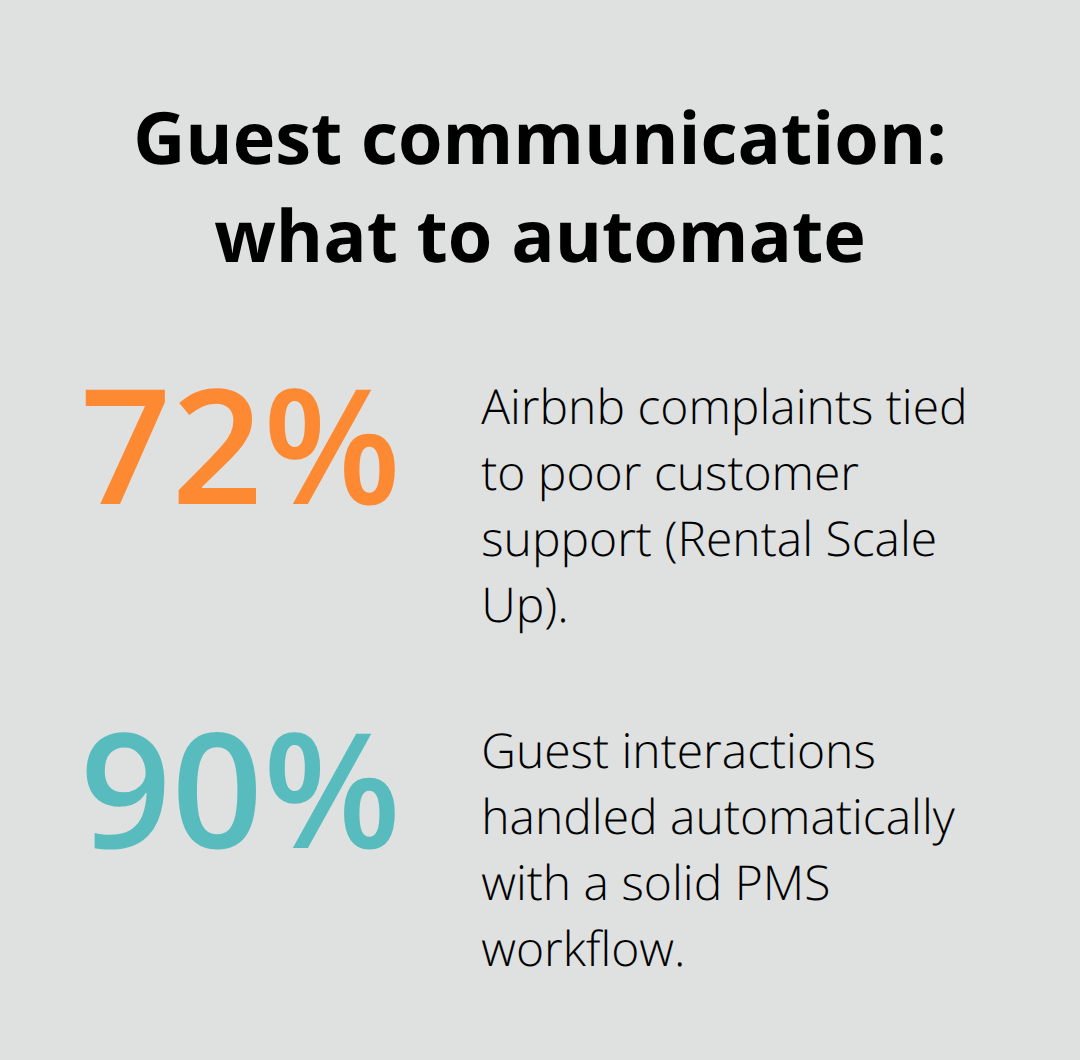
Your guest communication needs to be fast and automated where it makes sense. A Rental Scale Up survey found that 72% of Airbnb complaints relate to poor customer support, not property issues. When a guest books, they need check-in instructions, Wi-Fi passwords, and local information before they arrive-not when they ask.
A unified inbox pulls messages from all your booking channels into one place and cuts response time dramatically. You prevent missing inquiries on less-used platforms. Automate the routine interactions: send booking confirmations, pre-arrival guides, and post-checkout review requests through your PMS. This handles roughly 90% of guest interactions without your involvement, freeing you to focus on the exceptions that actually need your attention.
Track Finances Separately and Thoroughly
For payment processing and finances, separate your vacation rental income from personal money immediately. Use a dedicated business account and a PMS that integrates with accounting software like QuickBooks. Track every expense-property taxes, insurance, utilities, maintenance, cleaning supplies-because the IRS expects you to report income accurately.
If your rental generates more than $20,000 in annual revenue across multiple platforms, you become a target for scrutiny. Ongoing costs typically run about 1% of your property’s value per year in maintenance alone, plus utilities around $200 monthly. A platform like Baselane consolidates banking, bookkeeping, and property-level reporting so you see exactly what’s profitable and what drains cash. Without this visibility, expense creep sneaks in-you upgrade the kitchen, add better linens, improve the Wi-Fi-and suddenly your profit margin evaporates. Once your financial foundation is solid, you can focus on the operational side: keeping your property clean, handling repairs quickly, and managing the day-to-day tasks that directly impact guest satisfaction.
Keep Your Property Clean and Running Without Burning Out
Cleaning and maintenance separate successful self-managers from those who quit within a year. The physical upkeep of a vacation rental is relentless-turnovers happen fast, guests expect spotless spaces, and one delayed repair tanks your reviews. The difference between profitability and failure often comes down to how systematically you handle these tasks.
Establish a Cleaning Schedule That Works
Start with a realistic cleaning schedule tied to your booking calendar. Most self-managers underestimate turnover time and overcommit to back-to-back bookings. A typical two-bedroom property requires 3–4 hours for a deep clean between guests, not including laundry and restocking. If you clean yourself, you can realistically manage one to two turnovers per day before quality suffers. Many owners discover this the hard way when guest reviews mention dirty baseboards or unmade beds.
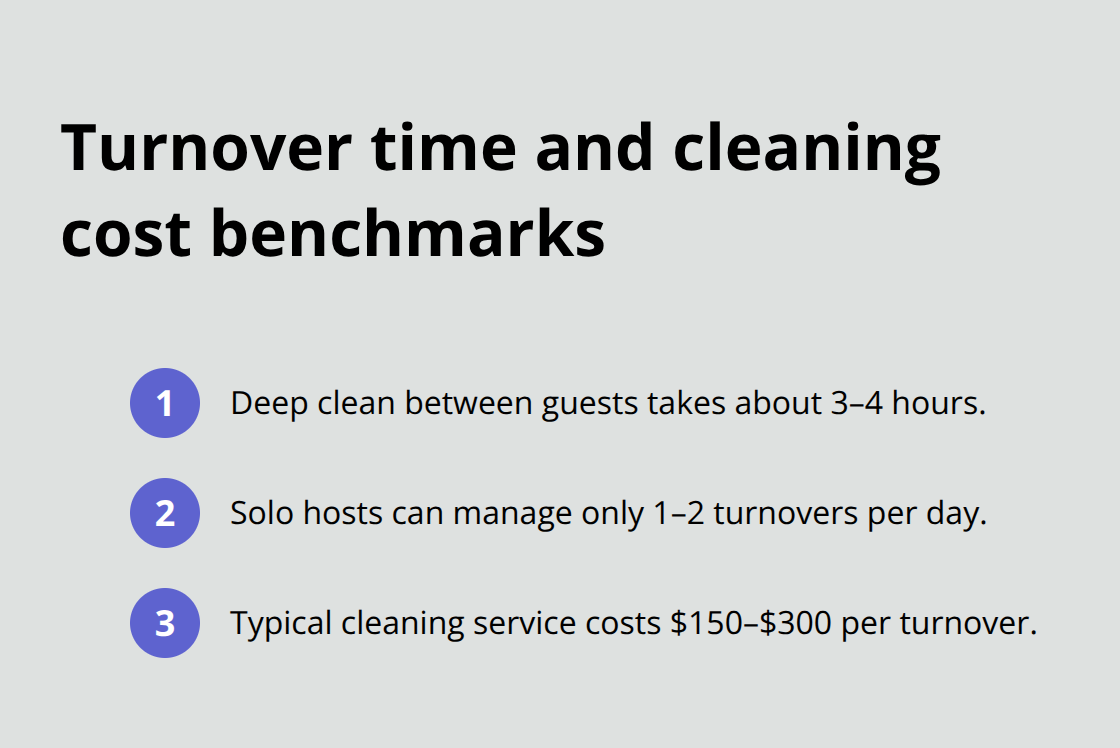
The smarter move is to hire a local cleaning service and lock in a fixed price per turnover-usually $150–$300 depending on property size and location. This removes the bottleneck and guarantees consistent standards. Set a detailed cleaning checklist that covers everything from appliance interiors to light switches, then photograph the property after each cleaning to document the standard and catch any lapses.
Plan for Maintenance Before Emergencies Strike
Maintenance is where expenses creep in and catch owners off guard. Plan for roughly 1% of your property’s value annually in maintenance costs, according to industry benchmarks. That means a $300,000 property should budget $3,000 yearly for routine upkeep-HVAC servicing, plumbing checks, pest control, and preventive repairs.
The real cost comes from emergency repairs you didn’t anticipate. A burst pipe or failed water heater can cost $1,500–$4,000 and destroy your booking schedule if it happens mid-season. Build a network of trusted local contractors before you need them-a reliable plumber, electrician, and handyman who can respond quickly. Have their contact information readily available and establish what you’ll pay for after-hours emergency calls.
Set aside $100–$200 monthly in a maintenance reserve fund to absorb these shocks without panic. Schedule quarterly property inspections yourself, checking for leaks, mold, pest activity, and appliance wear. Document everything with photos so you catch small problems before they become expensive ones.
Manage Supplies and Inventory Strategically
Supplies and inventory management directly impacts guest satisfaction and your time. Stock toilet paper, paper towels, cleaning supplies, soaps, and linens in quantities that last between your scheduled supply runs. Many self-managers run out mid-season and scramble to restock, or they buy in small quantities at retail prices and overspend.
Calculate your monthly usage based on occupancy rates and buy in bulk from warehouse clubs or online suppliers. Keep a simple inventory log-either digital or paper-noting what you have on hand and when you last restocked. Linens and towels are your biggest inventory expense; most properties need two complete sets per bedroom plus extras for accidents and laundry days. A queen bed set costs $40–$80, and you’ll replace items every 2–3 years as they wear.
Track which linens are stained or fraying so you replace them before guests encounter them. Store supplies in a dedicated closet or cabinet, not scattered across your property, so you know exactly what’s available and what needs ordering. With your property running smoothly on the operational side, you can now focus on the marketing and guest experience strategies that fill your calendar and generate positive reviews.
Getting Guests to Book Your Property
Your listing sits on Airbnb, Vrbo, and Booking.com, but bookings trickle in slowly. The problem is rarely the property itself-it’s that thousands of similar listings compete for the same guests. The ones that generate consistent revenue share one trait: they dominate visibility across multiple channels and deliver experiences that produce positive reviews. A Rental Scale Up survey found that 72% of guest complaints stem from poor communication and service, not property quality. This means your marketing and guest experience directly drive bookings far more than the number of amenities you offer.
List on Major Platforms and Build Direct Bookings
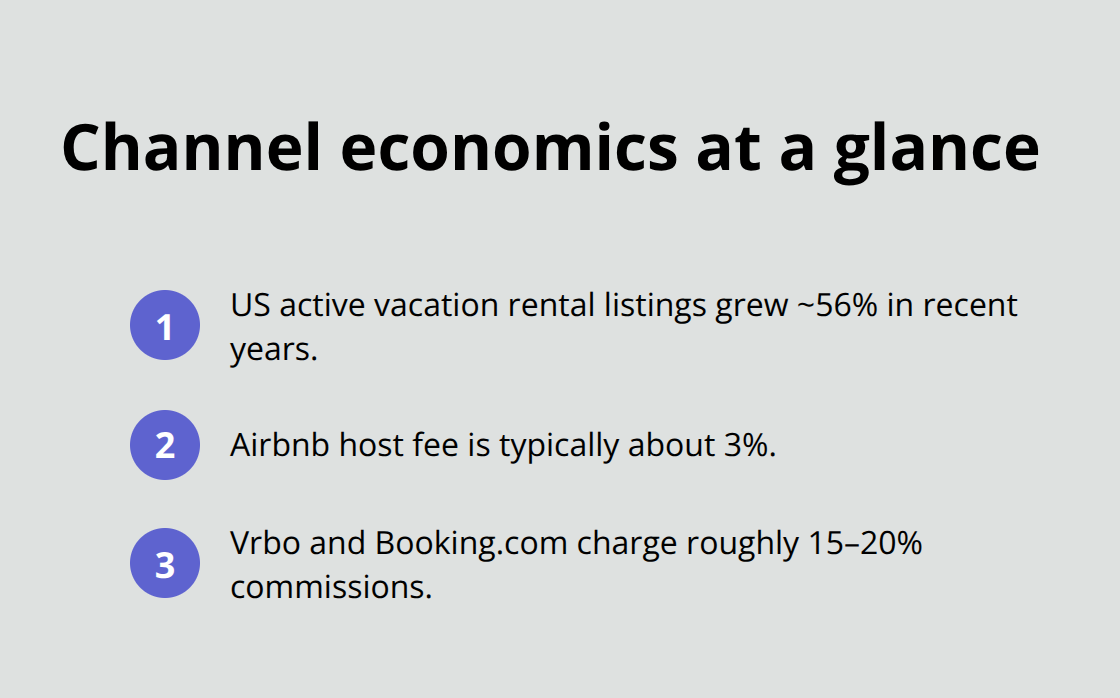
Start with the three major platforms that control most vacation rental traffic: Airbnb, Vrbo, and Booking.com. US active vacation rental listings grew by about 56% in recent years, signaling fierce competition for every booking. Platform fees typically run 3% on Airbnb for hosts, while Vrbo and Booking.com take 15–20% commissions.
Many self-managers stop here and wonder why occupancy stalls. The real strategy involves building a direct-booking website alongside these platforms so you reduce reliance on channels that take substantial cuts. A platform like Lodgify lets you build a professional direct-booking site starting around £14 per month and integrate it with a channel manager that syncs your calendar across all platforms simultaneously. This matters because platform fees compound-if you earn £5,000 monthly on Airbnb, you lose £150 to their commission alone. Direct bookings eliminate that drain entirely. Your goal should be for direct bookings to represent 20–30% of your total reservations within the first year. Offer past guests a small incentive, like £50 off their next stay, if they book directly through your website instead of going through Airbnb. This builds a customer relationship and reduces your dependency on platforms that can change their policies or increase fees without warning.
Optimize Photos and Descriptions for Conversions
Your listing photos and description determine whether potential guests click through or scroll past. Professional photography increases bookings compared to phone photos. Hire a photographer to shoot your property in natural light during peak times of day, and update photos annually because stale images signal neglect to potential guests. Write your description to address specific guest pain points, not generic features. Instead of saying your property has a full kitchen, write that guests can prepare meals without driving to town, or that the Wi-Fi speed is 100 Mbps, suitable for remote work. Local travelers and remote workers make up a growing segment of vacation rental demand, and they want properties that solve their specific needs. Include Wi-Fi speed, parking details, proximity to restaurants, and whether the space accommodates work calls-these details appear in competitor listings as vague afterthoughts, but they drive bookings when spelled out clearly.
Price Strategically With Market Data and Dynamic Rates
Your nightly rate must reflect local market demand, not arbitrary guesses. Use AirDNA or similar tools to research comparable properties in your area, then price within 5–10% of the median for your property size and amenities. Seasonal adjustments matter enormously-rates during peak summer weeks should run 30–50% higher than off-season rates in most regions, yet many self-managers charge flat rates year-round and leave thousands on the table. Dynamic pricing tools adjust rates based on demand, local events, and competitor pricing. This approach maximizes both occupancy and revenue because you capture peak-season premiums while staying competitive during slower periods. A property priced at £150 per night year-round might generate £13,650 annually at 60% occupancy, but the same property with dynamic pricing ranging from £100–£250 per night could generate £18,000 or more.
Deliver Exceptional Pre-Arrival and Post-Stay Experiences
Guest experience directly determines whether someone books with you again or leaves a negative review that kills future bookings. Send pre-arrival information 48 hours before check-in, including Wi-Fi passwords, TV setup instructions, parking details, and a local guide highlighting restaurants, hiking trails, and attractions within 15 minutes of your property. This single step reduces guest inquiries by up to 80%, according to research from Touch Stay, because guests have answers before they need to ask. Include your personal contact number for genuine emergencies, not questions about Wi-Fi passwords. Provide clear check-in instructions with photos if your property has an unusual entry, and use smart locks so guests can check in without waiting for you to arrive. After checkout, send a brief follow-up message thanking them for staying and requesting a review. Guests who leave reviews within 48 hours tend to be more honest and detailed than those who wait weeks.
Actively Manage Reviews to Build Trust and Bookings
Your reviews are your most powerful marketing asset. A property with a 4.8-star rating gets booked before one with a 4.5-star rating, even if the cheaper option is more affordable. Respond to every review, positive or negative, within 24 hours. For negative reviews, acknowledge the specific complaint, explain what you’ve done to prevent it, and invite the guest to contact you directly next time. This response is visible to potential guests and demonstrates that you take feedback seriously. For positive reviews, a simple thank you shows you’re engaged and professional. Properties that actively manage reviews and maintain ratings above 4.7 stars see 20–30% higher booking rates than those below 4.5 stars. Make review collection part of your system-automate a post-checkout message requesting a review, then follow up personally with guests who don’t respond within a week. This requires discipline but pays dividends in steady bookings.
Final Thoughts
Self-managing your vacation rental property works if you build systems first and stay disciplined about execution. Owners who succeed treat their rental like a business, not a side project, and they invest in a property management system that syncs calendars across platforms, automate routine guest communications, track finances separately, and price strategically based on market data. These fundamentals prevent the chaos that derails most self-managers within the first year.
The reality is that how to manage your own vacation rental property depends entirely on your capacity and priorities. If you have 5–10 hours weekly to dedicate to bookings, maintenance coordination, and guest communication, self-management is viable and you’ll handle the strategic decisions while your PMS handles the operational noise. But if your time is limited or your property sits in a competitive market where marketing and guest experience determine success, professional management often generates higher income because a dedicated team optimizes pricing, marketing, and guest experience in ways that individual owners rarely achieve.
We at Up North Property Management work with owners who recognize this trade-off, and some prefer to retain control while others decide that professional management makes sense because it frees their time and increases their income simultaneously. Up North Property Management offers full-service vacation rental management in Northern Minnesota, handling marketing, bookings, cleaning, and maintenance so properties stay in top condition. Homeowners enjoy hassle-free income while guests experience memorable vacations in the Northern Lakes Area.