

Vacation rental owners often struggle to fill their calendars, even when they have great properties. The difference between a booked-out property and one sitting empty usually comes down to marketing strategy.
We at Up North Property Management have seen firsthand how the right approach to marketing your vacation rental property can transform occupancy rates. This guide walks you through proven tactics that work.
Optimize Your Listing for Maximum Visibility
Your listing is your first impression, and first impressions matter enormously. Travelers spend an average of 30 seconds on a listing before deciding whether to click away or dig deeper. That’s why the fundamentals of optimization aren’t optional-they’re the difference between visibility and invisibility.
Professional Photography Drives Bookings
Professional photography is non-negotiable. A Vacasa study found that properties with 25 or more high-quality photos receive significantly more inquiries than those with fewer images. Your first photo should immediately grab attention, showing the property’s best feature or most inviting space. Include exterior shots, interior rooms, amenities, and close-ups of unique selling points like a hot tub or fireplace.
Video tours convert better than photos alone. A property walkthrough takes minutes to film but gives prospects a realistic sense of the space, reducing booking friction and lowering cancellation rates. These visual assets work together to build confidence in potential guests before they commit to a booking.
Write Descriptions That Sell the Experience
Your property description should be vivid and specific, not generic. Describe the guest experience, not just the features. Instead of listing amenities, paint a picture: fast WiFi for remote work, a fully stocked kitchen for family meals, proximity to hiking trails. Incorporate location-specific keywords naturally into your title and description-phrases like private beachfront rental or dog-friendly vacation home help you rank in search results.
A description of 300+ words gives you room to address what different guest types care about, whether that’s families, couples, or business travelers. This length allows you to showcase the property’s personality and help prospects envision their stay.
Price Based on Market Data and Amenities
Pricing directly impacts both visibility and revenue. Set rates too high and you’ll sit empty; too low and you leave money on the table. Research your local market by examining comparable properties on Airbnb, Vrbo, and Booking.com. Factor in bedroom count, amenities, views, and proximity to attractions.
A hot tub can justify a 15–20% income boost according to industry data, so if you have premium amenities, price accordingly. Seasonal pricing matters equally. High-demand periods warrant premium rates, while low seasons call for strategic discounts. A 10% off-season discount attracts bookings that wouldn’t happen at standard rates.
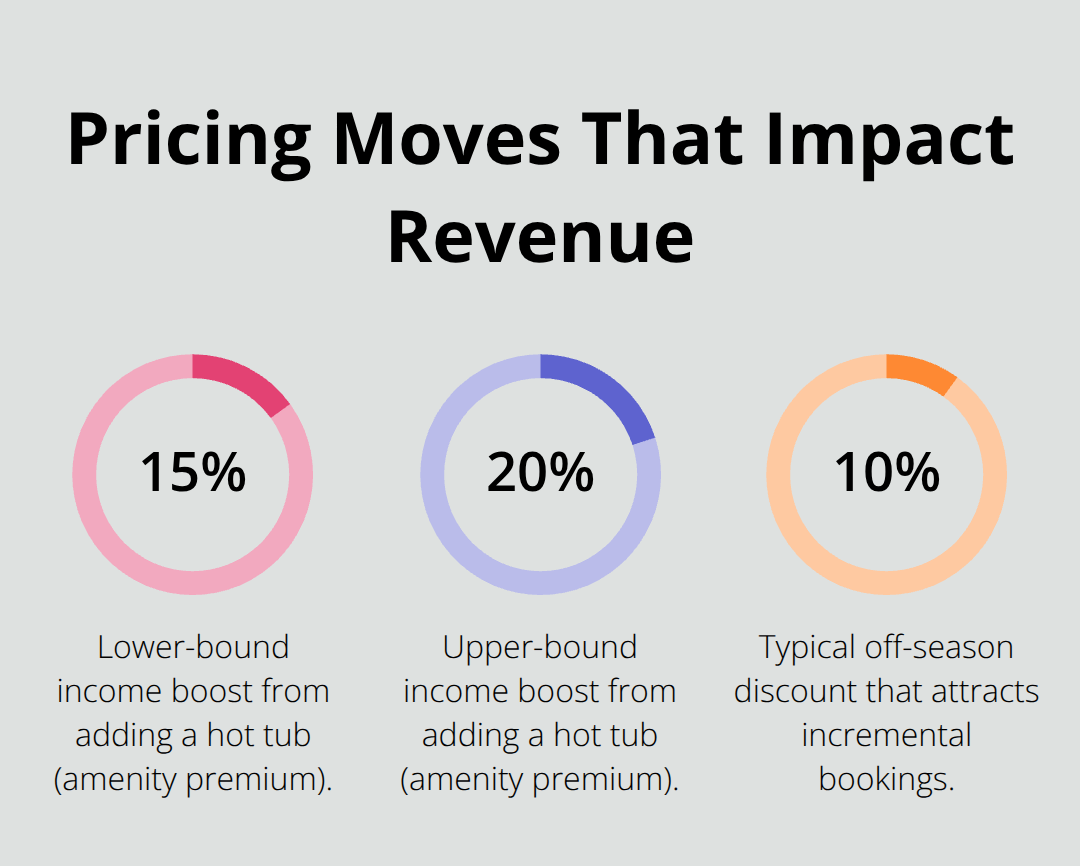
Use dynamic pricing tools to adjust rates based on local demand, competitor activity, and booking patterns (these tools sync across platforms and prevent double-bookings while optimizing revenue).
With your listing optimized for visibility and your pricing strategy in place, the next step is reaching the right guests across multiple channels.
Leverage Multiple Marketing Channels
A great listing means nothing if nobody sees it. You need to position your property where travelers actually search for vacation rentals. This means spreading your property across multiple platforms while maintaining consistent information everywhere.
List on All Major Vacation Rental Platforms
Leverage Multiple Marketing Channels by listing on Airbnb, Vrbo, Booking.com, and Expedia, which each attract different traveler segments and search behaviors. Airbnb dominates younger, experience-focused travelers. Vrbo appeals to families and groups seeking entire-home rentals. Booking.com reaches international guests and business travelers. Expedia captures users already in the booking mindset across their ecosystem.
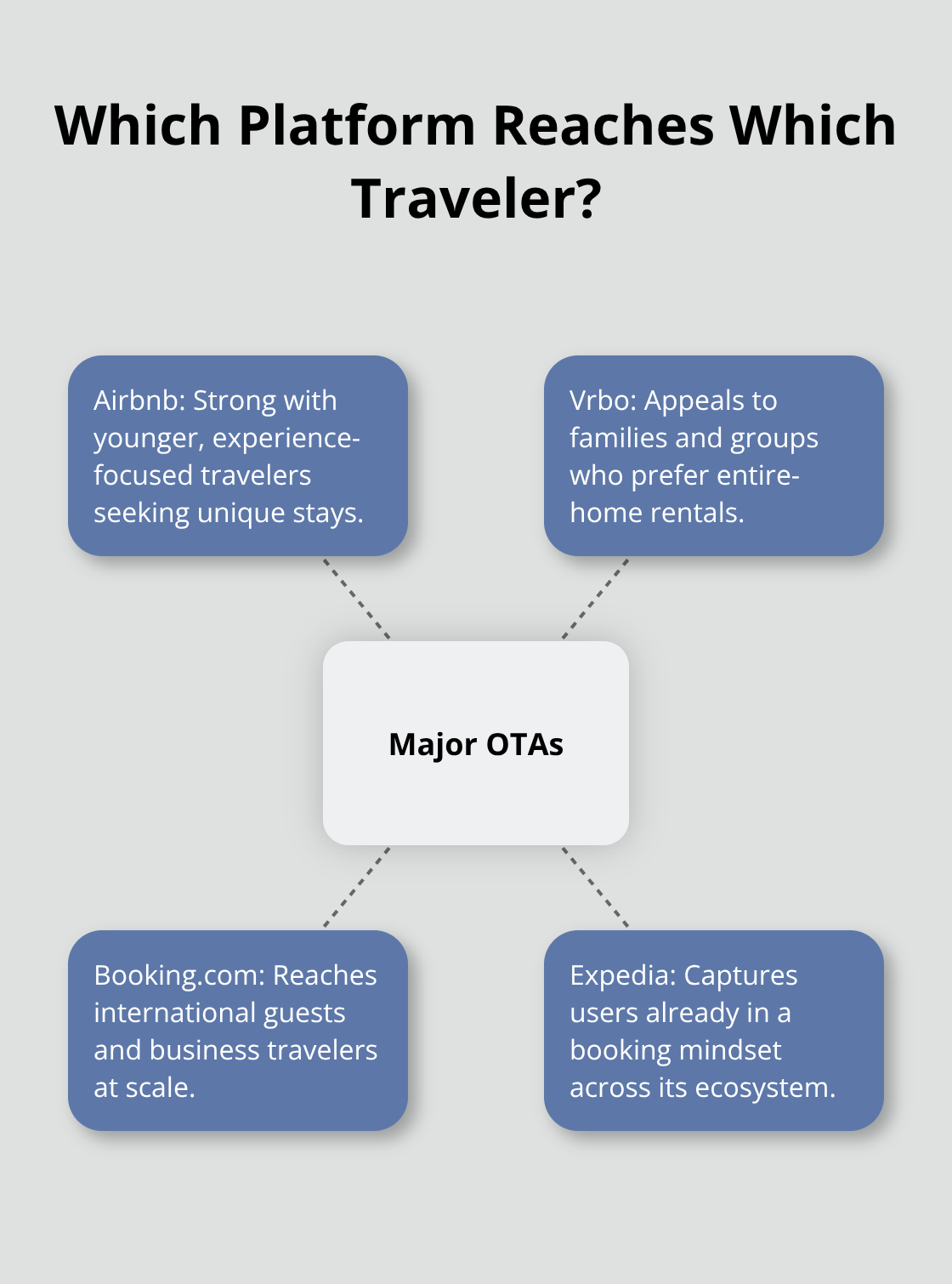
Listing on all four platforms isn’t optional if you want serious occupancy rates. Being on multiple platforms counteracts competitive pressure by capturing guests across different search channels.
Keep your calendar, rates, and descriptions synchronized across all platforms. Mismatched information causes double-bookings, guest frustration, and lost revenue. Use a channel manager tool to automate this synchronization rather than manually updating each platform.
Capture Local Search Traffic and Social Visibility
Google My Business drives local search traffic at no cost. Claim your listing, add photos, verify your information, and actively collect guest reviews. Travelers searching for vacation rentals in your area see your property directly in Google results, often before they land on Airbnb or Vrbo. This direct traffic shouldn’t be ignored.
Social media reaches travelers during the dreaming phase, before they hit booking platforms. Instagram works exceptionally well for vacation rentals because the platform is visual-first. Post high-quality photos of your property, guest testimonials, and local experiences. TikTok and YouTube short-form videos showcase property tours and nearby attractions. Facebook groups for travel communities and local tourism generate genuine engagement.
Remarketing ads on social platforms convert exceptionally well. Vacasa reports that remarketing ads achieve about 9 times higher bookings than standard social ads, making this your highest-ROI paid channel if you have budget.
Build Direct Relationships Through Email
Email reaches your most valuable audience: past guests. Build a list of previous bookers and send regular emails about seasonal promotions, new amenities, or local events. Guests who stayed with you once are significantly more likely to book again than cold prospects.
Send automated emails before and after stays to encourage repeat bookings and reviews. Most vacation rental owners underestimate email’s power because they focus on acquiring new guests instead of nurturing existing ones. This channel delivers consistent, low-cost bookings from people who already trust your property.
Own Your Booking Channel With a Direct Website
A direct-booking website reduces your dependence on OTA commissions, which typically range from 15–25% per booking. Build a simple bookable website on platforms like Wix or WordPress with integrated booking software to capture direct bookings and keep commission fees in your pocket.
Google rewards websites with quality content, so publish blog posts about local attractions, hiking trails, dining recommendations, or seasonal activities in your area. A post titled “Top Winter Activities Near Our Vacation Rental” ranks in Google search and drives qualified traffic directly to your property. This content also fuels your email marketing and social posts.
Direct bookings typically yield 20–30% higher margins than OTA bookings because you avoid commissions entirely. The upfront investment in a website pays for itself quickly once you capture just a few direct bookings monthly. With multiple channels now driving traffic to your listings, the next step focuses on converting that traffic into actual reservations through strategic promotional tactics and guest engagement.
Convert Bookings Into Revenue
Driving traffic to your listing means nothing if you can’t convert that traffic into actual reservations. The gap between interest and bookings comes down to three factors: how compelling your offer is, how trustworthy your property appears, and how responsive you are when someone shows interest.
Strategic Promotions Create Urgency
Seasonal promotions and discounts push fence-sitters into booking. A 10% off-season discount isn’t just about filling empty nights-it captures demand that wouldn’t exist at standard rates. Timing matters enormously. Run promotions during low-demand periods rather than high-demand ones, where your calendar fills regardless of discounts. If your market shows January as slow, launch a January promotion in November when travelers plan winter escapes.
Dynamic pricing tools can earn properties up to 40% more annual revenue compared to static rate-setting strategies. These tools capture micro-opportunities when competitors raise prices or when local events drive temporary demand spikes.
Reviews Convert Skeptical Prospects Into Bookers
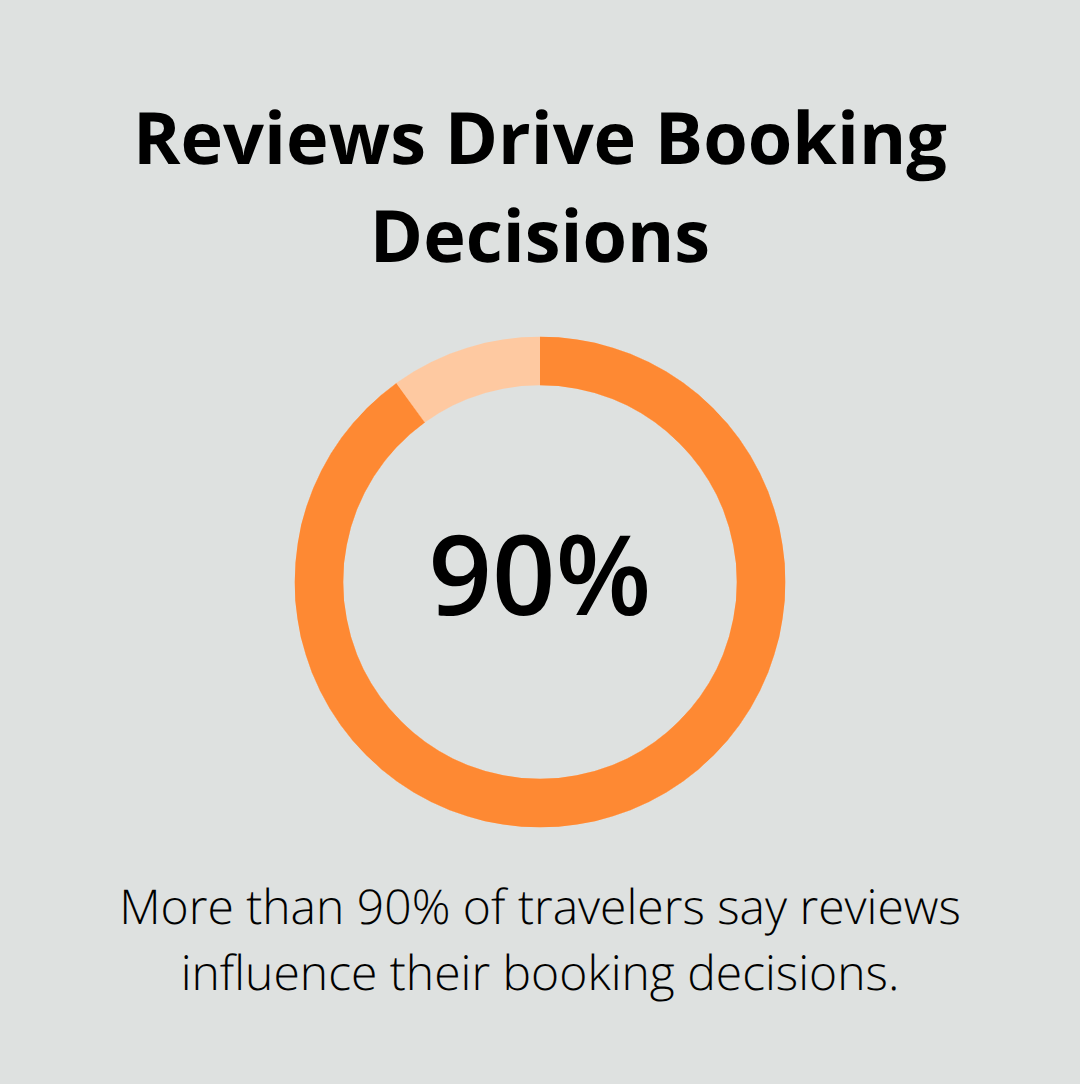
Guest reviews function as your most powerful conversion tool. More than 90 percent of travelers report that reviews influence their booking decisions. This isn’t marginal-it’s the difference between occupancy and vacancy.
Actively solicit reviews after every stay through automated follow-up emails sent 24 hours after checkout, when the experience is fresh. Include direct links to your Airbnb, Vrbo, or Booking.com listing to make the review process friction-free. Respond to every review, positive or negative, within 48 hours. Negative reviews deserve professional, solution-focused responses that show you care about guest satisfaction-these responses often convert skeptical prospects better than perfect ratings alone because they demonstrate accountability.
Fast Response Times Win Bookings
Response time directly impacts conversion rates and guest satisfaction. Travelers expect replies to inquiries within a few hours, not days. Slow responses signal either disinterest or poor management, causing prospects to book competitors instead. Set up automated acknowledgment messages for platform inquiries, then follow up with personalized responses quickly.
Before arrival, send a welcome email with check-in instructions, WiFi passwords, parking details, and nearby restaurant recommendations. This proactive communication reduces guest anxiety and sets expectations clearly. During the stay, remain available for questions but not intrusive. After checkout, send a thank-you email within 24 hours, request a review, and offer a discount code for their next stay.
Repeat Guests and Referrals Drive Sustainable Revenue
Word-of-mouth referrals from satisfied guests are your most reliable booking source because these guests arrive with realistic expectations and higher satisfaction rates. Offer a referral incentive-such as a $50 credit toward their next stay if they refer a friend who books-and turn past guests into active promoters. Track referrals using unique discount codes so you know which guests generate bookings.
This follow-up sequence costs almost nothing but generates repeat bookings at significantly lower acquisition costs than acquiring new guests. Properties that nail exceptional service typically see 30–40% of their bookings come from repeat guests and referrals within 12 months, compared to 10–15% for properties with mediocre service. The investment in responsive communication and guest appreciation pays dividends through sustained occupancy and reduced marketing expenses.
Final Thoughts
Marketing your vacation rental property successfully requires consistency across multiple channels, not sporadic effort on one platform. Properties that dominate their markets combine optimized listings with strategic pricing, multi-platform exposure, and relentless focus on guest satisfaction. The tactics covered here work because they address how travelers actually search for and book vacation rentals-starting with discovery on Google or social media, moving through comparison on OTA platforms, and concluding with a booking decision based on reviews and responsiveness.
The real competitive advantage comes from executing all three simultaneously. Properties that implement professional photography, maintain consistent pricing across platforms, actively collect reviews, and respond quickly to inquiries outperform competitors by 40–60% in occupancy rates. A comprehensive marketing strategy also reduces your workload over time, as automation handles email follow-up, calendar synchronization, and review solicitation while you focus on guest experience and strategic decisions.
If managing all these channels feels overwhelming, you don’t have to do it alone. Up North Property Management handles marketing, bookings, cleaning, and maintenance for vacation rental owners who prefer a hands-off approach. Start with one or two tactics rather than attempting everything at once, and adjust based on what works.