

Vacation properties can generate steady income, but they’re not a simple path to wealth. The real question isn’t whether vacation property is a good investment-it’s whether it’s the right investment for your specific situation and financial goals.
We at Up North Property Management have seen firsthand that success depends on understanding both the genuine returns and the hidden costs. This guide walks you through the numbers, the challenges, and the strategies that actually work.
Vacation Property Investment Returns
What Vacation Rentals Actually Generate
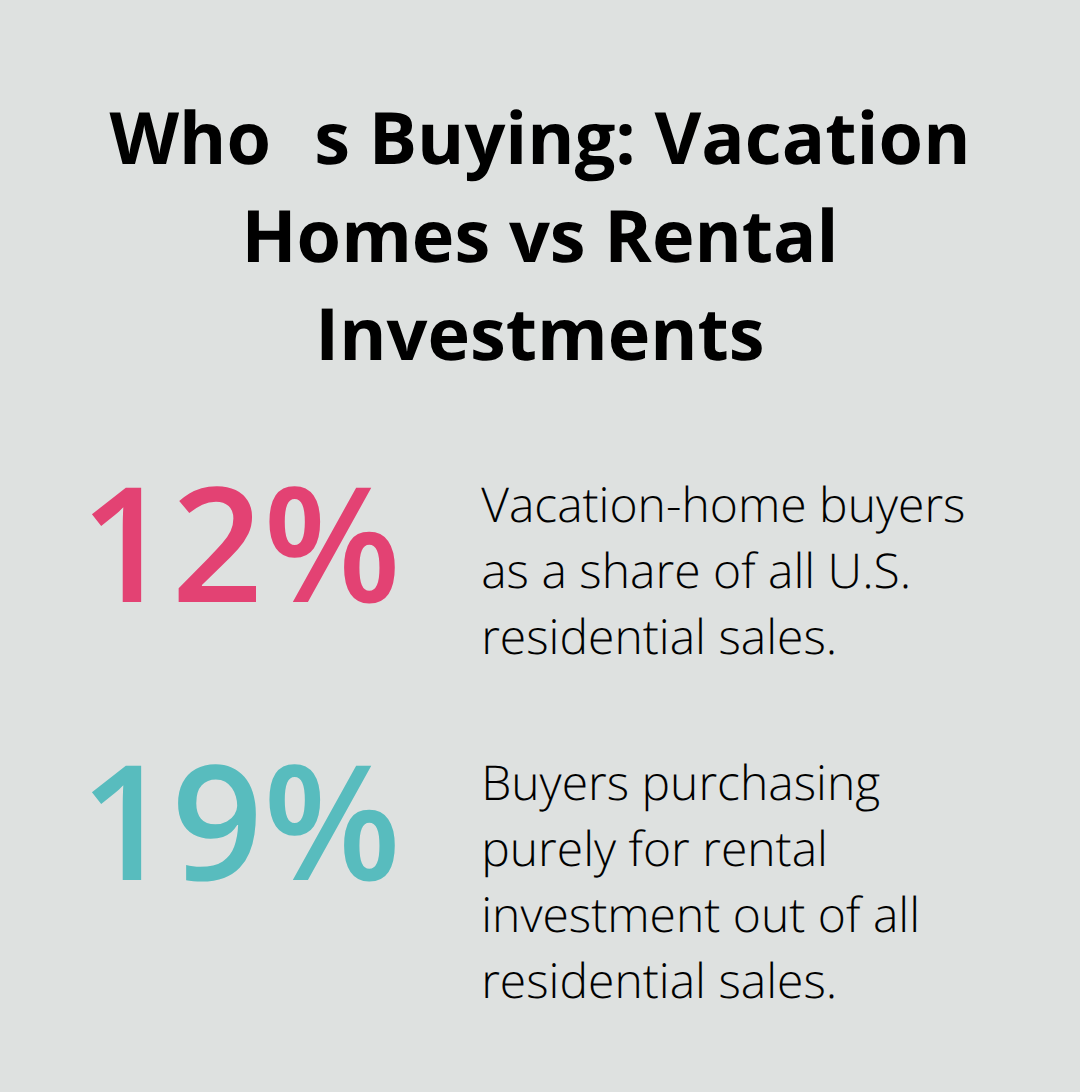
The typical U.S. vacation rental owner earns between $20,000 and $50,000 annually, according to industry data, though this range masks significant regional variation. Location determines everything. A six-bedroom property in Kissimmee might yield $40,000 to $45,000 per year, while high-end Hawaii rentals can exceed $200,000. The National Association of Realtors found that vacation-home buyers represent 12% of all residential sales, distinct from the 19% who buy purely for rental investment. Average occupancy rates sit around 65% nationally, but markets vary dramatically.
Smoky Mountains properties typically exceed 70% occupancy with peak periods reaching 80 to 90%, while ADR (average daily rate) ranges from $200 to $350. Orlando maintains 65 to 80% occupancy with ADR around $150 to $250. Big Bear Lake, California achieves strong year-round occupancy at $250 to $400 per night. Maui consistently hits 80 to 90% occupancy with ADR from $400 to $600, though initial property costs are substantially higher. These numbers matter because they show profitability depends almost entirely on where you buy, not on owning a vacation home generally.
How Vacation Rentals Compare to Long-Term Rentals
Vacation rentals can deliver initial returns two to three times higher than traditional single-family rentals when professional management handles operations. However, this advantage evaporates quickly if you self-manage or underestimate maintenance costs. Property taxes on second homes often run roughly double those of primary residences, immediately cutting into income. Insurance premiums are higher for vacation properties, and overseas properties incur even steeper surcharges. The trade-off is stark: vacation rentals demand constant attention to guest experience, turnover cleaning, and dynamic pricing, while long-term rentals offer stability with lower operational overhead. Most investors fail at vacation rentals not because the market is weak, but because they underestimate the operational complexity and treat it casually. If you won’t actively manage the property or hire professional management, traditional long-term rentals become the safer choice.
Tax Deductions and Capital Gains Strategy
If you rent out a vacation home, treat it as a small business, not a side income stream. The IRS allows deductions for mortgage interest, property taxes, utilities, insurance, repairs, and depreciation, but the rules are strict. Consult a tax professional before assuming deductions apply to your situation.
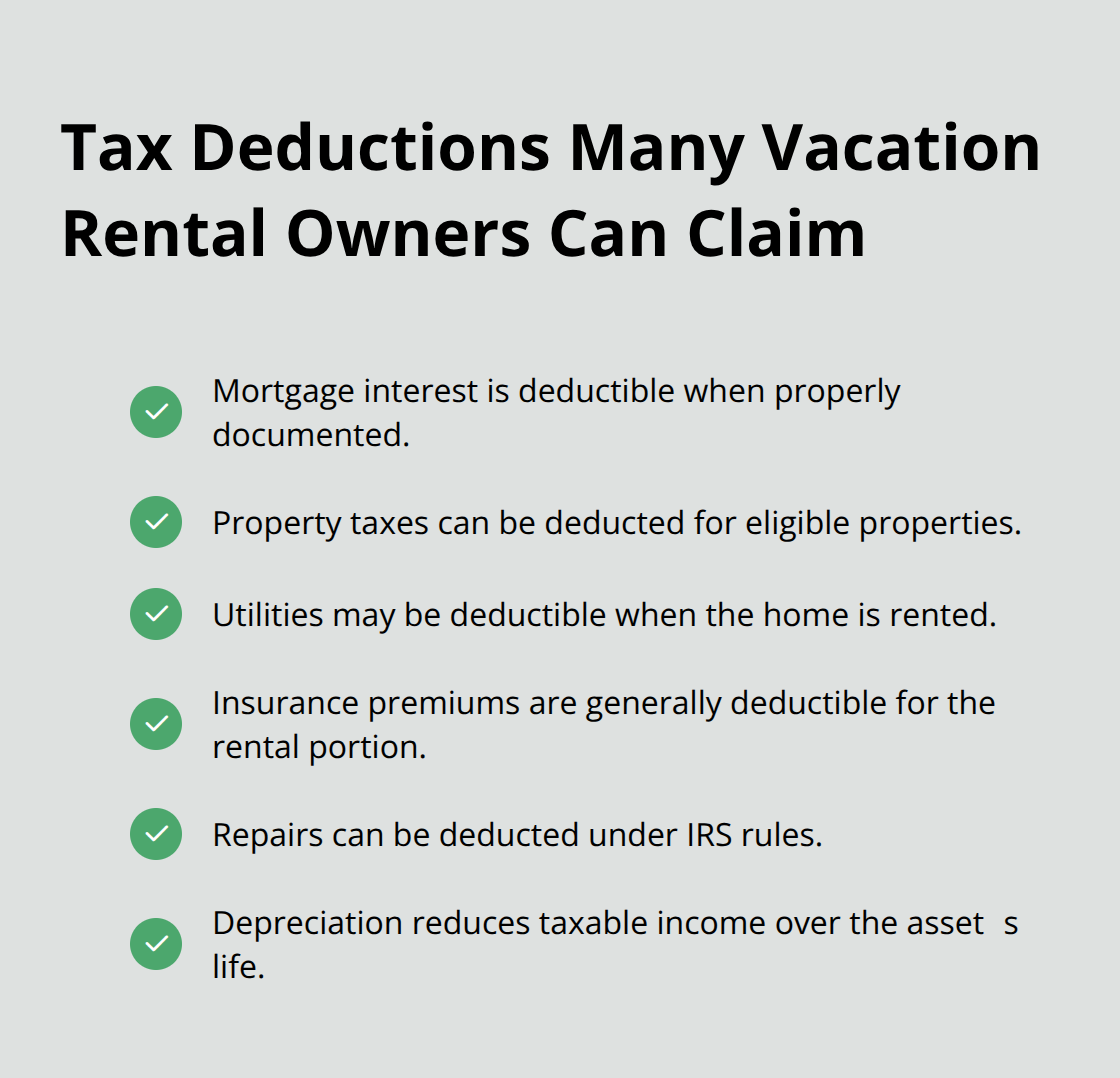
Mortgage interest and property tax benefits remain available even on second homes, which can offset carrying costs significantly. A capital gains strategy worth exploring: hold the property for at least one year before selling to qualify for long-term capital gains rates rather than ordinary income rates. The 1031 Exchange lets you defer capital gains taxes by swapping one investment property for another, a common strategy in real estate that professionals should handle. These tax advantages exist, but proper documentation and compliance protect them.
Understanding your actual income potential and tax position sets the foundation for the next critical decision: whether you can absorb the hidden costs that vacation properties demand.
Hidden Costs and Challenges of Vacation Rentals
Property Management Fees Eat Into Your Profits
The gap between gross rental income and actual profit reveals where most vacation property owners face harsh reality. Professional property management costs between 15% to 25% of gross rental income, depending on service level and market. Self-management appears cheaper until you calculate the hours spent on turnover cleaning, guest complaints at midnight, repair scheduling, and cancellation handling. A single water leak or HVAC failure costs $2,000 to $5,000 and wipes out your annual returns. Insurance premiums for vacation properties run significantly higher than primary residences because of liability exposure and frequent guest turnover. Overseas properties face even steeper surcharges. Property taxes on second homes typically run double those of primary residences, cutting directly into income.
Wear and Tear Accelerates With Guest Turnover
Furniture replacement, linens, kitchenware, and appliances wear out faster with constant guest use than they would in a primary residence. Each turnover requires professional cleaning, which adds $150 to $300 per cycle depending on property size. High-traffic areas deteriorate quickly, and guests treat rental properties differently than they treat their own homes. These maintenance costs compound over time and rarely appear in initial investment projections.
Seasonal Swings Create Cash Flow Chaos
Occupancy rates swing wildly between peak and off-season months, meaning your March income might be half your July income. Maui maintains 80 to 90 percent occupancy year-round, but Branson, Missouri hovers around 60 to 70 percent with peaks only in summer. This seasonality forces you to cover full mortgage and tax payments during slow months when bookings barely cover utilities. Economic downturns hit vacation rentals hard because travelers cut discretionary spending first. The 2008 financial crisis devastated vacation rental markets nationwide.
Regulations Can Destroy Your Investment Overnight
Short-term rental regulations can destroy profitability without warning. Many cities and counties now require licenses, impose strict caps on rental days per year, or ban short-term rentals entirely in residential areas. New York City limited short-term rentals to 120 days annually with primary residence requirements. Some HOA associations prohibit Airbnb-style rentals completely, making your investment worthless as a rental. Before purchasing any vacation property, contact the local planning department and HOA directly to understand current restrictions and whether new regulations are pending. One regulation change can eliminate your expected returns entirely.
These operational and regulatory realities demand a strategic response. The next section examines how successful investors maximize profits despite these obstacles.
How to Maximize Profits from Your Vacation Property
Dynamic Pricing Separates Winners From Underperformers
Static nightly rates leave thousands on the table during peak demand and tank occupancy during slow seasons. Successful vacation rental operators adjust rates based on dynamic pricing that accounts for demand, seasonality, and market trends. Maui properties command $400 to $600 per night during winter months but drop to $250 to $350 in shoulder seasons. Owners who fail to adjust rates either sit empty or undercharge significantly.
The math reveals the power of rate optimization. A Smoky Mountains property at 75% occupancy with a $275 average nightly rate generates roughly $75,000 annually. The same property at 85% occupancy with optimized seasonal pricing hits $95,000. That $20,000 difference comes entirely from rate management, not from improving the property itself. Tools like AirDNA provide market insights showing occupancy trends, competitor rates, and seasonal patterns specific to your location. Use these insights to price aggressively during peaks and competitively during valleys rather than guessing.
Professional Photography and Descriptions Drive Bookings
Marketing drives bookings, and most individual owners severely underinvest here. Professional vacation rental platforms like Airbnb and VRBO handle some visibility, but top performers use multiple channels simultaneously. Professional photography increases booking rates by 20% to 40% compared to amateur photos.
Professional property descriptions highlighting specific amenities, proximity to attractions, and guest reviews matter far more than generic descriptions. Seasonal marketing campaigns tied to local events-ski season promotions in Lake Tahoe, beach packages in Destin-outperform year-round generic marketing. The reality is that self-managing marketing consumes 10 to 15 hours weekly and still underperforms professional management.
Professional Management Multiplies Your Net Income
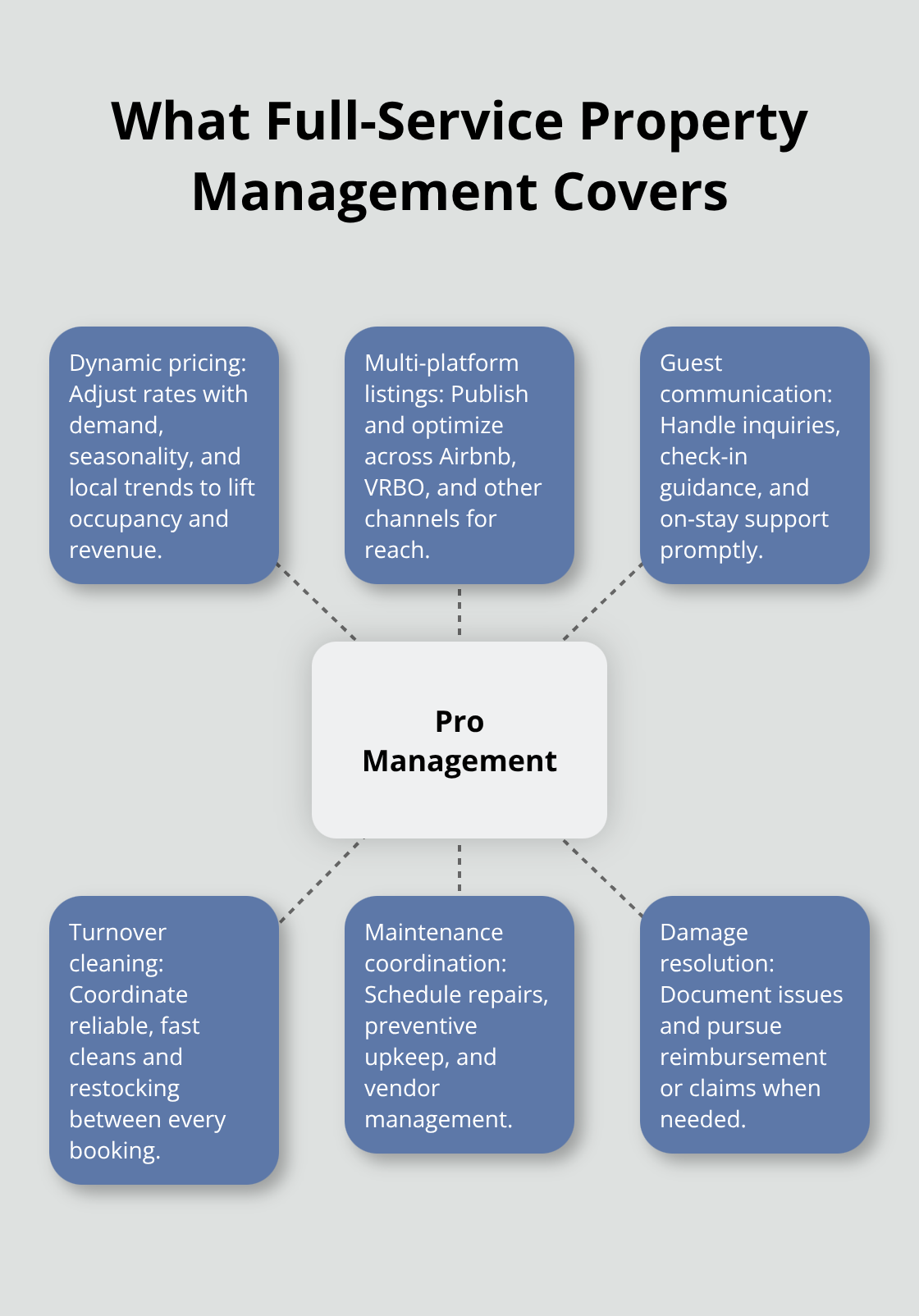
Full-service property management companies handle dynamic pricing, multi-platform listings, guest communication, turnover cleaning, maintenance coordination, and damage resolution. Yes, this costs 15% to 25% of gross rental income, but that percentage often shrinks as a share of net profit when professional management increases occupancy rates and optimizes pricing.
A property generating $50,000 gross revenue with poor management might net $15,000 after all costs. The same property under professional management might gross $65,000 and net $35,000 after management fees, doubling your actual income. In Northern Minnesota, Up North Property Management handles the full operational burden-aggressive marketing, booking management, cleaning between guests, and maintenance coordination-allowing property owners to collect income without the constant operational stress.
The alternative is spending 15 to 20 hours weekly on your vacation property while watching competitors who hired professional management earn significantly more from similar properties. The data is clear: vacation rental success requires professional management or your time investment becomes the hidden cost that erases profitability entirely.
Final Thoughts
Vacation property investment success hinges on three factors: location, operational management, and honest self-assessment of your time and capital. Properties in high-demand markets with strong year-round occupancy generate genuine returns, but only when professional management handles operations. A Smoky Mountains property at 75% occupancy with optimized pricing outperforms a poorly managed beachfront property by thousands annually, and location determines your occupancy ceiling before you even purchase.
Professional management multiplies net income by handling dynamic pricing, multi-platform marketing, guest communication, and maintenance coordination. Self-managing a vacation rental while working full-time creates a second job that erodes profitability through missed optimization opportunities and constant stress. The 15% to 25% management fee isn’t an expense-it’s an investment that typically doubles your actual net income compared to self-management, and whether vacation property is a good investment for you depends entirely on this operational reality.
Identify your target market, run the numbers for that specific location, and decide whether professional management fits your budget. If you own a vacation property in Northern Minnesota or are considering one, Up North Property Management handles the operational burden entirely, allowing you to collect income without constant operational demands. Commit fully to professional management or don’t invest at all.