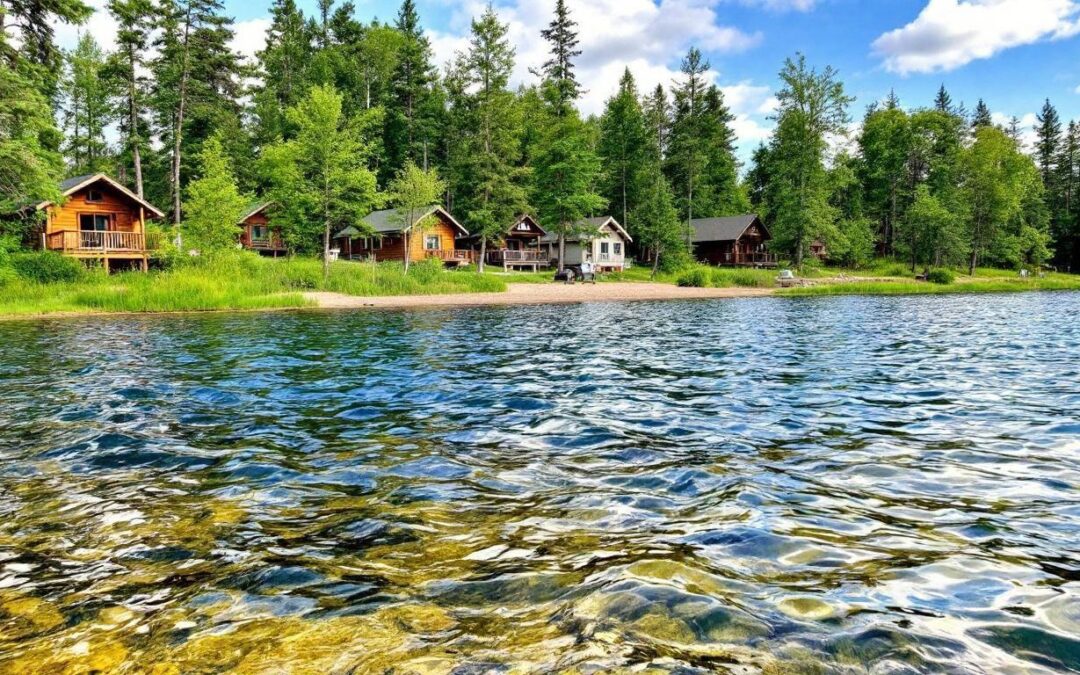
Lakefront cabins in the Brainerd area offer more than just a beautiful getaway-they’re a smart investment opportunity. Central Minnesota’s lakes region attracts thousands of visitors annually, creating consistent rental demand year-round.
At Up North Property Management, we’ve seen firsthand how the right lakefront property can generate strong returns while providing the lifestyle appeal that today’s travelers seek. This guide walks you through what makes these properties valuable and how to maximize your investment.
Why Brainerd Lakefront Cabins Deliver Strong Returns
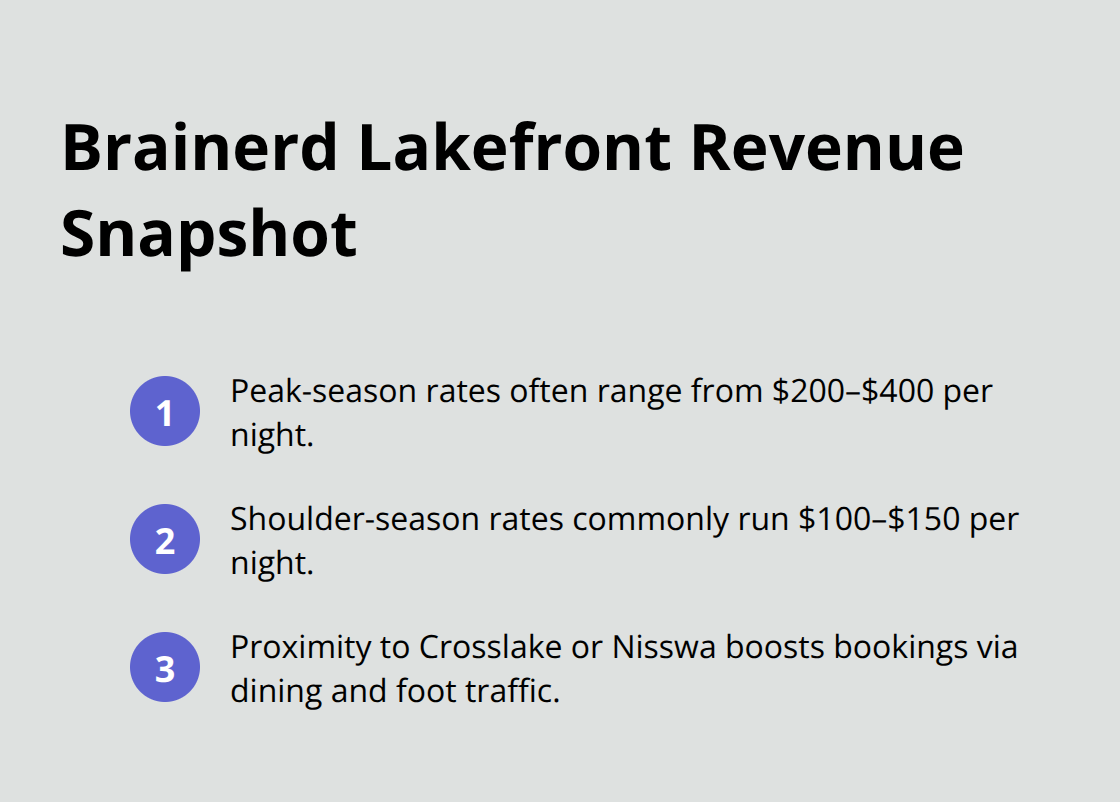
Brainerd’s lakefront cabins sit in one of Minnesota’s most visited vacation regions, and the numbers back up the investment case. The Brainerd Lakes Area attracts visitors consistently throughout the year, with peak demand concentrated in summer months when families book weeks in advance. Tourism in central Minnesota has grown steadily, and lakefront properties command premium nightly rates that far exceed inland alternatives. A cabin on Gull Lake or Bay Lake can charge $200 to $400 per night during peak season, while the same property might rent for $100 to $150 in shoulder months. This pricing flexibility allows owners to capture high revenue during busy periods and still maintain occupancy during slower times. The location advantage is real and measurable: properties within minutes of Crosslake or Nisswa benefit from foot traffic, dining options, and established tourism infrastructure that drives consistent bookings.
Rental Income Runs Year-Round
Contrary to popular belief, Brainerd lakefront cabins generate income well beyond summer. Winter brings ice fishing enthusiasts, snowmobile riders, and families seeking holiday getaways. Spring and fall attract anglers targeting walleye and northern pike runs, plus golf enthusiasts visiting championship courses like Alec’s Nine. Properties that maintain professional standards and strategic pricing achieve 60 to 75 percent occupancy across all seasons. A well-positioned cabin with modern amenities, reliable Wi-Fi, and year-round heating can generate $40,000 to $60,000 in annual rental income, depending on size and location. Properties offering unique features like saunas, fire pits, or dock facilities command higher rates and attract repeat bookings. The difference between strong performers and underperforming cabins comes down to professional marketing and maintenance standards that keep properties booked consistently.
Tourism Demand Continues Rising
Minnesota’s lakes region saw visitor spending exceed $2 billion annually in recent years, with central Minnesota capturing a significant share. Families increasingly prefer cabin rentals over hotel rooms because they offer more space, privacy, and the ability to cook meals. Pet-friendly cabins have become essential for capturing a growing segment of travelers who refuse to leave their animals behind. Multi-bedroom layouts that accommodate large family reunions or group getaways command premium rates and fill quickly during peak dates. The shift toward remote work has extended shoulder seasons considerably, as professionals book extended stays in lakefront cabins to work from quieter settings. Properties that offer reliable internet and comfortable workspace setups attract this high-value segment willing to pay premium rates for longer stays.
Position Your Property for Market Advantage
The competitive advantage goes to owners who understand these market shifts and position their properties accordingly. Cabins that combine waterfront access with modern amenities (Wi-Fi, heating systems, updated kitchens) outperform properties that lack these features. Marketing matters significantly-properties listed on multiple platforms and professionally photographed attract more inquiries and command higher rates. Owners who invest in professional management services handle the operational complexity while focusing on maximizing returns. The next section explores the specific features and amenities that transform a lakefront cabin from a seasonal rental into a year-round income generator.
Features and Amenities of Top Lakefront Properties
Waterfront Access and Dock Facilities Transform Rental Potential
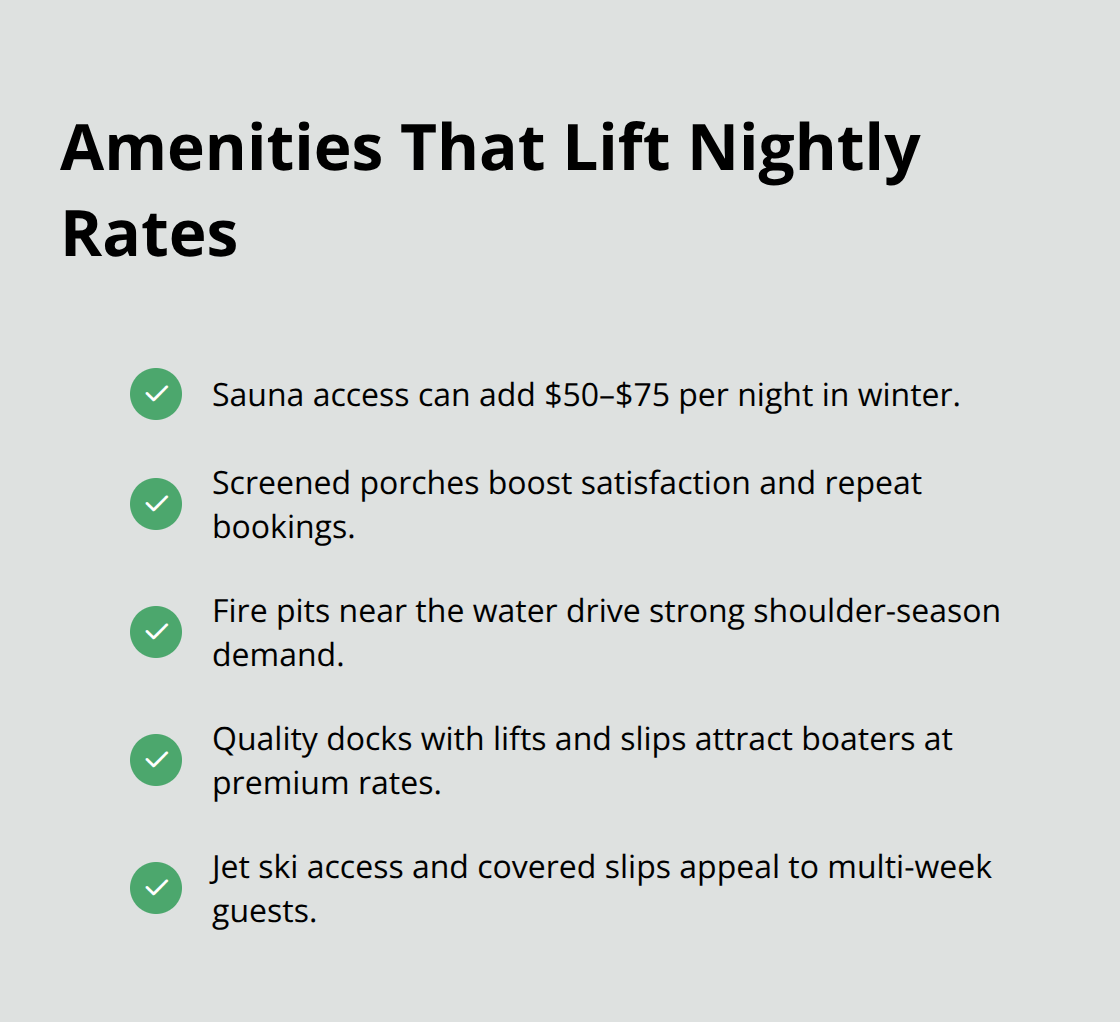
Direct waterfront access with functional dock facilities separates cabins that command premium rates from those that struggle to fill weekends. Properties on Gull Lake or Bay Lake with deep-water docks attract boaters willing to pay $300 to $400 per night, while identical cabins without dock access rent for $150 to $200. Dock quality matters significantly-boat lifts, jet ski access, and covered slip space justify higher nightly rates and appeal to serious water enthusiasts who book multiple weeks annually.
Saunas positioned on the beach or near the water add $50 to $75 per night to rental rates, particularly during winter months when families seek authentic north woods experiences. Properties featuring screened porches that extend usable outdoor space see higher guest satisfaction scores and generate more repeat bookings than cabins with minimal exterior amenities. Fire pits within steps of the water command strong demand during fall and spring shoulder seasons when families travel to enjoy cooler temperatures.
Properties lacking waterfront infrastructure should market alternative strengths rather than compete directly on water access. Those positioned near championship golf courses like Alec’s Nine or within walking distance of downtown Crosslake can differentiate through location convenience and dining proximity instead.
Modern Cabin Design and Comfort Drive Occupancy Rates
Modern cabin design directly impacts occupancy rates and nightly rates. Properties with updated kitchens, modern HVAC systems and reliable high-speed Wi-Fi rent more frequently than cabins with outdated infrastructure, according to vacation rental performance data across the Brainerd Lakes region. Ceiling fans, mini-split heating systems, and full bathrooms with shower-tub combinations attract guests who seek comfort without sacrificing rustic appeal.
Multi-bedroom layouts with flexible sleeping configurations-combinations of queen beds, twin bunks, and sofa sleepers-accommodate larger family groups and command rates exceeding $500 per night during peak summer weeks. These configurations allow owners to capture different market segments, from couples to extended families, within a single property.
Outdoor Recreation Opportunities Extend Guest Stays
Outdoor recreation features drive booking decisions substantially. Properties offering pontoon rentals, fishing equipment, snowmobile access, or partnerships with guided fishing trip providers attract adventure-focused travelers willing to pay premium rates. Amenities like fire pits, playground equipment for children, and beach volleyball setups extend guest stays by encouraging on-property activities rather than day trips.
Professional property management services handle the operational complexity of maintaining these amenities, ensuring systems function reliably and marketing effectively showcases what differentiates each property in a competitive market. The next section reveals how owners can maximize returns through strategic marketing and pricing approaches that respond to seasonal demand shifts.
How to Maximize Your Cabin’s Revenue Throughout the Year
List Your Property on Multiple Platforms
Properties listed on multiple platforms generate 30 to 40 percent more inquiries than single-platform listings, according to vacation rental performance data across the Brainerd Lakes region. Your listing description should highlight specific amenities that drive decisions: saunas, fire pits, boat lifts, Wi-Fi speeds, and proximity to Alec’s Nine golf course or downtown Crosslake. Generic descriptions perform poorly and fail to justify premium pricing.
Professional photography that showcases waterfront views, dock facilities, and interior comfort directly increases booking rates and nightly rates. Quality images justify premium pricing far more effectively than written descriptions alone.
Adjust Messaging and Pricing by Season
Seasonal marketing requires adjusting your messaging quarterly. Summer marketing emphasizes family reunions and multi-week stays with bulk discounts for seven-night bookings. Fall and spring messaging targets anglers and golf enthusiasts with equipment rental partnerships and course proximity. Winter marketing attracts snowmobile riders and ice fishing groups through heated cabins, sauna access, and proximity to riding trails.
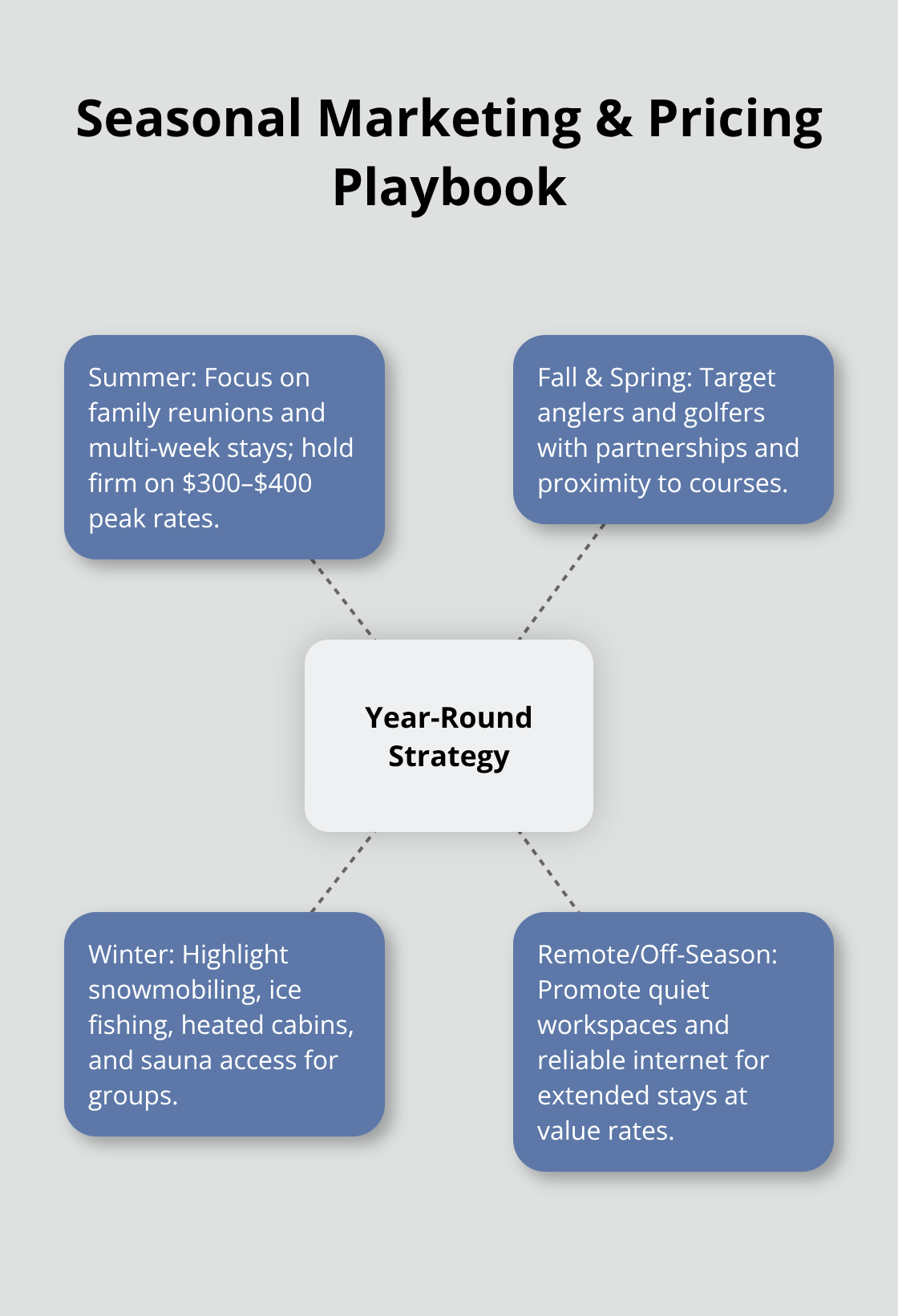
Peak season rates of $300 to $400 per night should hold firm during July and August when demand exceeds supply and families book months ahead. Shoulder seasons in May, June, September, and October allow flexibility: dropping rates to $180 to $220 per night fills weekends that would otherwise sit empty, generating revenue that exceeds zero. Off-season rates from November through April should target specific segments rather than competing on price alone.
A cabin charged at $150 to $180 per night attracts remote workers seeking quiet workspace and reliable internet willing to book three to four week stays. Extended-stay rates generate higher annual revenue than maximizing nightly rates because they eliminate turnover costs and cleaning expenses between guests. A $250 nightly rate generates $1,750 weekly, but a $1,400 weekly rate for the same property costs less to service and attracts guests booking multiple consecutive weeks.
Understand the True Cost of Self-Management
Independent owners managing their own properties spend 8 to 12 hours weekly on marketing, guest communication, scheduling cleaners, and handling maintenance requests. That time investment often costs more than the management fees charged by professional services. A cabin underpriced by $30 per night loses $10,950 in annual revenue across 365 days.
Professional managers negotiate better rates with cleaning services and maintenance contractors through volume relationships, reducing per-booking costs by 15 to 25 percent compared to owner-managed properties. They track dynamic pricing data and adjust rates based on real-time demand patterns, events calendars, and competitor pricing rather than using fixed seasonal rates that miss revenue opportunities.
Leverage Professional Management Services
Professional management handles the operational complexity that most owners underestimate. Properties managed professionally achieve higher occupancy rates because management companies respond to inquiries within hours, coordinate guest arrivals with cleaning schedules, and maintain consistent standards that generate repeat bookings and positive reviews.
Concierge services that professional managers provide increase guest satisfaction and justify premium nightly rates. Recommending specific restaurants, arranging fishing guides, coordinating boat rentals, and providing local information transform generic cabin rentals into memorable vacation experiences that generate five-star reviews and repeat bookings. Properties with strong review scores and consistent occupancy rates attract higher valuations when owners decide to sell, making professional management an investment in long-term property value rather than an expense.
Final Thoughts
Lakefront cabins in the Brainerd area represent a genuine opportunity for property owners seeking reliable income and strong market fundamentals. The region’s tourism infrastructure, year-round visitor demand, and premium nightly rates create conditions that favor well-managed properties. Central Minnesota’s lakes continue attracting families, anglers, golfers, and remote workers across all seasons, sustaining occupancy rates that generate $40,000 to $60,000 annually for properties positioned strategically.
Self-managed properties typically underperform professionally managed ones by 20 to 30 percent annually due to pricing inefficiencies, slower response times, and higher operational costs. If you own a lakefront cabin, evaluate whether your current management approach captures available revenue. If you’re considering purchasing a lakefront property, focus on locations with established tourism infrastructure like Gull Lake or Bay Lake, where demand supports premium nightly rates and year-round occupancy.
We at Up North Property Management handle the operational complexity that most owners underestimate, managing marketing, bookings, cleaning, and maintenance while providing concierge services that justify premium rates. Our aggressive marketing and full-service approach allow owners to focus on long-term value rather than daily operational demands. Properties positioned correctly today will generate consistent returns for years ahead.