

Minnesota has something for everyone, whether you’re chasing waterfalls in summer, watching leaves turn gold in fall, or spotting the Northern Lights in winter.
At Up North Property Management, we’ve put together Minnesota travel guides to help you plan the perfect getaway. A vacation rental gives you the comfort and flexibility to explore at your own pace, with a home base that feels like yours.
Minnesota’s Natural Attractions: Why They Deserve Your Time
Manageable Crowds and Genuine Outdoor Experiences
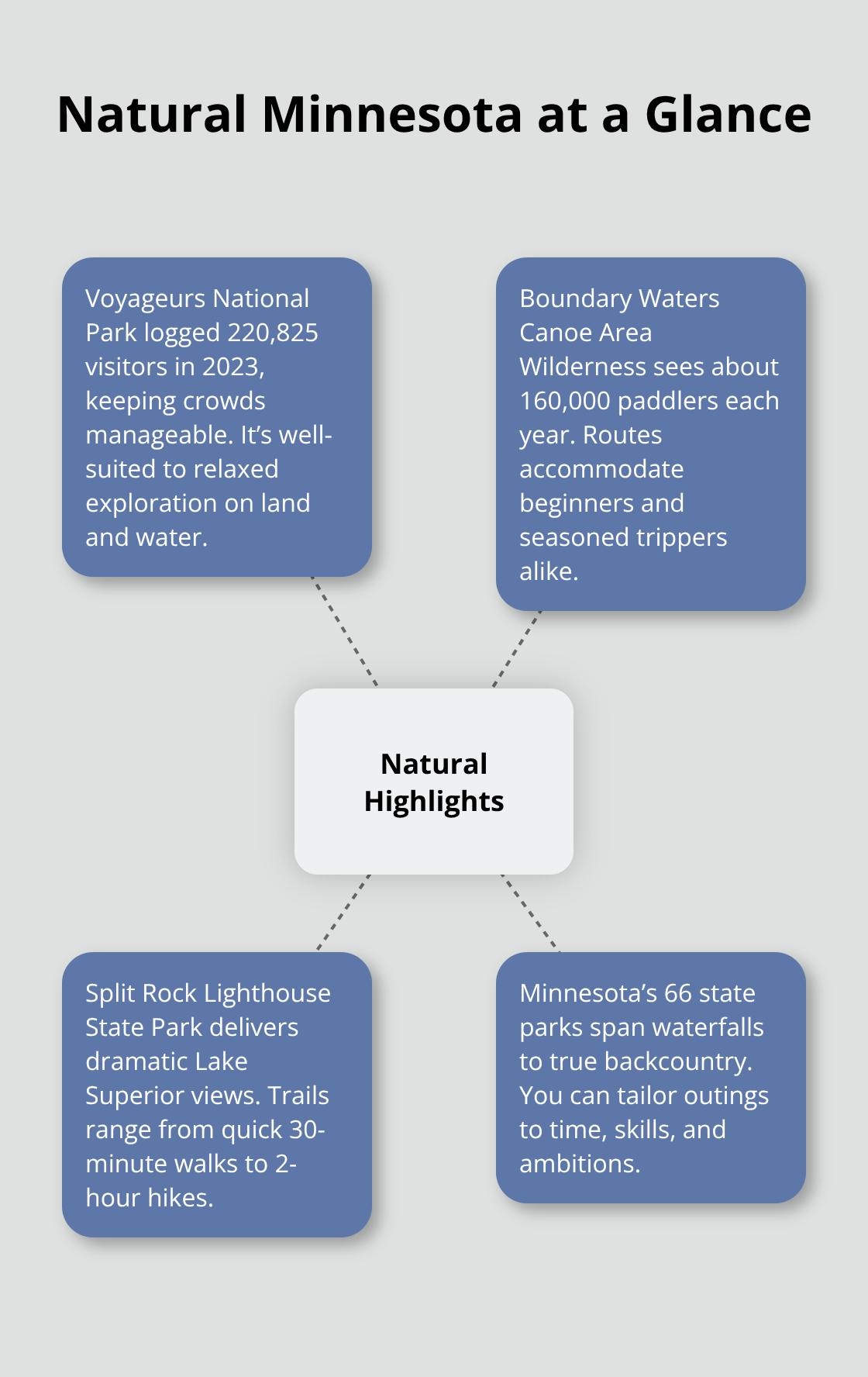
Minnesota’s landscape delivers genuine outdoor experiences without the crowds you’d find at overvisited destinations. Voyageurs National Park welcomed 220,825 visitors in 2023, making it manageable for exploration, while Boundary Waters Canoe Area Wilderness sees about 160,000 paddlers each year. Split Rock Lighthouse State Park near Two Harbors draws visitors for its dramatic Lake Superior views and hiking trails that take 30 minutes to 2 hours depending on your route. The state’s 66 state parks offer everything from waterfall pursuits to serious backcountry adventures.
Waterfalls, Fat Biking, and Beginner-Friendly Paddling
Minnesota hosts numerous waterfalls worth pursuing, with many requiring only moderate effort to reach. Cuyuna Country State Recreation Area has become a fat biking hotspot in winter, attracting riders who want challenging terrain without traveling to Colorado. The Boundary Waters offers beginner-friendly four-day canoe trips that introduce paddlers to backcountry camping without requiring extensive experience. Itasca State Park marks the official headwaters of the Mississippi River, making it a meaningful destination for those interested in geography and natural history.
Lakes and Water Opportunities Across the State
Lakes dominate Minnesota’s identity, with over 10,000 named lakes providing opportunities for fishing, swimming, and kayaking. Lake Superior’s shoreline in Minnesota features cold-water swimming, scuba diving, and shore-based photography along the North Shore. The Minnesota State Parks website and Explore Minnesota provide detailed trail maps, difficulty ratings, and seasonal conditions so you can match activities to your fitness level and timeframe.
Vacation Rentals as Your Base for Exploration
Your vacation rental becomes essential when exploring these attractions spread across the state. Properties in Northern Minnesota position you near multiple natural destinations while offering the comfort of a full kitchen, washer, dryer, and private outdoor space. Rather than staying in hotels near each attraction, a centralized rental lets you base yourself in one location and take day trips to waterfalls, parks, and lakes. Many properties include amenities like hot tubs for post-hike relaxation, multiple bedrooms for families or friend groups, and direct lake access (features that transform your stay from ordinary to memorable). This setup means you spend less time moving between accommodations and more time actually experiencing what Minnesota offers. With the right property, you’ll find that seasonal timing matters just as much as location-which brings us to understanding when Minnesota truly shines.
When to Visit Minnesota for Your Perfect Season
Summer: Peak Season Means Higher Prices and Early Booking
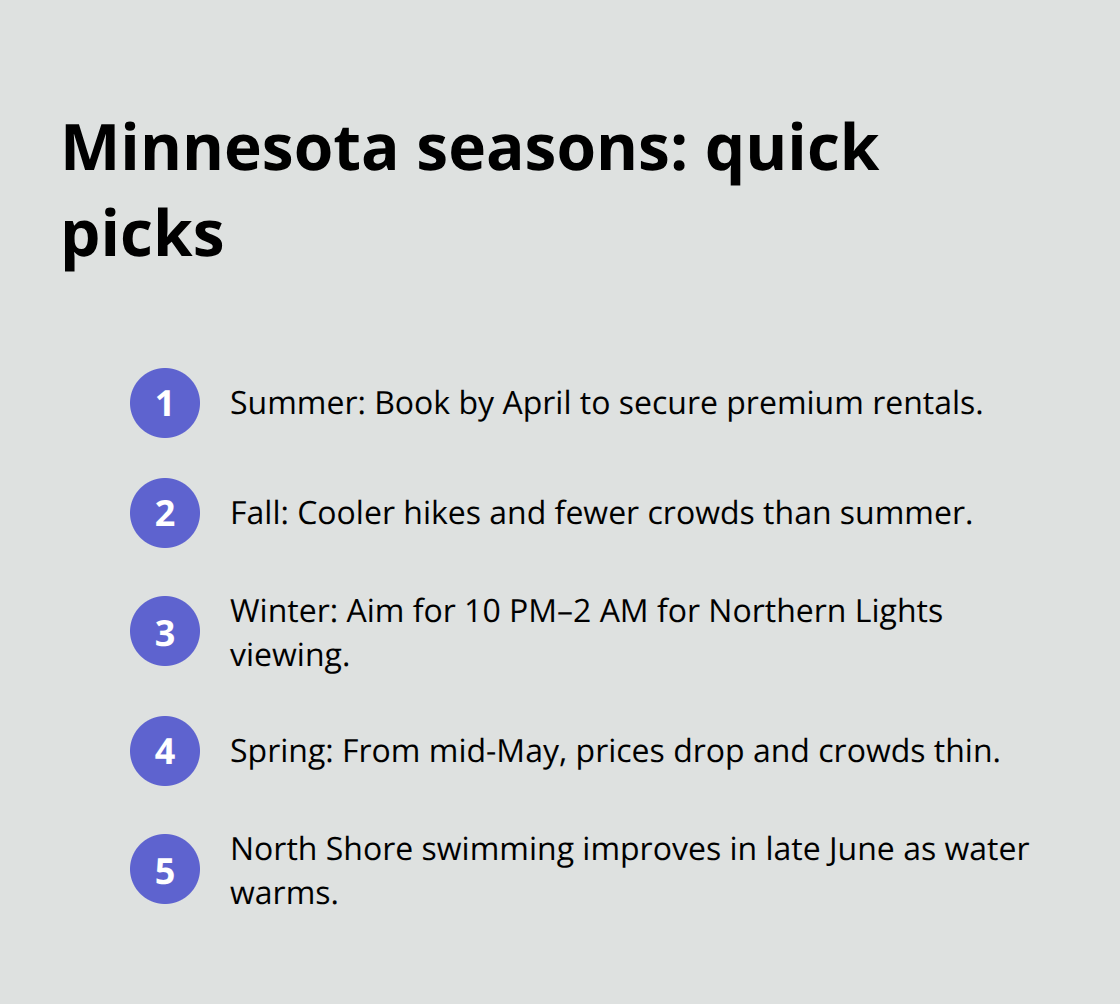
Summer transforms Minnesota into a water lover’s paradise, with July temperatures averaging 79°F and extended daylight until after 9 PM. Lake Superior’s North Shore becomes accessible for swimming and kayaking once water temperatures reach the mid-60s in late June, while inland lakes warm faster and become swimmable by early July. The Minnesota State Fair runs for 12 days in late August and attracts over 1 million visitors annually, making it a cultural anchor if you want to experience local traditions. However, summer also brings peak accommodation demand, which pushes vacation rental prices up 30-40% compared to shoulder seasons, and popular properties sell out months in advance. If you choose summer, book your Northern Minnesota vacation rental by April to secure premium properties at reasonable rates.
Fall: The Overlooked Season for Serious Explorers
Fall arrives in late August and peaks in early October, with September temperatures dropping to the comfortable 60-70°F range. Minnesota’s 66 state parks showcase their strongest appeal during this period-fewer crowds than summer, cooler hiking conditions, and the dramatic color shift that happens between mid-September and early October. The Boundary Waters Canoe Area Wilderness becomes ideal in September because paddlers avoid summer heat and winter ice, and campsites open up as school-year travel decreases. Fall is genuinely the best season for serious outdoor exploration, yet many travelers overlook it because they assume summer is mandatory. This season rewards flexible travelers with ideal conditions and lower prices than peak summer months.
Winter: Northern Lights and Cold-Weather Adventures
Winter runs from November through March and presents two distinct experiences: early winter (November-December) offers reasonable snow for fat biking at Cuyuna Country State Recreation Area and cross-country skiing, while deep winter (January-February) provides the clearest conditions for Northern Lights viewing. Aurora activity peaks during the winter months, with the best viewing typically occurring between 10 PM and 2 AM on clear nights away from light pollution. Northern Minnesota’s location at 47-48°N latitude puts it in prime aurora territory, and properties in areas like Ely or Grand Rapids offer darker skies than southern regions. Winter temperatures range from -5°F to 20°F, requiring appropriate clothing, but vacation rentals with hot tubs and fireplaces make the cold season genuinely enjoyable rather than merely tolerable.
Spring: A Practical Alternative for Budget-Conscious Travelers
Spring, while often overlooked, offers a practical option from mid-May onward when weather stabilizes, prices drop from summer peaks, and summer crowds haven’t yet arrived. This shoulder season provides comfortable temperatures for hiking and outdoor activities without the intensity of peak summer demand. Properties available in spring often feature better rates and more availability than summer months, making it an attractive choice for travelers who prioritize flexibility and value.
Matching Your Activity Goals to Seasonal Conditions
Each season demands different preparation and property selection. Summer requires early booking and acceptance of higher rates; fall rewards flexible travelers with ideal conditions and lower prices; winter demands comfort amenities like heated indoor spaces and hot tubs but delivers the most dramatic natural display Minnesota offers. A vacation rental with reliable heating, good insulation, and quality furnishings becomes non-negotiable in winter, while summer rentals benefit from screened porches and direct water access. The timing question isn’t about which season is objectively best-it’s about matching your activity goals to seasonal conditions and understanding how each season affects both pricing and experience quality. Once you’ve settled on your ideal season, the next critical decision involves where you’ll actually stay and what amenities will make your vacation feel like home rather than just another hotel room.
Why Vacation Rentals Beat Hotels for Minnesota Exploration
Full Kitchens and Laundry Transform Your Stay
A vacation rental fundamentally changes how you experience Minnesota because it provides a genuine home base instead of a temporary room. Hotels lock you into their dining hours, cleaning schedules, and limited kitchen access, which forces you to eat out constantly or settle for vending machine snacks after a full day of hiking. A rental property with a full kitchen lets you prepare meals on your timeline, save money on food costs, and accommodate dietary preferences that restaurants cannot match. You access a washer and dryer included with your stay, which matters enormously when you spend days outdoors in Minnesota’s weather-you can actually wash muddy hiking clothes instead of stuffing them in a suitcase. Properties with multiple bedrooms cost less per person than booking multiple hotel rooms, and the shared common space keeps your group connected rather than retreating to separate rooms.
Recovery Amenities That Hotels Cannot Replicate
Hot tubs and saunas provide genuine recovery after physical activity-something no hotel can replicate at the same price point. Winter stays demand properties with backup heating systems, quality insulation, and reliable hot tubs since you will spend evenings recovering from cold-weather activities like cross-country skiing or Northern Lights viewing. Summer rentals should offer screened porches or direct lake access because you will want outdoor space for morning coffee and evening relaxation without fighting insects. These amenities transform a vacation from functional to restorative.
Location and Logistics Matter More Than You Expect
Properties near waterfalls or hiking trailheads save you 30-45 minutes of driving per day compared to staying in town, which compounds into meaningful time savings across a week-long stay. You should verify that the property includes linens, towels, and basic kitchen supplies-some properties charge extra for these items, effectively raising your actual nightly cost by 15-20%. Check whether the rental’s wifi strength supports your needs since many Minnesota rentals rely on satellite or rural broadband that struggles with video streaming or remote work. Properties with multiple bathrooms matter more than you would expect when traveling with families or friend groups, particularly during morning routines.
Questions to Ask Before You Book
Contact the property manager directly to ask about recent renovations, furnace age, and actual winter heating performance rather than relying solely on online photos-these details determine whether a winter stay feels comfortable or frustrating. Try to confirm that the property has adequate snow removal services if you visit during winter months, since rural Minnesota properties sometimes lack reliable plowing. Ask about the property’s proximity to restaurants, grocery stores, and emergency services, as rural locations may require 20-30 minutes of travel for basic supplies.
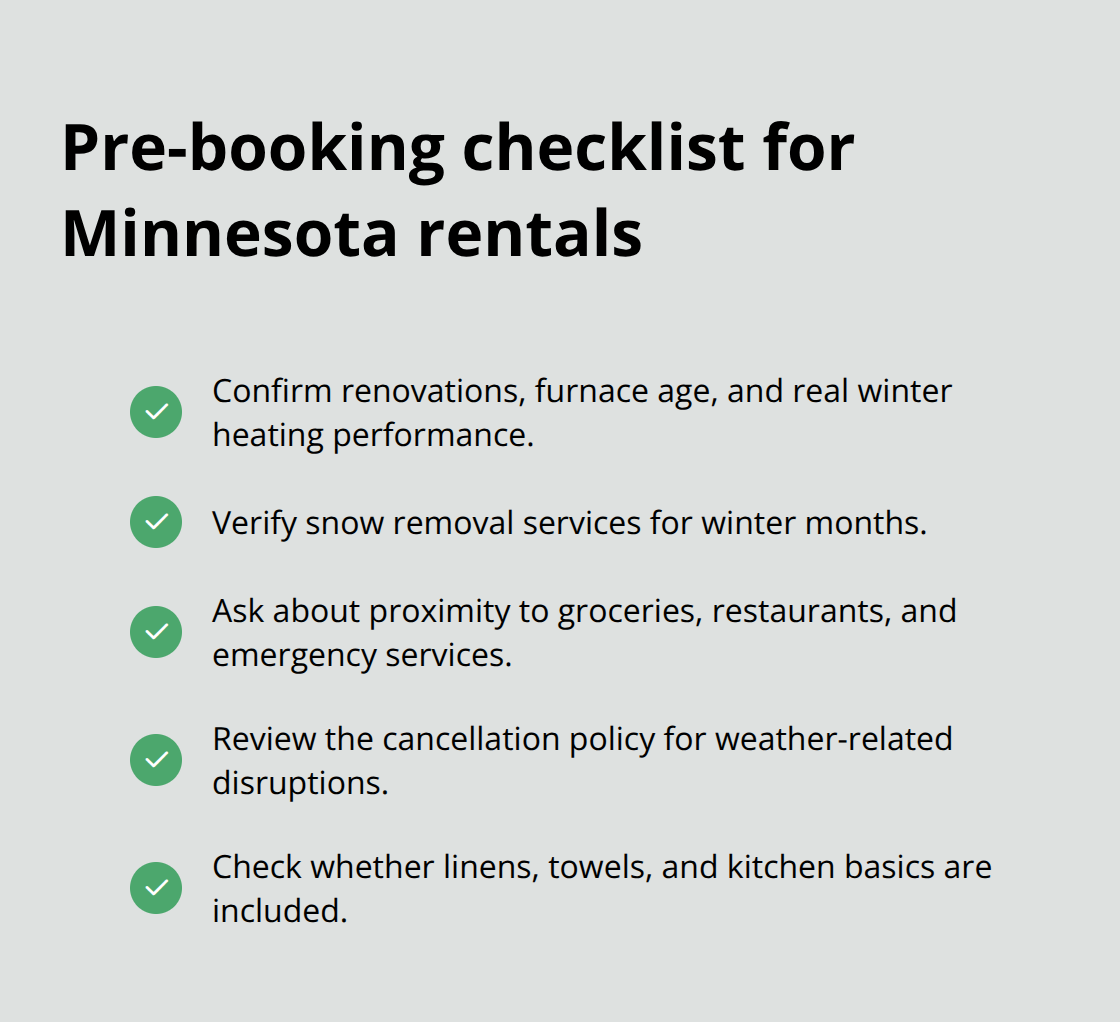
Verify the cancellation policy and what happens if weather conditions deteriorate unexpectedly during your stay, since winter travel carries inherent risks that summer trips do not.
Final Thoughts
Minnesota delivers genuine outdoor experiences across every season, from summer lake activities and fall hiking to winter Northern Lights viewing and spring paddling. The state’s 66 state parks, 10,000 named lakes, and iconic destinations like Voyageurs National Park and the Boundary Waters provide options for every activity level and interest. Whether you chase waterfalls in July, watch leaves turn in September, or stand under the aurora in February, Minnesota rewards explorers who match their visit to seasonal conditions.
Vacation rentals transform how you experience these attractions because they provide comfort and flexibility that hotels cannot match. A full kitchen lets you eat on your schedule, a washer and dryer handles muddy hiking clothes, and amenities like hot tubs provide genuine recovery after physical activity. Multiple bedrooms cost less per person than separate hotel rooms, and a centralized property near your target attractions saves hours of driving across your stay.
Planning your Minnesota adventure starts with honest answers about your preferred season, activity goals, and group size. Summer demands early booking but delivers peak water conditions; fall offers ideal hiking weather and lower prices; winter provides the most dramatic natural display if you prioritize comfort amenities. Browse our available properties to find your perfect base for exploring Minnesota’s natural attractions and using Minnesota travel guides to plan your activities.