
Northern Minnesota cabins face unique seasonal challenges that demand year-round attention. Winter’s freeze-thaw cycles, spring moisture, summer guest wear, and fall storms all take their toll on your property.
At Up North Property Management, we’ve seen how systematic cabin maintenance protects both your investment and your guests’ experience. This checklist breaks down exactly what needs attention each season.
Spring Cabin Opening Checklist
Inspect Roof and Gutters for Winter Damage
Spring arrival at a Northern Minnesota cabin means confronting the damage winter inflicted. Ice dams crack gutters, freeze-thaw cycles split wood, and standing water from melting snow finds every weak point. Start every spring with a thorough inspection of the roof and gutters because missing shingles or clogged downspouts lead directly to interior water damage that costs thousands to repair. Check for granule loss on shingles, which indicates age and vulnerability to leaks. Clear all debris from gutters and downspouts, then run water through them to confirm proper drainage. Look for sagging sections in the gutter line, a sign that ice buildup stressed the fasteners.
Don’t assume your roof survived intact just because it looks fine from the ground. Ice dams form at the eaves where warm air from inside meets cold exterior surfaces, creating a dam that forces meltwater back under shingles. The University of Minnesota Extension recommends inspecting the interior ceiling for water stains before active leaks appear, catching hidden damage early when repair costs stay manageable. If you spot any signs of water intrusion, address them immediately rather than waiting for next season.
Test Water Systems With Careful Sequencing
Your plumbing system sat dormant all winter, and restarting it incorrectly creates pressure spikes that burst pipes or damage fixtures. Open the cold water tap first and leave it open while you turn on the pump, allowing air to escape from the lines. Listen for hissing sounds as air purges, then close the tap once water flows steadily.
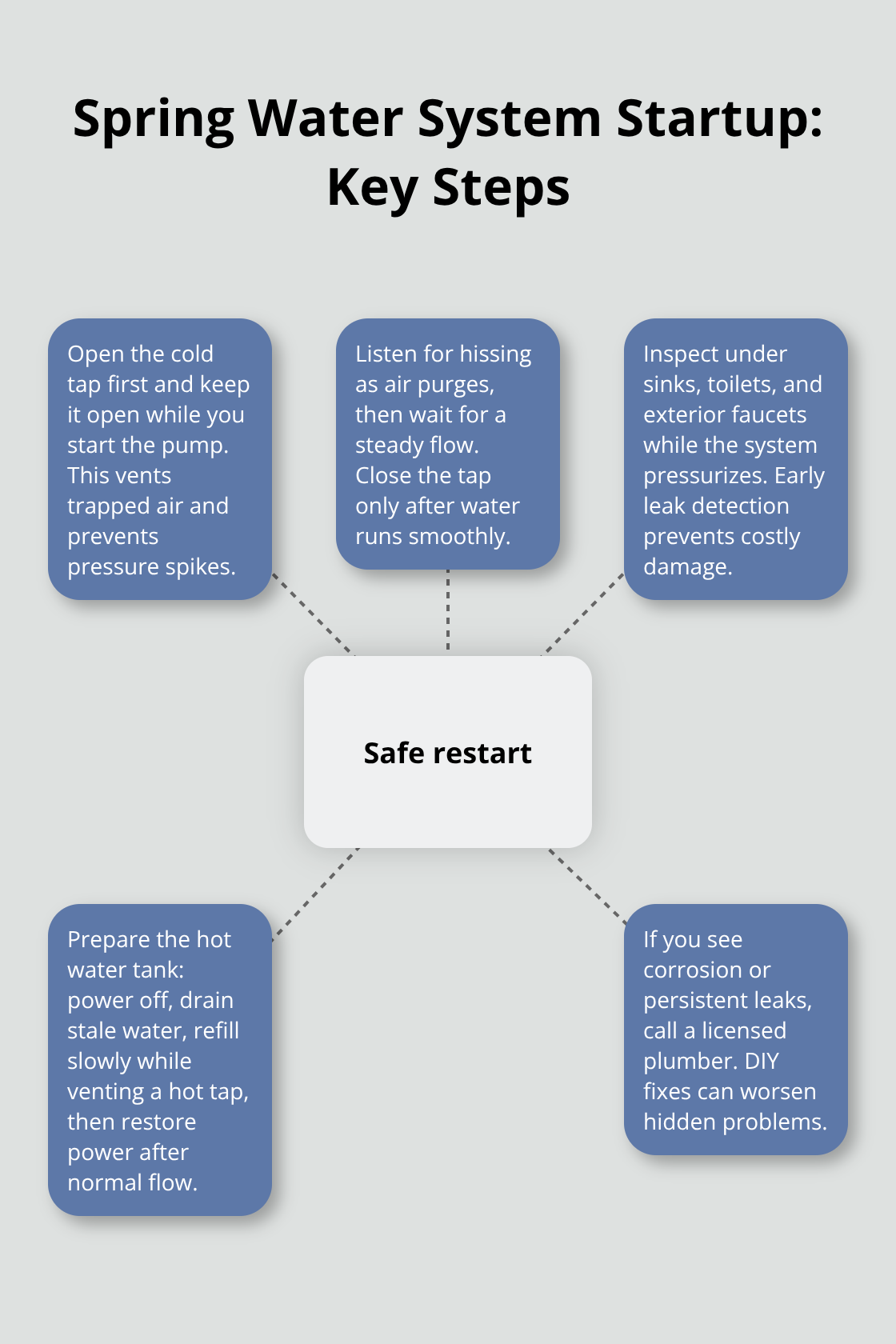
Check under every sink, toilet, and exterior faucet for leaks while the system pressurizes.
The hot water tank requires special attention: turn the breaker off, open the drainage valve to expel stale water, then refill slowly by opening the cold water inlet while a hot water tap vents air. Only after water flows normally from the hot tap should you switch the breaker back on. Look for corrosion or mineral buildup on pipe connections, which signals deteriorating joints that need replacement soon. A septic inspection catches system failures before they become emergencies, and spring is the ideal time to schedule one when the ground is still moist. If you spot leaks you cannot tighten or pipes showing visible corrosion, call a licensed plumber rather than attempting repairs that could worsen the problem.
Service HVAC Systems Before Warm Weather Arrives
Your heating system ran hard all winter and your air conditioning has been idle for months. Replace the furnace filter before running the system, as a clogged filter reduces efficiency and forces the system to work harder. If you use wood heat, have the chimney professionally inspected and cleaned to remove creosote buildup that creates fire hazards. Test your air conditioning unit before guests arrive by running it for at least thirty minutes to confirm it cools properly and all vents blow cold air evenly.
Dirty condenser coils outside reduce cooling capacity, so rinse them gently with a garden hose to remove pollen and debris. Check that all thermostats respond correctly and that temperature readings match what the system actually delivers. Smoke and carbon monoxide detectors deserve fresh batteries and a function test, since dead batteries from winter storage often go unnoticed until an emergency occurs. With your systems running smoothly and water flowing properly, summer guest preparation becomes straightforward-which means power washing exterior surfaces and inspecting waterfront areas before the season kicks into high gear.
Summer Maintenance and Guest Preparation
Power Wash Exterior Surfaces and Decks
Summer brings the highest occupancy rates for Northern Minnesota cabins, which means your property needs to look and function flawlessly before the first guests arrive. Visible dirt, broken deck boards, or malfunctioning appliances tank guest reviews and create liability issues you cannot afford. Power washing removes years of pollen, mold, and algae buildup from siding and decks, which protects wood finishes and prevents slips that cause injuries.
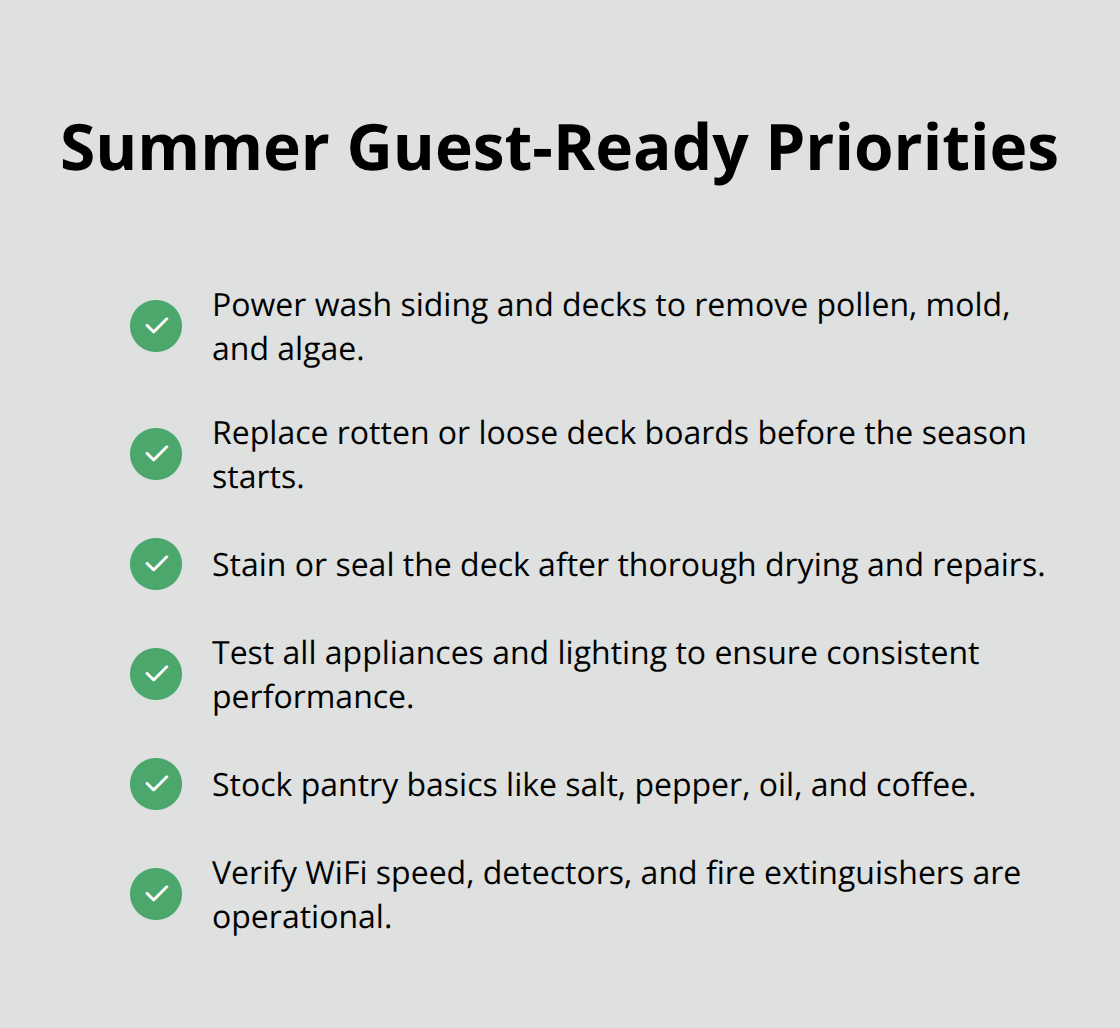
Pressure wash at 2,500-3,000 PSI to avoid damaging wood or shingles, and pay special attention to north-facing surfaces where mold grows thickest.
After washing, inspect the deck boards themselves for soft spots or protruding nails that indicate rot or fastener failure. University of Minnesota Extension research shows that wood rot spreads rapidly in Minnesota’s humid climate, so replace compromised boards now to prevent complete deck failure mid-season. Stain or seal the deck after washing and repairs dry completely, since this protects against UV damage and water infiltration that accelerates deterioration.
Inspect and Repair Dock and Waterfront Areas
Waterfront areas demand equally aggressive attention because dock damage or safety hazards create guest injuries and expensive liability claims. Check every board on your dock for soft wood, and test railings by applying firm pressure to confirm they resist movement. Loose fasteners on lifts or watercraft equipment can fail suddenly when loaded, so tighten every bolt and inspect for corrosion that weakens metal connections. Walk the shoreline and remove any sharp rocks, broken glass, or submerged hazards that could injure swimmers or damage boats.
Stock Supplies and Test All Appliances
Inside the cabin, test every appliance before guests check in-run the dishwasher through a full cycle, verify the refrigerator maintains proper temperature, and confirm the stove burners heat evenly. Stock the pantry with basics like salt, pepper, cooking oil, and coffee so guests do not face empty cabinets on arrival. Check that all light switches work, door locks function smoothly, and plumbing fixtures do not drip or leak.
A single leaking faucet wastes thousands of gallons over a summer season and signals poor maintenance to guests, damaging your reputation far beyond the water bill. Test internet speed and WiFi coverage throughout the cabin, since modern guests expect reliable connectivity even in remote locations. Verify that all safety equipment functions-test fire extinguishers, check that smoke and carbon monoxide detectors have fresh batteries, and confirm that first aid kits contain unexpired supplies.
With your cabin guest-ready and all systems tested, fall arrives faster than expected, which means you need to shift focus toward winterization and protecting your property against the harsh months ahead.
Fall Winterization: Protect Your Cabin From Freeze Damage
Fall is when most cabin owners make their costliest mistakes. You close up in October thinking everything is fine, then January arrives with temperatures dropping to minus 20 degrees, and frozen pipes burst inside walls where you cannot see them until spring thaw reveals thousands of dollars in water damage. The University of Minnesota Extension emphasizes that Minnesota’s freeze-thaw cycles create more stress on plumbing systems than sustained cold, because water expands as it freezes and contracts as it thaws, straining joints and fittings until they fail. Start winterization in mid-September when nighttime temperatures still hover above freezing, giving you time to work methodically without rushing through critical steps.
Shut Off Water and Drain All Lines
If you plan to occupy the cabin sporadically during winter, maintain a minimum indoor temperature of 55 degrees Fahrenheit continuously, because even brief power outages or heating failures can freeze pipes in uninsulated areas like rim joists or under-cabinet spaces. If you are closing the cabin entirely, shut off the main water valve immediately and drain every line by opening all faucets, including outdoor spigots and the lowest point in your plumbing system. Leave faucets open during draining to allow air to enter pipes and prevent vacuum pockets that trap water.
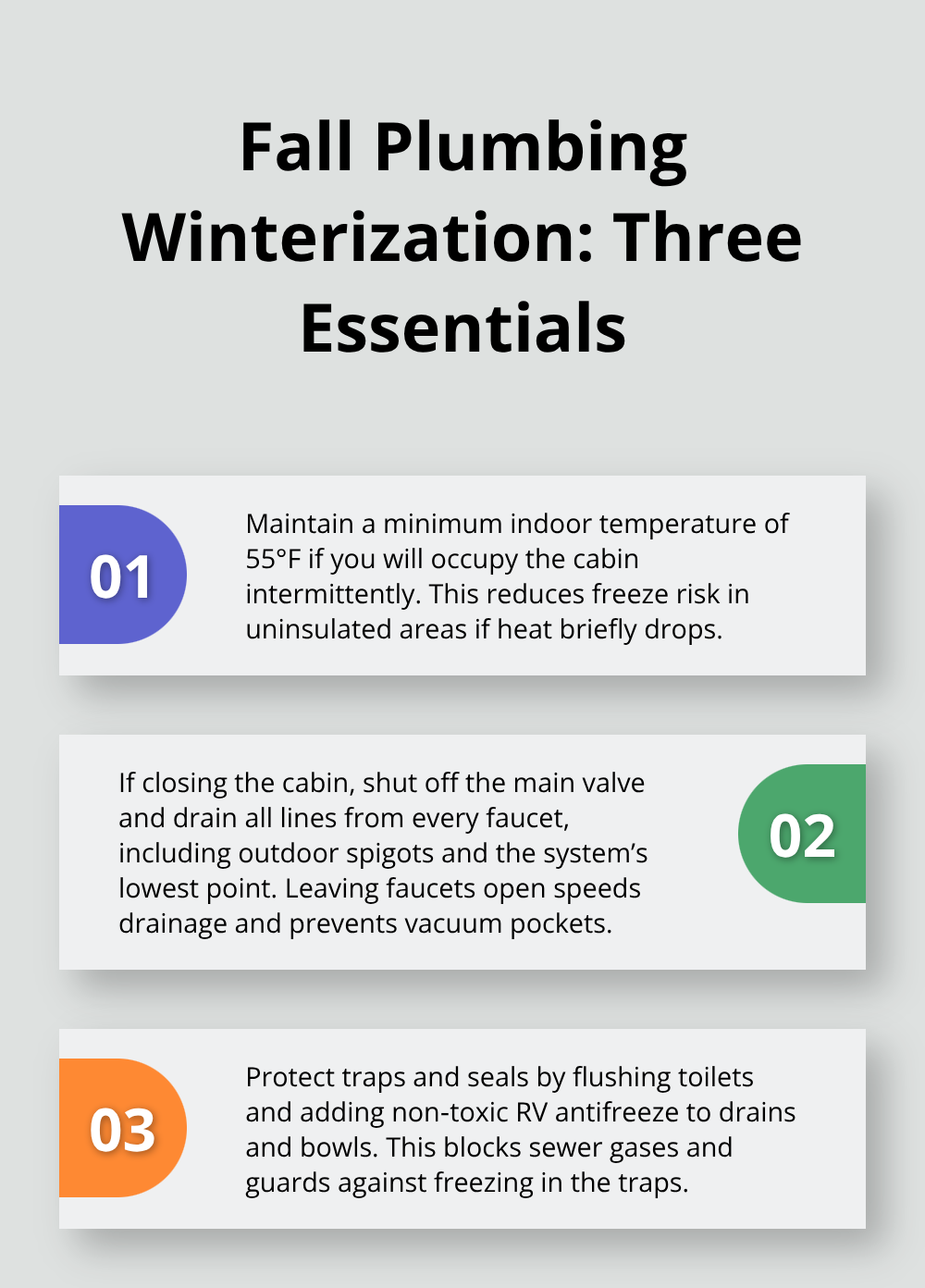
Flush the toilet multiple times to empty the bowl and tank completely, then pour non-toxic RV antifreeze down all drains and into the toilet to protect trap seals that prevent sewer gases from entering the cabin. Do not use automotive antifreeze, which is toxic and contaminates groundwater if it leaks into the soil.
The hot water tank requires complete drainage by opening the valve at the base and letting water run outside through a hose until the tank is empty, preventing corrosion and bacterial growth in stagnant water.
Seal Windows, Doors, and Vents Against Pests
Sealing windows and doors against cold air prevents heat loss that forces your furnace to run continuously, but more importantly it stops rodents and insects from entering your cabin during the winter months when they seek shelter. The University of Minnesota Extension identifies carpenter ants as a wood-damaging pest in Northern Minnesota, and they become active in spring after overwintering inside cabin walls where gaps and cracks provide entry points. Inspect every window frame for cracked caulk or separation from the wall, and replace weatherstripping that has become compressed or brittle. Check door frames where the door meets the threshold, as these gaps expand and contract with temperature swings and often develop cracks that invite pest entry.
Seal gaps larger than one-quarter inch with removable caulk that you can peel away in spring without damaging paint or wood, or use expanding foam for larger openings. Vents that allow air circulation during summer must be covered with removable screens or caps in fall to block insects while still allowing moisture escape, which prevents mold growth in stagnant air.
Service Your Septic System Before Ground Freezes
Your septic system requires attention before winter arrives, particularly in Northern Minnesota where ground freezing affects drainage. Have your septic tank pumped in late September or early October before the ground freezes, because a full tank cannot drain properly when soil temperature drops below 32 degrees. The Minnesota Pollution Control Agency recommends septic maintenance every three to five years for a typical household, but seasonal cabins with heavy summer use often need service annually. Clear the drainage field area of leaves, branches, and debris that can block water movement into the soil, and avoid parking vehicles or placing structures over the field where weight compacts soil and restricts drainage.
Test Sump Pumps and Clear Discharge Routes
If your cabin has a sump pump, test it before winter by pouring water into the pit and confirming the pump activates and discharges water outside and away from the foundation. Winter snow and ice can block discharge pipes, so position the outlet where meltwater flows downhill and away from the building foundation.
Final Thoughts
Seasonal cabin maintenance in Northern Minnesota protects your investment and keeps guests returning year after year. The tasks outlined in this checklist address the specific threats your property faces: winter freeze damage, spring water intrusion, summer guest safety, and fall pest entry. A burst pipe discovered in January costs far more than winterizing plumbing in September, and mold spreading through walls costs more than clearing gutters in spring.
We at Up North Property Management have managed hundreds of Northern Minnesota cabins, and the properties that maintain consistent guest satisfaction and strong rental income follow this seasonal rhythm. Guests notice when appliances work flawlessly, decks remain splinter-free, and water pressure flows strong-they leave five-star reviews and book again next year. Properties that skip maintenance develop reputations for problems, and word spreads quickly in the vacation rental market.
If managing these tasks yourself feels overwhelming, Up North Property Management handles the full scope of seasonal cabin maintenance alongside marketing, bookings, and cleaning, so your property stays guest-ready while you focus on enjoying your investment. Their team knows Northern Minnesota’s specific challenges and coordinates maintenance before problems develop. Your cabin deserves systematic protection to deliver reliable income and memorable guest experiences for decades.