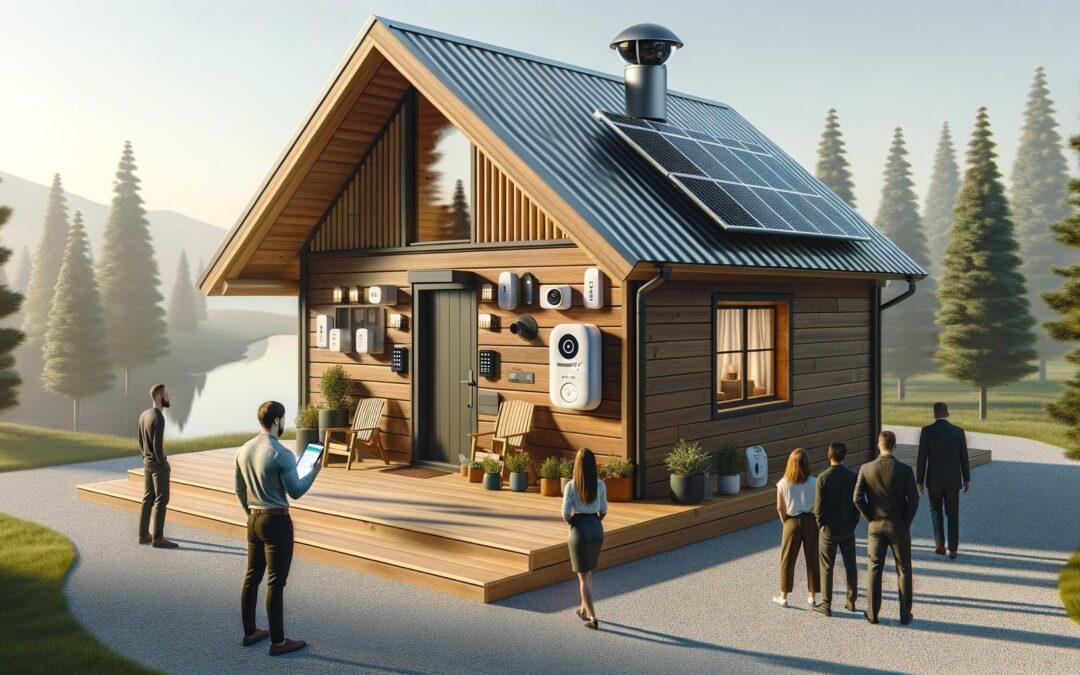
Remote cabins face unique security challenges that most homeowners never consider. Isolation, seasonal vacancy, and distance from emergency services create vulnerabilities that standard home security won’t address.
At Up North Property Management, we’ve seen firsthand how the right cabin security systems protect properties from theft, environmental hazards, and costly damage. This guide covers the essential technologies that keep remote cabins safe year-round.
What Technology Actually Protects Remote Cabins
Motion-activated cameras remain the most practical defense for remote cabins, but not all cameras work equally in isolation. Standard Wi-Fi cameras fail when internet drops, which happens regularly in remote areas.
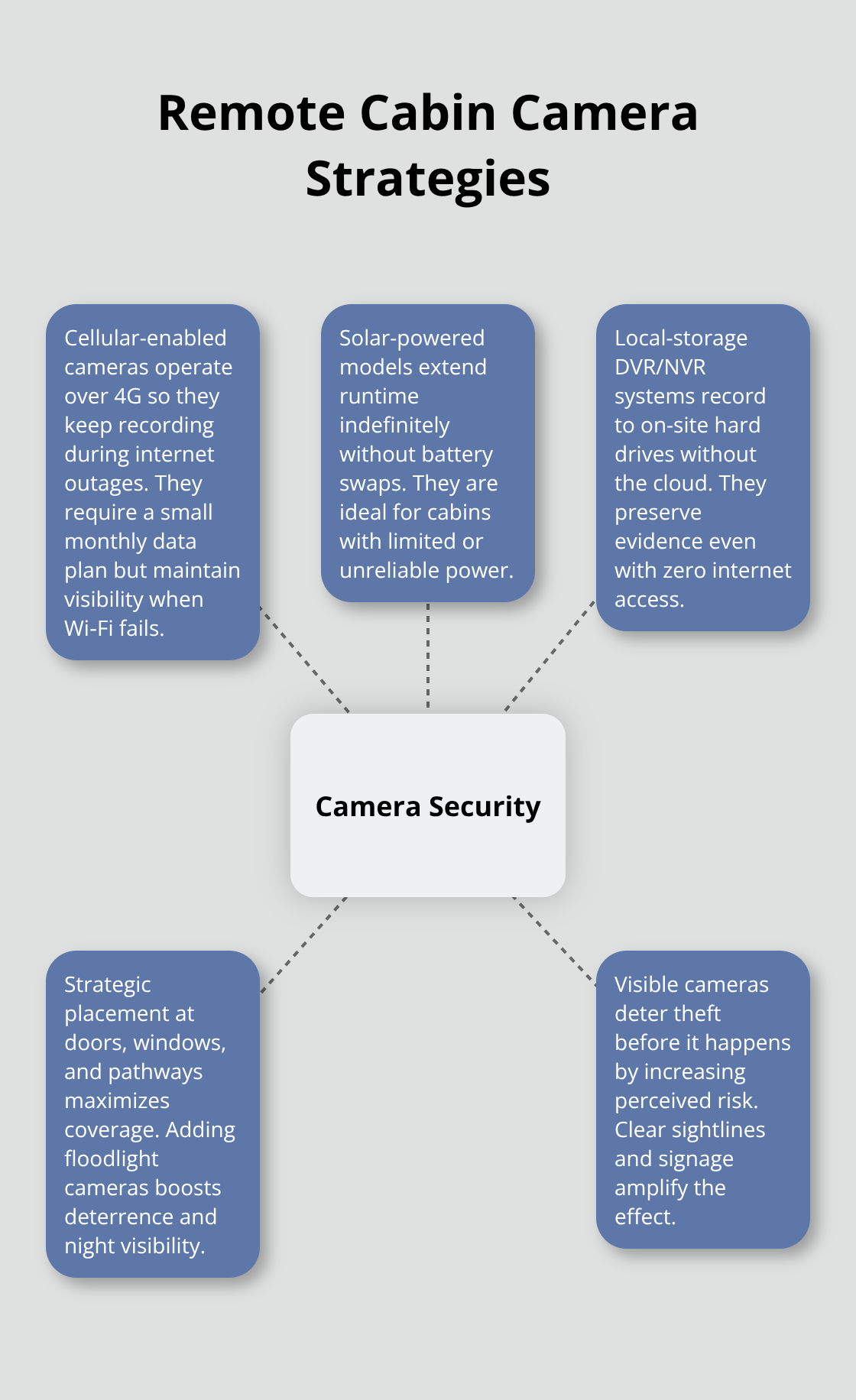
Cellular-enabled cameras like the Arlo Go 2 ($249) and Eufy 4G Starlight ($229) operate independently of your cabin’s internet connection, transmitting footage over 4G networks instead. These cameras require a data plan, typically costing $5–15 monthly, but that expense is negligible compared to theft losses. Solar-powered options extend operation indefinitely without battery replacement, making models like the Reolink Argus 4 Pro and Reolink Go Plus ideal for cabins with limited power access. Place cameras at entry points-doors, windows, and pathways-and add floodlight cameras for deterrence and night visibility. For true off-grid setups with zero internet, local-storage systems like Lorex’s offline DVR or Annnke’s 8-camera system ($260) store footage on hard drives without cloud transmission, eliminating data-breach risks entirely. Visible cameras deter theft before it happens.
Smart Locks Control Guest Access Remotely
Smart locks with temporary access codes solve the most common cabin security problem: managing keys for seasonal guests. Codes automatically expire on set dates, preventing unauthorized entry after checkout without requiring physical key retrieval. Ring and Yale smart locks integrate with most cabin security systems and support remote unlocking from your phone, critical when guests arrive late or lose access codes.
Environmental Sensors Prevent Costly Damage
Temperature sensors and freeze sensors protect against pipe damage during cold snaps, a genuine threat in remote mountain locations where burst pipes cost thousands to repair. Water leak sensors detect kitchen and bathroom leaks early, reducing water damage exponentially. Carbon monoxide detectors are non-negotiable for cabins with fireplaces, wood stoves, or gas heating, especially at elevation where CO accumulation poses serious health risks. Smoke detectors that alert both you and emergency services create a multi-layered safety net.
Professional Monitoring Provides 24/7 Protection
Professional monitoring services starting around $30 monthly provide 24/7 human oversight and rapid emergency dispatch, essential when you’re hours away from your property. These services often include guest-entry alerts, temperature drop notifications, and smoke detector status updates, giving you complete visibility into your cabin’s condition at all times. With the right combination of cameras, smart locks, and environmental monitors in place, your cabin gains the protection it needs-but only if you can access alerts and respond to threats in real time.
What Threatens Remote Cabins Most
Unoccupied properties attract criminals far more than occupied homes. The FBI Crime Data Explorer reported over 880,000 burglaries across the U.S. in 2023, with vacation properties representing prime targets because they sit empty for extended periods. Remote cabins compound this vulnerability-distance from police response means thieves operate with minimal interruption. Fire kills faster in isolated locations where emergency services take 30 minutes or longer to arrive, compared to urban response times under 5 minutes. Carbon monoxide poisoning escalates at elevation, where cabins with fireplaces, wood stoves, or gas heating systems accumulate CO more rapidly in thin air. Water damage from frozen pipes ranks among the costliest cabin emergencies, with burst pipes regularly exceeding $5,000 in repair costs. These three threats-break-ins, fire hazards, and water damage-account for the majority of remote cabin losses. Each requires different detection and response strategies, which is why layered security systems work better than single-point solutions.
Visible Cameras Deter Theft Before It Happens
Security cameras reduce theft risk dramatically. An Aberdeen-area trial cited in the NFU Mutual rural crime report found that off-grid CCTV systems reduced break-ins by approximately 72%.

Criminals avoid properties with visible cameras because detection risk rises sharply. Remote cabins need cameras that function during internet outages, however. Standard Wi-Fi systems fail precisely when isolation peaks. Cellular cameras like the Arlo Go 2 ($249) and Eufy 4G Starlight ($229) transmit footage over 4G networks regardless of your cabin’s connectivity status, costing $5–15 monthly for data plans. For properties with zero cellular coverage, local-storage systems bypass internet entirely-Annnke’s 8-camera DVR system costs around $260 and stores footage on hard drives without cloud transmission, eliminating remote viewing but preserving evidence on-site.
Smart Locks Eliminate Key-Related Break-Ins
Smart locks prevent key-related entry entirely. Temporary access codes that expire automatically eliminate the problem of guests leaving spare keys behind or unretrieved keys falling into wrong hands. This single feature stops more cabin thefts than any other security measure because most break-ins exploit known key locations. Ring and Yale smart locks integrate with most cabin security systems and support remote unlocking from your phone, critical when guests arrive late or lose access codes.
Fire and Carbon Monoxide Kill Faster at Elevation
Smoke detectors that alert emergency services directly save lives in remote locations. Standard battery-powered detectors cost around $50 for a six-pack, but connected smart detectors notify you and dispatch simultaneously, critical when you’re hours away. Carbon monoxide detectors are non-negotiable for any cabin with combustion appliances. At elevation, CO accumulates faster due to thinner air and altered draft patterns in wood stoves and fireplaces. Place detectors in sleeping areas and near fuel-burning appliances to catch dangerous levels before they spread. These systems cost under $100 total and prevent silent poisoning that kills without warning.
Temperature Sensors Prevent Catastrophic Pipe Damage
Temperature sensors prevent catastrophic damage by alerting you when indoor temperatures drop below 50 degrees, the threshold where pipes begin freezing. Freeze sensors specifically monitor vulnerable locations like crawl spaces and exterior walls. Water leak sensors in kitchens and bathrooms detect problems before they spread, reducing water damage costs exponentially. These three sensor types cost under $300 combined and connect to professional monitoring services that track conditions 24/7 even when you can’t access your phone. With these environmental protections in place, your cabin survives the harshest conditions-but only if you receive alerts and respond quickly when threats emerge.
How to Monitor Your Cabin When You’re Not There
Cameras and sensors mean nothing without real-time visibility. We see cabin owners install complete security systems, then fail to monitor them because the setup is too complicated or alerts disappear into email folders. The right monitoring solution transforms isolated hardware into an active defense system that responds to threats before damage occurs. Most remote cabins need three monitoring layers working together: local storage that preserves evidence without internet, cloud backup for remote access when connectivity exists, and professional monitoring that responds 24/7 when you cannot. This combination covers gaps that single-solution systems leave exposed.
Cellular-enabled cameras like the Arlo Go 2 and Eufy 4G Starlight transmit footage over 4G networks regardless of your cabin’s Wi-Fi status, but they still require you to check a mobile app manually to spot problems. Professional monitoring services starting around $30 monthly add human oversight that watches continuously, triggering emergency dispatch for fire alarms, CO detectors, and unauthorized entry without waiting for you to notice an alert. SimpliSafe and Vivint both offer vacation rental monitoring packages that include guest-entry notifications, temperature drop alerts, and smoke detector status updates, giving you complete visibility into your cabin’s condition at all times. Local storage through systems like Lorex’s offline DVR or Annnke’s 8-camera setup preserves footage on hard drives without cloud transmission, eliminating data-breach risks while providing evidence that survives internet outages. Unoccupied properties represent prime targets for burglary-distance from police response means criminals operate with minimal interruption unless someone actively monitors the property.
Mobile Apps Must Work Offline
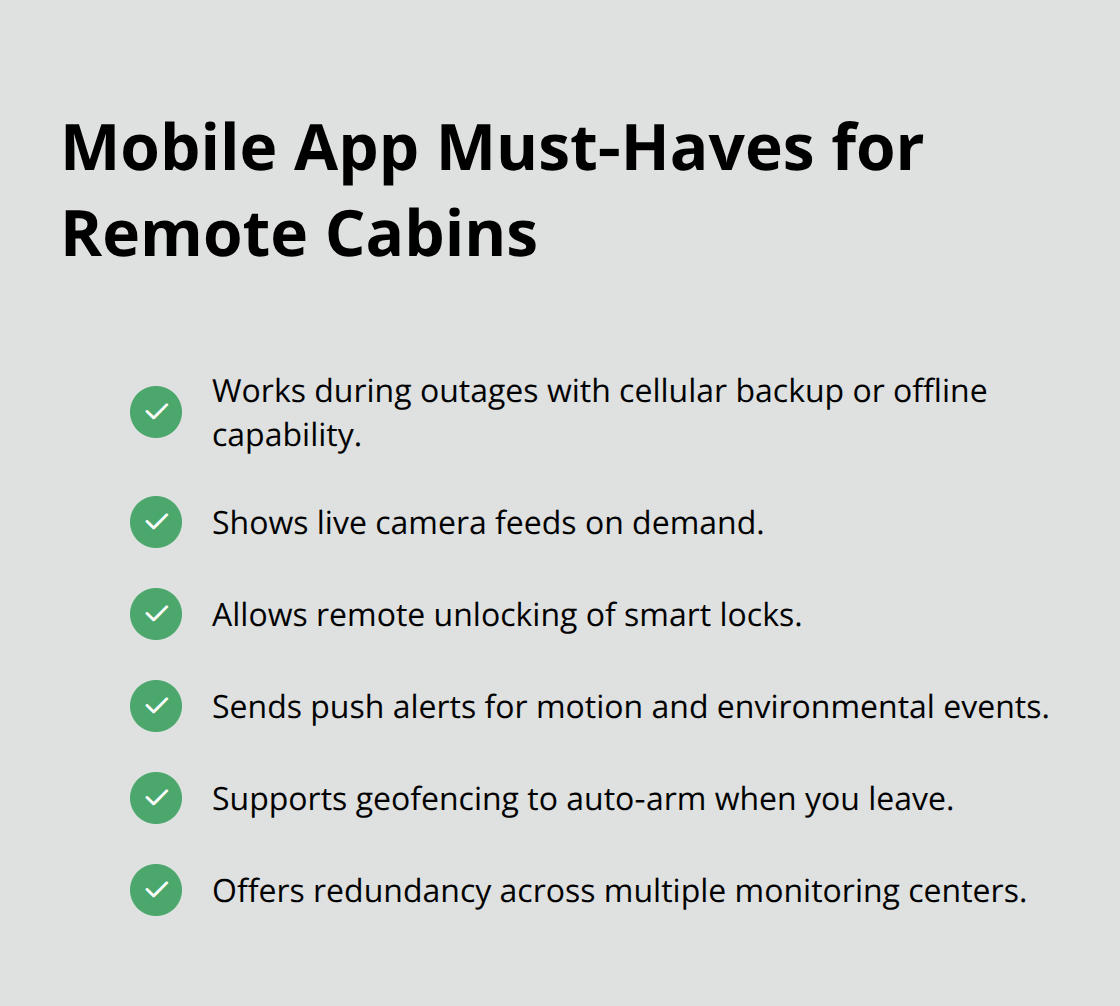
The critical mistake cabin owners make is choosing monitoring systems that depend entirely on cloud connectivity. When your cabin loses internet during a winter storm, your monitoring system becomes blind. Ring Alarm Pro includes a built-in Wi-Fi 6 mesh router with cellular backup, maintaining connectivity even when your primary internet fails. Cove Security operates without Wi-Fi entirely, using cellular connectivity starting at $19.99 monthly for monitoring, making it ideal for remote locations with spotty broadband. Test your chosen system’s offline functionality before relying on it-some apps display cached data for a few minutes while others go completely dark. Frontpoint enables geofencing to automatically arm your system when you leave your phone’s location, responding to threats without requiring manual intervention. ADT’s mobile app provides access across 12 monitoring centers, ensuring response capability even if one facility experiences issues. The app should display live camera feeds, permit remote unlocking of smart locks, and send push notifications for motion detection and environmental alerts.
Abode iota supports local storage and on-demand professional monitoring, meaning you can review footage stored locally even if cloud services fail temporarily.
Professional Monitoring Responds When You Cannot
Professional monitoring services dispatch emergency responders immediately when alarms trigger, a response time measured in minutes rather than hours. Unoccupied cabins cannot afford delayed response-fire spreads, CO accumulates, and burst pipes flood entire rooms while you drive toward your property. Vivint HomeProtect Pro includes 24/7 monitoring as standard with professional installation, managing cameras, locks, thermostats, and sensors through a single interface. SimpliSafe monitoring starts at $22.99 monthly without requiring long-term contracts, allowing flexibility if you sell or change security providers. Allstate, Progressive, and State Farm may offer home insurance discounts for installed security systems with professional monitoring, potentially offsetting monitoring costs entirely. Temperature sensors connected to professional monitoring services track your cabin’s condition 24/7 even when you cannot access your phone, alerting you to dangerous temperature drops before pipes freeze. Water leak sensors in kitchens and bathrooms trigger immediate notifications, giving you hours to respond before water damage spreads through walls and flooring. Smoke detectors that integrate with professional monitoring services alert emergency services directly, critical when you’re hours away from your property. The combination of environmental sensors plus professional monitoring creates a safety net that catches problems during your absence.
Final Thoughts
Remote cabin security requires layered protection that addresses theft, fire hazards, and water damage simultaneously. Cellular-enabled cameras, smart locks, environmental sensors, and professional monitoring work together to protect your property when you cannot be present. The investment in these systems typically ranges from $1,000 to $3,000 upfront, with monthly monitoring costs between $20 and $40, but insurance discounts from providers like Allstate and Progressive often offset these expenses entirely.
The real cost of inadequate cabin security emerges when theft occurs, fire spreads unchecked, or frozen pipes cause thousands in dollars in damage. Remote cabins sit empty for months at a time, making them prime targets for criminals who operate without interruption in areas where police response takes 30 minutes or longer. Professional monitoring services dispatch emergency responders immediately when alarms trigger, response times measured in minutes rather than hours, while temperature sensors alert you to dangerous drops before pipes freeze and smoke detectors notify emergency services directly when fire starts.
Start with motion-activated cameras at entry points, add smart locks to control guest access, and connect environmental sensors to professional monitoring (testing your system’s offline functionality before relying on it ensures cameras and alerts function during internet outages). If managing cabin security feels overwhelming, Up North Property Management handles maintenance, monitoring, and guest coordination for vacation rentals in Northern Minnesota, allowing you to focus on ownership rather than daily operations.