
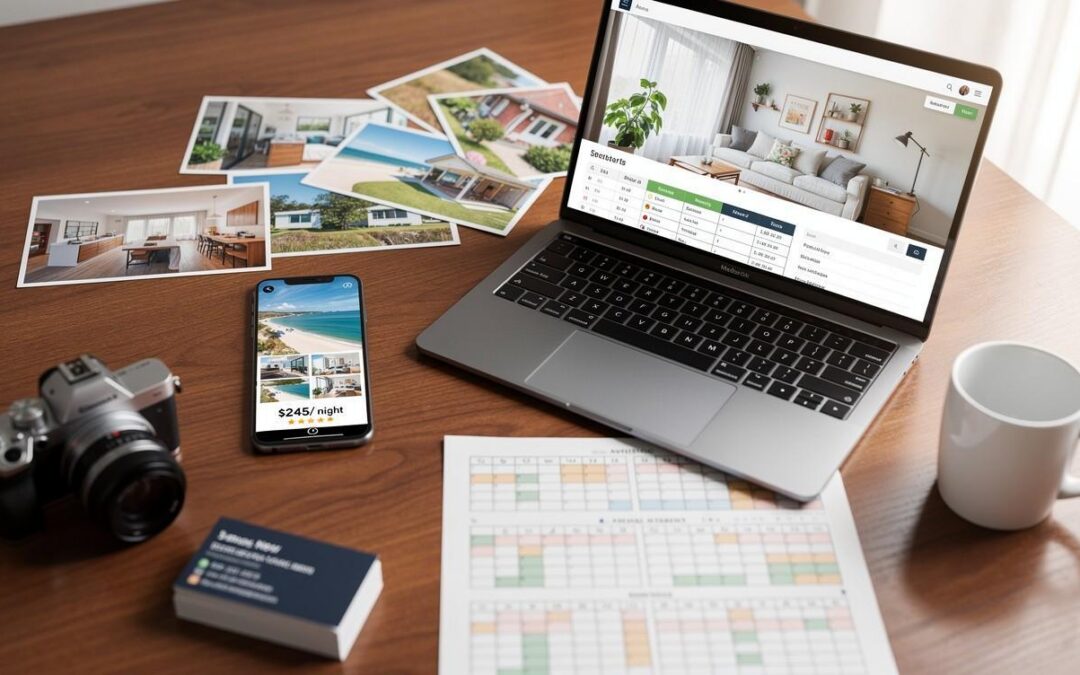
Vacation rental owners face a tough reality: listing your property isn’t enough to fill your calendar. You need a deliberate marketing approach that reaches guests across multiple channels and convinces them your property is worth booking.
We at Up North Property Management have seen firsthand how the right vacation rental marketing strategies transform occupancy rates and revenue. This guide walks you through the proven tactics that work.
Where Should You List Your Vacation Rental
The vacation rental market demands presence across multiple platforms, but not all platforms deserve equal attention. Most owners waste time maintaining listings on ten different sites when three or four drive ninety percent of bookings. Airbnb and Vrbo remain the dominant players, collectively capturing the majority of vacation rental searches across North America. Booking.com has expanded aggressively into vacation rentals and now accounts for significant volume in certain markets. Your direct website ranks third in importance because it eliminates commission fees that can reach fifteen to twenty-five percent per booking.
Build Your Direct Booking Channel First
Your website should function as a booking engine, not just a showcase. Most vacation rental owners treat their website as secondary marketing, but this approach costs money with every Airbnb reservation. A direct booking reduces your commission from twenty-five percent down to three to five percent, meaning a two-thousand-dollar booking nets you one hundred fifty dollars more when booked direct versus through Airbnb.
Tools like Airbnb’s booking widget or standalone platforms like Hostaway integrate your calendar across all channels simultaneously, preventing double bookings and reducing manual work. Email marketing to past guests generates repeat bookings at virtually zero cost. Guests who stayed once and had a positive experience book again at rates between thirty and forty percent higher than new guest conversions, according to hospitality data from Lighthouse.
Optimize Each Platform Differently
Listing quality varies dramatically across platforms. Airbnb’s algorithm heavily rewards detailed descriptions, complete amenity lists, and response times under one hour, which increases visibility in search results. Vrbo emphasizes professional photography and clear pricing structures without hidden fees. Booking.com prioritizes guest reviews and consistent availability calendars.

Your descriptions should highlight what makes your property distinct rather than repeating generic amenities every rental lists. Instead of saying spacious kitchen, specify stainless steel appliances, granite countertops, and that the kitchen seats six at the island. Pricing on each platform should reflect commission costs and local market rates (not a flat rate across all channels). This strategic approach to each platform sets the foundation for the next critical element: how you present your property visually and through compelling copy that converts browsers into bookers.
Professional Photography and Compelling Descriptions
Professional photography separates bookings from scrolls. Vacation rental guests make decisions in seconds while browsing hundreds of listings, and mediocre photos guarantee they move to the next property. Professional photographers typically charge between three hundred and eight hundred dollars for a vacation rental shoot, depending on property size and location. This investment pays back within two to three bookings.
High-Quality Photos That Convert Browsers to Bookers
Your photos should show the property in natural light during golden hour (early morning or late afternoon). Wide-angle shots of main living areas establish the overall feel, while close-ups of specific details set your rental apart. A photo of your espresso machine, heated towel racks, or fireplace tells guests they’re booking a well-maintained property, not a generic space. These details matter because they signal quality and care.
Virtual tours have become standard expectations. Matterport 3D tours cost between two hundred and five hundred dollars and allow guests to explore your property room by room before booking. Properties with virtual tours see booking conversion rates increase by twenty to thirty percent compared to photo-only listings.

Write Descriptions That Create Desire
Generic descriptions tank bookings. Instead of saying the master bedroom is spacious, write the master bedroom features a king bed with Egyptian cotton sheets, blackout curtains, and an ensuite bathroom with a rainfall shower and heated floors. Specificity creates desire and sets expectations accurately.
Your description should answer the questions guests actually ask: Where do I park? Is there a washer and dryer inside the unit or in a common area? Can I bring my dog? Are there stairs? How close is the lake or town? Airbnb’s algorithm favors listings updated within the last thirty days, so refresh your descriptions quarterly to maintain visibility.
Highlight local attractions honestly but strategically. Instead of generic mentions of hiking trails, name specific trails within fifteen minutes of your property. If your rental is near restaurants, name three to five specific places guests will actually want to visit. This approach attracts guests who want what your location offers, reducing cancellations from disappointed arrivals. The strongest descriptions weave amenities into lifestyle benefits: your hot tub becomes your private place to watch the sunset, and your proximity to downtown transforms into walkable dining and shopping without the parking hassle.
Alignment Between Photos and Descriptions Prevents Disappointment
Your photos and descriptions must align. If your description emphasizes the modern kitchen, your photos should show it prominently with clear detail shots. If you mention lake views, every relevant room should feature a photo showcasing that view. Inconsistencies between photos and descriptions trigger guest frustration and negative reviews.
Update photos annually or whenever you make significant upgrades. A fresh coat of paint, new furniture, or updated decor justifies new photos that reflect the current state of your property. Guests notice when photos look outdated, and they assume the property itself is outdated regardless of reality. Strong visuals and accurate descriptions work together to attract the right guests and set the stage for the next critical element: pricing your property strategically to maximize revenue while remaining competitive in your market.
Pricing Your Vacation Rental Without Leaving Money on the Table
Pricing vacation rentals based on gut feeling or copying competitors costs thousands annually. Successful vacation rental owners treat pricing as a dynamic lever that changes weekly based on demand, seasonality, and what similar properties charge. Most owners set a nightly rate in January and never adjust it, which means they undercharge during peak season and overprice during slow periods. This passive approach leaves money on the table every single month. Instead, adjust rates strategically and monitor your market constantly.
Research Your Market Before Setting Rates
Start by researching comparable properties in your area with similar size, amenities, and location. Tools like AirDNA provide market data showing average daily rates and occupancy percentages for specific neighborhoods, allowing you to position your pricing relative to competition rather than guessing. If comparable properties in your market average one hundred eighty dollars per night during shoulder season with seventy percent occupancy, pricing your property at one hundred forty dollars won’t fill your calendar faster-it signals lower quality. Conversely, pricing at two hundred twenty dollars during low-demand weeks guarantees empty nights and lost income.
Build Your Pricing Structure Around Seasonality
Seasonality determines your pricing structure more than any other factor. Northern vacation markets see dramatic fluctuations: summer weekends command premium rates while January midweek nights struggle to book at any price. Establish your base rate for your slowest season, then build multipliers for different periods. Summer weekends might run one hundred fifty percent of base rate, summer weekdays one hundred twenty-five percent, and winter midweek nights at eighty percent. This tiered approach captures maximum revenue during high-demand periods while remaining competitive when demand drops.

Optimize for Revenue, Not Occupancy
Track your actual occupancy rates weekly using your booking platform data. If you consistently book at ninety-five percent occupancy, your rates are too low-raise them by ten to fifteen percent and expect occupancy to drop to eighty to eighty-five percent while your total revenue increases. Conversely, if occupancy drops below sixty percent, your rates exceed what the market will bear.
Most vacation rental owners optimize for occupancy when they should optimize for revenue per available night. A property booked at seventy percent occupancy at two hundred dollars per night generates more revenue than ninety percent occupancy at one hundred sixty dollars per night. The math is straightforward: one hundred forty-six nights at two hundred dollars equals twenty-nine thousand two hundred dollars versus one hundred sixty-four nights at one hundred sixty dollars equals twenty-six thousand two hundred forty dollars.
Adjust Rates Based on Booking Patterns
Adjust rates quarterly based on booking patterns from the previous season, and implement weekly micro-adjustments during peak demand periods when rates should spike further. This approach combined with accurate market research prevents the common mistake of leaving money on the table during your strongest booking windows.
Final Thoughts
The vacation rental marketing strategies outlined here work because they address what actually drives bookings: visibility across the right platforms, professional presentation, and pricing that captures market demand. Owners who implement all three elements consistently outperform those who focus on only one or two. Your direct booking channel reduces commissions and builds guest relationships that generate repeat bookings at higher conversion rates.
Professional photos and detailed descriptions convert browsers into bookers by setting accurate expectations and highlighting what makes your property distinct. Dynamic pricing captures maximum revenue by adjusting rates weekly based on demand rather than guessing at a static price. Consistency matters most-updating your listings quarterly, monitoring competitor pricing weekly, and refreshing your photos annually keeps your property competitive and visible.
Owners who treat vacation rental marketing as a one-time setup task watch their bookings decline as competitors improve their listings and market conditions shift. If managing all these elements feels overwhelming, Up North Property Management handles multi-channel marketing, bookings, guest services, and maintenance for vacation rentals across Northern Minnesota. Their approach lets homeowners focus on ownership while guests experience a memorable stay in the Northern Lakes Area.