
Minnesota’s vacation rental market is competitive, and standing out requires a smart approach to marketing. We at Up North Property Management know that hosts who combine seasonal tactics with strong listing optimization and guest loyalty strategies win more bookings.
This guide walks you through proven vacation rental marketing methods designed specifically for Minnesota properties. You’ll learn how to capitalize on seasonal demand, attract guests through better visibility, and turn one-time visitors into repeat customers.
Seasonal Marketing Tactics for Minnesota Properties
July Peaks-Price and Promote Aggressively
Minnesota’s vacation rental market swings dramatically across the calendar, and your marketing must move with it. July drives the highest revenue-properties average $4,138 monthly with occupancy around 61.8% and rates near $205 per night, according to AirROI 2026 data. This peak season attracts families seeking lake access, outdoor activities, and warm weather. Bookings for July typically arrive 48 days in advance, giving you a critical window to refine your listing, adjust pricing upward, and promote through paid channels and social media. Summer demand is real, but it’s also crowded. Competing properties flood the market, so differentiation matters.
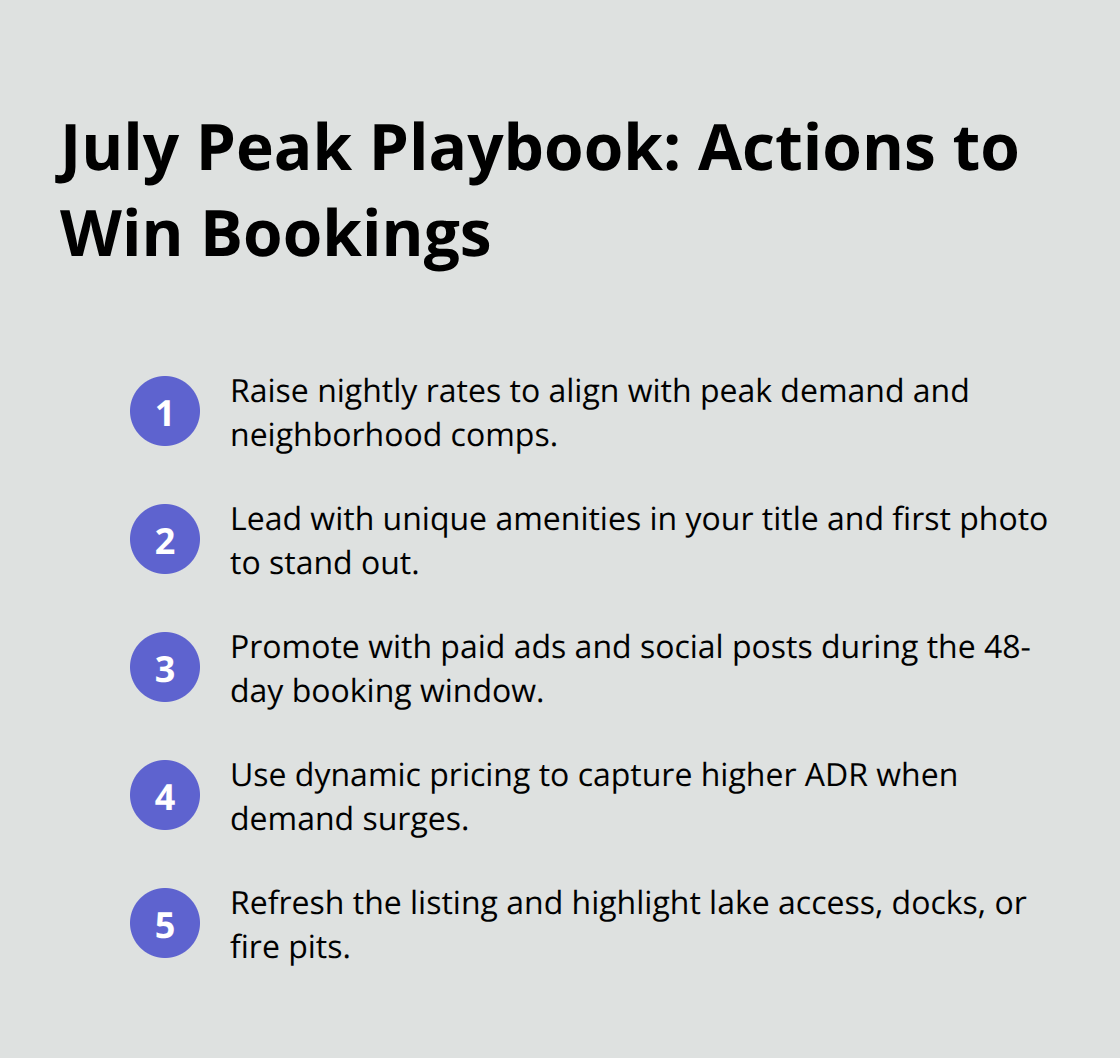
Emphasize unique amenities like lake frontage, boat docks, or fire pits in your titles and first listing images. Price strategically by researching comparable properties in your neighborhood and using dynamic pricing tools that adjust rates based on demand. Don’t leave money on the table during peak season-if your property can command $250 per night in July, charge it. Guests booking in June expect to pay premium rates for summer access, and undercutting yourself only signals lower quality to potential visitors.
February and Winter-Target Last-Minute Travelers
Winter and shoulder seasons demand entirely different tactics. February shows the shortest booking lead time at around 24 days, meaning last-minute travelers dominate this period. Create themed packages for winter getaways-cozy cabin retreats with hot tubs, ice fishing weekends, or cross-country skiing escapes. Offer 1-night minimum stays and midweek discounts during February and March to capture spontaneous bookings from regional guests escaping cabin fever.
Spring and Fall-Market Seasonal Activities
Spring and fall present underrated opportunities. While occupancy dips compared to summer, fewer hosts actively market during these seasons, so your visibility increases. Tailor your messaging to spring break families, fall color tourism, and hunting or fishing seasons. Highlight seasonal activities specific to your location-if you’re near Mille Lacs Lake, promote spring walleye fishing in April and May.
Extended Stays Year-Round-Offer Discounts
Extended-stay demand peaks year-round, and guests staying longer reduce your turnover and cleaning costs significantly. Offer extended-stay discounts of 15-20% for 30-day bookings and 25-30% for 60-day bookings across all seasons to attract remote workers and relocating families, not just summer tourists.
Stay Responsive-Update Weekly
Update your availability calendar monthly and adjust pricing weekly based on local events, weather patterns, and competitor activity. Properties that stay responsive and seasonal win bookings that static, one-price-fits-all listings never capture. Your next step is to ensure your listing itself stands out-high-quality photos and compelling descriptions are what convert browsers into bookers.
Optimizing Your Listing for Maximum Visibility
Your First Image Stops the Scroll
Your listing’s first image determines whether a potential guest clicks through or scrolls past. Professional photography acts as your conversion multiplier. The first image must showcase your property’s strongest feature: a sparkling lake view, a modern kitchen, or a cozy fireplace. Subsequent photos reveal layout and natural lighting in sequence, moving from common areas to bedrooms to bathrooms.
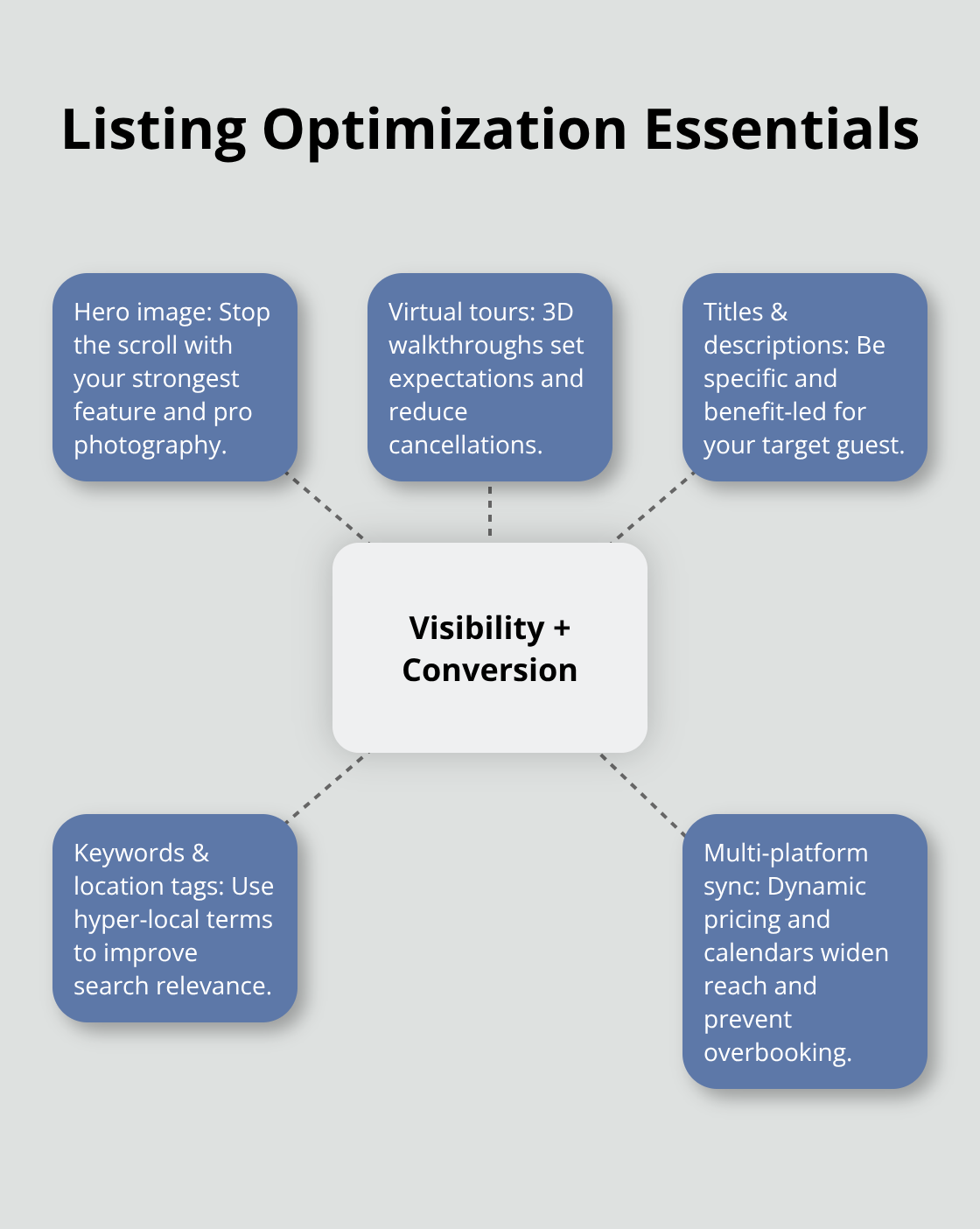
Test your photo order against viewer analytics on Airbnb or Booking.com; if guests click away after image three, reorder your gallery immediately.
Virtual Tours Reduce Cancellations
Virtual tours and Matterport 3D walkthroughs increase engagement dramatically and reduce cancellation rates because guests arrive knowing exactly what to expect. Properties with 3D tours convert at higher rates than static photo galleries alone. This transparency builds trust before guests commit to a booking.
Write Titles and Descriptions That Convert
Your title and description must work together to pull guests deeper into your listing. Avoid generic titles like “Cozy Minnesota Cabin”-instead, write something specific like “Waterfront Home on Mille Lacs Lake with Dock and Fire Pit.” Start your description with an emotional hook that speaks to your target guest: whether that’s families seeking safe swimming, remote workers needing fast WiFi, or hunters planning a fishing trip. Then detail amenities and nearby attractions. Mention that fast WiFi is available (guests rate communication and value as top factors influencing their choice), proximity to state parks, local restaurants within walking distance, and seasonal activities.
Location Tags and Keywords Drive Search Relevance
Keywords matter enormously. Tag your listing with location-specific terms like “Mille Lacs Lake cabins,” “Whitefish Chain rentals,” or “North Loop vacation homes” depending on where your property sits. These hyper-specific tags improve search relevance for Minnesota audiences actively looking for properties in exact locations. Update your entire listing monthly-refresh photos seasonally, adjust tags for current events, and tweak descriptions based on guest feedback. Properties that signal activity through regular updates rank higher in platform algorithms than stagnant listings.
Synchronize Pricing Across Multiple Platforms
Dynamic pricing tools synchronize across multiple platforms simultaneously, ensuring your rates stay competitive without manual updates across Airbnb, Vrbo, and Booking.com. Hosts who manage calendars and pricing across multiple channels prevent overbooking disasters and capture bookings that single-platform listings miss entirely. Once your listing attracts clicks and conversions, your next priority is turning those bookings into five-star reviews and repeat customers-a strategy that compounds your visibility over time.
Building Guest Loyalty and Generating Repeat Bookings
Respond to Reviews Within 48 Hours
Guest reviews are the currency of trust on every platform, and Minneapolis vacation rental listings average 4.8 out of 5 stars. The difference between a 4.7 and a 4.9 rating directly impacts your search ranking and booking conversion rate. Properties with strong communication ratings (averaging 4.89) and value ratings (averaging 4.74) rank higher in platform algorithms and attract guests willing to pay premium rates.
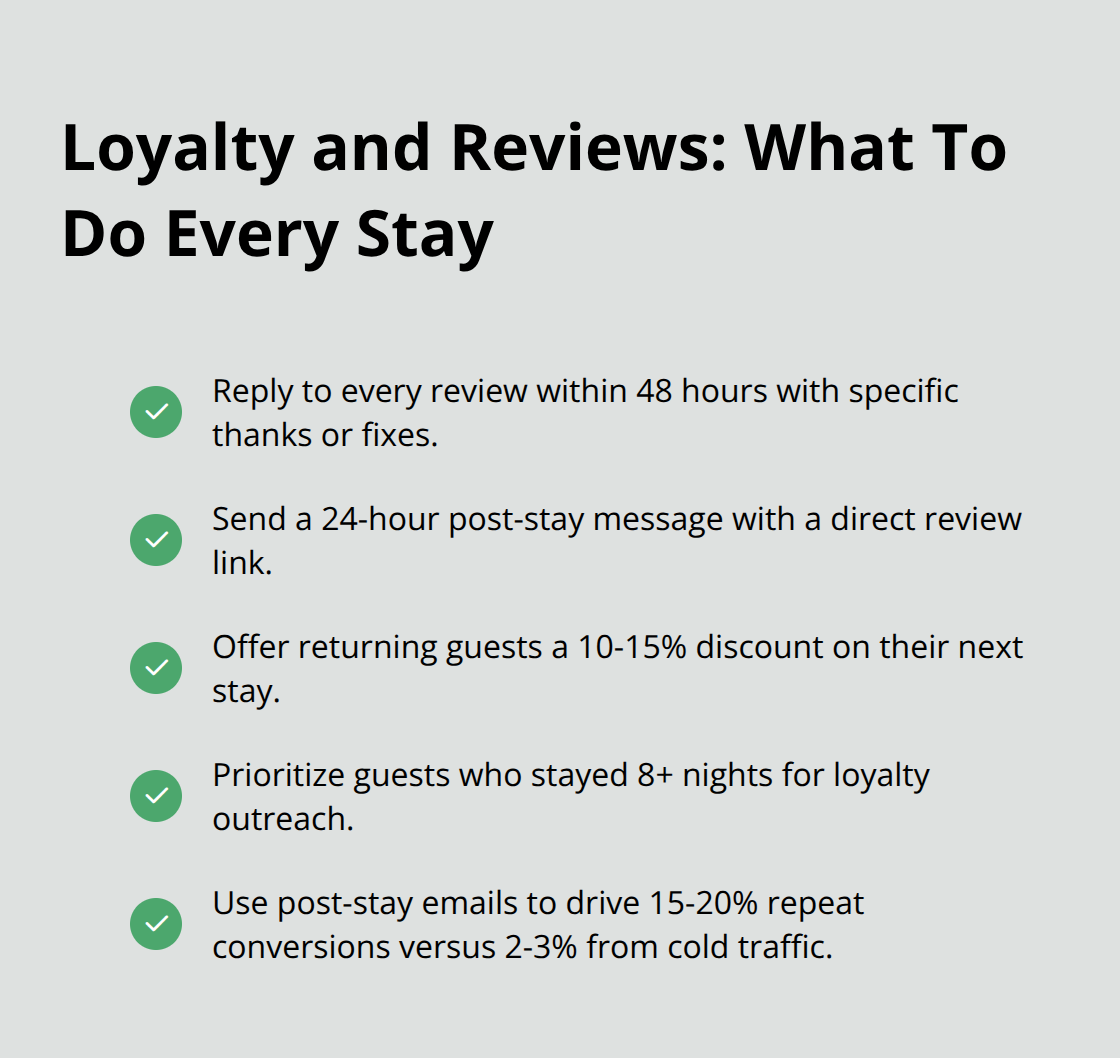
Respond to every review within 48 hours, even negative ones. A thoughtful reply to a three-star review shows potential guests that you take feedback seriously and actually improve. When a guest praises your cleanliness or WiFi speed, thank them specifically and mention the upgrades you’ve made. This public dialogue builds trust with future bookers scrolling your listing.
Request Reviews Strategically
Don’t wait for guests to leave reviews on their own. Send a post-stay message 24 hours after checkout with a direct link to the review page and a specific request-ask them to mention what surprised them most about the property. Guests respond better to genuine questions than generic review requests.
On Airbnb and Booking.com, listings with 50+ reviews significantly outrank those with fewer than 20, so volume matters. Properties with the Guest Favorite badge (39.3% of Minneapolis listings carry it) earn it through consistent five-star ratings and engagement. If you manage multiple properties, prioritize reviews for your weakest performer first.
Offer Loyalty Discounts for Returning Guests
Repeat guests spend less on marketing and produce more revenue per property. Offer returning guests a 10-15% discount on their next stay, clearly communicated in your post-stay email. Create a separate email sequence for repeat bookers that highlights new amenities, seasonal updates, or upcoming local events.
A guest who stayed in July for fishing season will likely return in spring for walleye season, so message them in March with a specific offer. Track repeat guests manually in a spreadsheet or use your channel manager’s guest database to identify patterns. Guests staying 8+ nights are far more likely to rebook than one-night visitors, so prioritize longer-stay guests for loyalty outreach.
Craft Post-Stay Emails That Convert
Send your post-stay email within 24 hours of checkout while the experience remains fresh. Include a high-quality photo of your property, a specific thank-you mentioning something they did during their stay, and a direct link to book their next visit. This email becomes your most powerful marketing tool because acquisition costs are zero and conversion rates on repeat bookings reach 15-20% compared to 2-3% for cold traffic.
If your property has unique amenities like a hot tub or lake dock, mention seasonal uses in your follow-up emails. A guest who loved your fire pit in August should hear about winter s’mores and hot tub access when you reach out in December.
Final Thoughts
Vacation rental marketing in Minnesota succeeds when you align seasonal pricing with guest expectations, optimize every element of your listing, and treat reviews as your most valuable asset. Minneapolis properties averaging 4.8 stars with strong communication ratings command higher nightly rates and occupy more nights annually than lower-rated competitors. Extended-stay discounts attract remote workers and relocating families who book 30 to 60 days at a time, reducing your turnover costs and marketing spend per night.
Your competitive advantage lies in specificity. Generic listings describing a cabin near a lake lose to hosts who mention Mille Lacs walleye fishing in spring, July family reunions with dock access, or February ice fishing weekends. Guests searching for Minnesota rentals want to know exactly what they’ll experience, and your job is to show them through professional photos, detailed descriptions, and consistent five-star reviews that prove you deliver on your promises.
Implementing these strategies requires discipline but not complexity. Start by updating your listing photos and title this week, adjust your pricing for the next season, and send a thoughtful review request to your last guest. If managing multiple properties or coordinating seasonal campaigns feels overwhelming, Up North Property Management handles marketing, bookings, cleaning, and maintenance for vacation rentals across Northern Minnesota, allowing you to focus on ownership while we maximize your property’s income potential.