
The vacation rental property manager job description covers far more than most people realize. From handling guest complaints at midnight to coordinating maintenance crews, the role demands a unique mix of customer service, technical skills, and problem-solving ability.
We at Up North Property Management know that understanding what this job actually involves is the first step toward building a successful career in the vacation rental industry. This guide breaks down the real responsibilities, required skills, and earning potential you’ll encounter.
What Vacation Rental Property Managers Actually Do Every Day
Managing Guest Communication Across Multiple Platforms
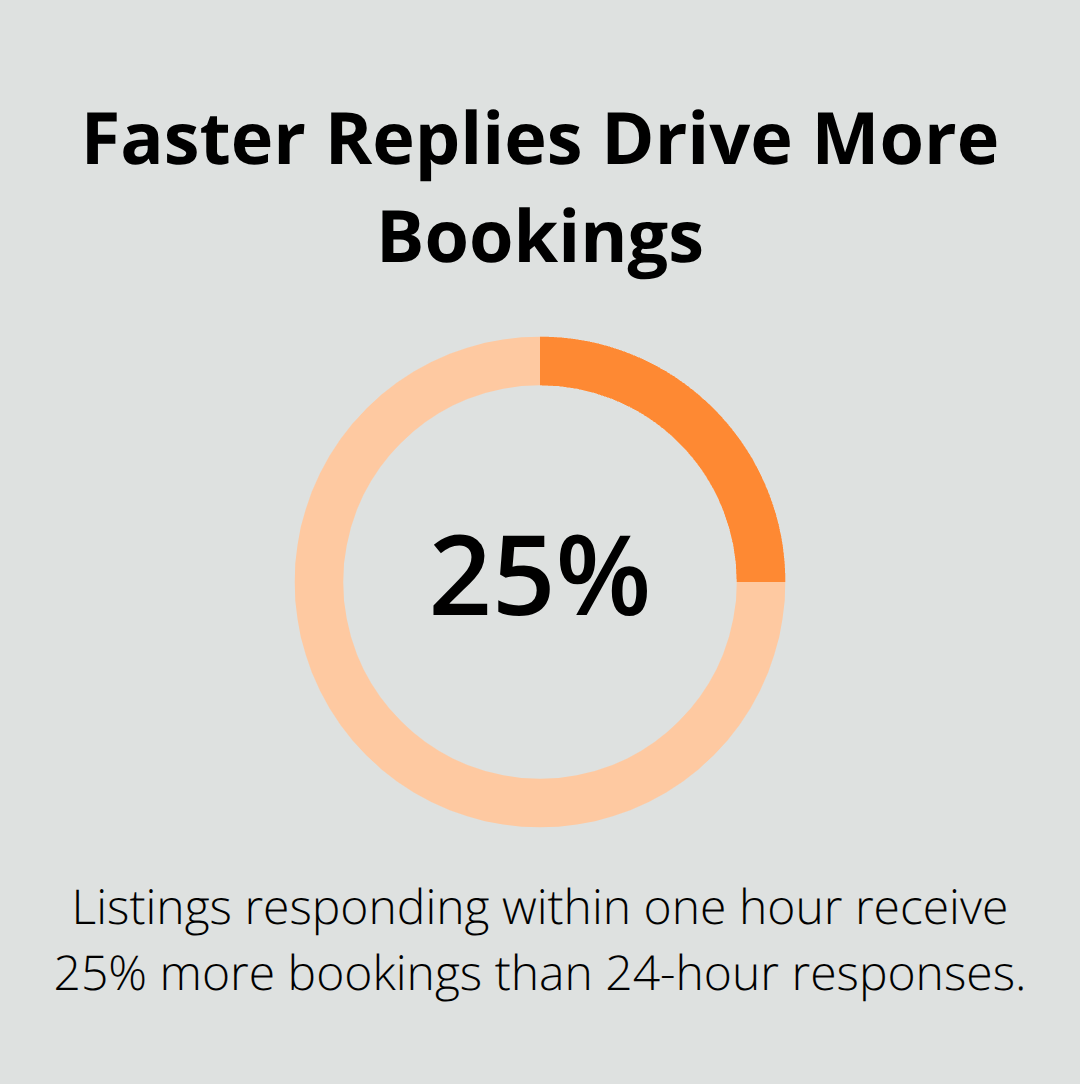
Property managers field inquiries across multiple platforms simultaneously-Airbnb messages, Vrbo emails, direct website submissions-and response speed directly affects booking conversion. Research shows that properties with response times under one hour receive 25% more bookings than those responding within 24 hours. Managers handle guest questions about pet policies, parking, WiFi speeds, and checkout procedures at all hours. The role demands constant attention before anyone even books.
Solving Problems in Real Time
During stays, managers resolve issues immediately: a guest discovers a broken coffee maker at 7 PM, the AC isn’t cooling properly, or they can’t figure out the smart lock. Managers prioritize rapid issue resolution, which builds the positive reviews that drive future bookings. This rapid response separates properties that maintain high occupancy from those that struggle with cancellations and negative ratings.
Synchronizing Calendars and Managing Pricing
Calendar management runs parallel to guest communication. Managers synchronize availability across Airbnb, Vrbo, Booking.com, and Expedia to prevent double bookings-a catastrophic mistake that costs money and reputation. Property management systems like Hostaway or Guesty automate much of this work, but managers still monitor pricing, adjust rates based on demand patterns, and coordinate turnover windows between guests. Dynamic pricing tools analyze demand signals and competitor rates to maximize revenue; a property priced $50 too low for peak season means thousands in lost annual income.

Scheduling Maintenance and Building Contractor Networks
Maintenance and inspections happen on a schedule, not in crisis mode. Smart property managers inspect properties every 30 to 60 days, checking for water damage, HVAC performance, appliance wear, and guest-caused damage before small problems become expensive repairs. Managers build relationships with reliable contractors-cleaners, plumbers, electricians-who respond quickly when issues arise. Turnover cleaning between guests must be flawless; a guest arriving to dirty sheets or a bathroom with soap scum tanks ratings immediately.
Connecting Cleanliness to Revenue
Properties with consistent 4.8+ star ratings command higher nightly rates and fill more nights annually than properties rated 4.5 or below. This connection between operational excellence and income potential shapes how successful managers prioritize their daily work. The skills required to manage these responsibilities demand both technical knowledge and interpersonal finesse.
What Skills Actually Matter in This Role
Master Software Platforms Through Strategic Use
Property managers need to work efficiently within software platforms, not memorize every button. Hostaway, Guesty, and iPropertyManagement handle calendar syncing, but a manager who understands pricing logic operates these tools strategically. The difference between a manager earning $45,000 annually and one earning $75,000 often comes down to how they use data from these platforms. A manager who pulls occupancy reports, identifies pricing gaps, and adjusts rates weekly outperforms one who sets prices once monthly.
Technical proficiency also extends to using Google Sheets or Airtable to track maintenance schedules, vendor performance, and guest feedback patterns. The ability to spot trends in your data matters more than clicking around in software.
Build Systems to Organize Information Across Properties
Property managers working with multiple listings need systems to organize information. A spreadsheet tracking which contractor fixed what issue at which property prevents costly repeat mistakes and helps you negotiate better rates with reliable vendors. Email management tools like Gmail filters or Slack integrations keep communication organized across channels. Without organization systems, urgent messages get buried, guests wait for responses, and maintenance requests sit unaddressed.
Strong organizational skills also mean maintaining detailed property checklists before and after each guest stay. Properties with documented inspection records catch problems early, prevent guest complaints, and build evidence if disputes arise over damage claims.
Stay Calm and Respond Fast During Crises
Crisis management separates average managers from excellent ones. When a guest arrives to find no hot water, a manager who stays calm, documents the problem, arranges immediate repair, and offers a partial refund or discount on future stays salvages the booking and the review. Panic and delays guarantee negative ratings and refund demands.
Experienced managers develop decision trees for common problems: guest lockout situations, noise complaints from neighbors, cleaning failures, and appliance breakdowns. Problem-solving speed matters because every hour a guest waits for resolution increases frustration. Managers who have relationships with emergency contractors who respond within two hours prevent catastrophic reviews.
Prevent Crises Through Proactive Inspection
The ability to think ahead prevents many crises entirely. A manager who inspects properties every 45 days, tests smart locks monthly, and schedules HVAC maintenance before peak season avoids emergency situations that derail operations. Attention to detail extends to guest communication as well. Reading a guest inquiry carefully to catch that they need accessible parking, pet-friendly spaces, or high-speed internet for remote work means you avoid mismatches that create problems during stays. Small oversights in communication create large problems in guest satisfaction.
These foundational skills set the stage for understanding what the job market actually pays and where the industry is heading.
What Vacation Rental Managers Actually Earn
Salary Ranges Across Experience Levels
Compensation in vacation rental management splits into two distinct paths: salary-based positions and commission-driven ownership models. Salary-based property managers working for established companies typically earn between $40,000 and $65,000 annually, with the range reflecting experience, property portfolio size, and market location. Managers handling four to six properties in competitive markets like Colorado or Florida tend to land closer to $60,000, while those managing two to three properties in smaller markets average $45,000.
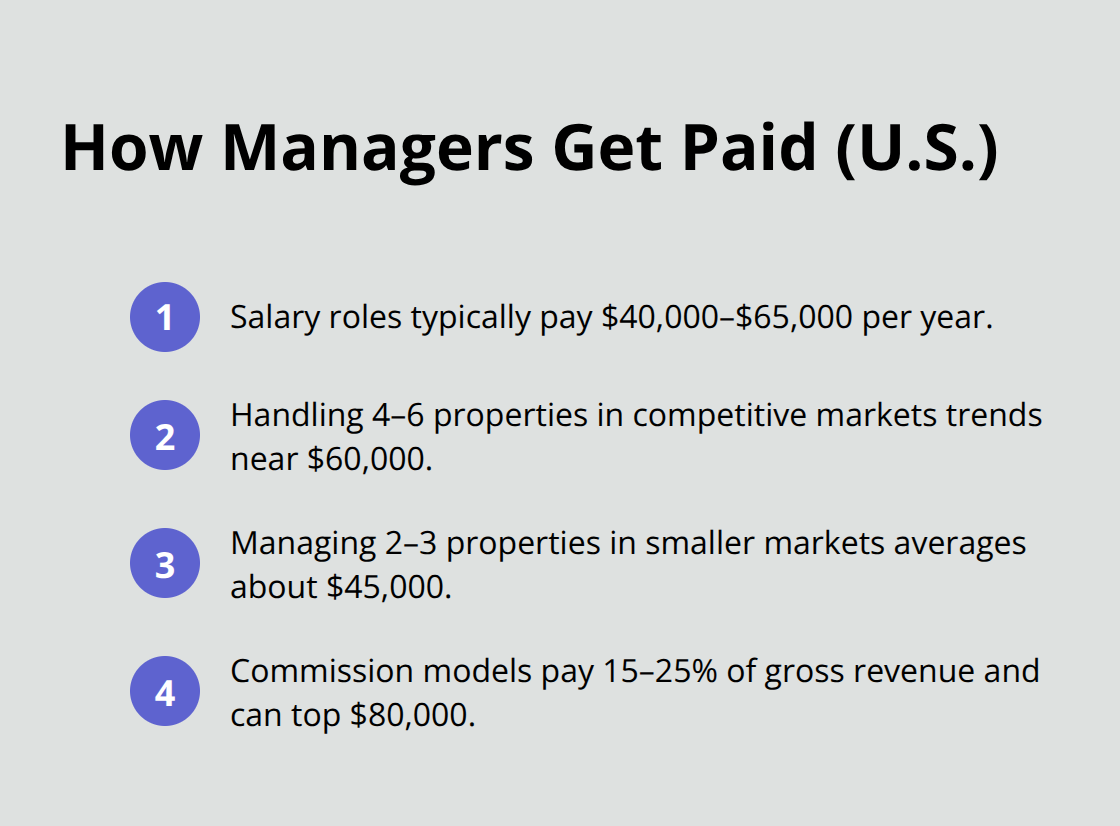
Commission structures vary widely; some companies pay 15-25% of gross rental revenue after expenses, which can exceed $80,000 annually for managers handling high-performing portfolios.
How Performance Directly Impacts Your Paycheck
The critical difference between earning $45,000 and $75,000 comes down to three factors: how many properties you manage, how efficiently you optimize pricing and occupancy, and whether you work for a company offering commission incentives. Managers who master dynamic pricing strategies and maintain occupancy rates above 75% consistently earn more because revenue-generating skills directly impact their compensation. A manager who pulls occupancy reports, identifies pricing gaps, and adjusts rates weekly outperforms one who sets prices once monthly-and that performance difference translates directly to higher annual income.
Industry Growth Creates New Opportunities
The US short-term rental market shows steady year-over-year growth in both supply and demand, indicating rising job opportunities across all management levels. This expansion creates advancement paths that didn’t exist five years ago. Entry-level positions start with single-property or guest services roles paying $35,000-$45,000, but managers who demonstrate pricing expertise and high occupancy rates advance to managing larger portfolios within 18-24 months, jumping to $65,000-$85,000 compensation.
Career Paths to Higher Income
Experienced managers transition into revenue management specialist roles, focusing solely on pricing optimization across multiple properties, which commands $70,000-$75,000 salaries. Others move into operations director positions overseeing entire regional teams, earning $80,000-$120,000 depending on company size. The most lucrative path involves building your own vacation rental portfolio and managing it professionally, where top-performing owners earn $100,000+ annually from properties they own outright (though this requires capital investment and carries personal financial risk).
The Safest Route to Higher Earnings
Working for established companies that provide portfolios to manage, offer commission structures, and have training systems to help you develop the technical and operational skills that drive higher earnings remains the safest path to higher income. Remote staffing solutions have reduced hiring costs by up to 60% compared to local hires, which means some companies now reinvest those savings into higher manager compensation rather than keeping it as profit.
Final Thoughts
The vacation rental property manager job description demands technical proficiency with booking software, strong organizational systems, and the ability to solve problems under pressure. Managers who pull occupancy reports, identify pricing gaps, and adjust rates weekly outperform those who set prices monthly-a performance difference that translates to $20,000 to $30,000 in annual compensation. The US short-term rental market shows steady year-over-year growth, creating advancement opportunities that didn’t exist five years ago.
Entry-level positions start at $35,000 to $45,000, but managers who demonstrate pricing expertise and maintain occupancy above 75% advance to $65,000 to $85,000 within 18 to 24 months. Revenue management specialists and operations directors earn $70,000 to $120,000 depending on company size and scope. Building your own portfolio demands capital investment and carries personal financial risk, though top performers earn $100,000 annually.
Working for established companies that provide portfolios, offer commission structures, and have training systems remains the safest path to higher income. Start by mastering one property management platform deeply, building relationships with reliable contractors, and developing systems to organize information across multiple listings. Up North Property Management handles full-service operations that allow property managers to focus on optimization and growth.