
Owning a lake cabin in Minnesota sounds like a dream, but the financial reality is far more complex than most people realize. Between purchase prices, property taxes, maintenance, and utilities, lake cabin costs add up quickly-and many owners miss the hidden expenses entirely.
At Up North Property Management, we’ve helped countless cabin owners understand their true costs and find ways to offset them. This guide breaks down every expense you’ll face, from the initial purchase through ongoing operations.
What Are Lake Cabin Prices and Taxes in Minnesota?
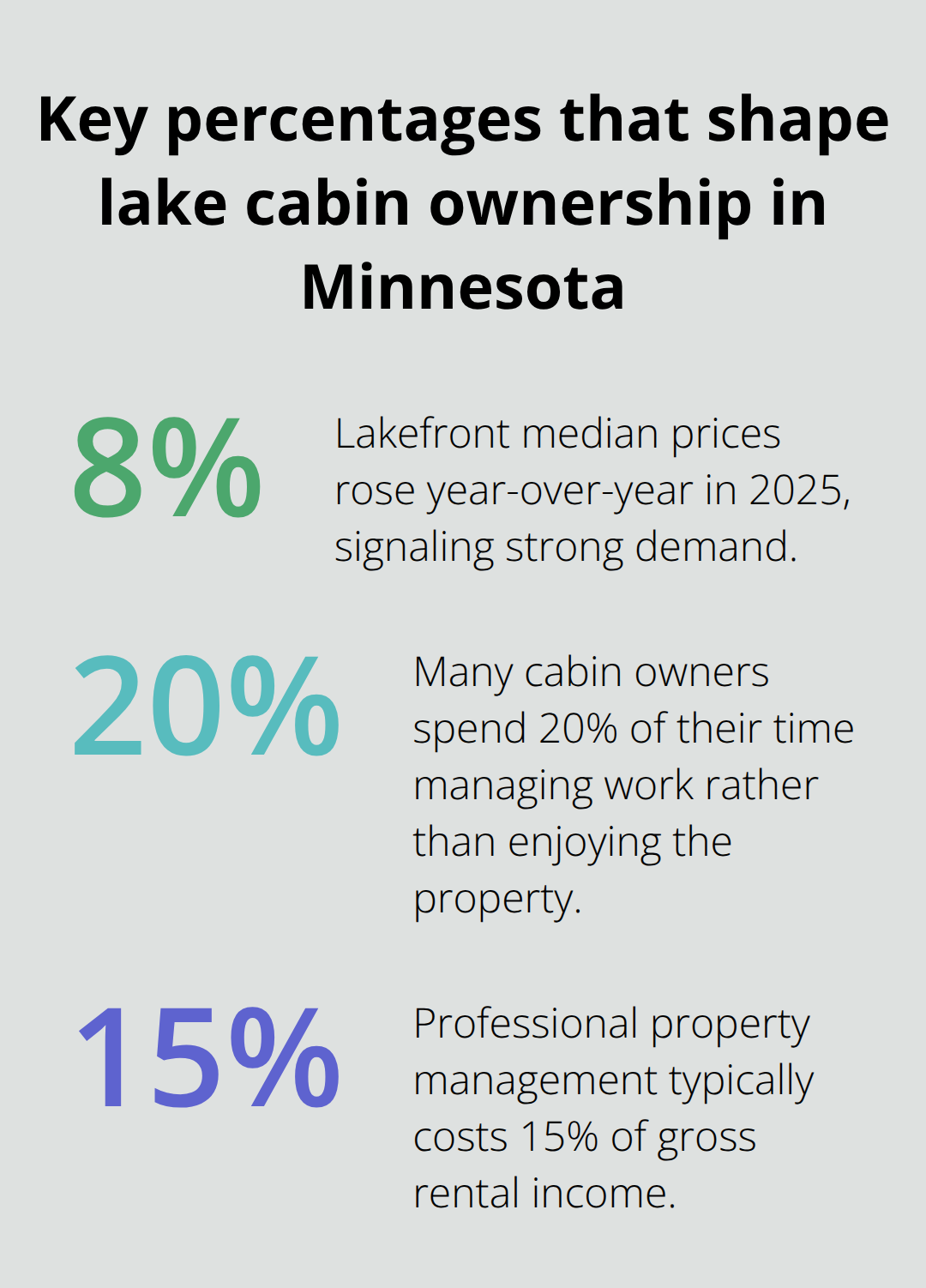
Minnesota lakefront property commands a significant premium over inland homes. In 2025, the median lakefront home sold for approximately $550,000 statewide, compared to $366,900 for regular homes, creating a $183,100 waterfront premium. This gap reflects limited developable shoreline across Minnesota’s 11,842 lakes. Entry-level lakefront cabins typically start in the $300,000 to $500,000 range, making them the most competitive segment. The Brainerd Lakes Area offers higher-priced inventory, with average listings around $878,795, while Twin Cities metro lakefronts command $900,000 to $3,000,000 or more, particularly around Lake Minnetonka. Lakefront values appreciate roughly twice as fast as inland properties. In 2025 alone, lakefront median prices rose 8% year-over-year, signaling strong demand. When you evaluate total cost of ownership, factor in that waterfront land is often leased rather than owned outright, with typical monthly lease costs ranging from $200 to $500 depending on location and lease length.
Property Taxes Rise Faster Than You Anticipate
Property taxes on Minnesota lake cabins exceed those on inland homes, driven by premium assessed values and complex state funding mechanisms. Minnesota’s Local Government Aid system has faced cuts since 2003, forcing rural and lake-rich communities to rely increasingly on local property levies. This means your tax bill can rise even if your property value remains flat, because declining state aid shifts costs to property owners. Tax burdens also shift unevenly within districts when some properties appreciate faster than others. For lake cabin owners specifically, Minnesota Lakes and Rivers Advocates have worked to depress cabin tax rates toward the homestead rate of approximately 1%, providing some ongoing relief. However, rising shoreland taxes incentivize owners to sell or subdivide property, which undermines water quality. Before you purchase, consult a lakefront specialist about water rights, shoreland regulations, and potential future tax shifts from Local Government Aid changes or class-rate adjustments. Property taxes will represent a meaningful annual cost that extends far beyond your mortgage payment.
Inspections Reveal Expensive System Problems
Hidden expenses during the buying process frequently surprise new owners. Septic system inspections typically cost $200 to $500, but replacing a seriously damaged system can reach $7,000. HVAC systems in older cabins often require replacement, with outdated heating systems significantly increasing winter costs. Many lake homes sit in homeowners associations with mandatory dues that govern maintenance, regulations, and lake access. Dock construction represents another major consideration: average dock costs run approximately $14,907, with high-quality permanent docks exceeding $50,000. If an existing dock is present, verify its age, as wooden docks typically last 20 to 25 years. Insurance premiums for lake properties run substantially higher than inland homes due to weather exposure and flood risk, and dock damage from freezing or thawing may not be covered by standard policies.
What Comes Next: The Real Operational Costs
Professional inspections of all systems and structures protect you from catastrophic replacement costs after closing. However, the purchase price and taxes represent only the beginning of your financial commitment. Once you own the cabin, seasonal maintenance, utilities, and waterfront upkeep create ongoing expenses that many first-time buyers underestimate. Understanding these operational costs will help you build a realistic annual budget and identify where you can control spending most effectively.
What Annual Operating Costs Should You Budget For
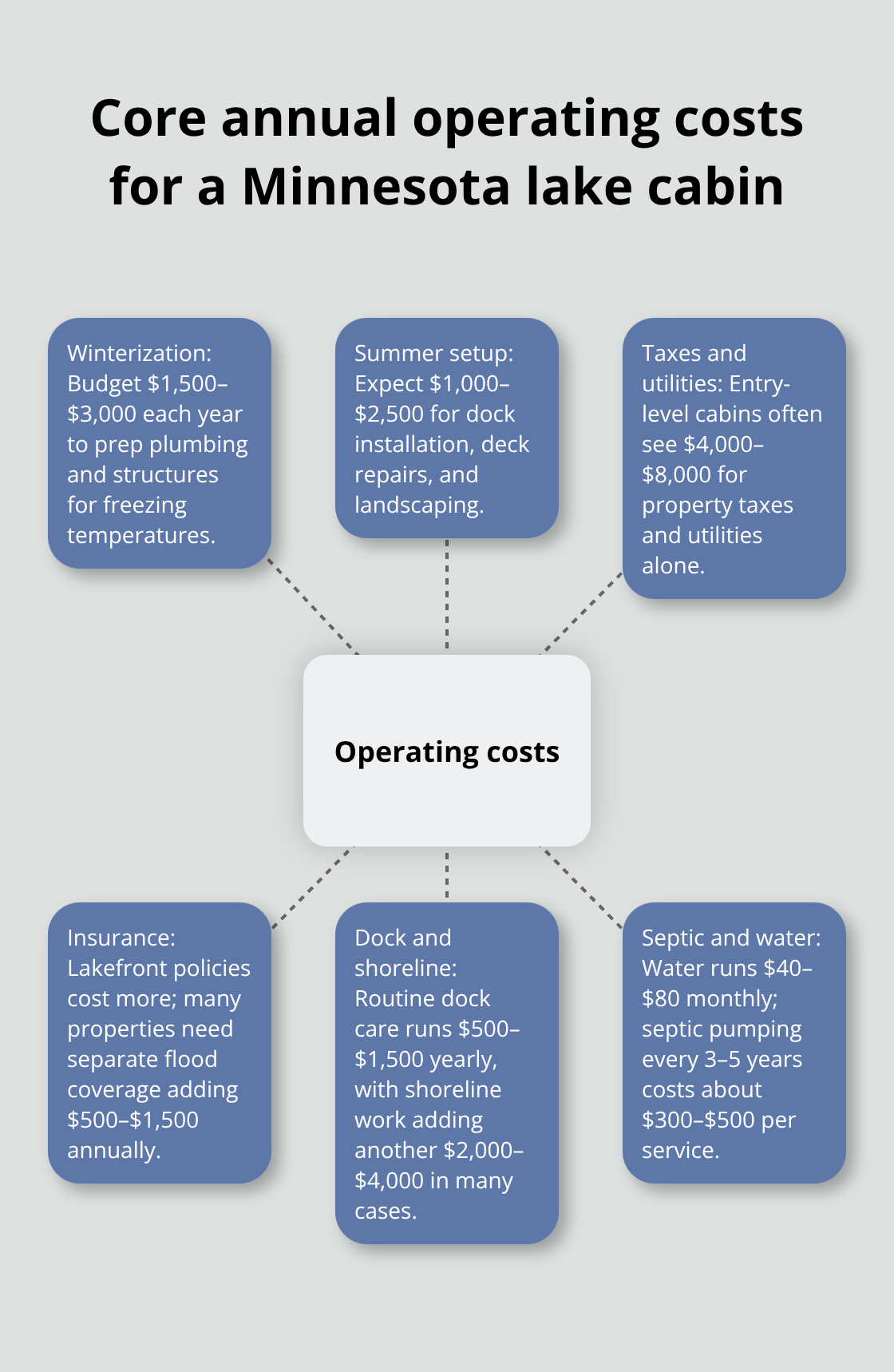
Seasonal maintenance at a Minnesota lake cabin demands serious money and attention. Winter preparation costs most owners $1,500 to $3,000 annually when professionals winterize plumbing, drain systems, and prepare structures for freezing temperatures. Summer setup involves dock installation, deck repairs, and landscape maintenance, adding another $1,000 to $2,500 per season. Many cabin owners spend 20% of their time managing work rather than enjoying the property, which means you either handle this labor yourself or pay someone else to do it.
Utilities in rural lake areas run higher than suburban homes, partly because seasonal cabins sit unused for months and partly because remote locations lack competitive utility options. Electricity bills typically range from $80 to $150 monthly during occupied seasons and $30 to $60 during winter when heating demands spike. Water costs usually fall between $40 and $80 monthly, though properties on septic systems face additional costs for professional pumping every three to five years at roughly $300 to $500 per service.
Insurance Costs Reflect Waterfront Risk
Homeowners insurance for lake properties costs more than comparable inland homes due to wind, water damage, and flooding exposure. Many insurers require separate flood coverage, adding $500 to $1,500 annually depending on elevation and water proximity. Standard policies frequently exclude dock damage from freeze-thaw cycles, so verify coverage before you sign any agreement.
Dock Maintenance Consumes More Money Than Most Owners Anticipate
Wooden docks require annual inspection, sealing, and repairs that accumulate to $500 to $1,500 yearly. Dock lifts and boat lifts demand seasonal maintenance, winterization, and occasional replacement of hydraulic lines or cables, costing $200 to $600 annually. Shoreline erosion control, including riprap installation or seawall repairs, represents the most expensive waterfront work, sometimes exceeding $5,000 for significant projects. Ice damage during spring thaw frequently damages docks and waterfront structures, forcing emergency repairs that catch owners off guard.
Total Operating Costs Add Up Quickly
Property taxes and utilities alone typically consume $4,000 to $8,000 annually for entry-level cabins, while dock and shoreline maintenance adds another $2,000 to $4,000 per year. When you total seasonal preparation, utilities, insurance, maintenance, and property taxes, realistic annual operating costs range from $8,000 to $15,000 for modest properties, before accounting for unexpected repairs or system failures. These substantial ongoing expenses explain why many cabin owners explore vacation rental income as a way to offset costs and generate revenue from their investment.
Turning Your Cabin Into an Income Stream
Offsetting $8,000 to $15,000 in annual operating costs through vacation rentals is realistic, but only if you approach it strategically. Minnesota’s Brainerd Lakes Area and other resort-lake markets support strong seasonal rental demand, particularly for properties near quality fishing and recreational amenities. The short-term rental market has matured significantly since 2020, meaning successful owners compete on more than just location. Properties that generate meaningful income invest heavily in marketing, maintain competitive pricing, and handle guest communication professionally. Most cabin owners who rent casually without proper systems earn far less than those who treat rentals as a managed business.
Revenue Potential From Strategic Pricing
A cabin renting at $150 to $250 nightly during peak season can generate $12,000 to $20,000 over a six-month summer window, which directly covers your annual operating expenses. Achieving this requires understanding platform costs, marketing investment, and the operational demands of guest turnover. Seasonal pricing demands constant adjustment based on local events, weather patterns, and competitive listings, which requires either your ongoing attention or professional management.
Platform Commissions and Marketing Expenses
Booking platforms charge 3% to 5% in commission on each reservation, which means a $200 nightly booking costs you $6 to $10 per night just for the listing platform. Airbnb, VRBO, and Booking.com each charge different rates and attract different guest types, so successful owners list on multiple platforms to maximize occupancy. Professional photography costs $300 to $800 upfront but significantly increases booking rates compared to amateur photos.

The Hidden Labor Cost of Self-Management
Managing guest communication, scheduling cleanings between turnover, coordinating maintenance requests, and handling damage claims consumes 10 to 15 hours weekly during peak season if you manage it yourself. This workload often exceeds what casual owners anticipate, particularly during peak summer months when turnover happens frequently. Professional property management typically costs 15% of gross rental income but eliminates this workload entirely and often generates higher nightly rates through optimized marketing and professional presentation. Up North Property Management handles aggressive marketing and pricing optimization for homeowners in Northern Minnesota, removing the administrative burden while maximizing occupancy and revenue.
Final Thoughts
Owning a Minnesota lake cabin requires you to account for the full financial picture, not just the purchase price. Entry-level cabins start around $300,000 to $500,000, but lake cabin costs extend far beyond the down payment-property taxes run higher than inland homes, while seasonal maintenance, utilities, insurance, and dock upkeep typically total $8,000 to $15,000 annually. A realistic budget accounts for winterization costs of $1,500 to $3,000, electricity ranging from $30 to $150 monthly depending on season, and dock maintenance between $500 and $1,500 yearly.
The long-term financial outlook for cabin owners improves significantly when you generate rental income to offset these expenses. A cabin renting at $150 to $250 nightly during peak season can produce $12,000 to $20,000 over six months, directly covering your annual operating costs. However, self-managing rentals demands 10 to 15 hours weekly during peak season, consuming time that most owners would rather spend enjoying the property, while platform commissions, cleaning coordination, and pricing optimization create substantial hidden labor costs.
Professional property management transforms rental income from a time-consuming burden into a realistic financial strategy. We at Up North Property Management handle aggressive marketing, booking management, and maintenance oversight for Northern Minnesota properties, allowing you to capture rental income without the operational burden while offsetting your lake cabin costs. Contact Up North Property Management to explore how professional management can maximize your property’s income potential and simplify ownership.