

Buying a cabin on a Minnesota lake sounds like a dream until you hit a roadblock with lake permits. We at Up North Property Management have seen deals fall apart and property values plummet because buyers overlooked permit restrictions.
Most cabin buyers don’t realize that lake permits control everything from dock size to shoreline access. Missing this step before purchase can cost you thousands in unexpected fees or force you to abandon plans for your property.
What Lake Permits Actually Control
Lake permits in Northern Minnesota regulate far more than most buyers understand, and this is where deals either move forward smoothly or stall completely. Permits control dock size and placement, shoreline modifications, vegetation removal within setback zones, water access rights, and even seasonal construction windows. The Minnesota Department of Natural Resources (DNR) enforces these rules alongside local county authorities, and their requirements vary significantly by county and municipality.
Dock and Shoreline Restrictions
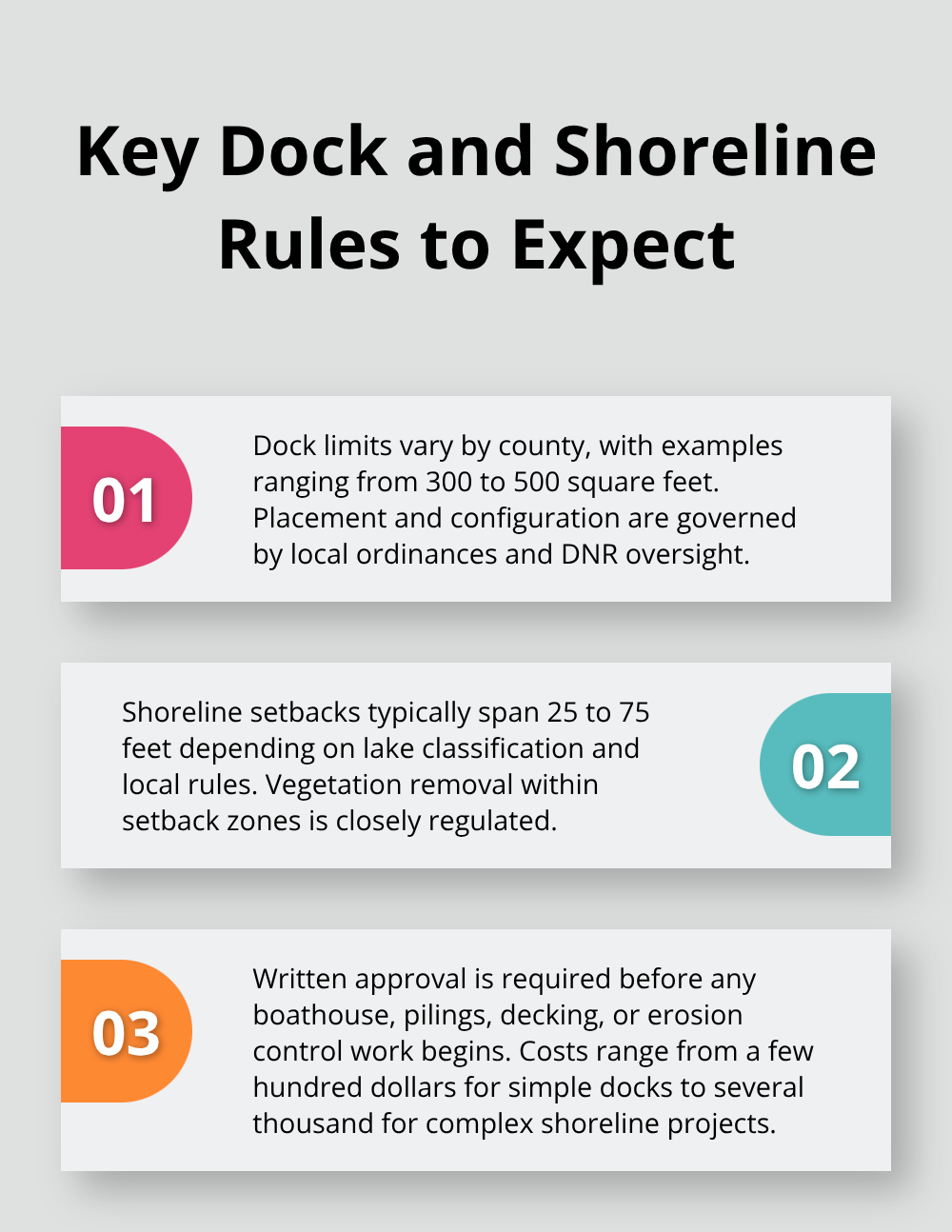
A dock permit in one county might allow a 500-square-foot structure, while an adjacent county limits you to 300 square feet. Shoreline setback requirements typically range from 25 to 75 feet depending on the lake’s classification and local ordinances. If you plan to build a boathouse, install pilings, add a deck, or stabilize erosion, you need written approval before breaking ground. The cost of obtaining or modifying permits ranges from a few hundred dollars for straightforward dock applications to several thousand for complex shoreline work.
Utility and Access Permits
Utility access permits demand equal attention-water line connections, septic system placement, and electrical service to waterfront structures all require separate approvals. Many buyers discover too late that their dream dock or waterfront expansion violates local ordinances or has already faced denial by the DNR. Construction windows matter too-some Minnesota lakes restrict work between April and June to protect spawning fish, which means your project timeline locks into specific months whether you prefer it or not.
How Permits Shape Property Value and Usability
A property with clear, current permits commands higher resale value than an identical property with permit complications. Lenders and title companies require proof that permits are valid before closing, which means missing or expired permits can kill financing entirely. If a previous owner installed a dock without proper permits, you inherit the problem-the DNR may require you to remove it or apply for retroactive approval, both expensive and time-consuming options.
Properties marketed as waterfront lose marketability dramatically when dock rights remain unclear or restricted. Fishing enthusiasts, boaters, and swimmers have different permit needs, and if your property cannot legally support your intended use, its value drops accordingly. Insurance premiums also fluctuate based on permit status-properties with unresolved shoreline issues or flood-prone access points face higher premiums or coverage denials. Northern Minnesota lakes have varying water level stability, and climate change alters traditional patterns, which means permits issued a decade ago may not account for current conditions.
Taking Action Before You Make an Offer
Before you make an offer, request copies of all existing permits and speak directly with your county’s DNR representative about what modifications are actually feasible on that specific property. This conversation reveals whether your vision for the property aligns with what local authorities will actually permit, and it exposes hidden restrictions that could derail your plans after closing.
Red Flags and Hidden Costs Associated with Lake Permits
What Permit Fees Actually Cost You
Permit fees seem reasonable until you examine what Northern Minnesota counties actually charge. A standard dock permit runs $150 to $500, but shoreline stabilization or erosion control work jumps to $1,000 to $3,000 or more depending on project scope. Renewal fees hit annually or every few years depending on your county, and most buyers never budget for these ongoing costs. Lake County, Minnesota charges renewal fees ranging from $75 to $200 per year for dock permits alone, which adds up to $750 to $2,000 over a decade of ownership.
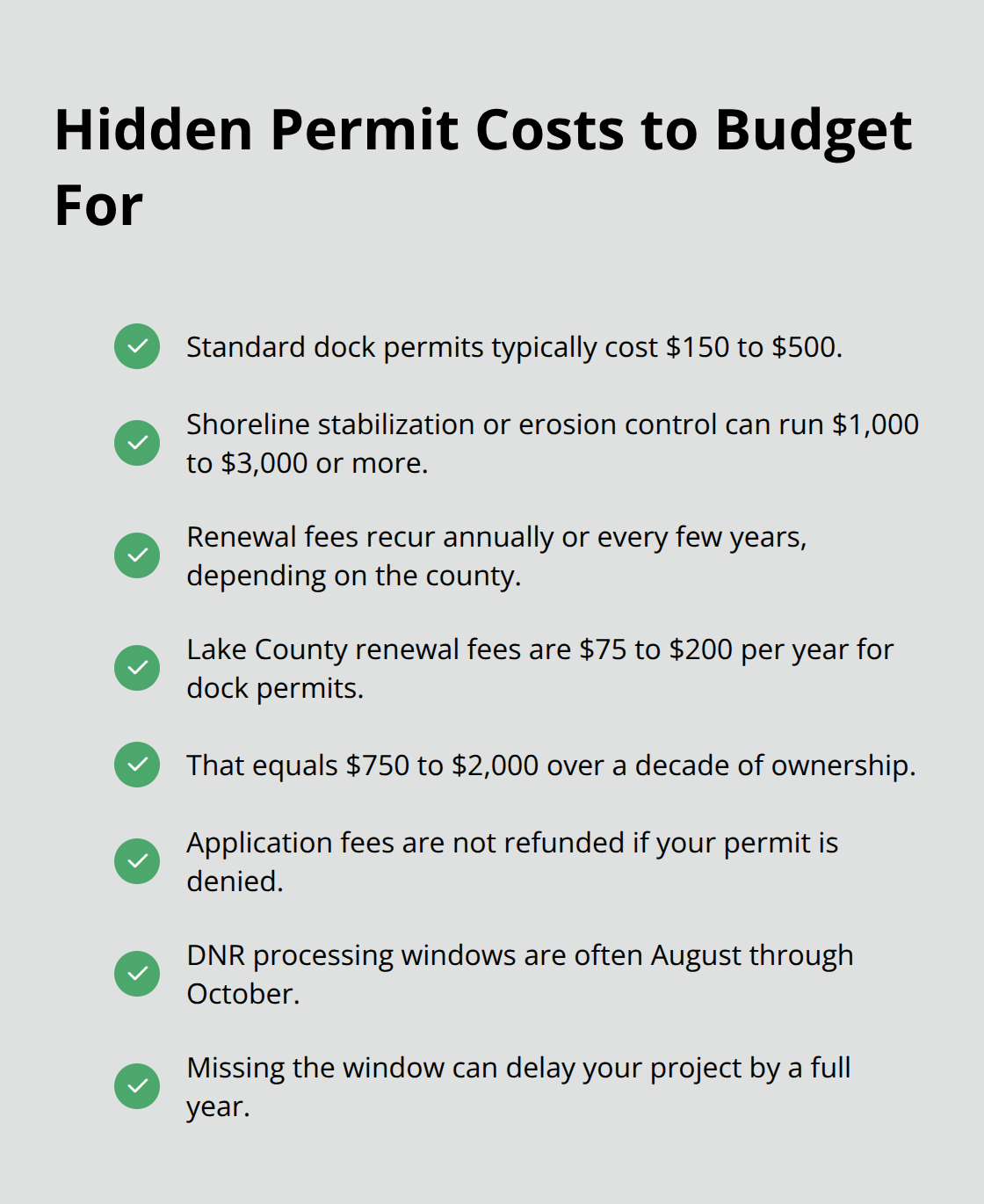
What catches most buyers off guard is that permit denial does not refund your application fee. You pay to apply, receive rejection, and then pay again if you modify your plans and reapply. The Minnesota DNR processes applications during specific windows (often August through October), which means missing that deadline costs you an entire year of waiting.
The Real Cost of Unpermitted Structures
If a previous owner built structures without permits, you face retroactive permit applications or removal costs that can exceed $5,000 to $10,000 depending on what was built. Title companies flag unpermitted structures, and lenders will not fund properties with unresolved permit violations, leaving you stuck until the mess gets cleaned up. This situation transforms a simple purchase into a legal and financial nightmare that derails closing timelines.
How Restrictions Strangle Property Usability
Permit restrictions directly limit property usability and resale appeal in ways most buyers do not anticipate. If your county limits dock size to 300 square feet but you wanted a boathouse, that restriction is not negotiable-you are buying a property that cannot legally support your vision. Seasonal construction windows mean your dock work might only happen April through September, forcing you to pay premium contractor rates during peak season or wait months for off-season discounts that do not exist.
The Resale Problem Nobody Talks About
Properties with unclear dock rights sell for less than comparable properties with clear permits, according to Northern Minnesota real estate professionals. Buyers with boating or fishing plans specifically avoid properties where dock permits are restricted or nonexistent, which instantly narrows your buyer pool when you eventually sell. This reality means your investment loses value the moment permit problems surface.
Insurance and Mitigation Expenses
Insurance companies charge higher premiums for waterfront properties with unresolved permit issues or shoreline problems, sometimes adding $500 to $1,500 annually to your homeowner’s policy. If a property sits in a flood-prone area or has unstable shoreline conditions, permits may require expensive mitigation measures like vegetation buffers or erosion controls that cost $2,000 to $8,000 to install and maintain. These hidden expenses compound over years of ownership and catch sellers off guard when they finally list the property.
Before you move forward with any cabin purchase, you need to know exactly what permits exist on the property and what restrictions actually apply to your intended use. The next section walks you through the specific steps that reveal permit status and expose problems before you sign anything.
How to Uncover Permit Problems Before Closing
Start your permit research at the county level, not with the seller. Contact your Minnesota county’s DNR office directly and request all permits associated with the property address-dock permits, shoreline modification permits, utility permits, and any violation notices. Most counties maintain searchable permit databases online, though some still require phone calls or in-person visits to access complete records. When you call, ask specifically about expired permits, denied applications, and any structures on the property that lack current permits.
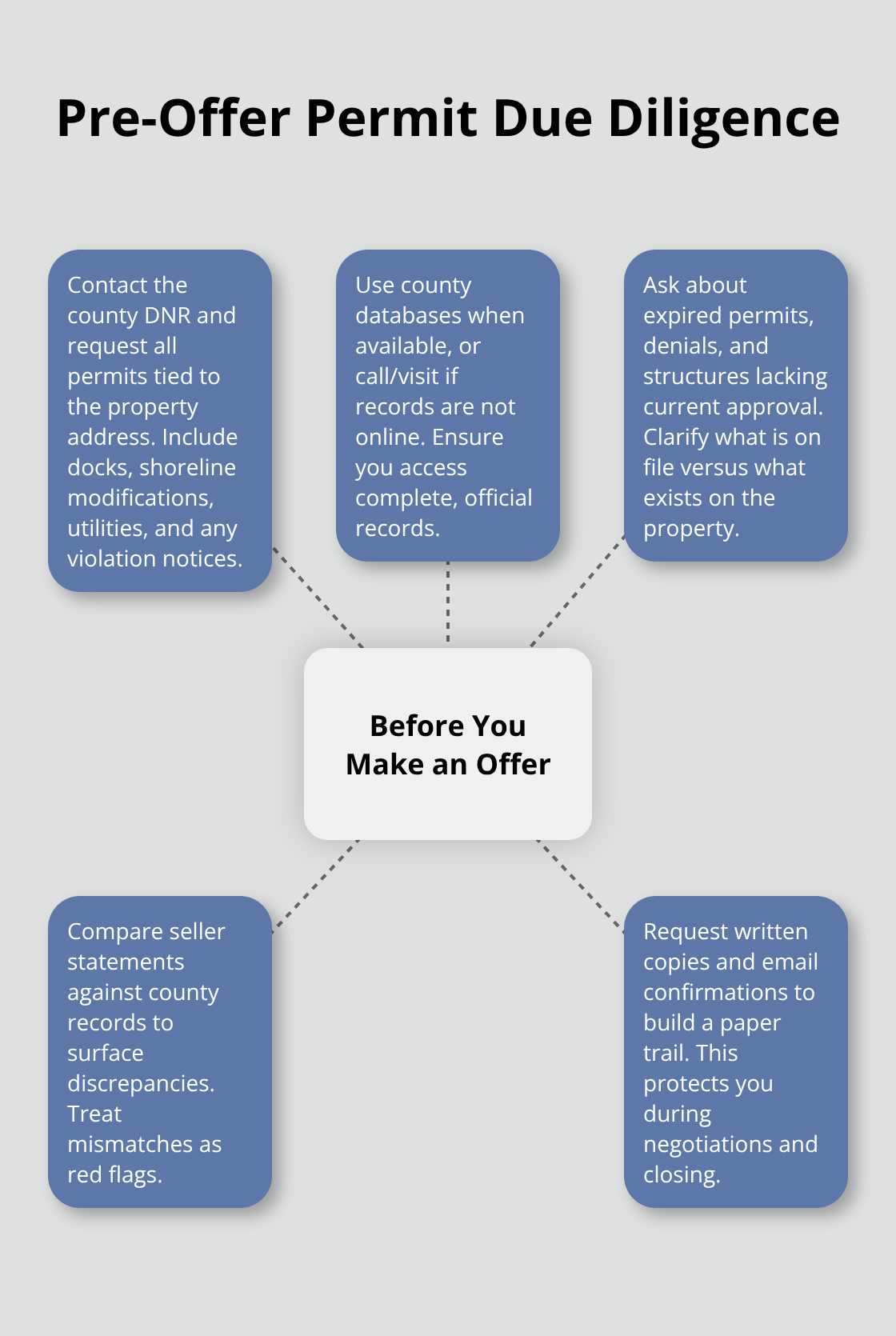
This conversation reveals what the county actually knows about the property’s history, and discrepancies between what sellers claim and what county records show expose major red flags immediately. Request copies of all dock permits, shoreline stabilization approvals, and construction window restrictions in writing-email confirmations create a paper trail that protects you during negotiations and closing.
The Questions That Matter Most
Sellers often downplay permit complications or claim they handled everything properly when they actually did not. Ask the seller directly whether all structures on the property have valid permits, whether any work occurred without permits, and whether the county has ever cited the property for violations. Request proof of current permits for docks, decks, boathouses, pilings, and any shoreline work-if they cannot produce documentation, assume it does not exist. Ask whether construction faced denial or delay, and whether they have ever received notices from the DNR regarding unpermitted activity. Question whether seasonal construction windows have affected their plans, and whether they understand the specific restrictions that apply to dock size, placement, and shoreline setbacks on that particular lake. Ask about insurance complications related to permit status or shoreline conditions, and whether their homeowner’s policy has ever flagged issues. Most importantly, ask for the names and contact information of any contractors they hired for waterfront work-those contractors often hold institutional knowledge about what the county actually permits versus what residents attempt. Your real estate agent should push for these answers in writing as part of the purchase agreement, not through casual conversation.
Hiring a Surveyor Before You Commit
Hire a surveyor who specializes in waterfront properties before making an offer, not after. A waterfront surveyor identifies actual property boundaries, setback zones, and whether existing structures comply with current regulations. Surveyors flag unpermitted docks, illegal shoreline modifications, and encroachments that title companies will eventually discover anyway. This professional step eliminates surprises and gives you accurate information to negotiate with sellers or walk away from problematic properties.
Working with Legal and Financial Professionals
Contact a local real estate attorney who handles lake properties in your specific county; they understand which restrictions are negotiable and which ones are absolute. Minnesota counties vary dramatically in their permit flexibility, and an attorney familiar with that county’s DNR office knows exactly which applications face approval and which ones face denial. Before closing, your attorney should conduct a title search that specifically identifies permit-related encumbrances, deed restrictions, and easements that affect water access. Request that your lender’s inspector verify permit status as part of the mortgage process-lenders will not fund properties with unresolved permit violations, so catching problems early protects your financing. If the property has any structures without permits, your attorney should determine whether retroactive permits are possible or whether removal is required (and that determination must happen before you sign the purchase agreement). This professional layer costs money upfront but eliminates the scenario where permit problems emerge after closing when you have no recourse against the seller.
Final Thoughts
Lake permits form the foundation of whether your cabin purchase succeeds or fails. We at Up North Property Management have watched buyers lose tens of thousands of dollars because they skipped permit research or trusted sellers who minimized restrictions. Permits control dock size, shoreline access, construction timing, and property value in ways that directly impact your investment and enjoyment, which means your due diligence must happen before you make an offer.
Contact your county’s DNR office, request all existing permits, hire a waterfront surveyor, and consult a real estate attorney who understands your specific county’s regulations. Ask sellers tough questions about permit history and demand written proof of current approvals. This process takes time and costs money upfront, but it prevents the scenario where you close on a property only to discover that your vision for the cabin violates local ordinances or that previous owners left unpermitted structures that you now must remove.
Permit problems do not resolve themselves after purchase-denied applications, expired permits, and unpermitted structures become your responsibility the moment you own the property. Insurance companies charge higher premiums for properties with permit complications, lenders refuse to fund deals with unresolved violations, and resale value plummets when dock rights remain unclear. If you plan to use your cabin as a vacation rental, Up North Property Management handles the operational complexity so you can focus on ownership and the lake permits that protect your investment.