Lakefront properties in Minnesota demand a different approach than standard residential management. Water, weather, and regulations create challenges that most property owners aren’t prepared to handle alone.
We at Up North Property Management have spent years managing waterfront investments across Minnesota, and we’ve learned what separates thriving lakefront properties from struggling ones. The difference comes down to specialized expertise and proactive planning.
Why Lakefront Properties in Minnesota Require Specialized Management
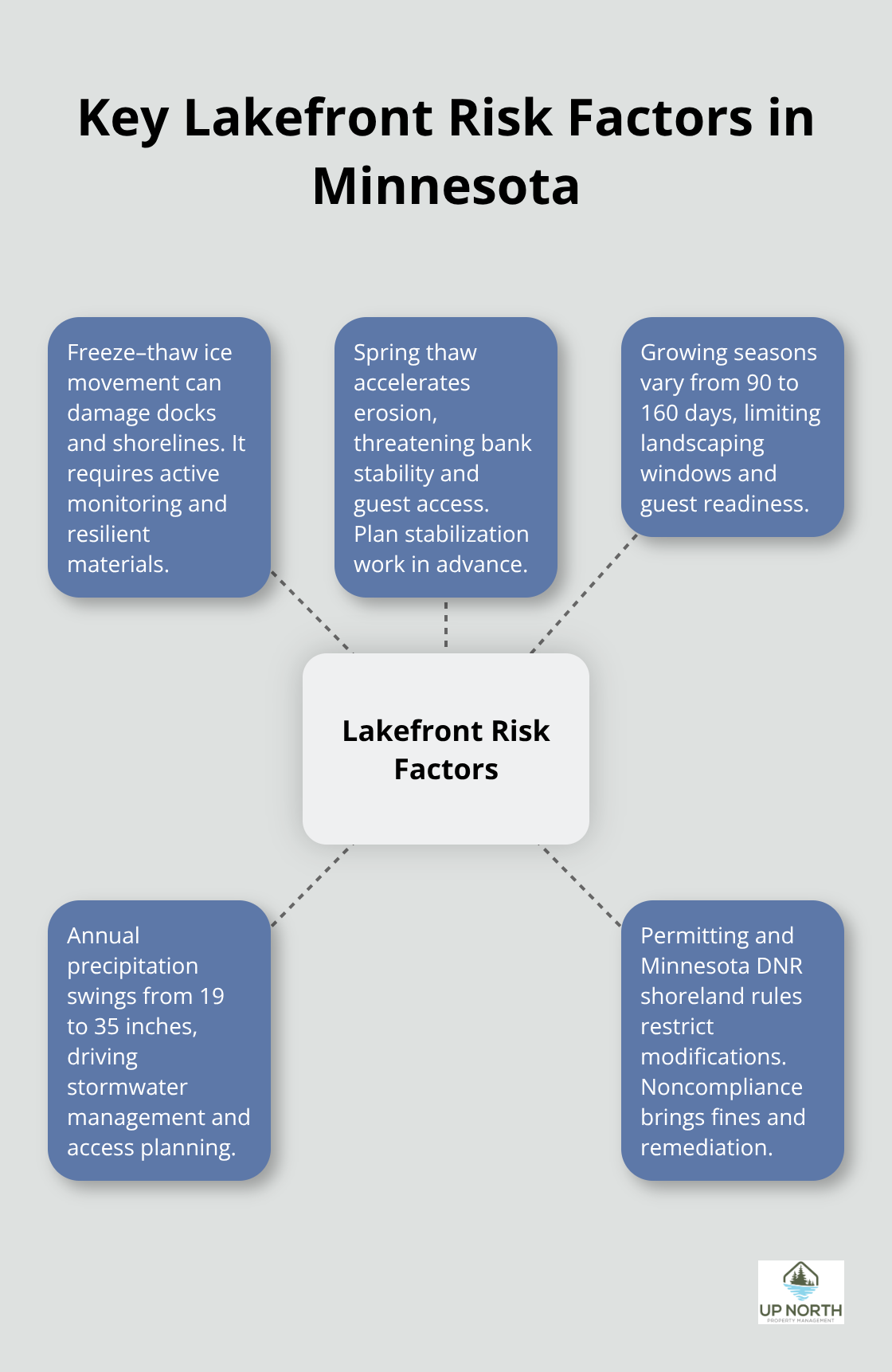
Minnesota’s lakefront environment creates physical and regulatory demands that standard residential properties simply don’t face. Minnesota has a continental climate with record temperature extremes, which means your dock, septic system, and water lines require winterization protocols that inland properties never need. Ice movement during freeze-thaw cycles damages shoreline structures, and spring thaw brings erosion risks that demand active monitoring. The growing season ranges from 90 days in the northeast to 160 days in the southeast, which directly impacts landscaping maintenance schedules and when properties can safely accommodate guests. Annual precipitation varies from 19 to 35 inches across the state, creating unpredictable stormwater runoff that affects both your shoreline stability and guest access. These aren’t minor inconveniences-they’re operational realities that determine whether your property generates income or sits idle.
Permits and Regulatory Requirements You Cannot Ignore
Lakefront properties in Minnesota fall under overlapping regulatory frameworks that inland properties avoid entirely. Before any shoreline work-dock installation, seawalls, or bank modifications-you must obtain permits from both the county and the Minnesota Department of Natural Resources. The Minnesota DNR enforces shoreland management requirements covering setbacks, vegetation rules, and allowable stabilization methods that directly restrict what you can do with your property. Violating these requirements results in fines and forced remediation that costs far more than obtaining permits upfront. Additionally, watershed districts and soil and water conservation districts require coordination for water-quality improvements and shoreline alterations. Standard homeowners insurance excludes flood damage entirely, so you need separate National Flood Insurance Program coverage to protect against lake-related losses. Understanding your FEMA flood zone and securing appropriate coverage isn’t optional-it’s the foundation of protecting your investment and your guests’ safety.
Seasonal Demand Creates Cash Flow Volatility
Lakefront rentals in Minnesota operate on compressed seasonal cycles that fundamentally differ from year-round markets. Summer occupancy drives the majority of revenue, but winter creates either secondary income from ice-fishing enthusiasts or extended vacancy. Spring and fall shoulder seasons experience unpredictable demand based on weather and local events. This volatility means you cannot rely on consistent monthly rental income to cover mortgage payments and maintenance reserves. Properties that depend on seasonal revenue need aggressive multi-channel marketing to capture bookings across all seasons and maximize occupancy rates when demand exists. You must also build dedicated reserve funds for storm damage, erosion control, and routine waterfront upkeep-these aren’t optional expenses but essential resilience measures. Properties managed with seasonal cash flow awareness achieve positive free cash flow to cover debt service and maintenance; properties managed without this discipline face cash shortfalls when unexpected repairs emerge or occupancy dips below projections.
These operational complexities-environmental hazards, regulatory compliance, and seasonal revenue patterns-demand professional management expertise that most property owners lack. The next section outlines the specific services that protect your waterfront investment and transform these challenges into consistent income.
Essential Services for Protecting Your Lakefront Investment
Protecting a Minnesota lakefront property requires three interconnected services that address the specific vulnerabilities of waterfront rentals. Professional maintenance and inspections catch problems before they escalate into expensive damage. Aggressive multi-channel marketing fills your calendar across all seasons, which directly impacts your ability to cover mortgage payments and maintenance reserves. Guest services and concierge support transform occupied properties into reliable income generators while protecting your asset from misuse. These services work together because seasonal revenue demands constant occupancy optimization, environmental hazards require preventive maintenance, and regulatory compliance depends on documented inspections and proper property management. Properties relying on single services or DIY management consistently underperform compared to properties receiving integrated professional support.
Annual Inspections Prevent Costly Damage
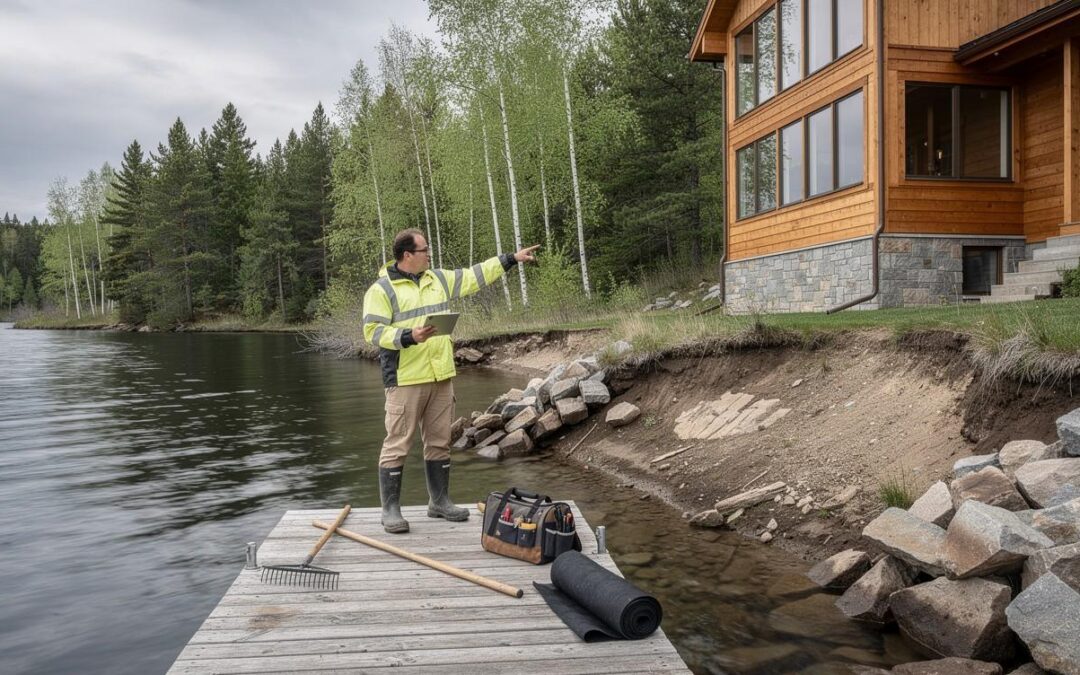
Dock and shoreline structures deteriorate rapidly in Minnesota’s freeze-thaw environment, and waiting until damage becomes visible costs significantly more than scheduled inspections. Annual inspections should occur before winter to identify corroded hardware, loose fasteners, and structural weakening that ice movement will exploit. Spring inspections catch erosion damage, vegetation loss, and bank instability created by thaw cycles and runoff. Professional inspectors assess conditions against current Minnesota DNR codes and permit requirements, documenting findings with photos and records that streamline insurance claims and future property sales.
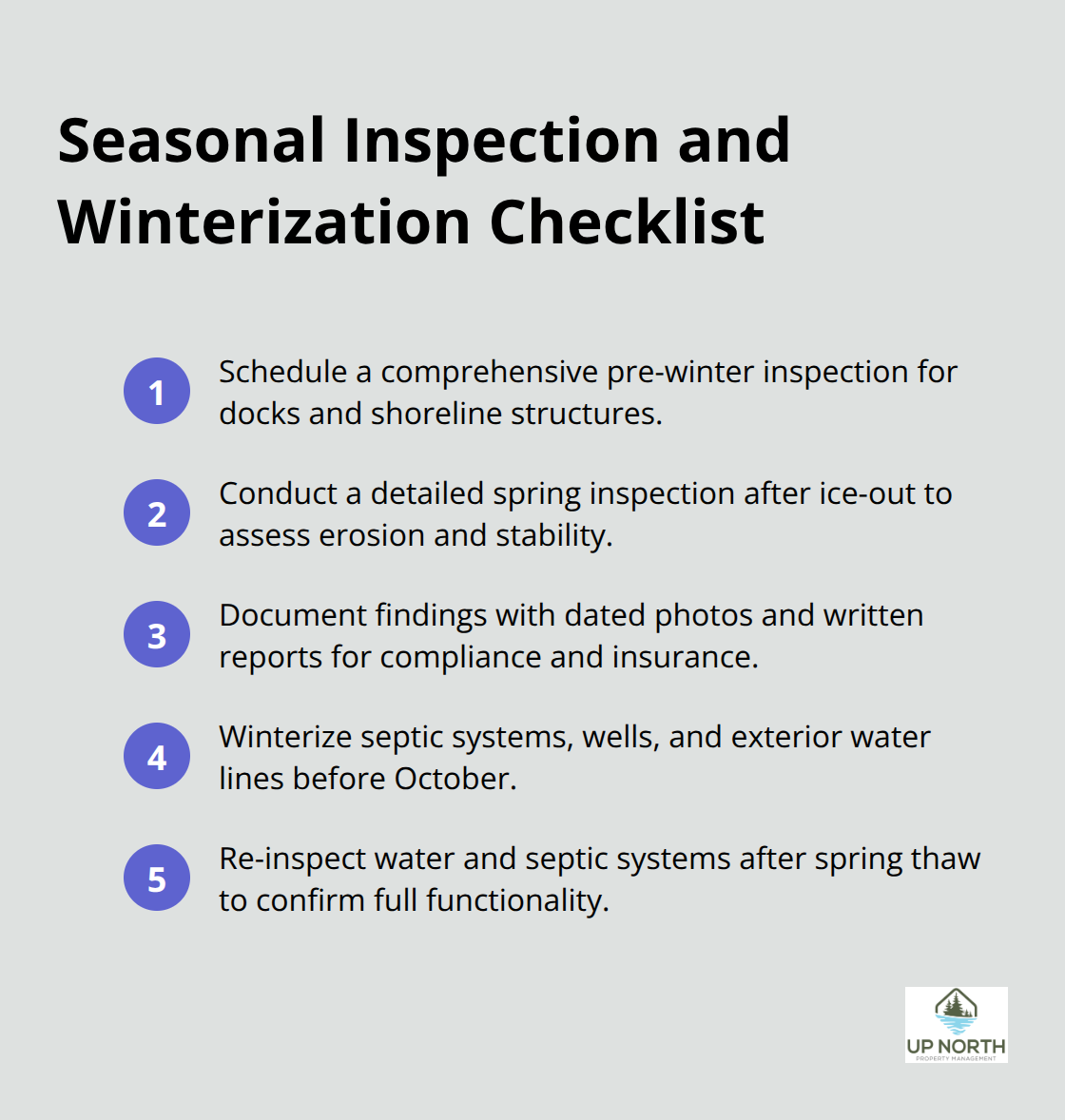
Septic systems, water lines, and well infrastructure require winterization before October and inspection after spring thaw to verify freeze damage didn’t compromise functionality. Properties that skip these seasonal inspections face emergency repairs costing thousands of dollars when systems fail mid-season, directly eliminating rental income during peak occupancy windows.
Multi-Channel Marketing Maximizes Occupancy Year-Round
Summer bookings alone cannot support debt service and maintenance reserves on Minnesota lakefront properties. Properties marketed only through single channels or seasonal tourism boards miss substantial potential revenue from shoulder-season guests and winter ice-fishing enthusiasts. Professional management uses vacation rental platforms, direct booking channels, corporate retreat networks, and regional tourism partnerships to reach different guest segments at different times. Aggressive marketing captures early bookings for peak summer weeks when rates justify premium pricing, then pivots to mid-week discounts and winter packages targeting ice fishers and snowmobile enthusiasts. Properties with professional marketing achieve higher occupancy rates and longer average stays, which directly translates to positive free cash flow after mortgage and maintenance expenses.
Guest Services Protect Your Property and Income
Guest services coordinate cleaning between bookings, manage check-in and checkout logistics, and respond to maintenance requests during stays so owners never field emergency calls at midnight. Concierge support handles guest inquiries about local activities, dining, and seasonal attractions, which increases guest satisfaction and generates positive reviews that drive future bookings. Professional guest management also enforces occupancy limits, implements safety disclosures, and ensures compliance with state and local rental regulations-reducing liability exposure that DIY owners often overlook. Properties with dedicated guest services experience fewer damage claims, higher repeat-booking rates, and stronger online ratings that compound occupancy gains across multiple seasons. This combination of preventive maintenance, aggressive marketing, and professional guest services creates the operational foundation that transforms seasonal volatility into predictable income.
The specific challenges of dock maintenance, water damage prevention, and winterization demand more than general property management expertise. The next section examines the common issues that lakefront owners face and the practical solutions that protect both your property and your guests.
Common Issues Lakefront Property Owners Face
Most homeowners insurance does not cover flood damage. Flood insurance is a separate policy that can cover buildings, the contents in a building, or both. Unlike inland homes where water intrusion occurs sporadically, waterfront properties face constant moisture exposure from lake spray, groundwater seepage, and humidity that corrodes structures year-round. Basement and foundation walls absorb moisture during spring thaw when snowmelt and runoff saturate soil around your property, creating conditions that support mold growth within weeks if drainage systems fail. The Minnesota Pollution Control Agency monitors water quality conditions that directly impact your property’s usability and maintenance demands, particularly during algae blooms that restrict guest access and create liability concerns. Properties without aggressive moisture management experience deteriorating guest experiences, negative reviews that suppress future bookings, and escalating maintenance costs that eliminate profitability.
Moisture Prevention Protects Your Foundation and Guest Experience
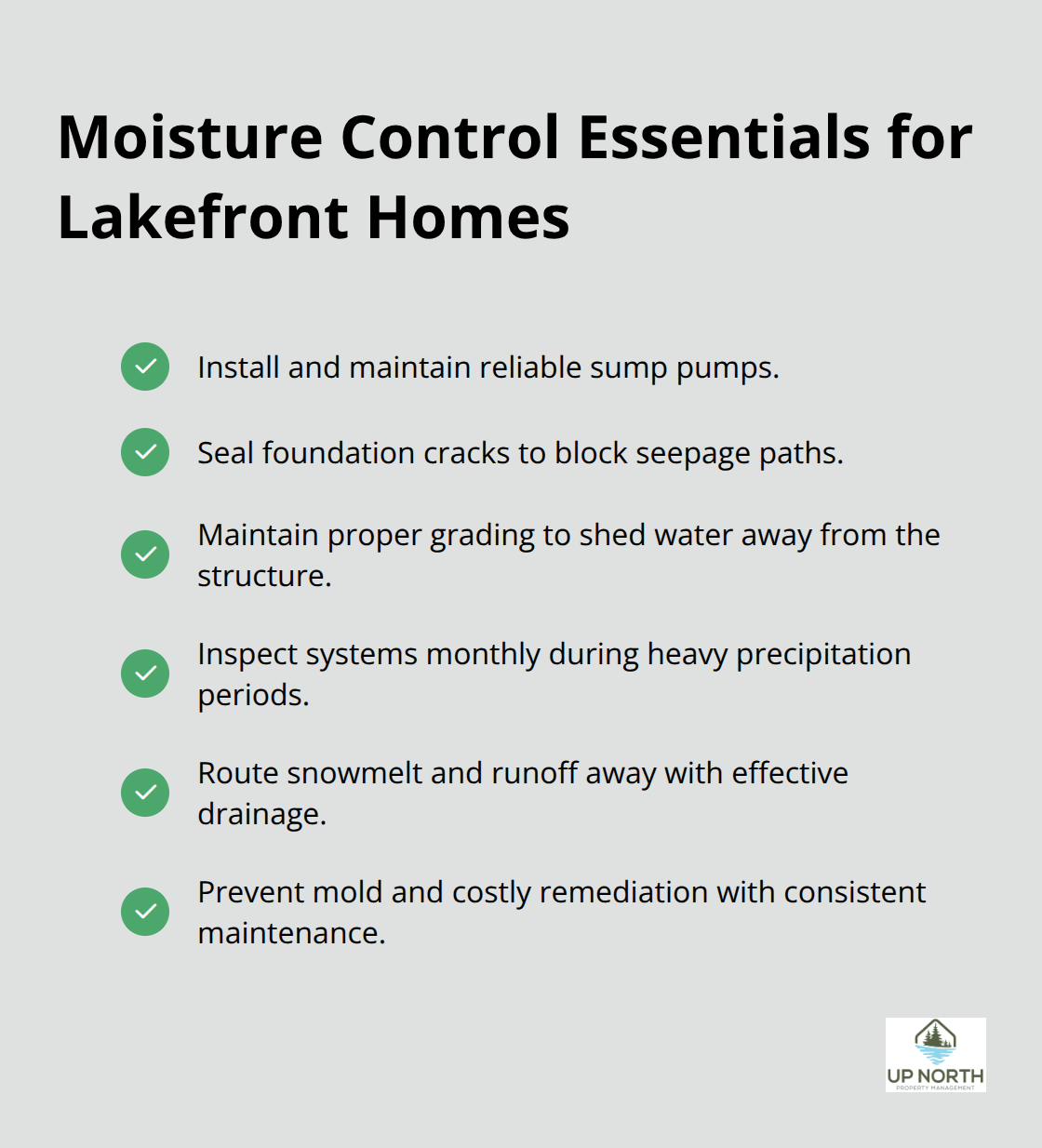
Sump pumps, sealed foundation cracks, and proper grading around the foundation prevent most moisture problems before they develop. These systems require monthly inspections during heavy precipitation periods to verify functionality and catch early signs of water intrusion. Proper drainage systems redirect snowmelt and runoff away from your structure, protecting both the foundation and the guest experience that depends on dry, functional interiors. Properties that install and maintain these moisture-control measures avoid the expensive remediation that follows water damage and mold growth.
Dock and Shoreline Structures Deteriorate Rapidly in Minnesota’s Freeze-Thaw Cycles
Dock hardware corrodes faster in lakefront environments than most property owners anticipate, with freeze-thaw cycles causing fasteners to loosen and wooden pilings to crack within two to three seasons without intervention. Annual spring inspections after ice-out reveal whether winter ice movement damaged support structures, created separation at connection points, or weakened fasteners that require replacement before summer guest use. The Minnesota Department of Natural Resources requires that all dock modifications and shoreline work maintain compliance with current setback regulations and stabilization methods, meaning non-compliant structures can face forced removal that costs substantially more than proper maintenance. Native vegetation with deep root systems stabilizes banks far more effectively than riprap or seawalls while reducing long-term maintenance costs and supporting water quality that protects your guests’ experience. Erosion control with native shoreline plants prevents the bank deterioration that creates safety hazards and liability exposure when guests access the water.
Winterization Begins Before Temperatures Drop
Winterization starts in September and October before temperatures drop consistently below freezing, not in November when most unprepared owners scramble to drain systems. Septic systems, water wells, and exterior water lines must drain completely or freeze solid, cracking pipes and rendering systems unusable until spring thaw allows repairs. Dock hardware should be removed or heavily greased to prevent corrosion, and any structures exposed to ice movement need inspection for loose fasteners that winter conditions will exploit. Properties that skip winterization face burst pipes, frozen septic systems, and damaged dock infrastructure that require emergency repairs costing thousands of dollars and creating liability when guests cannot access water systems or dock facilities during winter use. Scheduling winterization inspections in August and September with professionals who understand Minnesota’s climate requirements ensures systems are properly prepared before the first hard freeze arrives.
Winter Guest Access Depends on Proper Infrastructure Preparation
Winter guest access depends entirely on properly winterized infrastructure, meaning properties without this discipline cannot generate income from ice-fishing enthusiasts and winter recreation guests who represent secondary revenue streams during slower seasons. Properties that maintain winterized systems throughout the cold months create opportunities to capture bookings from guests seeking winter activities on Minnesota lakes. This secondary revenue stream requires upfront investment in winterization but delivers measurable returns when your property remains functional and accessible during months when competitors sit idle.
Final Thoughts
Lakefront property management in Minnesota succeeds when owners stop treating waterfront investments like standard residential rentals. The environmental hazards, regulatory requirements, and seasonal revenue patterns demand specialized expertise that separates profitable properties from money-losing liabilities. Professional management costs far less than the damage caused by skipped inspections, missed marketing opportunities, and deferred maintenance-a single burst pipe from improper winterization costs thousands of dollars and eliminates rental income during peak seasons.
We at Up North Property Management handle the operational complexity that most lakefront owners cannot manage alone. Our team coordinates annual inspections before winter and spring thaw, manages multi-channel marketing across vacation rental platforms and regional tourism networks, and provides guest services that protect your property while maximizing occupancy rates. We understand Minnesota’s regulatory environment, seasonal demand patterns, and the specific maintenance requirements that waterfront structures demand.
If your lakefront property currently generates inconsistent income or requires constant emergency repairs, professional management offers a measurable path to profitability. Contact us today to discuss how full-service lakefront property management in Minnesota can protect your waterfront investment and deliver the returns your property should generate.