
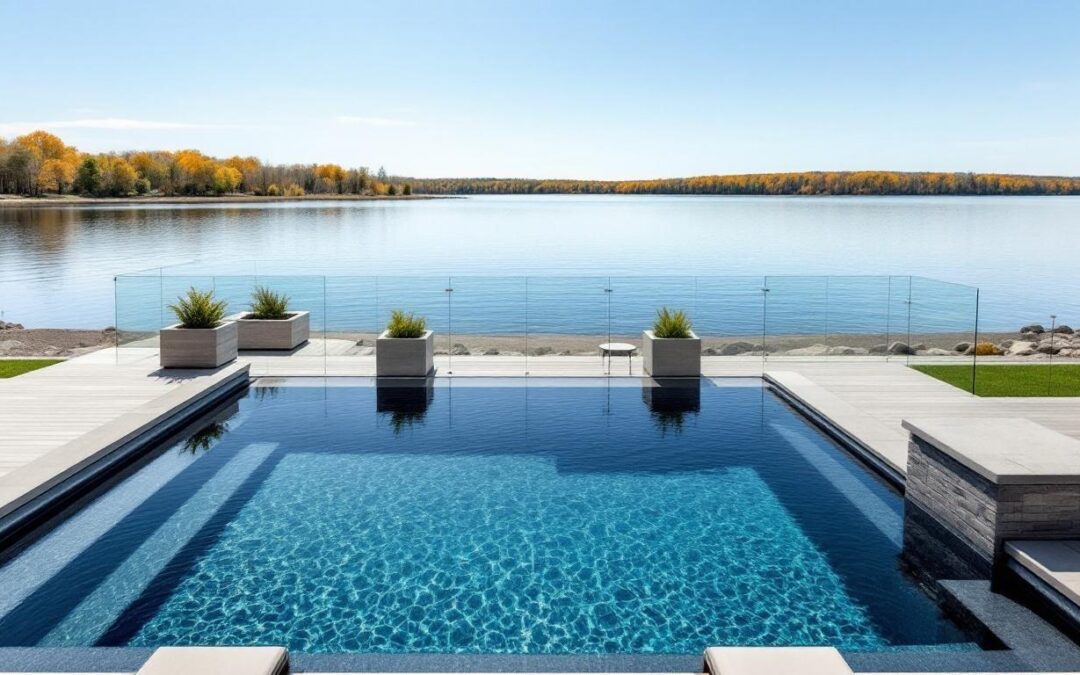
Lakeside pools in Minnesota represent one of the smartest investments a property owner can make. These waterfront amenities boost property values, attract premium renters and buyers, and transform your outdoor space into a year-round gathering spot.
At Up North Property Management, we’ve seen firsthand how lakeside pools deliver strong returns while creating lifestyle benefits that standard properties simply can’t match. The key is understanding the design, installation, and maintenance requirements specific to Minnesota’s climate.
Why Lakeside Pools Transform Minnesota Property Economics
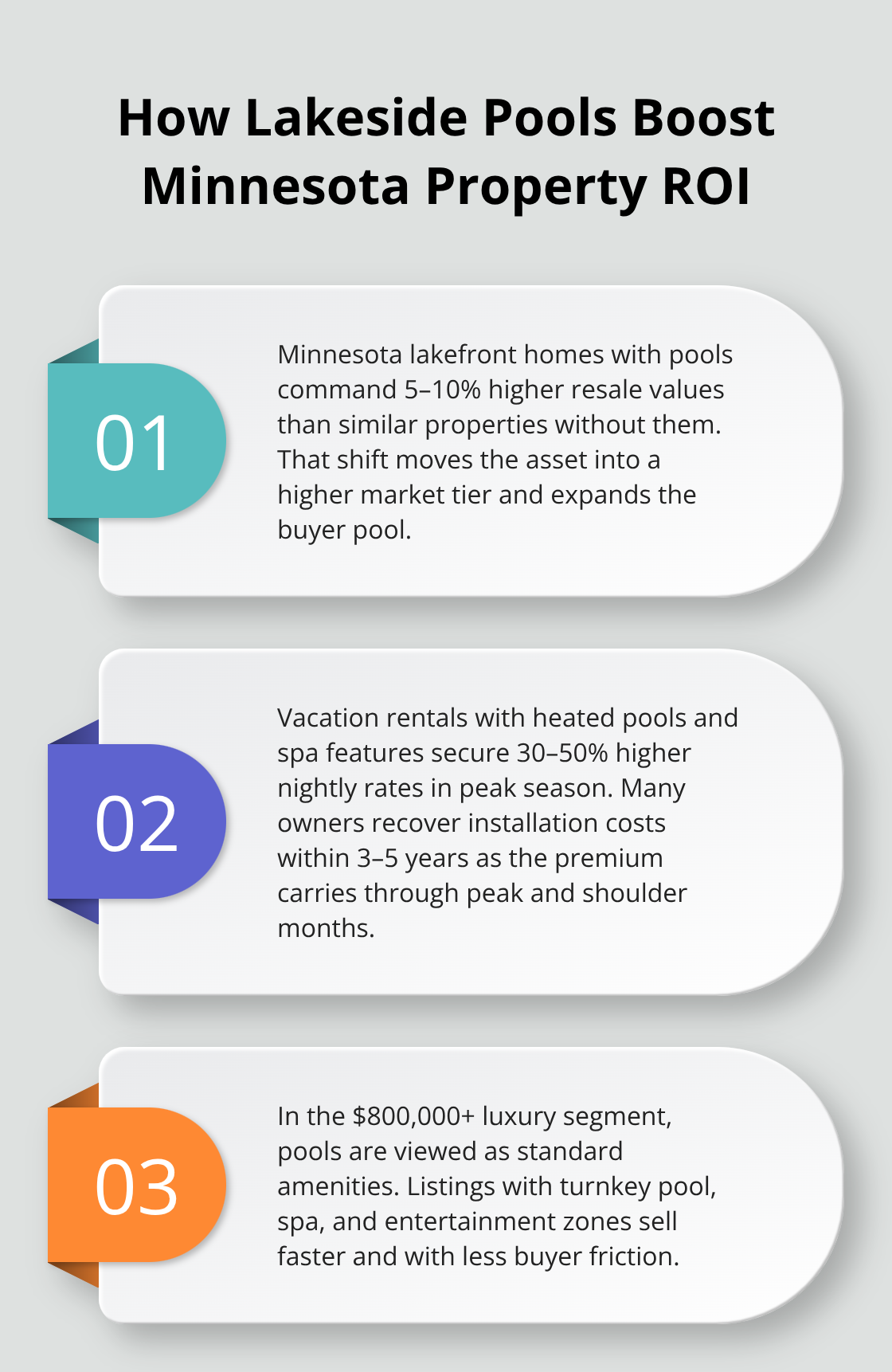
A lakeside pool isn’t a luxury add-on in Minnesota-it’s a financial decision that moves your property into a completely different market tier. Properties with pools command 5–10% higher resale values compared to similar homes without them, according to real estate data from markets across Minnesota’s lakefront regions. More importantly, that premium widens significantly for high-end waterfront properties where pools become expected amenities. Vacation rental properties with pools attract renters willing to pay 30–50% more per night during peak summer months, transforming a seasonal property into a revenue generator that covers installation costs within 3–5 years for most owners.
The Rental Income Advantage
Lakeside properties with custom dipping pools or resort-style features positioned as wellness amenities command premium nightly rates in Minnesota’s vacation market. A standard lakefront home rents for $200–300 per night during summer peak season, but properties featuring heated pools with year-round access, integrated hot tubs, and outdoor entertainment zones consistently achieve $350–500 per night. The difference isn’t trivial-a 40-day summer season at the higher rate generates an additional $6,000–8,000 in revenue compared to pool-less competitors. Properties with vinyl dipping pools featuring auto covers extend this advantage into shoulder seasons (May and September), when demand remains strong but supply shrinks. Concrete pools with integrated spa features and vanishing-edge designs targeting the luxury segment attract guests spending $500–800 per night, fundamentally shifting the property’s income profile.
Year-Round Usability Extends Revenue Windows
Minnesota’s short 3–4 month natural pool season disappears when you invest in heating systems and auto covers. Heated pools maintain temperatures between 78–82°F through May and September, periods when Minnesota experiences average temperatures around 70°F but guests actively seek warm-water amenities. Properties offering heated pools with spa features remain competitive during these shoulder months when unheated alternatives sit empty. This extended season directly translates to 50–70 additional rental days annually for properties that invest in climate control infrastructure. The economics work: heating costs run $1,500–3,000 annually, while those extra 50 days at premium rates generate $10,000–25,000 in additional revenue.
Attracting Buyers Who Prioritize Waterfront Lifestyle
Minnesota lakefront buyers in the $800,000+ price range view pools as standard luxury features, not optional upgrades. Properties without pools face significant marketing friction in this segment, while those featuring custom concrete pools with mortared flagstone surrounds or limestone-carved designs appeal directly to buyers seeking turnkey entertainment spaces. The combination of lake access plus resort-quality pool amenities eliminates the most common objection from high-net-worth buyers: the need for additional capital investment post-purchase. Properties marketed with integrated pool, hot tub, outdoor kitchen, and fire pit arrangements sell 20–30% faster than those requiring buyers to envision these additions independently.
Design Choices That Drive Market Performance
Vanishing-edge designs create a luxurious lakeside look and enhance the water-to-land visual connection, directly influencing buyer perception and rental appeal. Dark concrete spa builds blend seamlessly with natural surroundings, while mortared flagstone surrounds enhance transitions between pool, spa, and landscape. These design elements aren’t merely aesthetic-they signal quality and attention to detail that justifies premium pricing. Properties incorporating limestone-capped stone ledges and black pearl smooth pebble finishes command stronger market positions than those with basic pool installations. The investment in premium finishes and textures pays dividends through faster sales, higher resale values, and increased rental rates.
Understanding these financial dynamics positions you to make informed decisions about pool installation and management. The next step involves navigating the regulatory and environmental requirements that shape how you design and build your lakeside pool.
Design and Installation Considerations for Minnesota Lakeside Pools
Minnesota’s Department of Natural Resources enforces strict permitting requirements for any in-water work on public waters below the ordinary high water level (OHWL), and most lakeside pool projects trigger these rules immediately. If your pool installation involves dredging, filling, or water-feature work, you need a DNR public waters work permit before breaking ground. Beach sand blankets require no permit if sand stays under 6 inches thick, remains within 50 feet wide (or half your lot width), and doesn’t extend more than 10 feet waterward of the OHWL, but you must notify local watershed districts seven days before installation. Retaining walls below the OHWL demand permits, though the DNR increasingly discourages hard armor in favor of natural vegetation stabilization. If your design includes lake aeration for water quality, that requires a separate DNR Aeration permit.
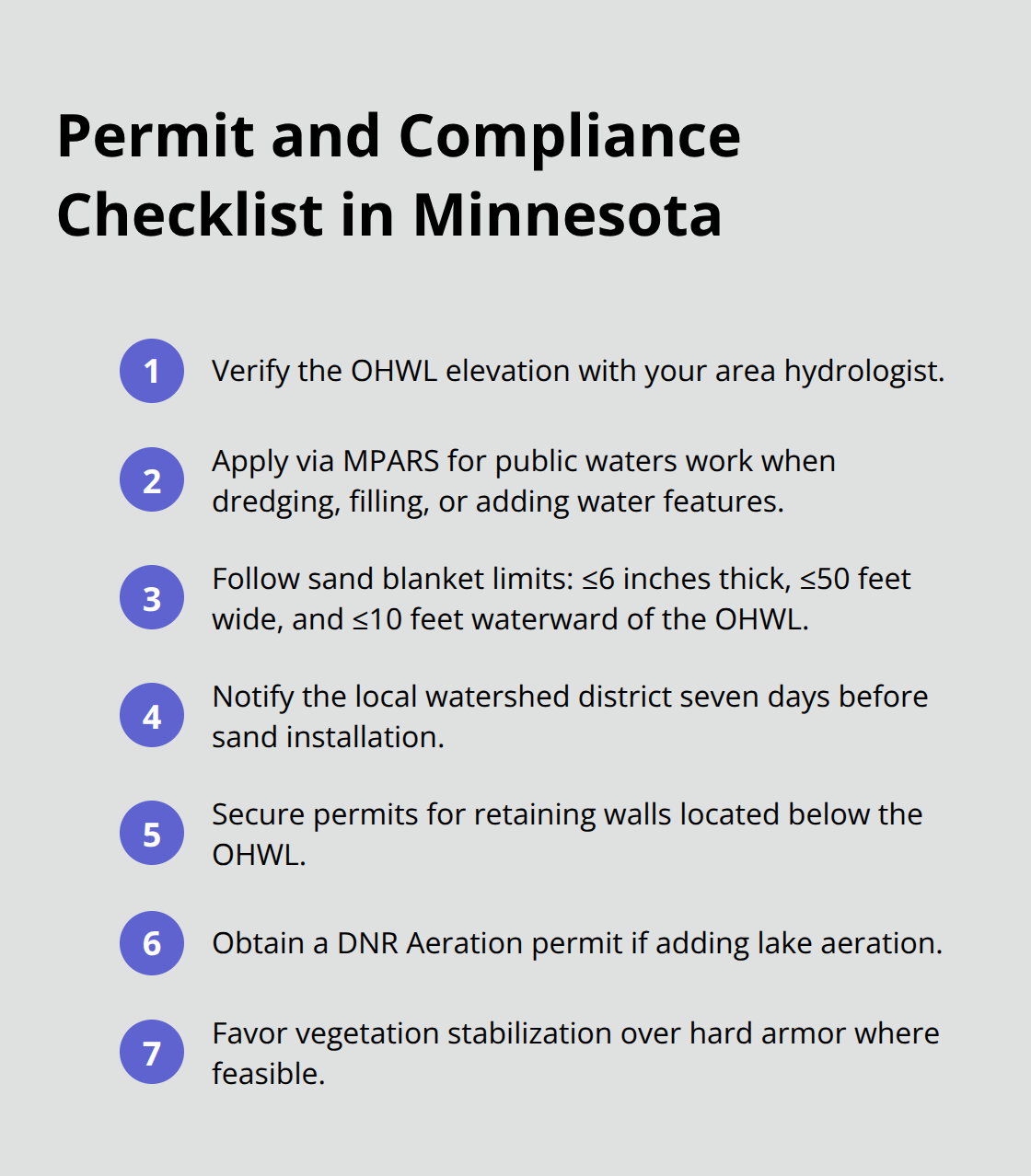
Removing emergent vegetation like cattails needs an aquatic plant management permit because that vegetation controls erosion and supports wildlife.
Understanding the OHWL and Permitting Timeline
The OHWL itself isn’t obvious-it’s the highest water level evidenced by vegetation changes-so contact your local area hydrologist to determine the exact elevation before finalizing designs. Applications flow through the Minnesota Permitting and Reporting System (MPARS), where you’ll coordinate with area hydrologists who understand local conditions. This process typically takes 4–8 weeks, so factor permitting timelines into your project schedule. Local zoning ordinances add another layer: some municipalities restrict pool setbacks from property lines, require safety fencing, or limit impervious surface percentages. Call your city or county planning department before hiring contractors to confirm shoreland zoning restrictions specific to your location. Properties in floodplain zones face additional scrutiny.
Environmental Consultants Protect Your Investment
High-end lakefront developments in Minnesota’s premium markets-around Lake Minnetonka, Prior Lake, and the St. Croix River region-often employ environmental consultants to navigate these requirements, and that investment pays dividends by preventing costly redesigns mid-project. These professionals understand local conditions and accelerate approval timelines significantly.
Selecting Materials for Minnesota’s Freeze-Thaw Cycles
Material selection for Minnesota pools demands winter-specific thinking because freeze-thaw cycles destroy poorly chosen finishes. Vinyl dipping pools with auto covers remain the practical standard for Minnesota because vinyl flexes with ice expansion and auto covers prevent debris accumulation that accelerates deterioration. Concrete pools require careful specification: standard gray concrete cracks under Minnesota’s temperature swings, but dark-finished concrete with integrated heating systems performs substantially better because darker surfaces retain heat longer and reduce the visual shock of temperature fluctuations. Mortared flagstone surrounds and limestone-capped edges provide premium aesthetics while offering superior freeze-thaw resistance compared to poured concrete alone. Black pearl pebble finishes on concrete pools deliver both durability and luxury appearance, resisting staining and maintaining color through Minnesota’s harsh winters.
Concrete Specifications and Drainage Systems
If you’re considering a concrete spa with vanishing-edge design, specify reinforced concrete with proper drainage underneath to prevent water accumulation that freezes and creates structural damage. Experienced Minnesota pool contractors-firms like Nor-Son Custom Builders and Santanni Custom Homes who operate in lakeside regions-understand these material realities and typically recommend concrete for permanent installations paired with auto cover systems rated for Minnesota snow loads. Vinyl pools work well for properties planning eventual removal or relocation. Regardless of material, specify drainage systems that handle Minnesota’s spring snowmelt and heavy summer rains, preventing water from pooling around the pool structure.
Heating Systems and Equipment Sizing
Heating systems represent the largest material investment for year-round usability; natural gas heaters cost $2,000–4,000 installed and run $1,500–3,000 annually, while heat pumps cost more upfront but deliver better efficiency in shoulder seasons when air temperatures hover near 70°F. Don’t skimp on pump and filtration systems-undersized equipment fails quickly in Minnesota’s intense summer season when algae growth accelerates and guest usage peaks. The right equipment choices determine whether your pool operates reliably through Minnesota’s demanding climate or becomes a maintenance headache that drains your budget and rental income.
Maintenance and Seasonal Management for Minnesota Pool Owners
<u>Winterization</u> separates pool owners who protect their investments from those who watch equipment fail mid-season. Minnesota’s freeze-thaw cycles demand aggressive preparation starting in October before temperatures drop below 50°F consistently. Your pool equipment-pumps, filters, heaters, and plumbing lines-will crack and fail if water freezes inside them, so drain all equipment completely and blow out plumbing lines with compressed air to remove trapped water. For vinyl pools with auto covers, lower water levels 12–18 inches below the skimmer and add winterizing chemicals that prevent algae growth and mineral buildup while the pool sits dormant. Concrete pools require different treatment: maintain water levels at normal operating height because concrete expands and contracts with temperature swings, and draining a concrete pool creates structural stress that causes cracking. Add extra winterizing chemicals to concrete pools because the larger water volume takes longer to stabilize chemically. Remove all removable equipment-ladders, slides, diving boards-and store them indoors where salt and moisture won’t corrode metal components. Install your auto cover properly: a poorly fitted cover allows debris and snow to accumulate, creating weight that damages the structure underneath. The Minnesota DNR emphasizes preserving natural shorelines, so never dump pool chemicals or debris into the lake; dispose of all materials through municipal waste systems or approved chemical disposal facilities.
Spring Startup Requires Patience and Inspection
Spring startup requires the opposite discipline: don’t rush opening your pool in April when temperatures fluctuate wildly. Wait until nighttime temperatures stay above 50°F consistently, typically late April or early May in Minnesota. Start by removing your auto cover carefully, cleaning debris from the cover before storing it, and inspecting the pool structure for winter damage-cracks in concrete, vinyl tears, or equipment corrosion. Refill to proper operating levels and run filtration systems continuously for 24–48 hours before adding chemicals, allowing circulation to distribute winterizing chemicals evenly.
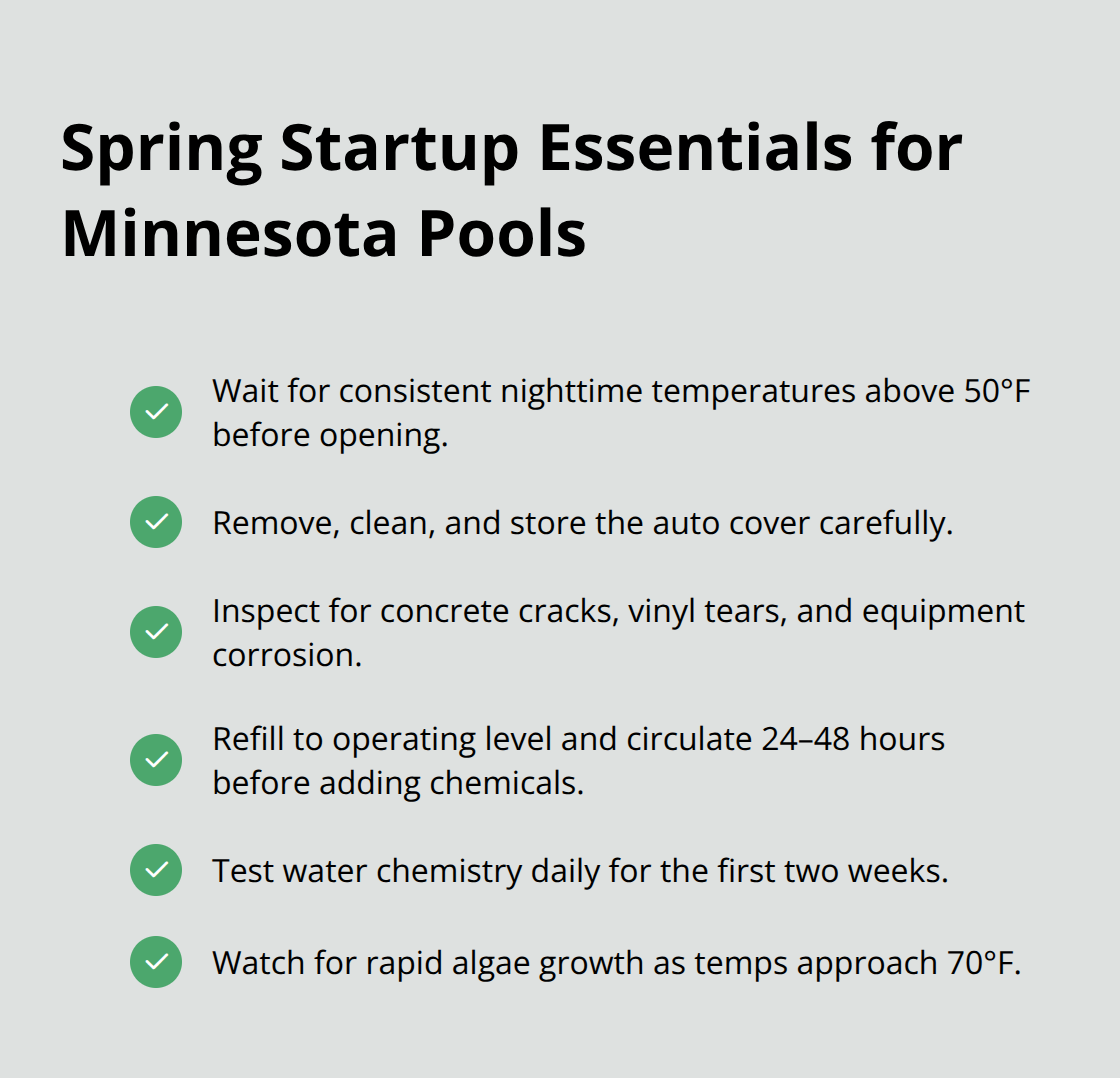
Test water chemistry daily for the first two weeks because spring algae growth accelerates rapidly once temperatures warm; Minnesota’s average summer temperature reaches 70°F by June, triggering aggressive biological activity.
Summer Maintenance Protects Peak Season Performance
During peak summer months, maintain chemical balance through weekly testing and twice-weekly cleaning of skimmer baskets, which fill with pollen and debris from surrounding vegetation. Professional pool maintenance services in Minneapolis average $317 monthly, a worthwhile expense that prevents costly algae blooms or equipment failures during your peak rental season. Consistent maintenance during summer ensures your pool operates flawlessly when guest satisfaction directly impacts your income and reviews.
Professional Management Handles Coordination
If you operate a vacation rental property, coordinating professional pool maintenance as part of your property management strategy eliminates the operational burden of seasonal care. Up North Property Management handles full-service vacation rental management in Northern Minnesota, including coordination of maintenance services that keep pools operating reliably throughout the rental season. This approach frees you from the logistics of scheduling contractors and monitoring chemical levels while your property generates income.
Final Thoughts
Lakeside pools in Minnesota deliver measurable financial returns that extend far beyond the initial installation investment. Properties with pools command 5–10% higher resale values, while vacation rentals with heated pools and integrated spa features generate 30–50% premium nightly rates during peak season. The math proves straightforward: a property earns an additional $10,000–25,000 annually through extended rental seasons and recovers its heating and maintenance costs within 2–3 years, then operates as pure income generation for decades.
The operational reality separates successful pool owners from those who struggle with maintenance demands. Winterization requires precision timing and technical knowledge, spring startup demands patience and inspection discipline, and summer maintenance needs consistent chemical management and equipment monitoring. Professional pool care costs $300–400 monthly, but that investment prevents algae blooms, equipment failures, and guest dissatisfaction that destroy rental income far more expensively than preventive maintenance ever could.
We at Up North Property Management handle the full operational coordination that transforms lakeside pools Minnesota into genuine revenue-generating assets rather than maintenance burdens. Our team manages maintenance scheduling, chemical monitoring, equipment inspections, and seasonal transitions so your property operates flawlessly when guests arrive and your income flows consistently. Full-service vacation rental management through Up North Property Management means your lakeside pool stays in top condition while you receive hassle-free income without managing contractors or monitoring chemical levels.